
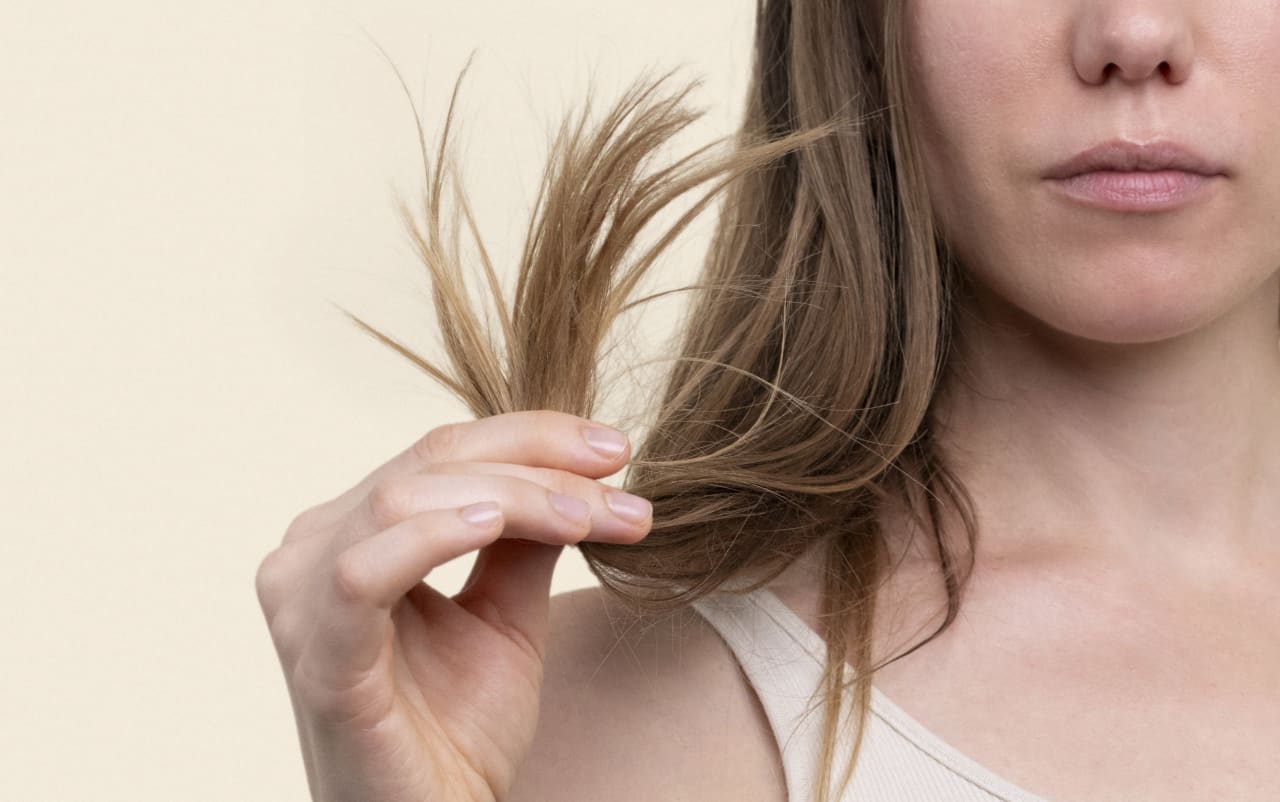
I look after my hair, but my ends still split – why is that?
Published on: Monday, May 18, 2026, Updated on: Tuesday, October 13, 2026
Hair ends don’t split for no reason. Heat, friction, dryness... The hair shaft is dead matter that wears down under repeated damage, without being able to regenerate. In this context, hair care products can improve suppleness, reduce friction and slow down the appearance of new split ends, but it does not reverse damage that has already occurred. Frayed ends and recurring breakage are signs that the hair fibre is too damaged and that a trim is essential. For everything else, identifying the root cause and adapting your hair care routine accordingly makes all the difference.
Contents
Related products
Repairing
Hair strengthening
£11.00
250 ml
Hair conditioner
Hair strengthening
£10.00
250 ml
2 options
Hair strengthening
£12.50
50 ml
£20.00
1 article
Nourishing
Hair conditioner
£12.50
500 ml
In brief
Dry ends, split ends, breakage… Each situation calls for a different priority: moisturise and nourish if the hair shaft is coarse; seal if the ends are becoming brittle; protect and review your routine if breakage is an ongoing issue
4 steps: an oil treatment, a hair mask, a leave-in conditioner and protection are often enough to see a difference, when used regularly and in moderation
Natural hair care products can improve the appearance of the lengths, but they are no substitute for a trim when the hair is too damaged.
Why do the ends of my hair break, even when I use hair care products?
The hair shaft is dead tissue: natural hair care products improve the condition of the remaining hair shaft, but they cannot repair breakage that has already occurred. To achieve real improvement, you need to tackle both your hair care routine and the everyday causes of hair fragility.
A hair that’s already broken cannot be repaired, but it can be better protected and made less noticeable. The hair fibre is a non-living keratinised fibre: once damaged, it does not regenerate in the same way as living tissue (4). Hair care products mainly act on the surface of the hair, improving suppleness and reducing friction, which helps to limit further damage. If the underlying cause – such as heat, rough handling or chronic dryness – persists in daily life, breakage will continue despite a proper hair care routine (3, 9).
The most common causes of persistent breakage
Persistent hair breakage is rarely caused by a single factor. Identifying the main cause – whether it’s heat, dryness, incorrect styling techniques or an imbalance in your hair care routine – allows you to take action in the right area before changing products.
Repeated exposure to heat severely weakens the ends. Heat-styling tools without thermal protection damage the cuticle and the internal structure of the hair fibre, especially when used frequently or set to too high a temperature (1, 2, 9). Even a highly nourishing treatment won’t compensate for repeated heat damage.
Dryness makes the ends more brittle and less supple. A hair shaft that quickly loses its moisture or lipids becomes coarser, tangles more easily and breaks more readily at the slightest movement (4, 7). This is often what gives the impression that the hair ‘soaks up everything’ without ever really looking nourished.
Everyday friction causes just as much breakage as the wrong products. Aggressive brushing, rubbing with a towel, tight hair ties, rough pillows: over time, the ends accumulate these micro-aggressions. Correcting these habits can sometimes significantly improve the condition of the lengths without changing your entire haircare routine (3, 4).
An excess of poorly balanced haircare products can also throw the hair fibre out of balance. Too much protein can make certain hair types stiff, whilst layering products without a consistent routine can weigh the hair down or make it limp (4, 8). When nothing improves, simplifying your haircare routine is often more helpful than adding yet another product.
Brittle ends: hydration vs. nourishment?
Mixing them up is one of the most common mistakes in an anti-breakage routine. A An effective natural anti-breakage routine alternates between hydration and nourishment depending on the hair’s needs, not just one or the other.
Hydration supplies water to the hair fibre and restores its suppleness and elasticity; this is the role of hair care products containing aloe vera, hydrosols or vegetable glycerine (4, 7)
Nutrition, on the other hand, seals in this hydration by depositing lipids on the surface or inside the hair fibre; this is the role of plant-based oils and butters (5, 6).
For brittle ends, both are necessary and complementary: if you moisturise without nourishing, the hair shaft quickly loses the moisture it has absorbed; if you nourish without moisturising, it remains supple on the surface but fragile deep down (4, 7, 8).
How can I tell the difference between dryness, split ends and breakage?
These three conditions do not share the same causes or solutions. Before choosing a treatment, examine your ends in natural light once they’re dry, then identify where the problem lies along the hair shaft. Identifying what you see along the length of your hair — dryness, split ends or breakage — is the most useful step before adapting your routine. Not every situation calls for the same treatment. This simple guide will help you work out whether you need to focus on moisturising, nourishing, sealing or cutting:
What you’re noticing | What this means | Top priority action |
|---|---|---|
Rough, dull, tangled ends | Dryness (the hair shaft lacks moisture or lipids) (4, 7) | Moisturise and nourish |
Split ends (split into two or more strands) | Split ends (damaged cuticle at the tip) (3, 4) | Nourish and seal the ends |
Short hairs on the brush, without roots | Breakage (mechanical breakage along the length) (3, 9) | Seal, protect and review your technique |
Small white spots at the ends | Severe breakage (exposed cortex) (3, 9) | Seal and consider a trim |
The elasticity test: Take a wet strand of hair and gently pull on both ends. A healthy strand of hair will stretch slightly before springing back into shape. If it snaps cleanly, the hair fibre lacks elasticity. (3, 9) If it stretches a lot without springing back, it is probably overburdened.
Our picks to prevent split ends
Effective natural treatments for preventing breakage rely on a few complementary steps. The aim is to prepare the hair fibre, nourish it deeply, seal the ends, and then protect the lengths from damage.
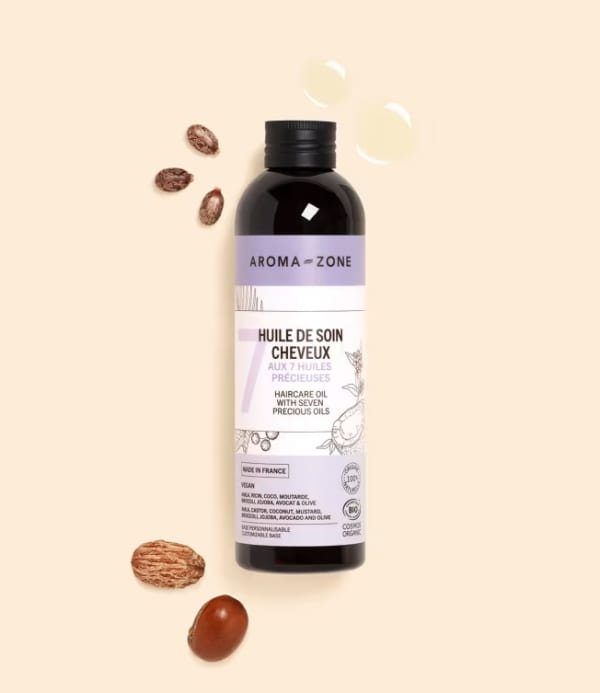
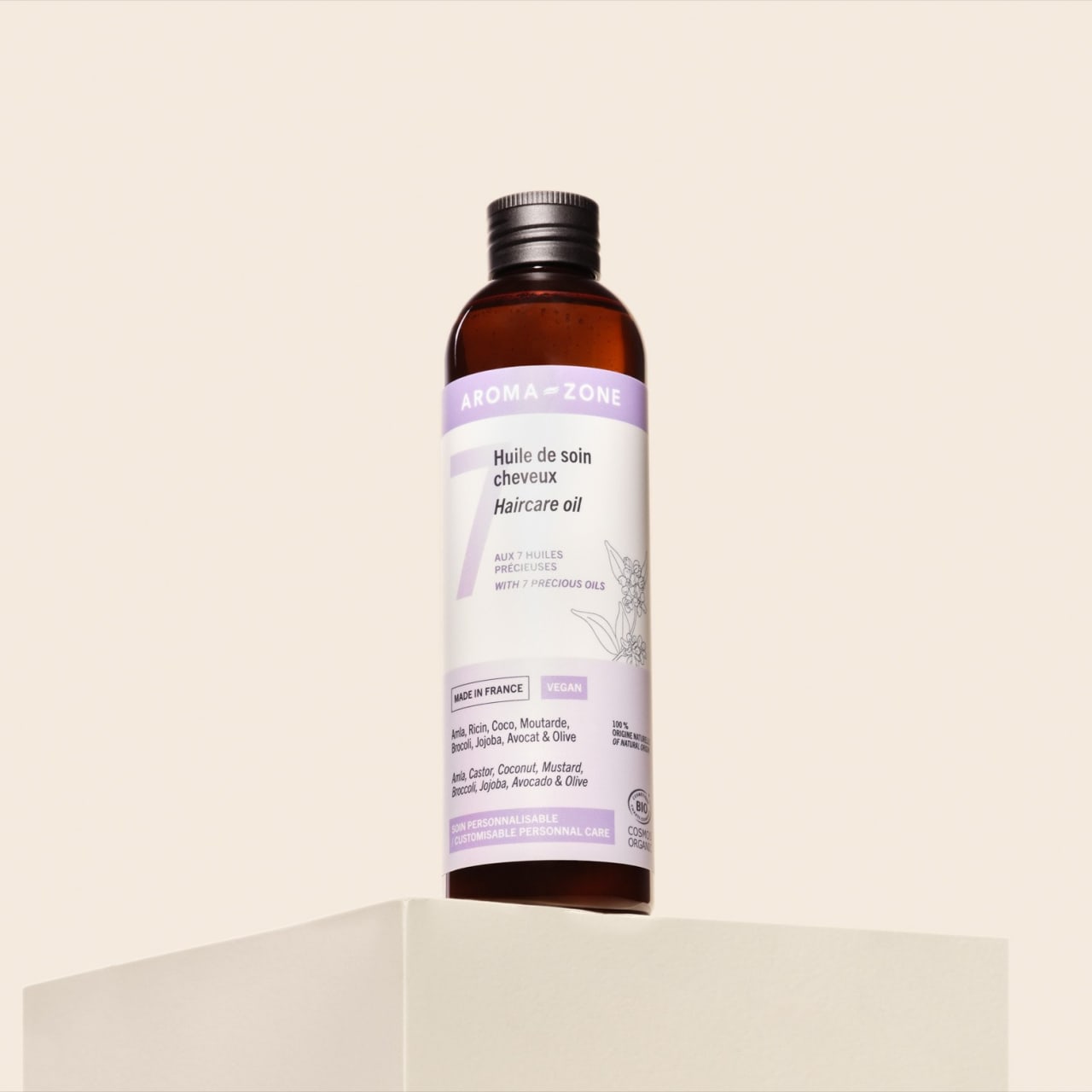
Nourish before shampooing: apply a few drops of our Hair Care Oil to the dry lengths, paying particular attention to the ends. Leave it on for 30 minutes to 1 hour under a warm towel, then wash your hair as normal.
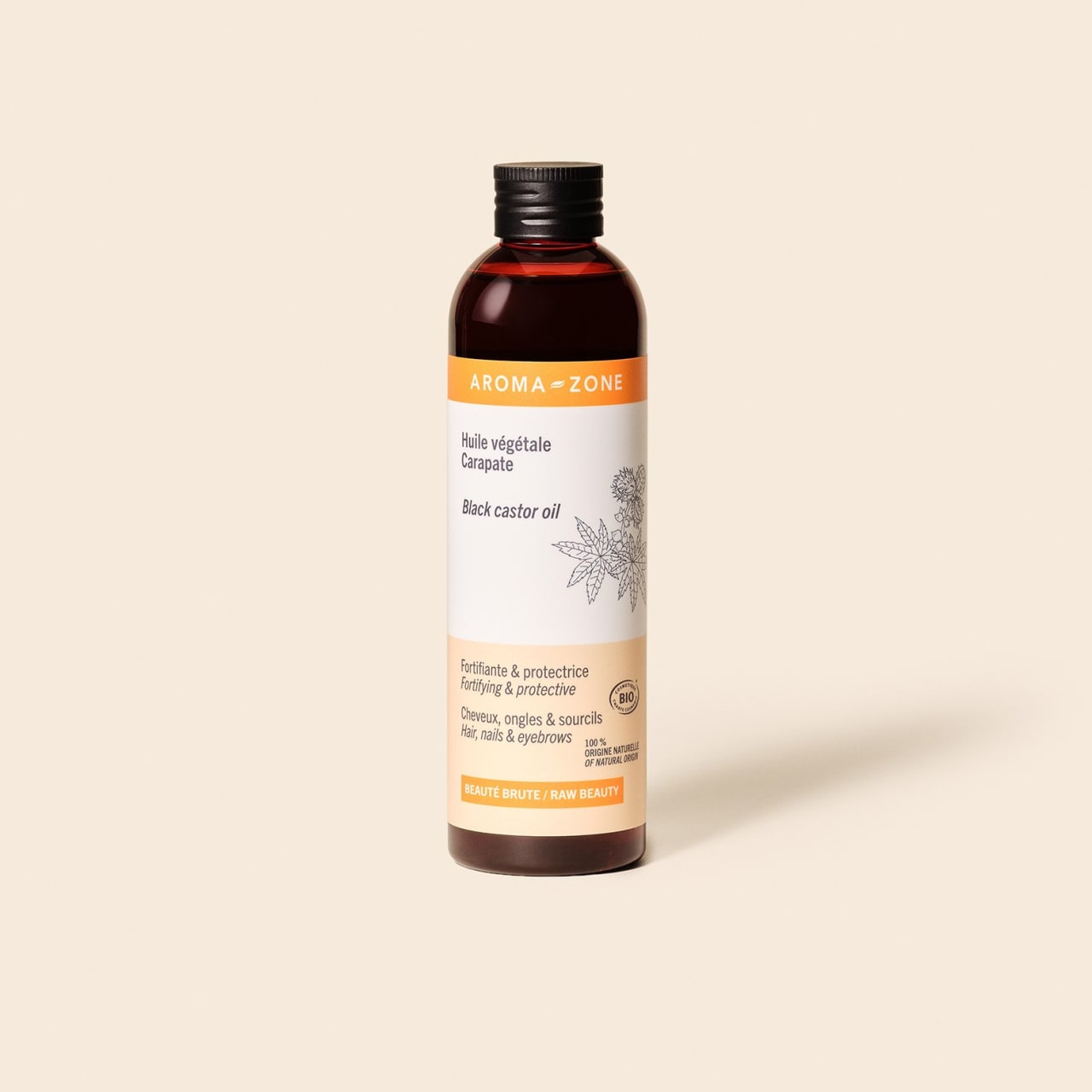
For curly, textured, frizzy or very dry hair, the Carapate Oil is recommended. Frequency: once a week.
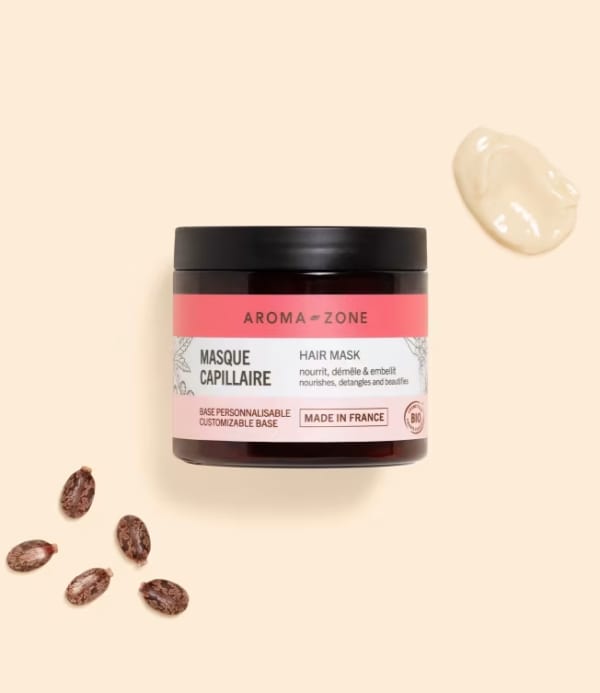
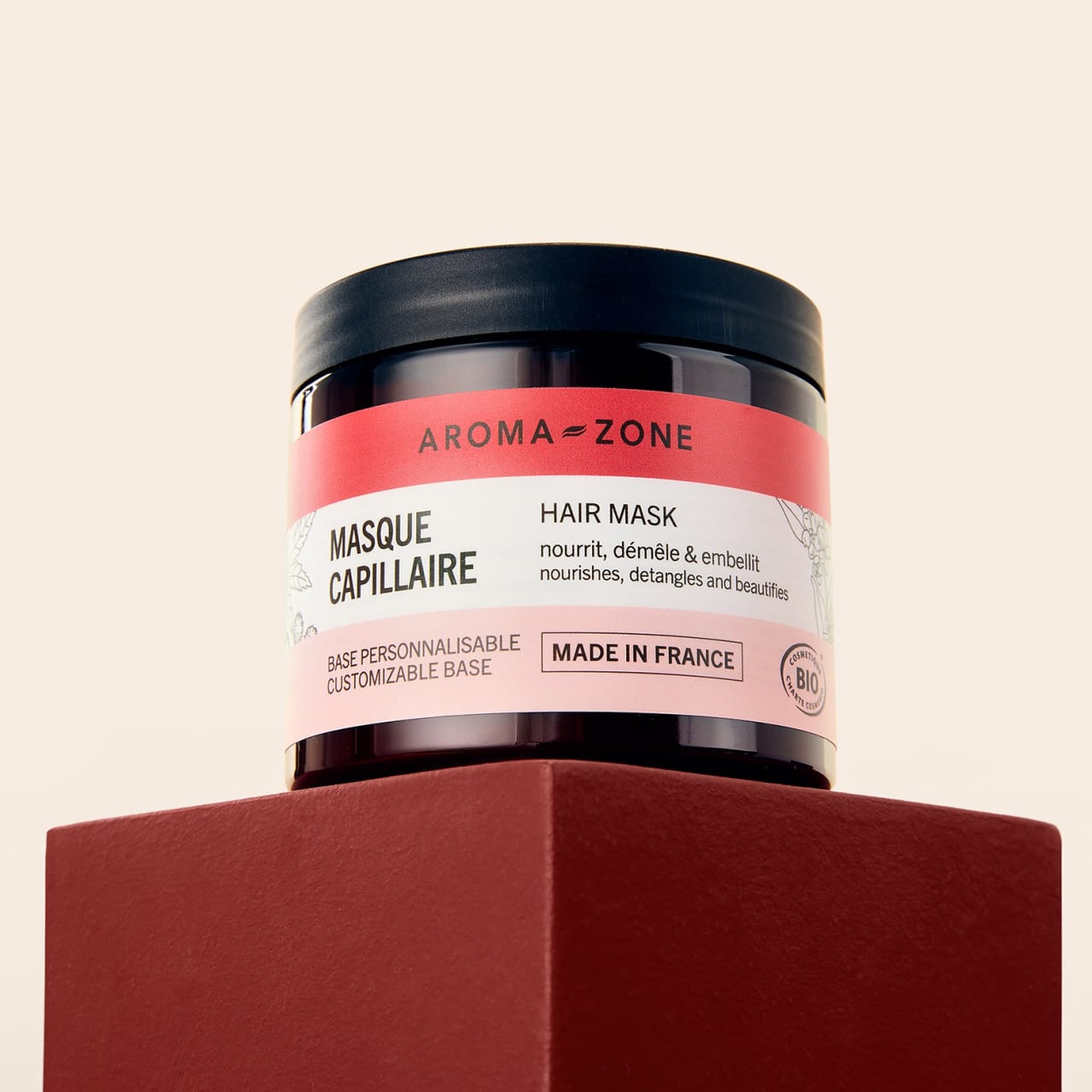
Conditioning after shampooing: On clean, towel-dried hair, apply a small amount (between a hazelnut and a tablespoon) of Hair Mask onto the towel-dried lengths (not the roots). Leave on for 5 to 10 minutes before rinsing with cool water. This step complements the oil treatment by providing comfort and suppleness. Frequency: once a week.
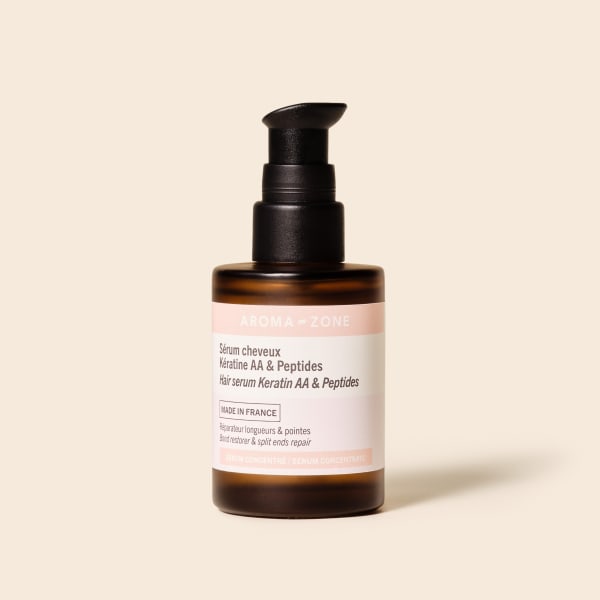
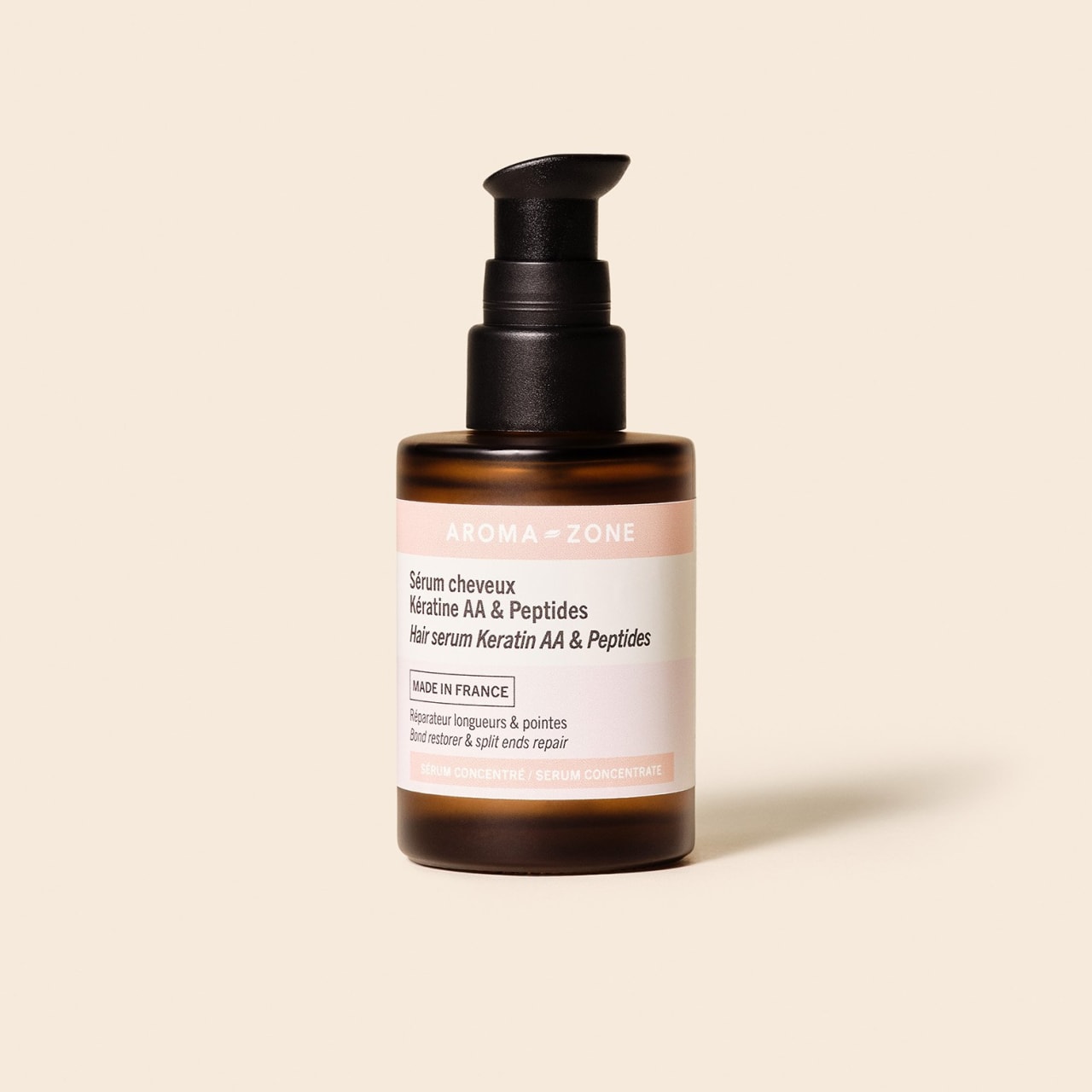
Strengthen and seal the ends: apply a few drops of Keratin AA & Peptides Hair Serum to your mid-lengths and ends – whether dry or damp – as part of your daily routine, without rinsing. The aim is to leave a smooth, discreet, non-greasy film that protects against friction without weighing the hair down. Frequency: after every wash or as part of your daily routine.
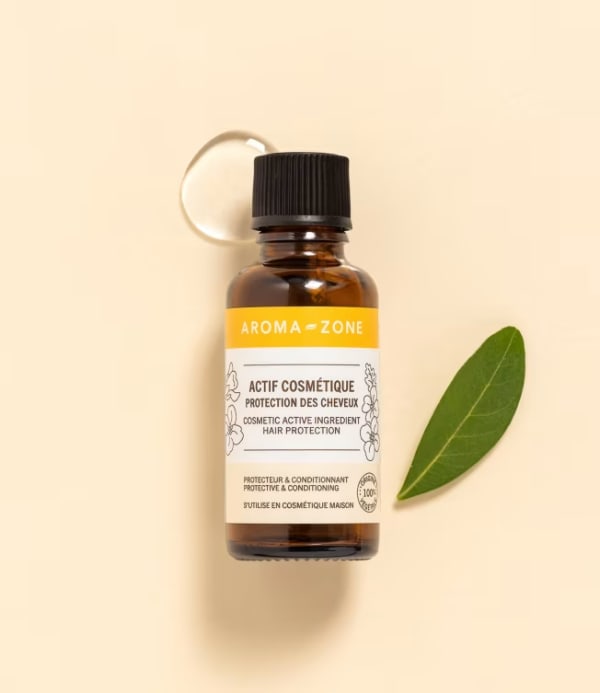
Daily protection: Before using any heat-styling tools, apply a heat protectant to the lengths of your hair, for example by mixing the Hair Protection Active with a hair care oil (using a concentration of 0.5 to 5 per cent of the total weight of your mixture). At night, a satin bonnet or a silk pillowcase helps to reduce friction. Furthermore, you should always start detangling from the ends, using a wide-toothed comb on damp hair.
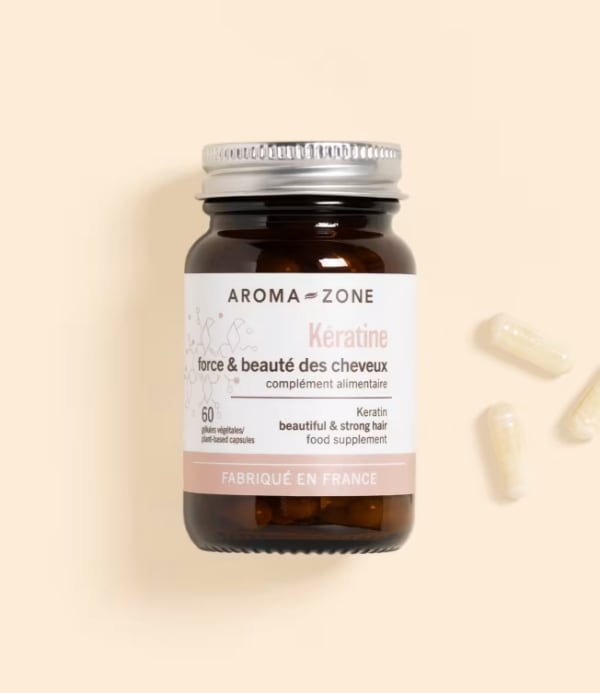
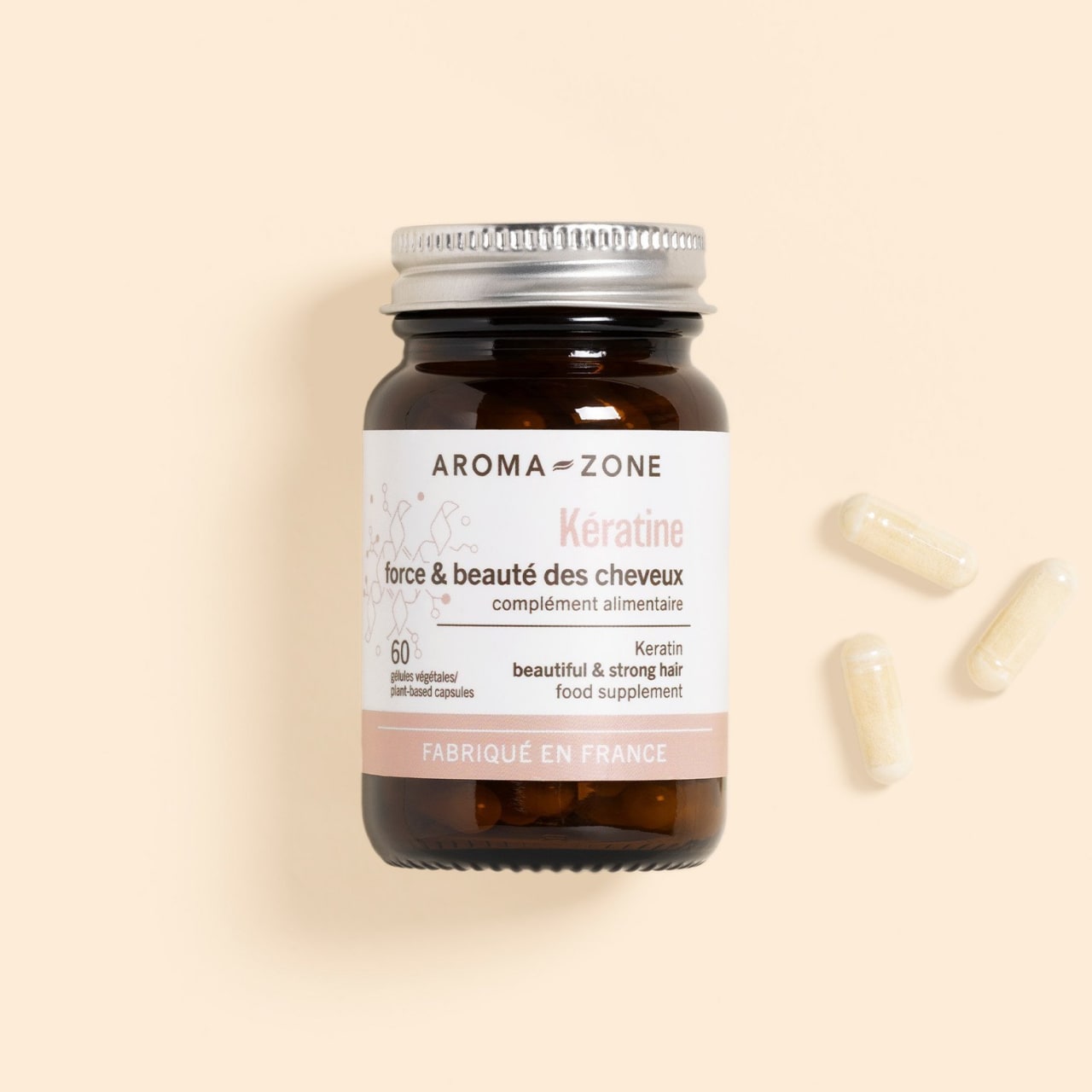
Treating it from the inside: a topical routine cannot compensate for a lack of nutrients essential to the quality of the hair fibre. The Keratin food supplement can help improve this, alongside a balanced diet and a consistent topical routine. Take 2 capsules a day, with a glass of water. For adults only; not recommended for pregnant or breastfeeding women.
To find out more, discover our minimalist anti-breakage routine, approved by our experts.
How can I properly ‘seal the ends’?
Sealing involves applying a light protective film to the ends to reduce friction, lock in moisture and slow down the appearance of split ends. It’s a quick but crucial step in an anti-breakage hair care routine.
Using a plant-based oil: warm 1 to 2 drops of a suitable plant-based oil in your palms, then gently run your fingers through the last few centimetres of the lengths. The texture should be almost invisible; the ends should appear slightly smoother and more satiny, without looking greasy. For fine or low-porosity hair, opt for a light, dry oil (jojoba, Abyssinian). For thick, dry or curly hair, a richer oil (Carapate, castor) is more suitable, used in very small quantities.
With a leave-in serum: a small amount of serum worked through the mid-lengths and ends, whether damp or dry. This is often a more practical option for fine hair, and it also provides a visible smoothing effect from the very first application.
Mistakes to avoid: applying too much product (leaves hair feeling sticky and weighed down), applying it to the roots (leaves the scalp looking greasy), or layering several film-forming products during the same wash.
When trimming split ends becomes essential
Hair care treatments can improve the appearance of the lengths and slow down breakage, but they cannot replace the benefits of a haircut when the hair fibre is too damaged. The two approaches are complementary. A haircut remains essential when the damage exceeds what hair care treatments can repair.
When the hair fibre is too damaged, a trim isn’t a waste of time: it’s the most direct way to stop the breakage from getting worse (3, 9). Consider getting a trim if you notice several of these signs:
Split ends extending several centimetres up the length of the hair
A recurring white patch at the tip (exposed cortex)
Very frayed ends that catch on everything
Recurring knots always in the same place, despite careful detangling.
Between haircuts, protection is your best defence. Sealing the ends after every wash, minimising heat exposure to the ends and reducing friction whilst sleeping all help to limit damage. A touch-up trim every 2 to 3 months should be enough to keep the ends in good condition on healthy hair, but this frequency also depends on the level of breakage, the heat used and the initial condition of the lengths (4, 5, 7).
The trichologist’s advice
"Hair breakage is often linked to nutritional deficiencies. The most common are deficiencies in protein, iron and zinc. As keratin is a protein, insufficient intake can make hair coarser, drier and more brittle. A deficiency in iron or zinc can also weaken the hair fibre and reduce its strength.
Hair breakage can also be linked to mechanical factors, particularly brushing too vigorously or using a brush unsuitable for the hair’s texture. Certain actions whilst shampooing can also weaken the hair shaft. To minimise breakage, the timing of brushing is important. Straight hair can be brushed whilst dry, ideally after applying a leave-in conditioner or a plant-based oil to protect the hair shaft and minimise friction. On the other hand, curly, wavy or frizzy hair, or hair that tangles easily, should be detangled after applying conditioner. This helps to protect the cuticle, makes it easier for the brush or comb to glide through the hair, and thus reduces mechanical breakage."
Dalila Belmokhtar, Doctor of Pharmacy and trichologist @dalilahairscience
Precautions
Some hair types may react badly to a sudden change in hair care products: it’s best to try one product at a time and observe the effect on the hair’s suppleness, texture and weight. In the event of significant, unusual or persistent breakage despite a suitable routine, medical advice is still recommended, as internal factors (nutritional deficiencies, medication, medical conditions) can weaken the hair shaft.
Expert advice
When faced with split ends, the first question to ask isn’t “which product should I add?” but rather “what is the main cause that my current hair care routine isn’t addressing?”. A weekly oil treatment in the right amount, sealing the ends after every wash and always using heat protection often produce better results than piling on more products without a consistent routine.
Spotlight on Our Writer: Louise Hourcade

After graduating from ESCP Business School in 2020, Louise began her career as a writer in 2021. Today, she writes a newsletter where she shares cultural recommendations and more personal articles, such as dating apps, therapy, and career guidance. She also writes for the media, brands and agencies on subjects such as well-being, mental health, culture, and society.
Bibliography
Li C. et al. Prevention of Hair Heat Damage via Thermoresponsive Organic Silicon-Modified Keratin. Molecules, 2026
https://doi.org/10.3390/molecules31030521
Zi Y. et al. Establishment of a Heat-Damaged Hair Model. Journal of Cosmetic Dermatology, 2025
https://doi.org/10.1111/jocd.70360
Taylor D. et al. The biomechanics of splitting hairs, 2024
https://pubmed.ncbi.nlm.nih.gov/39081627/
Dias M.F.R.G. et al. On Hair Care Physicochemistry: From Structure and Degradation to Novel Biobased Conditioning Agents. Polymers, 2023
https://pmc.ncbi.nlm.nih.gov/articles/PMC9921463/
Leite Silva V.R. et al. Impact of Hair Damage on the Penetration Profile of Coconut, Avocado, and Argan Oils into Caucasian Hair Fibres. Cosmetics, 2024
https://www.mdpi.com/2079-9284/11/2/64
Rele A.S., Mohile R.B. Effect of mineral oil, sunflower oil, and coconut oil on the prevention of hair damage. Journal of Cosmetic Science, 2003
https://library.scconline.org/v054n02/99
Qu W. et al. Improving the Mechanical Properties of Damaged Hair Using Low-Molecular Weight Hyaluronate.
https://pmc.ncbi.nlm.nih.gov/articles/PMC9695591/
Onofre S. et al. Prevention of chemically induced hair damage by means of treatment based on proteins and polysaccharides. Journal of Cosmetic Dermatology, 2022
https://doi.org/10.1111/jocd.14148
Lima C.R.R.D.C. et al. Evaluation of heat damage in virgin hair. Journal of Cosmetic Dermatology, 2019
https://doi.org/10.1111/jocd.12892



