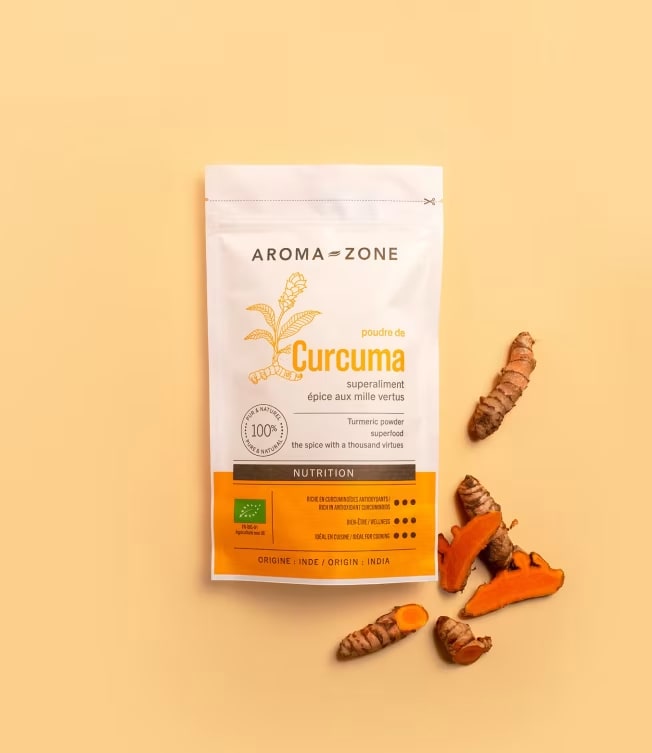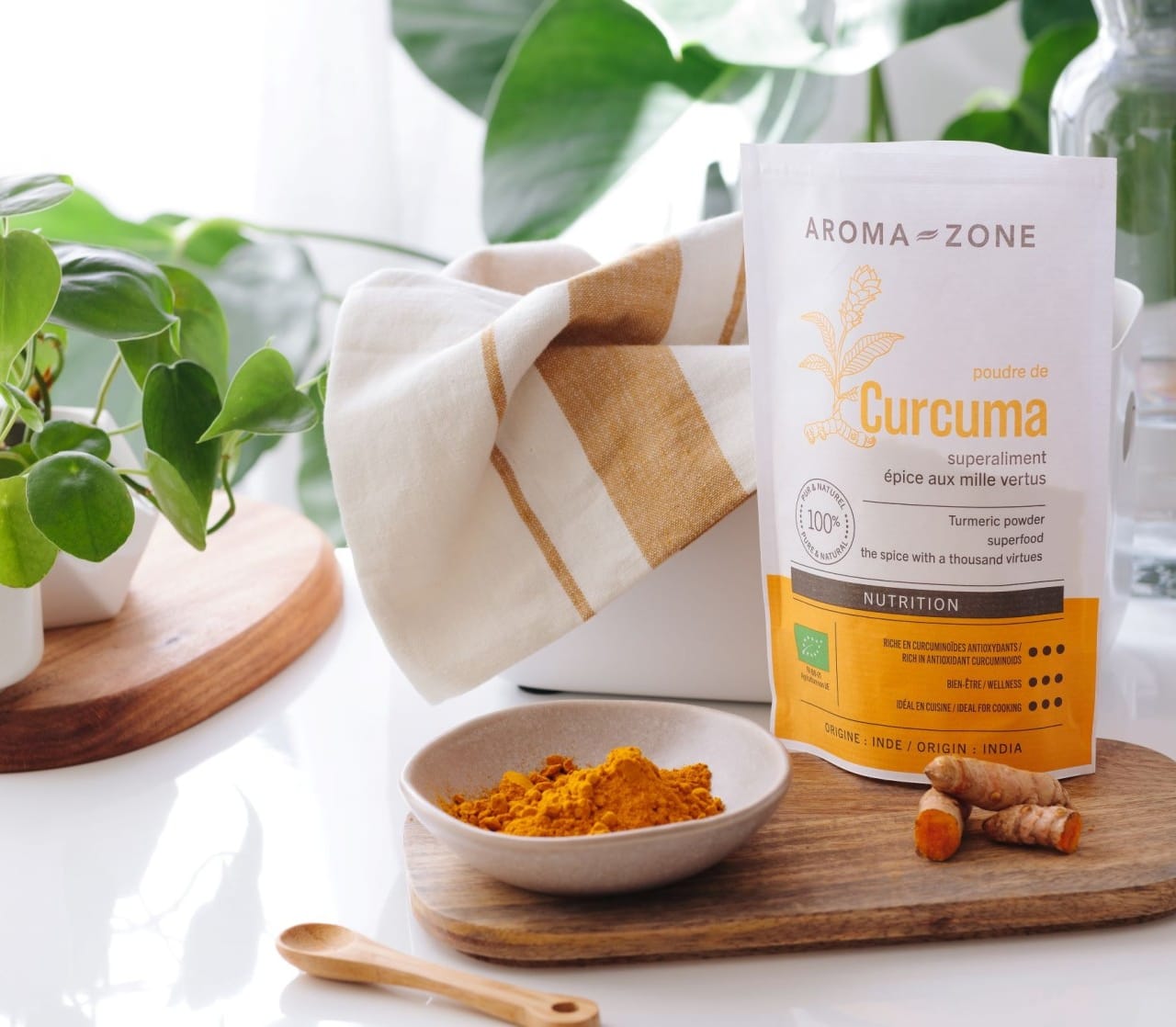


Turmeric, scientifically known as Curcuma longa, is a perennial herbaceous plant belonging to the Zingiberaceae family, the same family as ginger. Native to Southeast Asia, and more specifically India, turmeric has been cultivated for thousands of years for its many culinary and medicinal uses.
Origins and culture
Turmeric grows mainly in tropical and subtropical regions. The world's largest producers are India, China, Indonesia, and the Philippines. The rhizome of the plant, which is the underground stem, is the most commonly used part. This rhizome is harvested, boiled, dried, and then ground to produce a characteristic yellow-orange powder.
Turmeric plays an important role in Indian culture and cuisine. It is a key ingredient in many traditional dishes, and its golden hue makes it a prized natural dye. In addition, it has an essential place in Ayurvedic practices, where it is used for its therapeutic properties.
Curcumin, the key active ingredient in turmeric
Turmeric rhizome contains a group of substances called curcuminoids. But the one responsible for the main properties of turmeric is curcumin. It is also the most abundant substance in the rhizome.
It should be noted that curcumin is unfortunately poorly bioavailable, meaning that it is only poorly absorbed by the body. This is why obtaining significant health benefits from ingesting turmeric requires consuming large quantities of it... which is not necessarily recommended.
However, it is possible to improve the bioavailability of curcumin through the intestinal barrier using processes employed by manufacturers (such as adding black pepper extract).