The difference between turmeric and curcumin

Known as a spice for its fragrance and orange colour, turmeric has many medicinal properties. The curcumin it contains is responsible for a large proportion of its benefits. But what is curcumin? Discover its many benefits, how to consume it as a food supplement and learn how to choose the best formulation for optimal absorption.

Reading time: 0 min.

What is curcumin?

Curcumin (or diferuloyl-methane) is the polyphenolic pigment responsible for the yellow-orange colour of turmeric rhizomes. It accounts for more than 80% of the curcuminoids contained in the spice, the other two main ones being demethoxycurcumin (15%) and bisdemethoxycurcumin (around 4%).

Curcumin is the active ingredient in turmeric and is responsible for many of the plant's properties, including its powerful anti-inflammatory and antioxidant properties.

Curcumin is used as a colouring agent in the food industry (listed as E100(i)) to pigment mustards and sauces, dairy products, soups, cereals, etc., as a food supplement for its many properties and as a cosmetic ingredient (you can find it under the INCI name: CI 75300).

It is soluble in oil and ethanol, heat-stable but highly unstable to light and oxygen.


What are its properties?

Curcumin has the following properties

  • Anti-inflammatory,

  • Antioxidant

  • Antibacterial

  • Powerful digestive properties.

  • It has beneficial effects on all areas of the body (digestive, osteo-musculo-articular, respiratory, cutaneous, uro-genital, cardiovascular).

  • It relieves pain,

  • Calms overall inflammation and protects the body's cells against the free radicals responsible for their oxidation, premature ageing and damage.


Bioavailability of curcumin

Curcumin is not very bio-available, meaning that it is only absorbed into the bloodstream through the intestinal barrier to a limited extent when turmeric is ingested. We would have to eat large quantities of the spice to assimilate the quantities of curcumin that would have an impact on our health.

But there are several ways to increase the bioavailability of curcumin:

  • Black pepper: or rather the active molecule called piperine that it contains, increases the permeability of the intestine and therefore the absorption of curcumin when combined with turmeric.

  • Fats: curcumin is fat-soluble, so it is easier to absorb when eaten with carrier oil, yoghurt, butter or milk…

  • Catechin: found in cocoa and tea

  • Quercetin: found in red onions, grapes and red apples…

  • Other scientific formulations have been developed to increase the stability and solubility of curcumin. Some use adjuvants such as a micelle, nanoparticles or a phytosome, while others are based on an encapsulation process (liposomal curcumin).


The benefits of curcumin

  • Its anti-inflammatory benefits: curcumin is central to the body's inflammatory reactions, notably because it blocks the production of pro-inflammatory cytokines, protein molecules which direct the immune response according to the nature of the signal detected, and by inhibiting certain metabolic pathways involved in the inflammatory processes. Its anti-inflammatory action is effective against both acute and chronic inflammation, whatever part of the body is affected. It is particularly beneficial for joint or muscle discomfort, rheumatism, loss of mobility and flexibility in the joints and osteoarthritis. Curcumin is also very helpful for sportspeople in supporting and protecting joints, and is ideal for aiding post-workout recovery. It also has good results on dermatological inflammations such as acne, psoriasis and eczema, and ophthalmological conditions such as uveitis. Multiple studies have compared the efficacy of curcumin with certain non-steroidal anti-inflammatory drugs (NSAIDs), with the advantage that curcumin does not risk irritating the digestive tract (when taken in the recommended doses).

  • Antioxidant benefits: curcumin is a polyphenol and therefore a powerful natural antioxidant. It protects the body's cells against the free radicals responsible for premature ageing and oxidative stress. An unbalanced diet, UV rays, pollution, tobacco, alcohol, excessive physical exertion or stress can all encourage the body to form too many free radicals. An overproduction of free radicals can lead to oxidative stress, responsible for damaging the body's cells, which can lead to certain chronic and degenerative conditions. Curcumin's powerful antioxidant properties protect the body and ensure it functions properly, reducing the risk of cancer.

  • Digestive benefits: curcumin is a top choice for digestive comfort. It prevents and relieves stomach, liver, pancreas, gall bladder and intestinal problems. It calms inflammation of the stomach and intestines, gastro-oesophageal reflux, belching, bloating, flatulence, constipation and diarrhoea. It also relieves nausea, aids digestion and can help stimulate sluggish digestion. Curcumin is beneficial for the liver, protecting liver cells and stimulating the production of bile by the gall bladder. It also balances the intestinal flora by reducing the presence and multiplication of pathogenic strains in the intestine thanks to its antibacterial properties. The World Health Organisation (WHO) and the European Commission (EC) have recognised the effectiveness of turmeric (i.e. curcumin) in treating dyspepsia (digestive disorders).

  • Dermatological benefits: curcumin is effective in relieving irritation, itching and skin conditions such as allergies, acne, eczema and psoriasis. It calms inflammation, reduces the spread of bacteria and regulates sebum production. Its antioxidant effects protect skin cells from external aggressors such as UV rays, pollution, the cold and synthetic products.

Tip

We advise you to always choose an organic product to avoid chemical solvents from the curcumin extracting process.

Turmeric, curcumin: what's the difference?

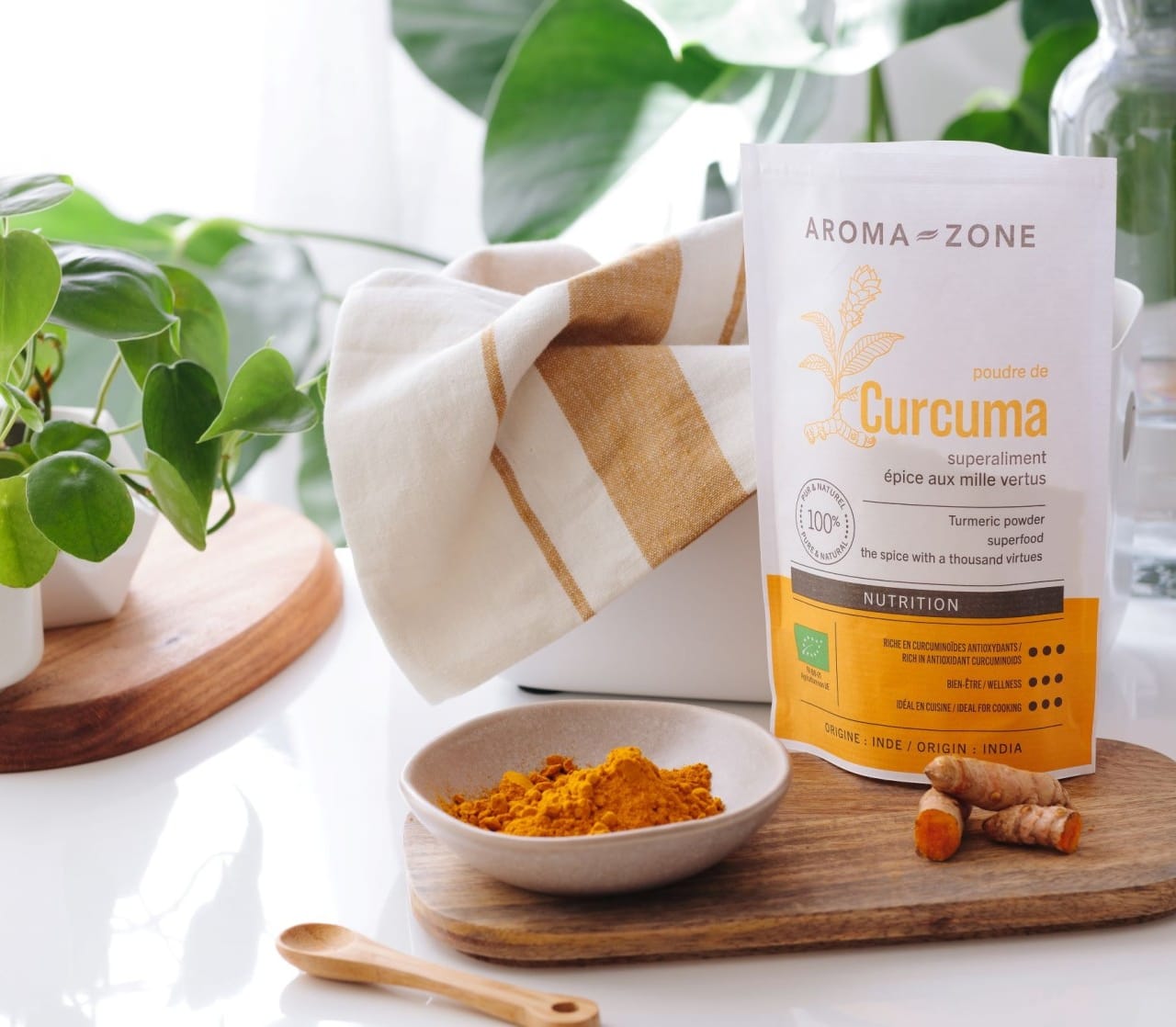
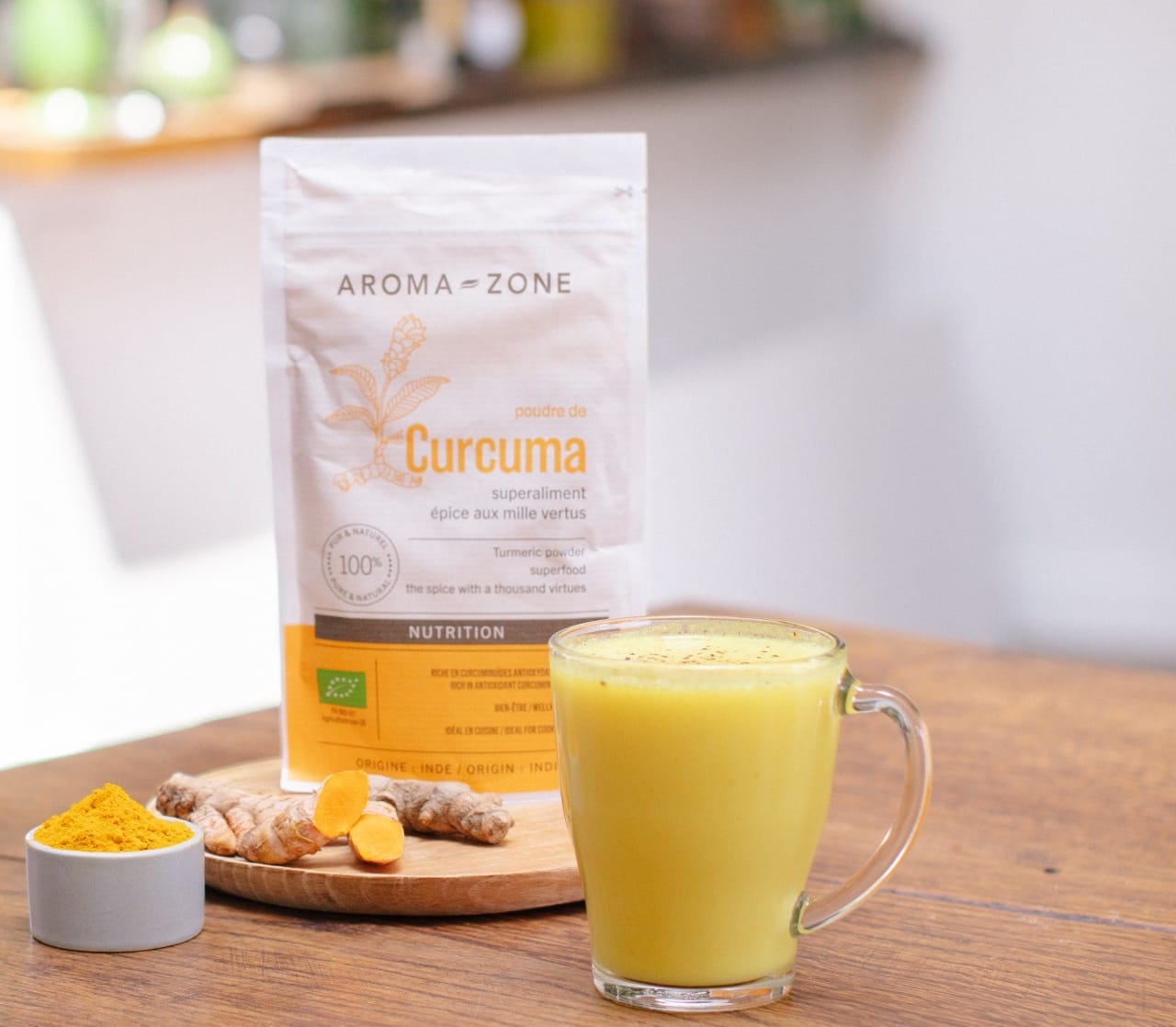
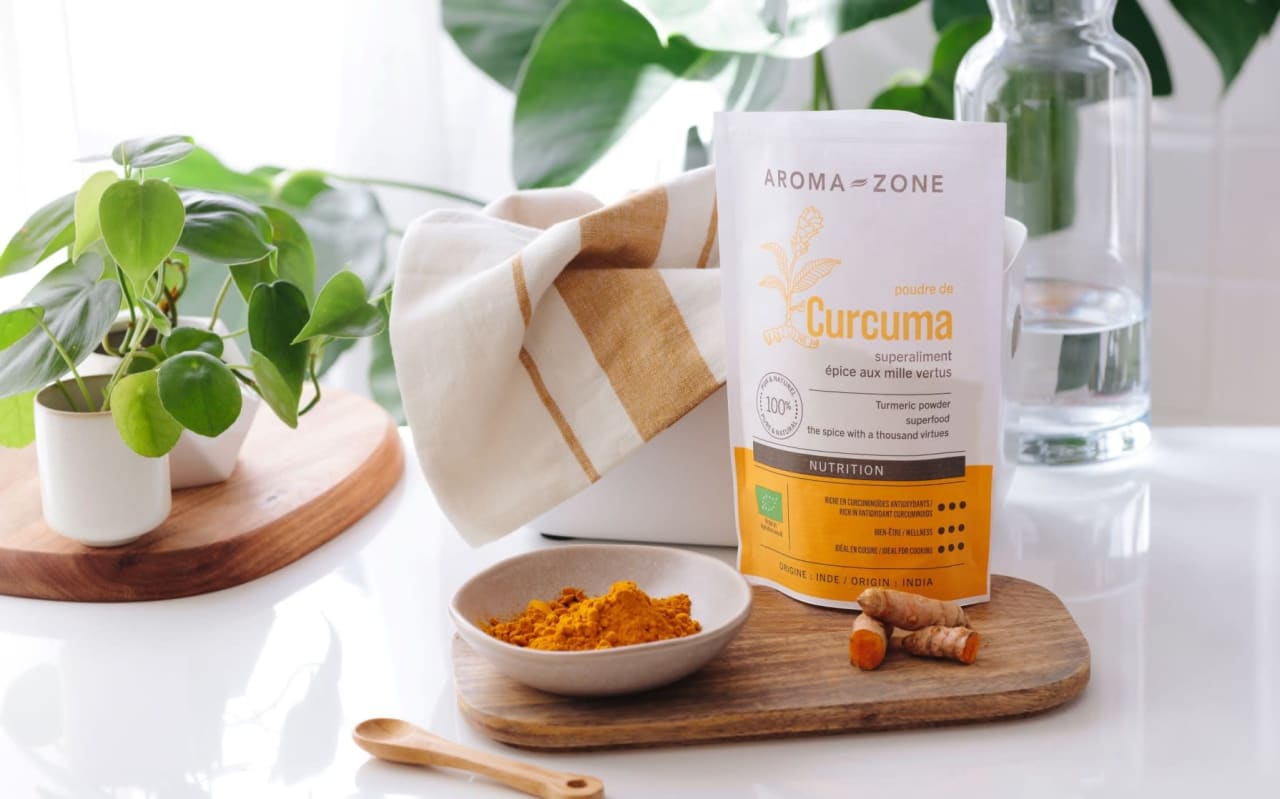
As you will no doubt have gathered, turmeric is the plant whose rhizomes, with their orange flesh and many medicinal properties, are used fresh or dried and then ground into powder.

Curcumin is one of the plant's active ingredients. It is an active molecule responsible for many of turmeric's properties, including its powerful anti-inflammatory and antioxidant properties.


What are the benefits of turmeric?

Turmeric obviously has the properties of the curcumin it contains. It therefore has anti-inflammatory, antioxidant, antibacterial and digestive properties.

But it also has other benefits:

  • Cardiovascular, thanks to its cholesterol-lowering action. It increases cholesterol metabolism and stimulates digestion. It prevents cholesterol-related disorders such as atherosclerosis, hypercholesterolaemia, metabolic syndrome and all the risk factors for cardiovascular disease.

  • Immunostimulant, it helps fight infections thanks to its antiseptic and anti-microbial properties and supports the proper functioning of the immune system.

  • Fluidifying, it has anticoagulant properties

  • Regenerates and protects organs and tissues

  • Remineralising thanks to its richness in vitamins (C, E, B1, B2, B3, B6, K), minerals and trace elements (iron, manganese, magnesium, calcium, potassium, copper, phosphorus...) and fibre.

A closer look at our organic curcumin optimised food supplement

Our food supplement

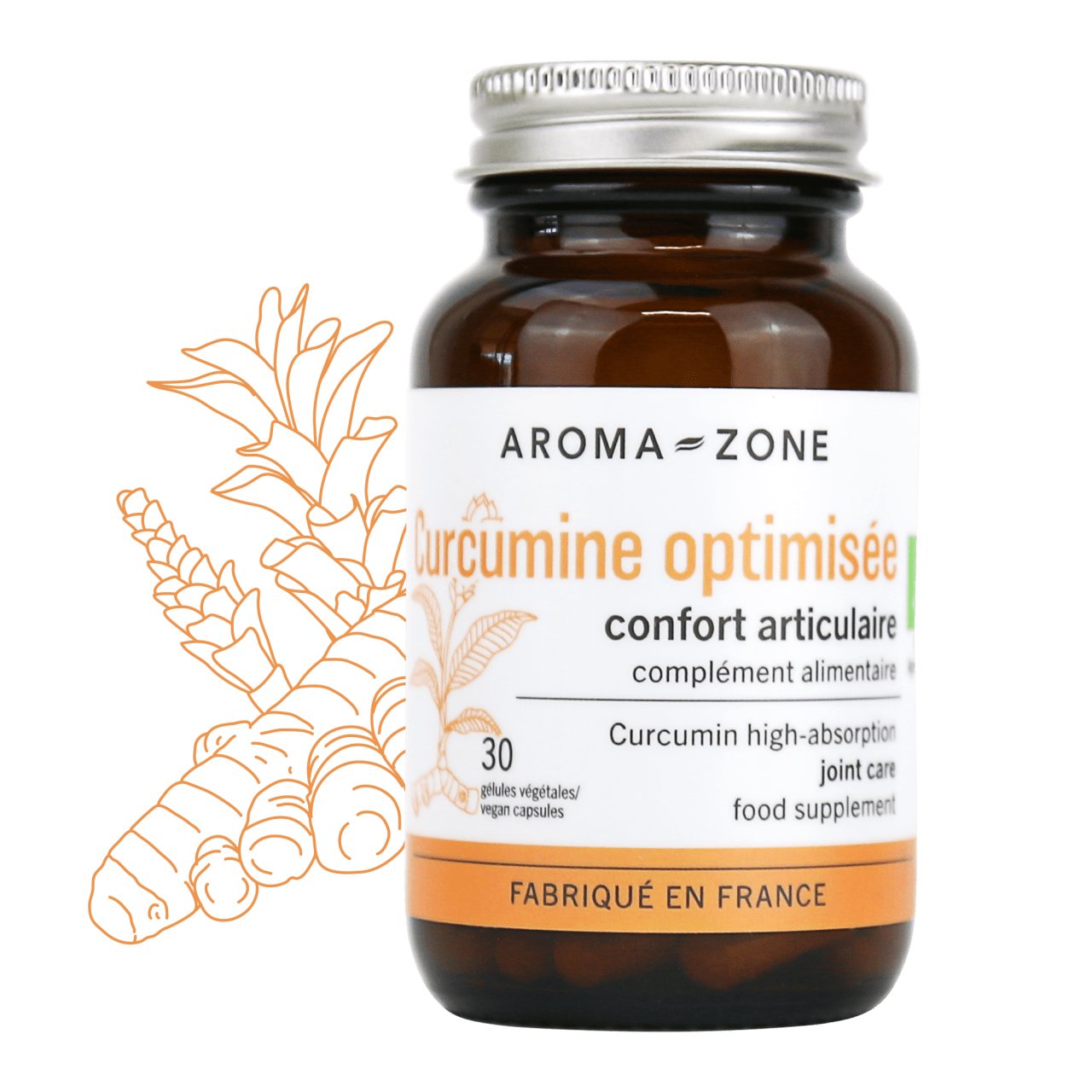
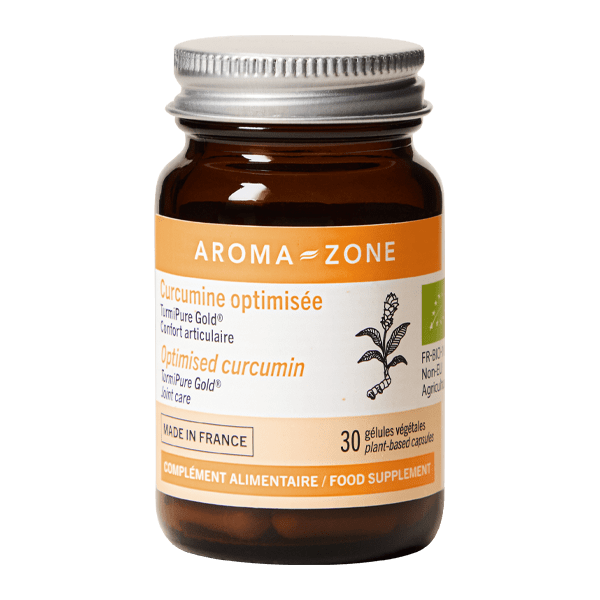
To improve curcumin absorption while avoiding the systematic addition of piperine (which can be irritating to the digestive tract in the long term) or other questionable additives, we have developed our Aroma-Zone Organic Optimised Curcumin food supplement, which is currently one of the best curcumin products on the market.

Optimised organic curcumin

Its criteria and formulation

100% natural and certified organic, it contains a patented extract (TurmiPure Gold® organic) of organic turmeric with a high content of curcumin micro-encapsulated in a matrix of plant origin based on Quillaja saponaria (Panama wood), acacia gum and sunflower oil, for optimal assimilation without the harmful irritating effects of other formulations. It is formulated without synthetic and controversial emulsifiers and nanoparticles.

Clinical studies carried out on the long-term consumption of our TurmiPure Gold® optimised curcumin food supplement have confirmed its safety, as well as good gastrointestinal tolerance with no notable side effects.


Its extraction process

Curcumin is extracted in vegetable ethanol and Panama wood is extracted with water.

No synthetic solvents are used.


Traceability

Turmeric is organically grown in India and our food supplement is developed and manufactured in France by the Naturex laboratory, which specialises in plant extraction and the development of active ingredients systematically supported by clinical studies. The capsules are filled into jars in a French laboratory specialising in food supplements.


Bioavailability

Encapsulation in this 100% plant matrix ensures excellent bioavailability of the curcumin. To put it simply, this plant matrix acts as a 'vehicle' around the curcumin molecules, enabling them to easily cross the intestinal barrier and reach the bloodstream in an active form.

Usually fat-soluble, i.e. soluble in oil, this plant matrix allows curcumin to become water-soluble (in water) and therefore much easier for your body to absorb.

By way of comparison, a single 300 mg capsule of TurmiPure Gold® delivers:

  • 1.5 times more curcuminoids in the blood than 1.5g of standard turmeric extract 95% curcuminoids + piperine (the powdered extract of dried turmeric rhizomes combined with the piperine in black pepper)

  • 2.8 times more curcuminoids in the blood than 1g of phospholipid-based turmeric extract (extract of dried turmeric rhizome powder combined with phospholipids, i.e. fats)

According to multiple comparative clinical studies, the TurmiPure Gold® patent is the extract with the best bioavailability on the market and therefore the best efficacy at the lowest dose, without any synthetic surfactants.

How should curcumin be taken?

We recommend you take 1 capsule a day of our Aroma-Zone Organic Optimised Curcumin food supplement with a large glass of water. Thanks to its powerful dosage, just one capsule is enough. This capsule can be taken at the time of day that suits you best, but preferably before or after a meal.

We recommend that you take our Organic Optimised Curcumin in the form of regular courses lasting 1 to 3 months, according to your needs, taking care to leave a one-week break between two doses.

For optimum effectiveness, regular consumption is important: we advise you to incorporate your curcumin capsule into your daily routine.

Contraindications to the consumption of curcumin

Contraindications

Curcumin is contraindicated in cases of:

  • Allergy to the plant

  • Stomach or duodenal ulcers

  • pathology of the bile ducts (stones, obstruction, etc.)

  • Liver problems


Side effects

When taken in the recommended doses, curcumin has very few side effects.

Some side effects may occur when taken in excess, such as yellow stools, flatulence, heartburn, dry mouth, skin rashes and headaches. An overdose can cause vomiting and diarrhoea, so consult a doctor as soon as possible.


Interactions with certain medicines

Curcumin may interact with certain medicinal treatments such as:

  • Anticoagulants or antiplatelet agents (blood thinners), including plants with anticoagulant properties such as gingko, ginseng, white willow and eleutherococcus, etc. ).

  • Anti-inflammatories

  • Anti-diabetics

  • Beta-blockers

  • Antibiotics

  • If you are undergoing radiotherapy or chemotherapy, we recommend that you do not consume turmeric before, during or after treatment.


Precautions

If you are taking any of the medicines listed above, ask your doctor for advice before taking curcumin.

As a precaution, curcumin is not recommended during pregnancy or breast-feeding, or for children under the age of 18. This does not apply to turmeric consumed in food form (sprinkled on your food).

Focus on our Naturopathic editor, Stéphanie Catrysse

Stéphanie Catrysse is a naturopath (certified by the FENA), a wellness massage and lymphatic drainage practitioner, and a personal development consultant. 

Passionate about alternative medicine, she practices a holistic approach to health.