Konjac and Weight Loss

Do you have a few extra pounds? Are you looking to lose weight? Have you ever considered Konjac? This plant, native to Asia, is a valuable ally in regulating satiety, reducing appetite, managing cravings, and lowering overall calorie intake.

In this guide, you’ll discover Konjac and its many benefits for promoting weight loss, as well as our tips for using it wisely.

Reading time: 0 min.

What is Konjac?

Konjac, also known by its scientific name Amorphophallus konjac, is a plant native to Asia, specifically Japan and China. This plant is valued for its tuberous root, which is rich in soluble dietary fiber, particularly glucomannan. Glucomannan is a water-soluble polysaccharide that has the unique property of swelling upon contact with water, forming a viscous gel in the stomach. This gives Konjac its many benefits for digestive health and makes it a valuable aid in weight loss.

Beyond its high fiber content, it is the unique structure of glucomannan that gives Konjac its physiological effects. When exposed to water, this soluble fiber forms a dense gel that alters the texture of stomach contents. This transformation naturally slows down the digestion process, which helps regulate appetite and prevent premature hunger pangs.

In the intestine, this fibrous gel acts as a gentle prebiotic, nourishing the beneficial bacteria of the microbiota. It thus contributes to better intestinal balance while promoting regular bowel movements. This mode of action, both mechanical and metabolic, is part of a gentle approach to weight management and digestive comfort.

Does Konjac help you lose weight?

As we saw earlier, Konjac forms a viscous gel when it comes into contact with water, increasing the volume of the food bolus. This mechanical action helps prolong the feeling of fullness, which can help reduce cravings, moderate appetite, and naturally limit calorie intake throughout the day.

But this effect alone is not enough. Konjac is not a substitute for a varied diet or a balanced lifestyle. It works in conjunction with a set of factors essential for healthy, sustainable weight loss. A diet rich in fiber, low in simple sugars, with sufficient protein, and spread out evenly throughout the day is essential to support the body and prevent imbalances. Physical activity, even moderate, also plays a fundamental role: it stimulates metabolism, regulates appetite, and supports elimination.

Sleep quality, stress management, paying attention to hunger cues, and guidance from a healthcare professional or dietitian are all factors that enhance the effectiveness of a supplement like Konjac. The goal is to adopt a holistic and gradual approach that respects each person’s pace, without unrealistic promises or pressure.

How does Konjac affect weight loss?

A Fiber with Satiety-Promoting Properties

Konjac’s main active ingredient, glucomannan, forms a viscous gel that takes up space, slows gastric emptying, and prolongs the feeling of fullness, which can naturally lead to reduced calorie intake during subsequent meals. This mechanical action is not stimulating, but contributes to better daily appetite control.

Aids in fat mass reduction

Some studies (1,2)have shown that glucomannan supplementation, as part of a balanced lifestyle, can promote a significant reduction in body fat in overweight individuals. Regular intake of glucomannan, combined with a low-calorie diet, has notably resulted in greater weight loss than in control groups.

The scientific data below is provided for informational purposes only and does not constitute health claims:

Support for stable blood sugar levels

The glucomannan in Konjac acts as a gelling fiber in the digestive tract. By slowing the absorption of carbohydrates, it helps moderate the rise in blood sugar levels after meals. This mechanism helps limit blood sugar spikes, reduce cravings, and support better daily energy management.

A beneficial effect on fat metabolism

The gel formed by konjac fibers can bind to some dietary fats in the intestine. This process promotes their natural elimination through stool, which helps lower LDL cholesterol levels. When incorporated into a balanced diet, konjac can thus help improve overall lipid profiles.

Digestive support for regular bowel movements

Thanks to its fiber content, Konjac supports regular bowel movements. This digestive comfort is often sought after in weight loss efforts, where dietary changes can sometimes disrupt the balance of the gut microbiota. Balanced bowel function also contributes to overall well-being, which is essential for maintaining a healthy lifestyle.

When should I take Konjac to lose weight?

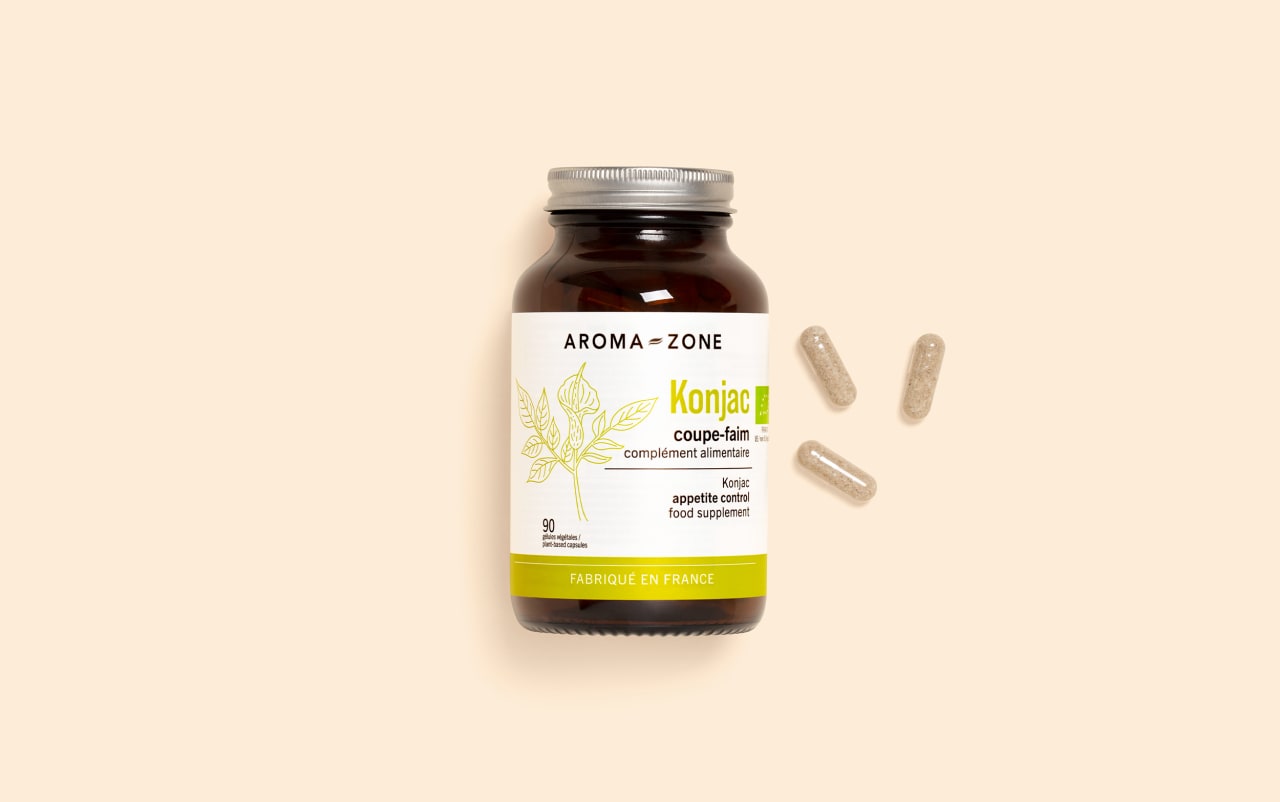
The best time to consume Konjac depends on its form. If used as a dietary supplement, it is recommended to take 2 capsules before each of the three main meals (breakfast, lunch, and dinner), with one or two large glasses of water. Taking it before meals allows the glucomannan to swell in the stomach and promote a feeling of fullness even before you start eating.

As a food, Konjac can be consumed as a partial or complete replacement for starchy foods at lunch or dinner. In the evening, incorporating konjac can also be beneficial, especially if you’re looking to have a lighter meal. Its high soluble fiber content helps curb appetite at the end of the day, a time when cravings are often strongest. This helps limit overeating without frustration, while promoting smoother digestion, which supports better sleep.

To fully benefit from its satiating and appetite-suppressing effects, it’s best to consume it at the beginning or middle of a meal, always accompanied by plenty of water. In any case, adequate hydration is essential to activate its gel-forming properties and avoid any risk of digestive discomfort. Remember to drink water regularly throughout the day.

How should you consume Konjac as part of a weight loss plan?

There are several ways to incorporate Konjac into your weight loss routine. It’s up to you to choose the form(s) you’d like to incorporate into your diet based on your habits and preferences. The goal is to replace certain foods on your plate or in your recipes to take advantage of its filling and low-calorie properties.

To maximize its effects, don’t forget to drink plenty of water when consuming Konjac to aid digestion, allow for the absorption of its soluble fiber, and fully benefit from its weight-loss properties.

Here are a few suggestions for easily incorporating Konjac into your diet:

Konjac rice: Konjac rice is a light, low-calorie alternative to traditional rice. It can be used in dishes such as stir-fries, soups, or side dishes to reduce the meal’s total calorie intake while promoting satiety.

Konjac noodles: They are a low-calorie, low-carb alternative to traditional pasta. They can be used as a substitute in your classic pasta dishes. Rich in soluble fiber, they promote a feeling of fullness and help control appetite.

Konjac flour: Konjac flour can be used as a substitute for traditional wheat flour in cooking and baking recipes. For example, you can incorporate it into your bread, pasta, or dessert recipes to reduce the carbohydrate and calorie content of the finished products.

Konjac gum: Konjac gum is a natural thickener that can be useful for adding body without necessarily adding extra calories to dishes such as soups, sauces, or smoothies.

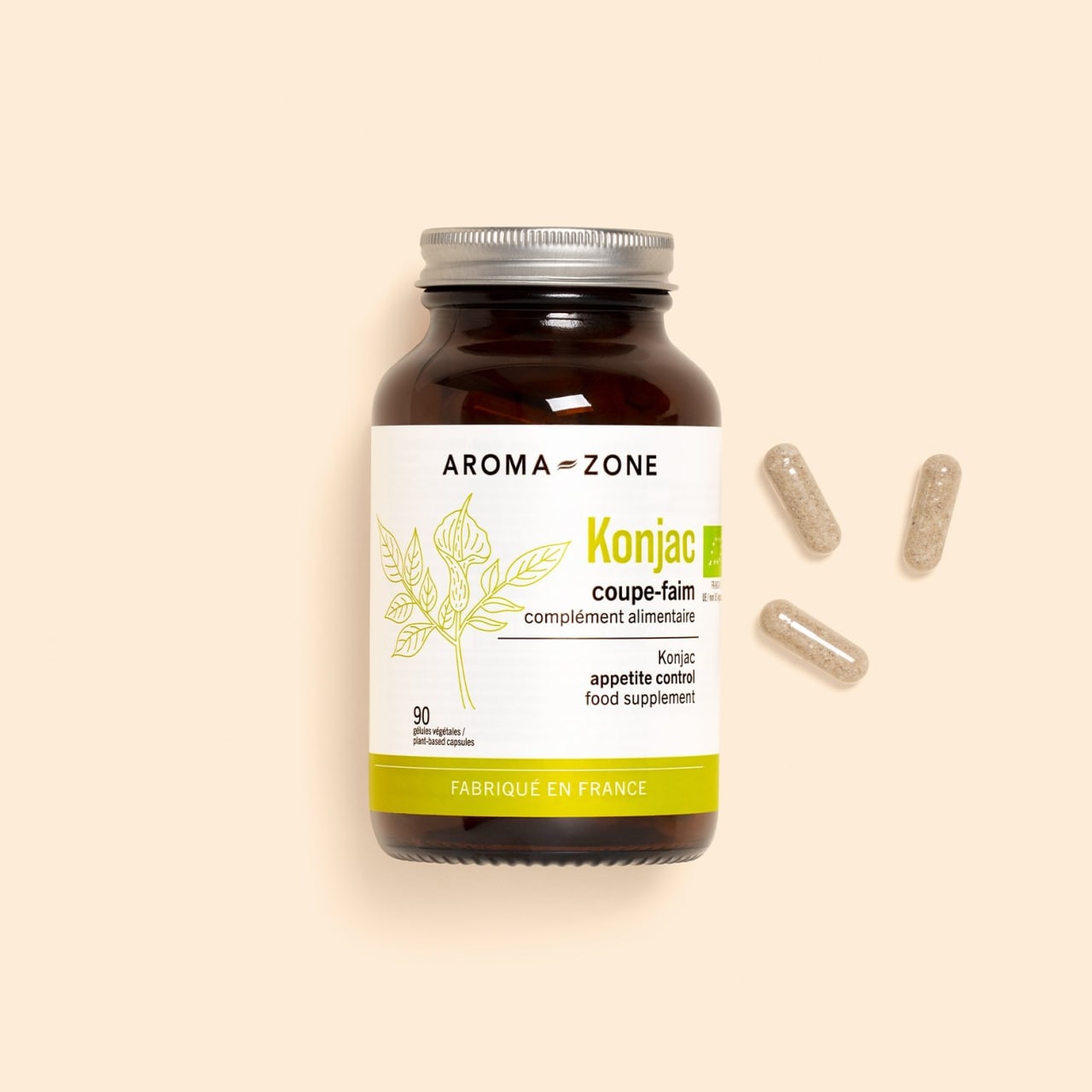
Konjac capsules or tablets: Konjac capsules or tablets are a convenient option, ideal for those who are not particularly fond of the taste and texture of Konjac. These supplements can be taken with a large glass of water before meals to increase feelings of fullness and reduce appetite.

Regardless of the form you choose, we remind you that it is important to follow the recommended dosage instructions.

We also recommend that you seek guidance from a professional during your weight loss journey and consult a doctor if you have a medical condition, are undergoing medical treatment, or have specific health concerns.

How much Konjac should you eat per day?

The recommended amount of Konjac may vary depending on several factors, including your weight, age, metabolism, and level of physical activity. In general, it is recommended to consume between 2 and 4 grams of glucomannan per day, spread out over several doses throughout the day, always with plenty of water. 

Please remember that it is essential to follow the dosage instructions provided on the Konjac products you choose and not to exceed the recommended dose.

What other alternatives are there to support weight loss?

In addition to Konjac, several other natural alternatives can be considered to support your weight loss. The choice will depend on your preferences, metabolism, and lifestyle. Here is our selection:

What are the precautions and contraindications for Konjac?

While Konjac is often touted as a weight management aid, its consumption still requires some precautions. Its ability to absorb water and form a thick gel in the stomach can, in some cases, pose a risk of gastrointestinal obstruction, particularly when consumed in capsule or tablet form and without sufficient hydration. It is therefore essential to consume it with plenty of water and to follow the recommended dosages.

Additionally, konjac is generally recommended as a short-term regimen, with breaks in between, to maintain digestive balance. It may also interact with certain medications, particularly those for diabetes or blood clotting. Medical advice is recommended if you are taking specific medications.

Finally, excessive consumption may cause some digestive discomfort, such as bloating and gas, or even more severe issues like diarrhea or nausea. If side effects occur, it is best to stop use and consult a healthcare professional.

Expert Tip

Incorporating Konjac into your daily routine can be a real asset if you want to better regulate your appetite. However, for its effects to be long-lasting, it’s essential to combine it with a balanced lifestyle. This means eating at regular times, prioritizing whole, nutrient-rich foods, moving daily according to your abilities, and giving your sleep and emotions the attention they deserve.

Weight loss never depends on a single factor: it is the sum of your habits, day after day, that helps restore lasting balance. Be patient, be kind to yourself, and don’t hesitate to seek support from a professional to move forward with confidence. A supplement, no matter how natural and effective it may be, is all the more beneficial when it’s part of a mindful and personalized approach.

Learn more

Is it okay to eat Konjac every day?

Although Konjac can be beneficial for weight loss, it’s important not to overdo it. Excessive consumption of Konjac can lead to unwanted side effects such as bloating, gas, or gastrointestinal issues. 

Use it in short-term regimens.

Since the key to good health lies in a varied and balanced diet, we recommend diversifying your diet as much as possible in a healthy way.

How long does it take to lose weight with Konjac?

Weight loss is a personal process that depends on many factors, including your metabolism, diet, level of physical activity, and weight loss goals. While Konjac can be a helpful tool for weight loss by increasing feelings of fullness and reducing calorie intake, it does not guarantee instant results. To lose weight in a healthy and sustainable way, it is important to adopt a balanced diet, exercise regularly, and maintain healthy lifestyle habits over the long term.

Focus on our Naturopathic editor, Stéphanie Catrysse

Stéphanie Catrysse is a naturopath (certified by the FENA), a wellness massage and lymphatic drainage practitioner, and a personal development consultant. 

Passionate about alternative medicine, she practices a holistic approach to health.

Bibliography

1

Woodgate DE, Conquer JA. Effects of a stimulant-free dietary supplement on body weight and fat loss in obese adults: a six-week exploratory study. Curr Ther Res Clin Exp. 2003 Apr;64(4):248-62. doi: 10.1016/S0011-393X(03)00058-4. PMID: 24944372; PMCID: PMC4052995.

2

Kaats GR, Bagchi D, Preuss HG. Konjac Glucomannan Dietary Supplementation Causes Significant Fat Loss in Compliant Overweight Adults. J Am Coll Nutr. 2015 Oct 22:1-7. doi: 10.1080/07315724.2015.1009194. Epub ahead of print. PMID: 26492494.

3

Kapoor DU, Sharma H, Maheshwari R, Pareek A, Gaur M, Prajapati BG, Castro GR, Thanawuth K, Suttiruengwong S, Sriamornsak P. Konjac glucomannan: A comprehensive review of its extraction, health benefits, and pharmaceutical applications. Carbohydr Polym. 2024 Sep 1;339:122266. doi: 10.1016/j.carbpol.2024.122266. Epub 2024 May 17. PMID: 38823930.

4

Vuksan V, Jenkins DJ, Spadafora P, Sievenpiper JL, Owen R, Vidgen E, Brighenti F, Josse R, Leiter LA, Bruce-Thompson C. Konjac-mannan (glucomannan) improves glycemia and other associated risk factors for coronary heart disease in type 2 diabetes. A randomized controlled metabolic trial. Diabetes Care. 1999 Jun;22(6):913-9. doi: 10.2337/diacare.22.6.913. PMID: 10372241.

5

Chen HL, Cheng HC, Liu YJ, Liu SY, Wu WT. Konjac acts as a natural laxative by increasing stool bulk and improving colonic ecology in healthy adults. Nutrition. 2006 Nov-Dec;22(11-12):1112-9. doi: 10.1016/j.nut.2006.08.009. Epub 2006 Oct 4. PMID: 17027233.

6

Ho HVT, Jovanovski E, Zurbau A, Blanco Mejia S, Sievenpiper JL, Au-Yeung F, Jenkins AL, Duvnjak L, Leiter L, Vuksan V. A systematic review and meta-analysis of randomized controlled trials of the effect of konjac glucomannan, a viscous soluble fiber, on LDL cholesterol and the new lipid targets non-HDL cholesterol and apolipoprotein B. Am J Clin Nutr. 2017 May;105(5):1239-1247. doi: 10.3945/ajcn.116.142158. Epub 2017 Mar 29. PMID: 28356275.