Its dense texture comes from its high ricinoleic acid content, an uncommon fatty acid that gives it its characteristic viscosity. This is what allows it to easily adhere to hair and nails.
How to Use Castor Oil on Your Hair
Known for its rich texture and high fatty acid content, Castor Oil is one of the most popular plant oils for hair care. It helps nourish lengths, strengthen ends, and support scalp vitality. In this guide, discover how to choose, apply, and easily incorporate it into your hair care routine, whether used on its own or alongside other natural treatments.
By Lou Dumas

In short:
Castor Oil is renowned for helping to support healthy hair growth, strengthen the hair fibre, and deeply nourish lengths and ends. It also helps enhance shine and gives hair a fuller-looking appearance, making it a staple of natural hair care routines.
The article outlines a precise application protocol: using Castor Oil as an oil treatment on the scalp and lengths, leaving it on for anywhere from a few minutes to several hours before shampooing, and combining it with other plant oils to customise treatments according to hair type and specific hair care goals.
The article also highlights important precautions to help prevent Castor Oil from weighing down fine hair or becoming difficult to rinse out, as well as recommendations for use on sensitive or irritation-prone scalps.
What is castor oil?
Castor Oil is derived from Ricinus communis, a tropical shrub with large, glossy leaves. The oil is extracted from the seeds found inside its red fruits. Although these fruits are naturally toxic and not edible, they contain an oil that has been valued since ancient times. It is said that Cleopatra used Castor Oil as a makeup remover, and it remains part of traditional practices in tropical regions of Africa.
Castor Oil obtained through first cold pressing is pale in colour, thick in texture, and exceptionally rich. In the Caribbean, a variation known as Black Castor Oil is produced by boiling the seeds before extraction, giving the oil a darker colour and a more distinctive aroma. Highly nourishing, it is particularly valued for helping to strengthen and coat dry or damaged hair.
What are the benefits of castor oil?
Thanks to its high concentration of fatty acids, Castor Oil has a rich, enveloping texture that works on both the hair fibre and the scalp. Among its key benefits are:
It softens and smooths the lengths: its rich texture coats the hair fibre, helping to reduce the feeling of dryness and roughness. Hair feels more comfortable, supple and soft, especially when it is naturally thick, dry or prone to lacking vitality.
It helps smooth the appearance of the hair fibre: by forming a protective coating around the hair, it helps retain moisture and improve the appearance of damaged ends. Hair looks smoother, more even and less prone to frizz. This benefit is particularly valued in oil treatments and targeted care for the ends.
It helps maintain scalp comfort: its lipid-rich composition helps reduce feelings of tightness, particularly on dry or sensitive scalps. Used in small amounts, it provides an immediate feeling of comfort.
It helps protect against everyday stressors: its naturally occurring antioxidants help limit the effects of pollution, dry air and repeated styling. Hair remains softer and shinier, even when regularly exposed to these environmental factors.
It strengthens fragile hair: by coating the hair fibre, it helps makes the lengths more resistant to friction, styling, and repeated handling. Fine, brittle or damaged hair feels stronger and is less prone to breakage.
Castor Oil and Hair: What Are Its Uses?
Versatile and rich in fatty acids, Castor Oil can easily be incorporated into a hair care routine. It can be incorporated into the care of lengths, ends, the scalp, or even the beard, depending on individual needs and hair type.
To Nourish and Soften the Lengths
Its rich texture nourishes dry or damaged hair, helping to restore softness and suppleness.
To Soften and Protect the Ends
Its coating effect helps limit dryness and improve the appearance of damaged or split ends.
To Help Add Hold and Manageability to Thick or Unruly Hair
Its enveloping properties help smooth the hair fibre and make lengths that lack hold easier to manage.
To Help Soothe and Comfort a Dry Scalp
Its lipid-rich composition can help reduce feelings of tightness and improve scalp comfort.
To Soften and Shape the Beard
Its coating effect is also valued for helping soften beard hair and giving it a neater, more groomed appearance.
Apply castor oil to your hair or beard: 5 tips
Castor oil can be used in different ways, depending on your routine and the nature of your hair or beard. Five uses are particularly well suited to daily care:
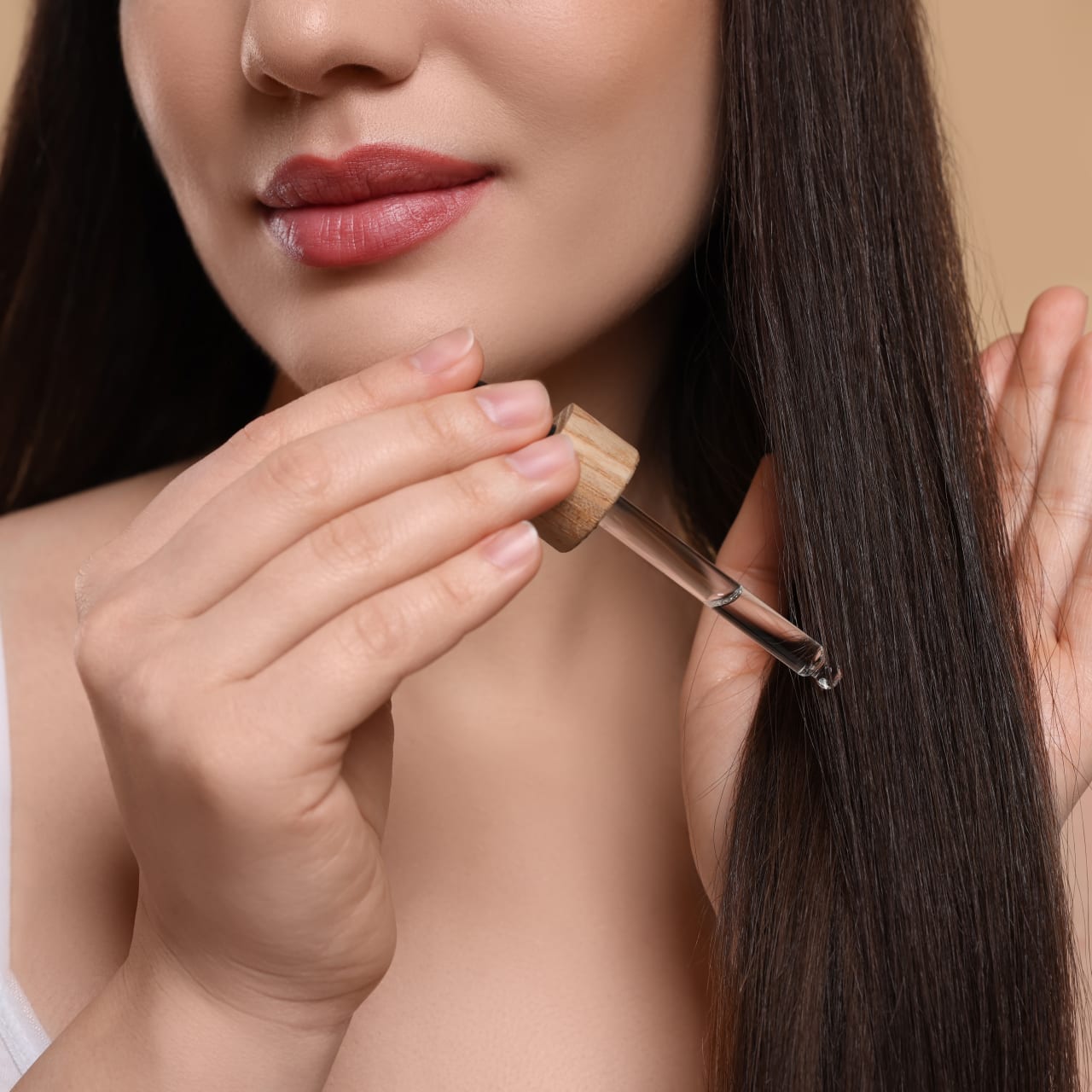
Oil bath: Apply a small amount of castor oil to dry hair, massaging it in to thoroughly coat the lengths and scalp. Leave on for two hours before shampooing. Weekly application is generally sufficient.
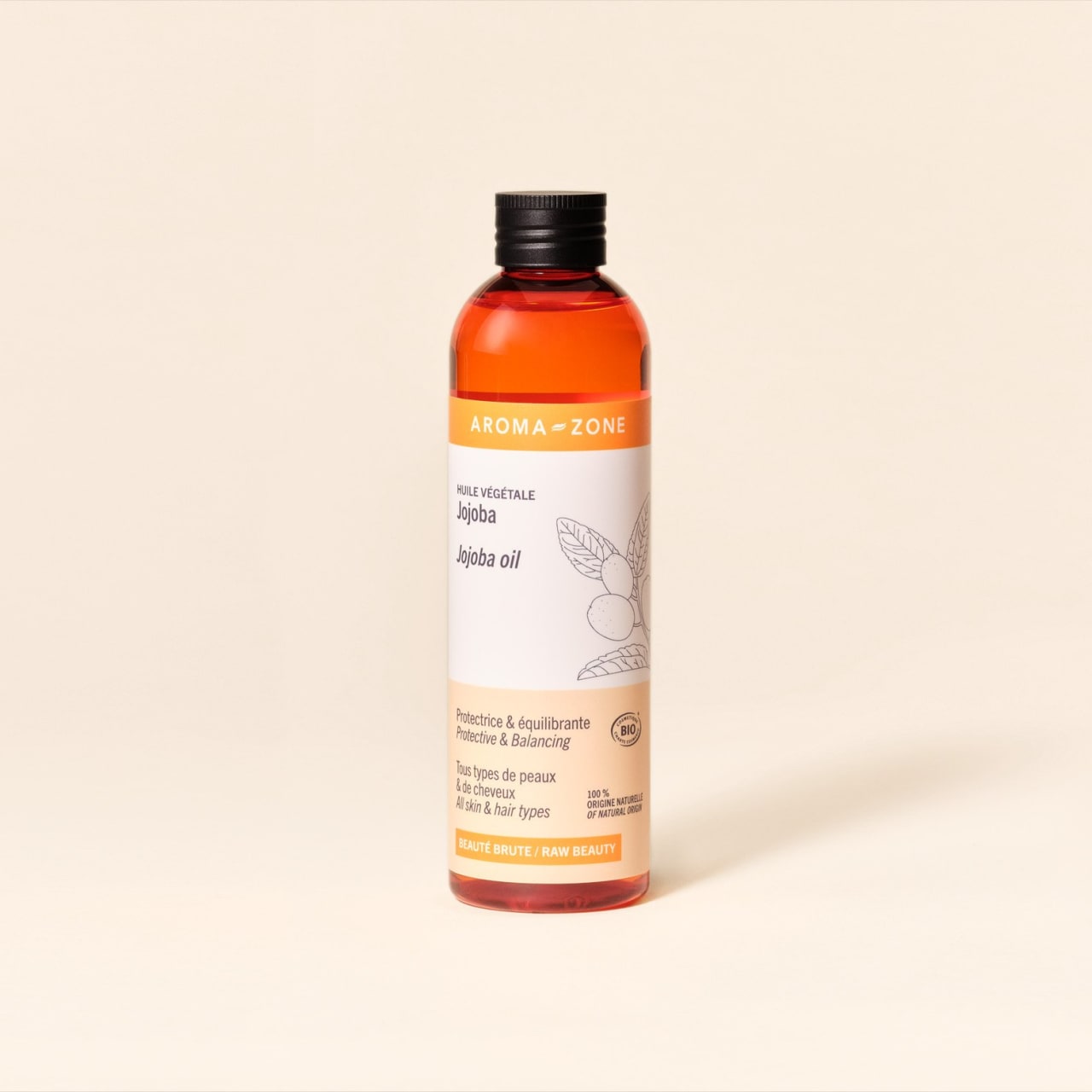
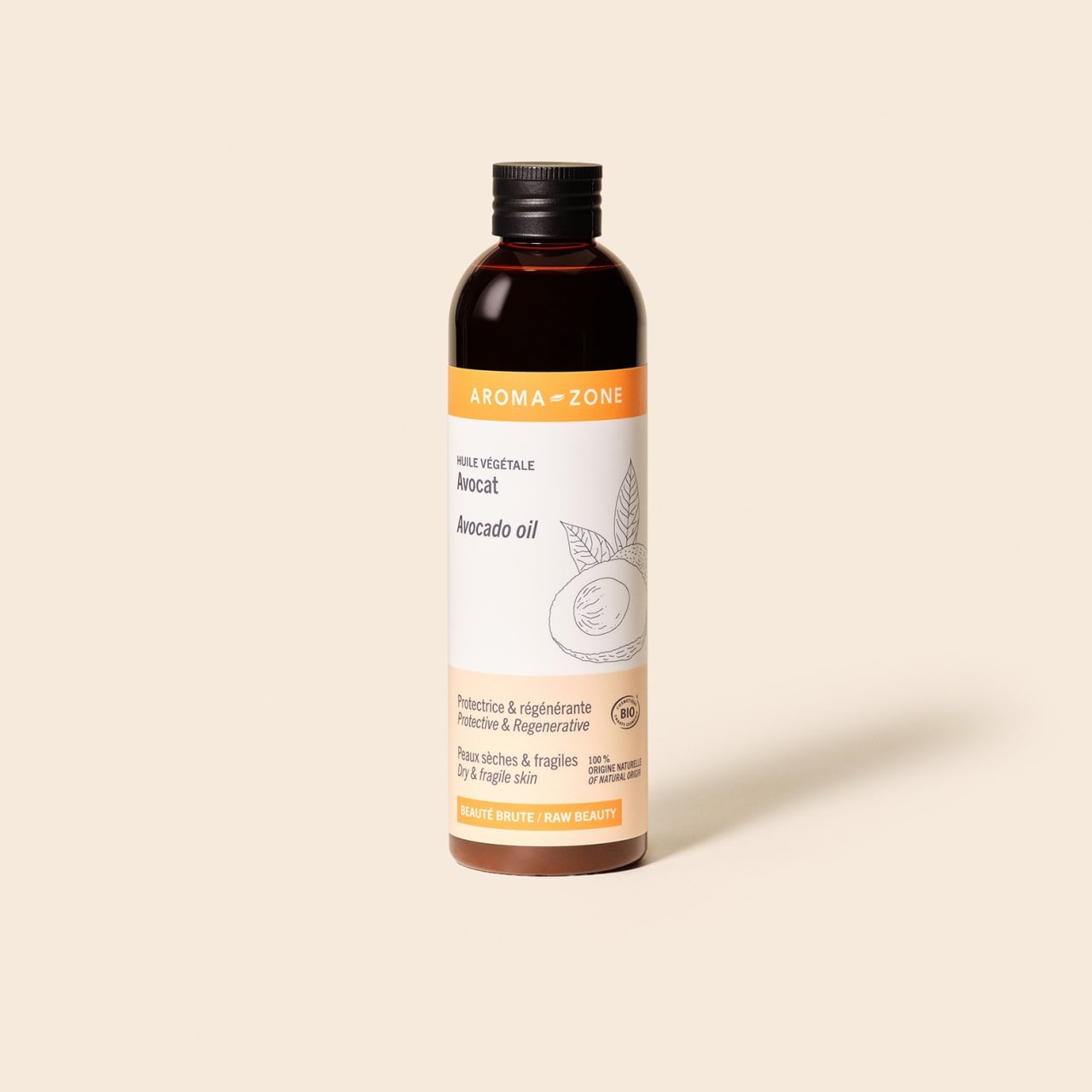
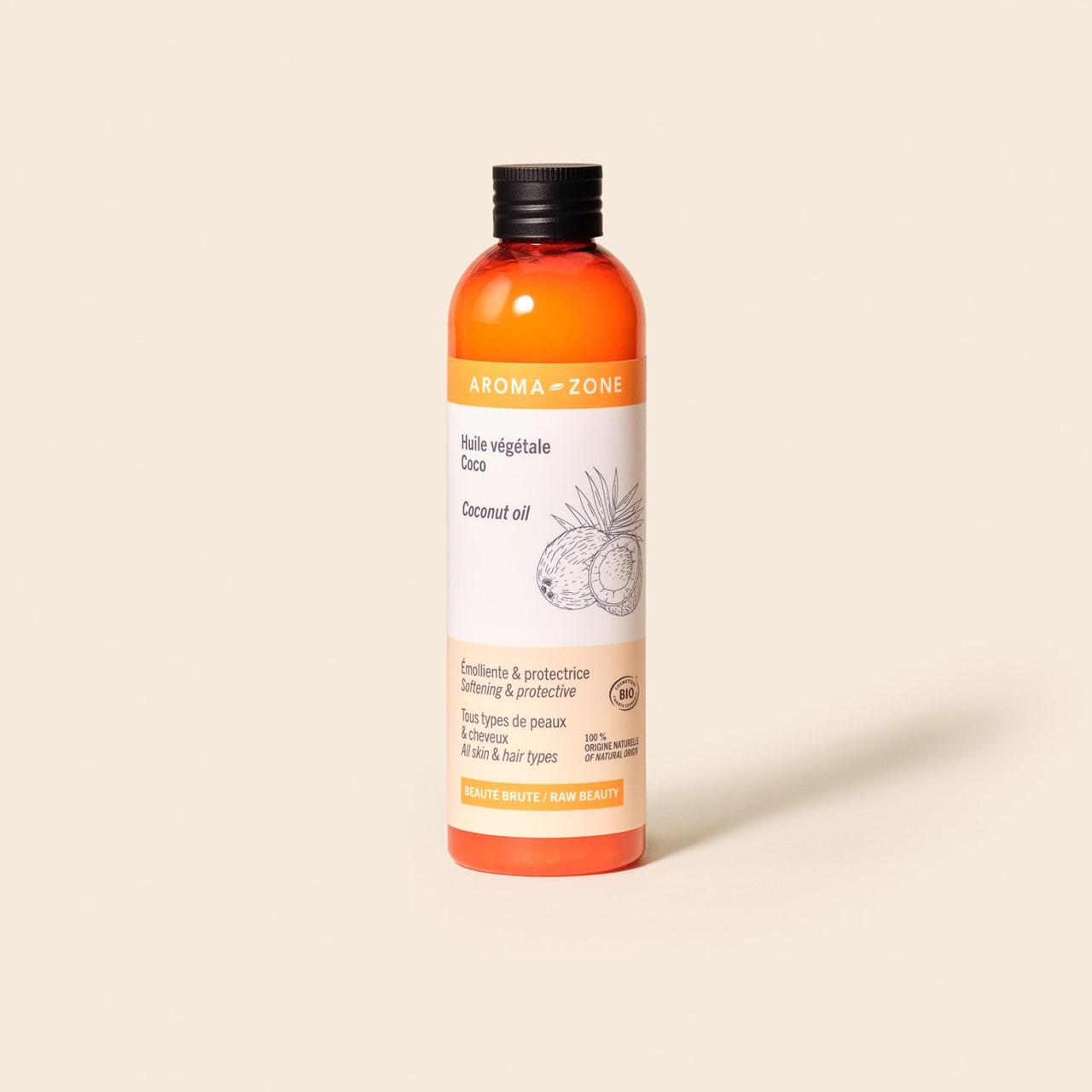
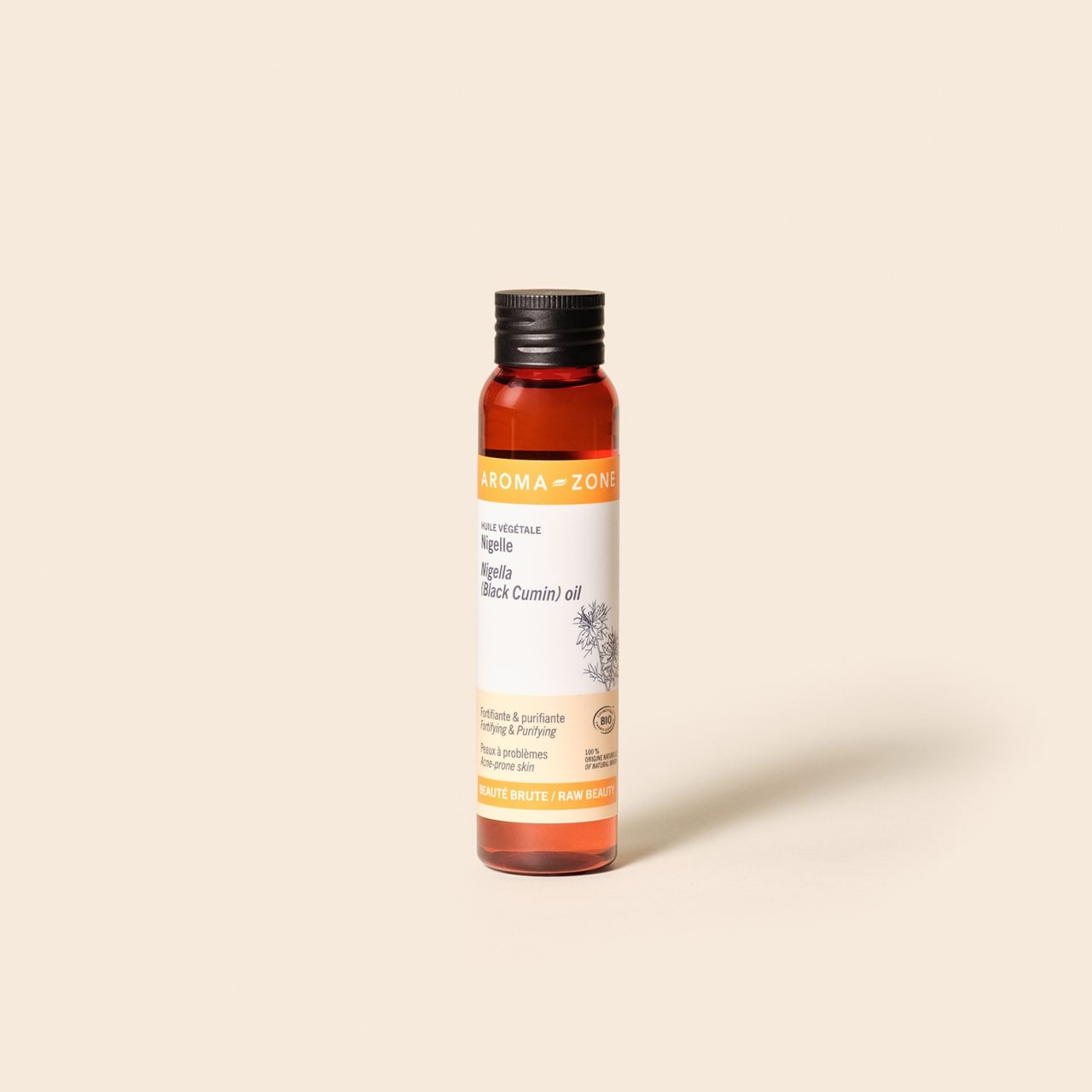
Combine it with other vegetable oils: as it has a thick texture, it is often mixed with a more fluid oil (jojoba, avocado, nigella, coconut, etc.). The mixture is easier to apply and is ideal for creating a serum or a balm for the ends.
Incorporate it into a homemade hair care product: Castor oil can enrich the oil component of a mask, conditioner, or targeted treatment. A small amount is enough to make the formula more nourishing and provide comfort to dry or sensitized hair.
Customize a ready-to-use neutral base: Castor oil can be added in small quantities to a neutral hair base, whether it's a mask or a cleansing cream. This makes the treatment richer and more comfortable for the lengths. Apply to wet hair, leave on for a few minutes, then rinse. This use can be easily integrated into your hair care routine.
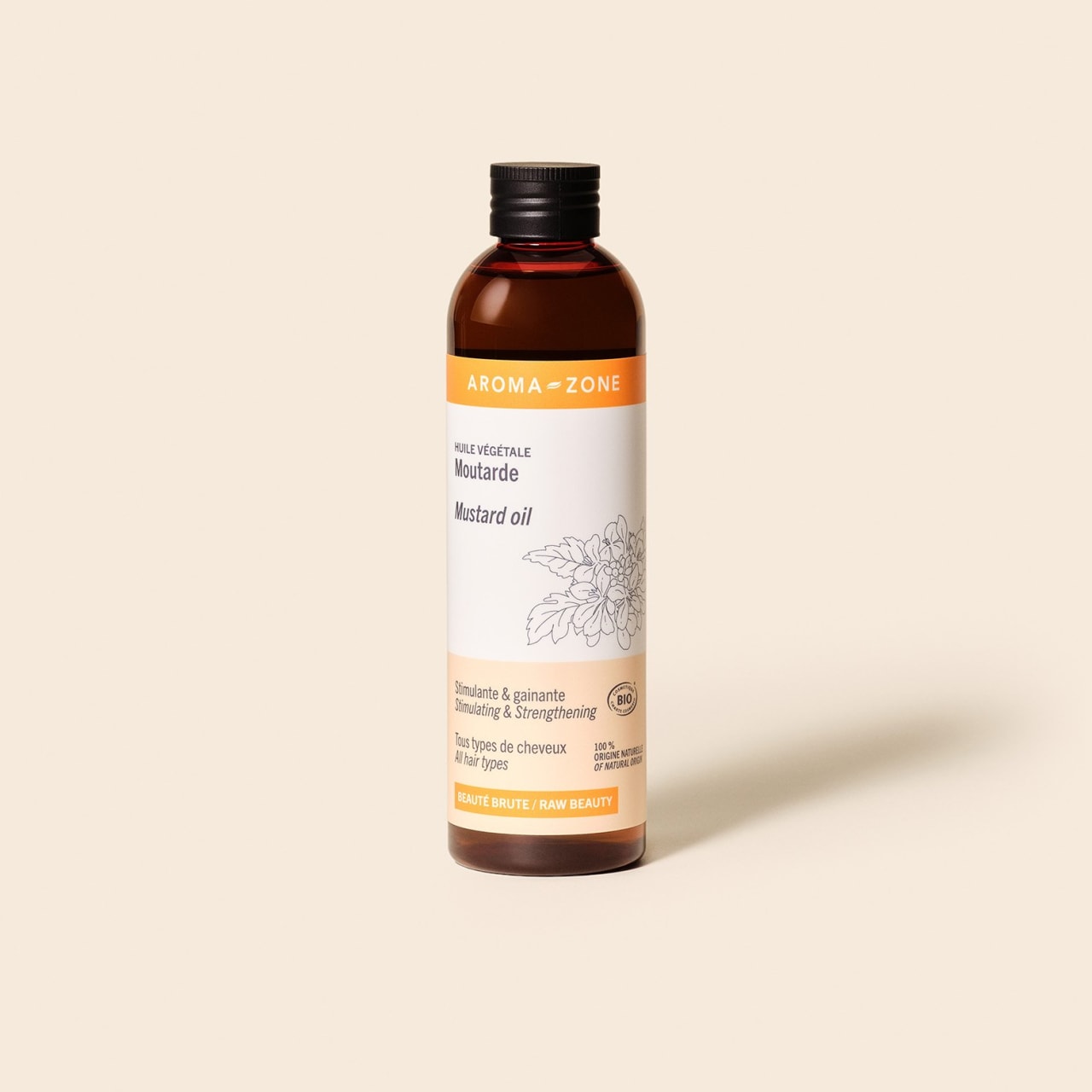
Prepare a pre-shampoo treatment: for a texture that is easier to apply, mix castor oil with one or more vegetable oils (mustard, jojoba, coconut, nigella, avocado, pracaxi, etc.). The mixture can contain up to 60% castor oil. Apply to the lengths of your hair, leave on for one to two hours, then shampoo. You can add one or two essential oils (Bay St Thomas, Grapefruit, Atlas Cedar, etc.), up to two drops per tablespoon of mixture, taking into account any contraindications. For a creamy texture, castor oil can also be added in small quantities to a neutral hair mask, to be used before or after shampooing.
Our Selection of Aroma-Zone Products Formulated with Castor Oil
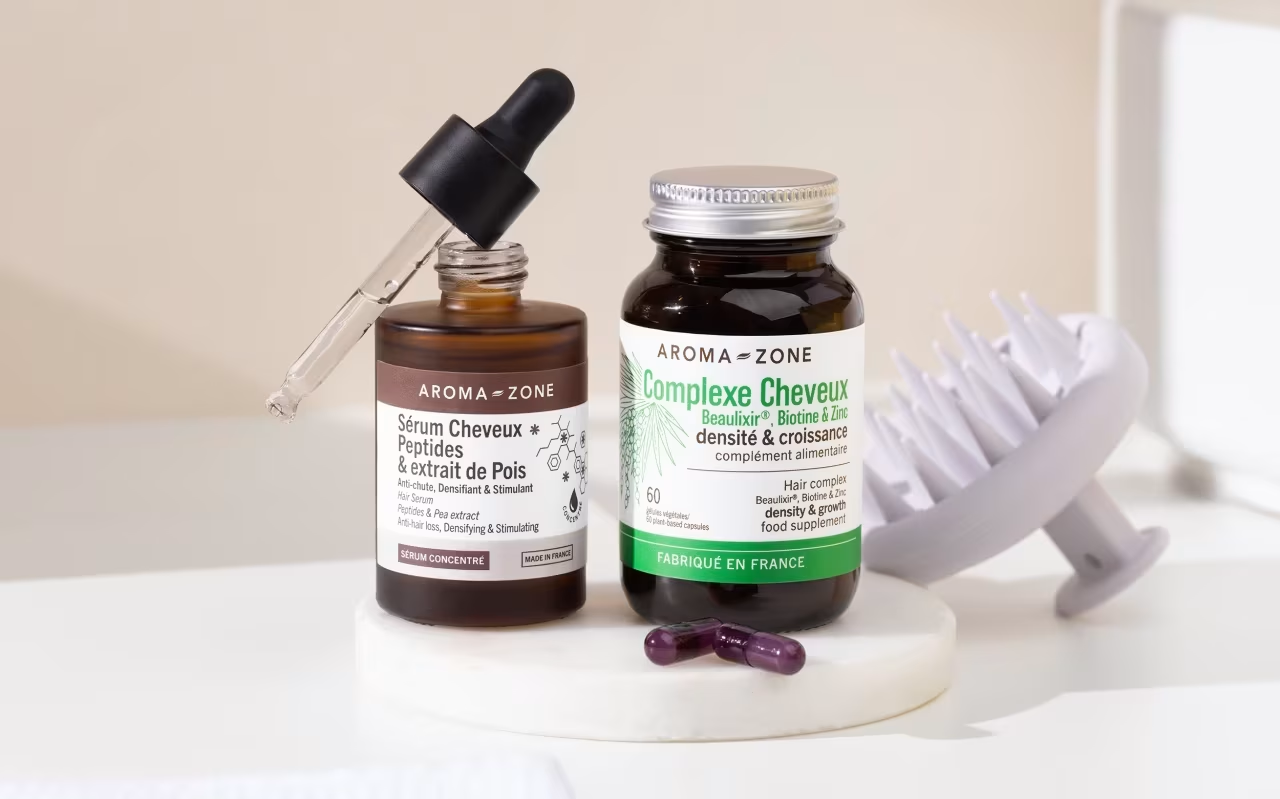
Aroma-Zone offers several products formulated with castor oil or enriched with complementary active ingredients to meet the needs of hair, beards, and eyelashes:

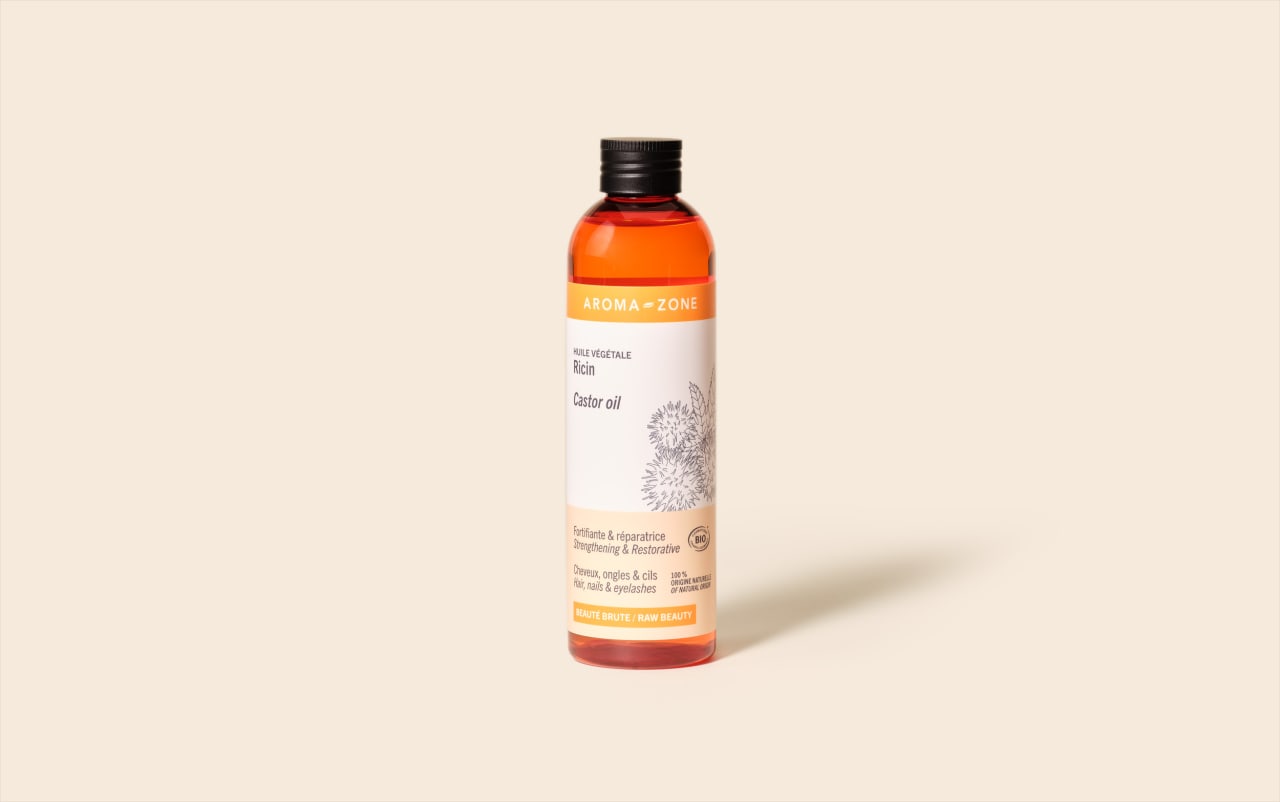
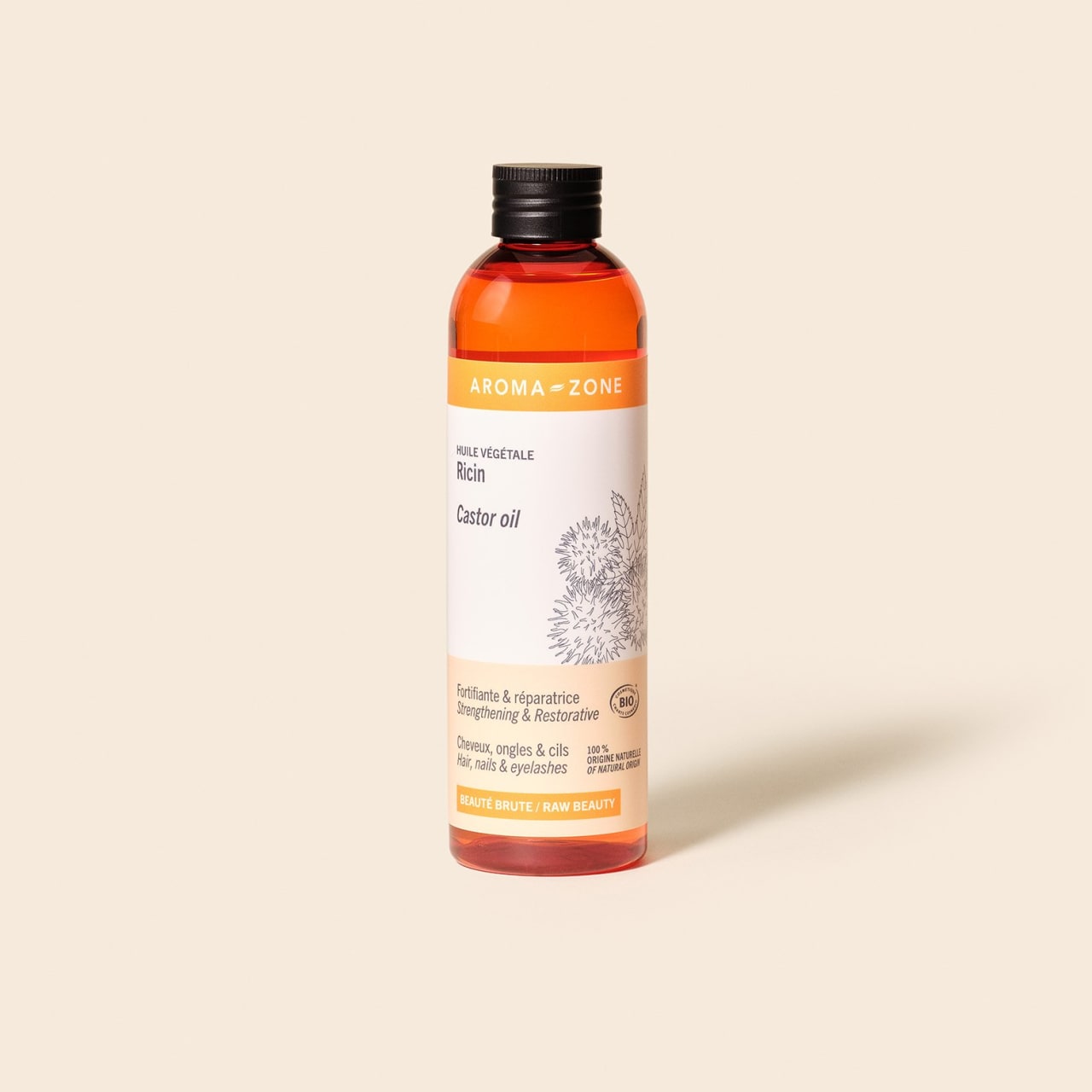
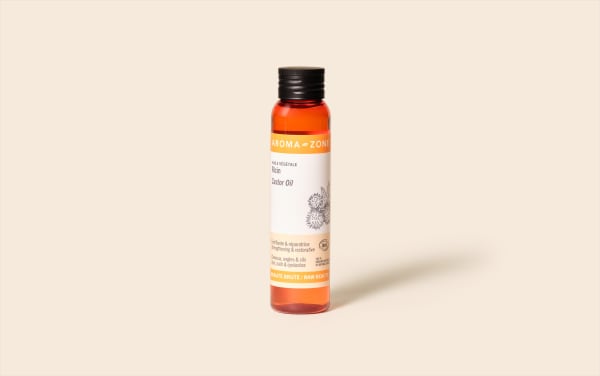
Organic Castor Oil
Pure and thick, it coats the hair fiber and provides real comfort to dry or damaged hair. Ideal for oil treatments, pre-shampoo treatments, or personalized blends, it helps soften the ends and improve hair manageability on a daily basis.

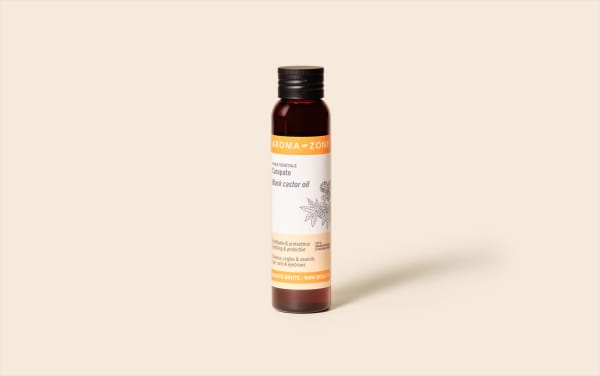
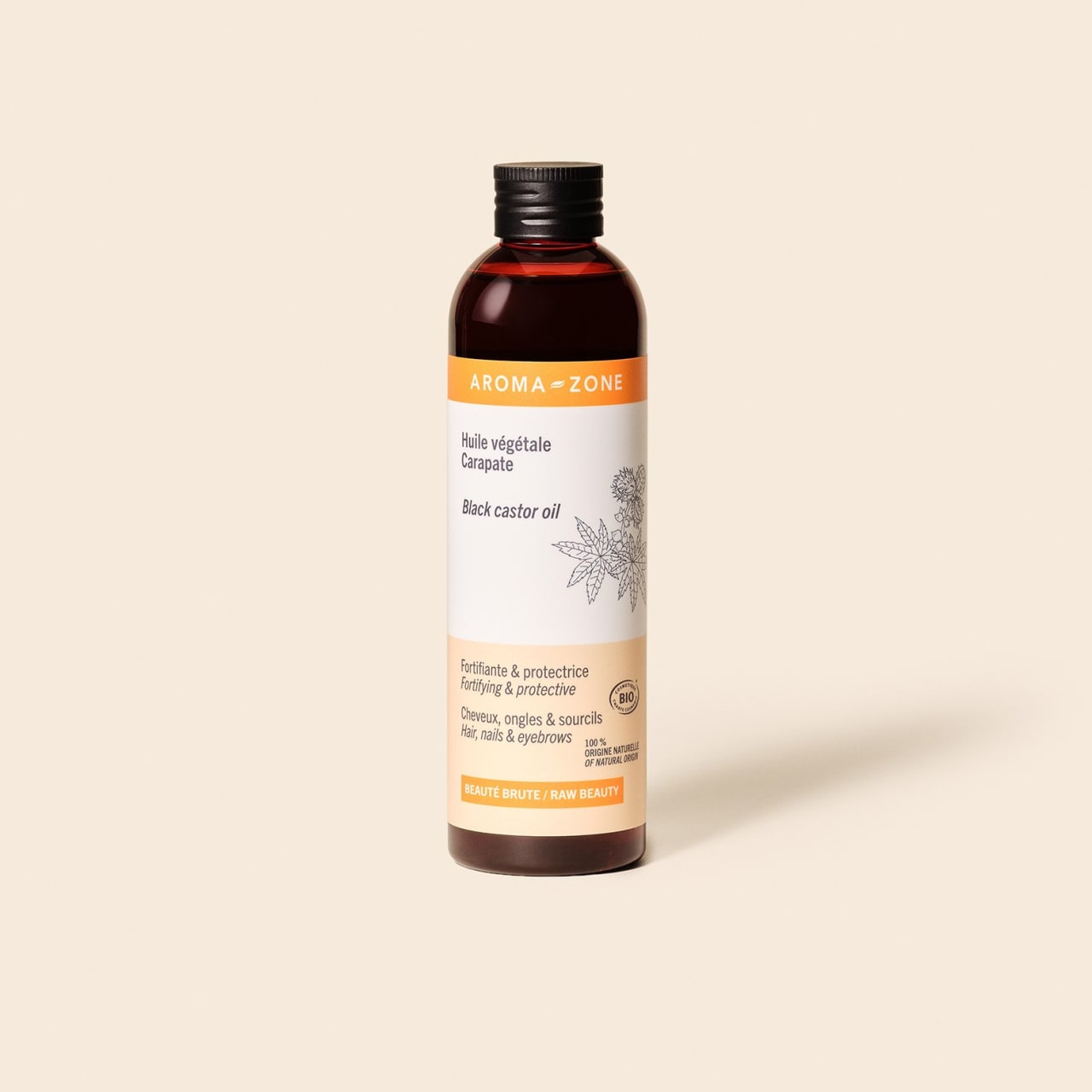
Carapate oil (black castor oil)
Produced using a traditional Caribbean process, this darker and slightly more fluid variant is particularly suitable for textured, thick, or damaged hair. It offers a popular coating effect to restore substance and support sensitized lengths.

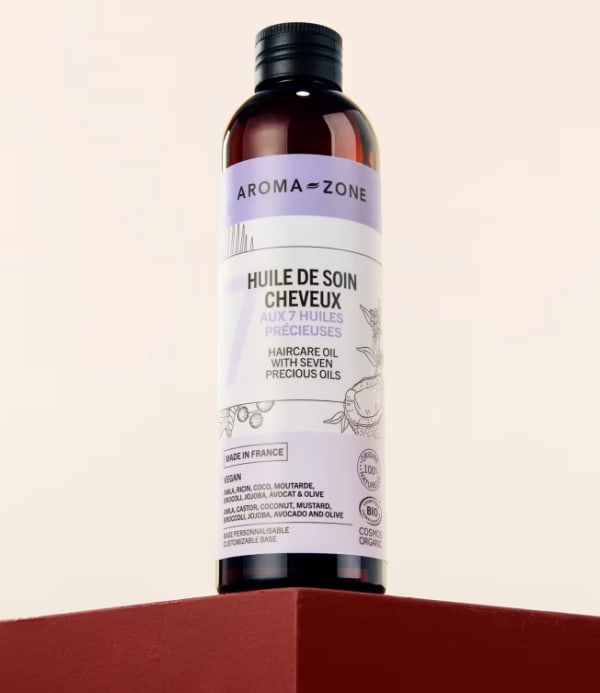
Hair Care Oil
A synergy of seven precious vegetable oils (castor, coconut, mustard, broccoli, avocado, jojoba, and olive) and an Amla macerate, it nourishes, strengthens, and softens the lengths while adding shine and discipline. Versatile, it can be used as an oil bath, a scalp massage, or a leave-in treatment on the ends.

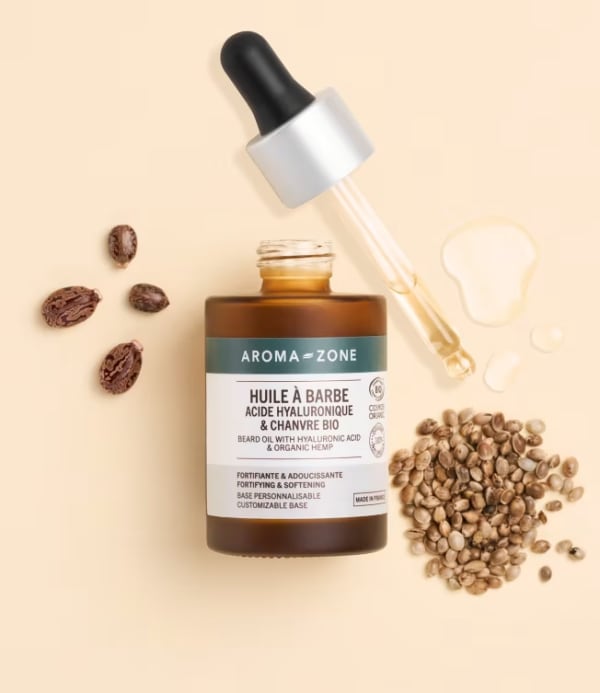
Beard Oil with Hyaluronic Acid & Organic Hemp
Formulated with organic hemp, argan, and castor oils, it nourishes, softens, and protects the beard. Its complex of active ingredients and moisturizing hyaluronic acid help strengthen hair, improve growth in sparse areas, and soften the beard without leaving a greasy film.

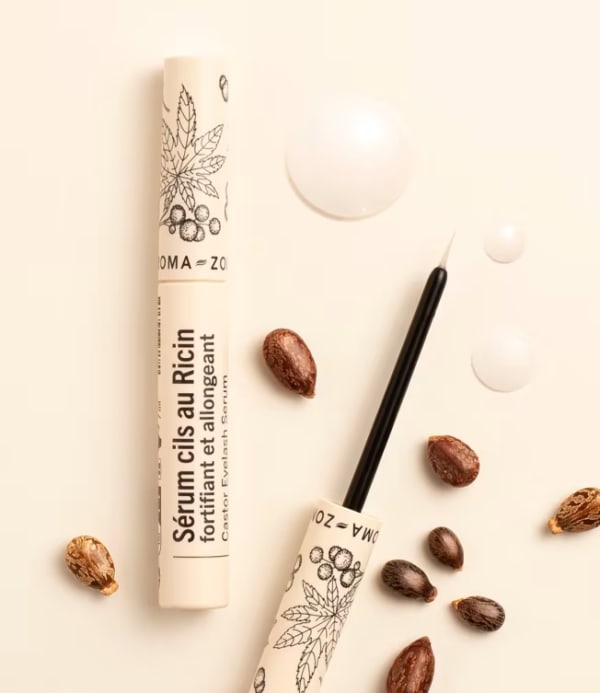
Organic Castor Oil Strengthening Eyelash Serum
Combining a peptide, pea shoot extract, panthenol, and organic castor oil, this serum targets lashes weakened by makeup or repeated handling. It helps make them more resistant, fuller, and visibly thicker, with a light texture and a fine brush for precise application at the root.
Precautions for Use
Castor oil is very nourishing and should be used in small quantities and never around the eyes. For a scalp that is prone to oiliness, it can accentuate the feeling of greasy hair if applied straight on. After an oil treatment, rinse thoroughly: two gentle shampoos may sometimes be necessary to remove any excess. If you add essential oils, follow the recommended dosages and contraindications. For very fine hair, it is best to mix it with a lighter oil. It is advised to test the product on the inside of your elbow before your first use.
Expert Tip
To prevent Castor Oil from becoming too thick, place the bottle under warm, running water for a few minutes before application. The texture will become more supple, spread more easily, and require less product. When rinsing, apply a small amount of shampoo directly to the lengths of your hair before adding water. This prevents the oil from sticking and makes cleaning much easier.
FAQ

Why is castor oil so thick?

Why is castor oil so thick?

Can it be used on colored or bleached hair?

Can it be used on colored or bleached hair?
Yes, castor oil is well suited to hair that has been sensitized by coloring. It helps soften the lengths and limit breakage. Simply rinse thoroughly after treatment to prevent its dense texture from remaining on the roots.

Should you always rinse it out?

Should you always rinse it out?
Yes, except in very small quantities on very dry ends. Whether used as an oil treatment or pre-shampoo treatment, rinsing is essential. To make it easier to remove, first apply a small amount of shampoo to dry or slightly damp hair before adding water.
Article written by Lou Dumas, Naturopath

Lou graduated from HEC in 2012. She gained ten years of experience in marketing for cosmetics and perfumes before becoming an independent consultant in this field. She recently completed a three-year naturopathy program at the European College of Holistic Naturopathy (CENATHO, Paris) with the goal of supporting the physical and mental health of the people she works with through a holistic approach to lifestyle.
Bibliography
1
Dumeignil, F. (2012). Properties and Uses of Castor Oil. OC.
https://doi.org/10.1051/ocl.2012.0427
2
Tessema, S. S. (2019). Physicochemical Characterization and Evaluation of Castor Oil (Ricinus communis) for Hair Biocosmetics. Science Journal of Analytical Chemistry.
doi: 10.11648/j.ajac.20190704.11