Aloe vera for relieving eczema: a closer look at this natural remedy

Aloe vera for relieving eczema: a closer look at this natural remedy


By Stéphanie Catrysse

Published on: Wednesday, March 22, 2023, Updated on: Thursday, October 29, 2026

Eczema is a common skin condition characterised by dry, fragile and often uncomfortable skin, which alternates between periods of remission and flare-ups with visible patches. When it comes to eczema, Aloe vera has attracted interest for its cosmetic uses on sensitive or dry skin. However, its use must remain within specific guidelines: it is not a substitute for medical advice, should not be applied to broken skin, and must not be presented as a cure for eczema. The aim of this article is to distinguish between what can be said about Aloe vera, the limitations of the available data, and the best practices to follow for skin prone to discomfort.

Contents

Related products

What is eczema?

eczema refers to a range of inflammatory skin conditions. It most commonly presents as red patches, dry skin, itching and, sometimes, small vesicles – that is, small fluid-filled blisters. When these vesicles burst, the skin may ooze and then form scabs.

atopic dermatitis, often referred to as atopic eczema, is one of the best-known forms. It progresses in flare-ups and periods of remission. It is linked to a compromised skin barrier and an inflammatory reaction in the skin. The skin barrier is the protective layer on the surface of the epidermis. When it is compromised, the skin loses moisture more easily and becomes more sensitive to irritants.

Itching, also known as pruritus, can be severe. It can sometimes lead to a vicious cycle: the skin itches, the person scratches, and the scratching further damages the skin. When the patches are weeping, cracked, painful, very extensive or affecting sleep, medical advice is required.
What are the different types of eczema?

Atopic eczema

Atopic eczema, or atopic dermatitis, occurs in individuals with what is known as an atopic predisposition. Atopy refers to a predisposition to developing certain hypersensitivity reactions, such as eczema, asthma, allergic rhinitis or certain allergies.

This form often appears in childhood, but it can also persist or develop later in life. The skin is generally dry, sensitive and prone to itching and patches. The affected areas vary depending on age.

Contact eczema

Contact eczema occurs following contact with a substance that triggers a skin reaction. This may be an allergen, such as certain metals, perfumes or preservatives, or an irritant, such as a household product, a solvent or repeated washing.

Patches often appear on areas directly exposed to the substance. They may be red, itchy, and sometimes blistered or weeping. Identifying the substance responsible may sometimes require specialist advice.

Irritant eczema

Irritant eczema is linked to repeated exposure of the skin to irritants. Frequent washing, detergents, cold weather, friction or certain professional-grade products can weaken the skin and lead to redness or cracks.

It is not necessarily caused by an allergic reaction. Repeated irritation is sometimes enough to damage the skin barrier.

Dyshidrotic eczema

eczema dyshidrotic eczema mainly affects the hands and feet. It is characterised by small blisters, which are often very itchy, located on the palms, fingers or soles of the feet.

Associated factors can vary: heat, sweating, stress, irritation, atopic predisposition or contact with certain allergens. This form can be a nuisance in everyday life, particularly when it affects the hands.

How is eczema managed?

The management of eczema depends on its severity, the location of the patches, the age of the person affected and the impact on daily life. When a flare-up occurs, the aim is to assess the condition of the skin, apply prescribed treatments if necessary, and minimise irritants.

  • Seek medical advice if the patches are severe: medical advice is required if the patches are very red, weeping, cracked, painful or if they are disrupting sleep

  • Use a topical corticosteroid only on prescription: in the event of an inflammatory flare-up, the doctor may prescribe a cortisone-based medicine to be applied locally to the patches. Its strength, texture and duration of use depend on the patient’s age, the affected area and the appearance of the skin

  • Choose the appropriate form of the prescribed treatment: a cream is often used on weeping lesions or in skin folds, whilst an ointment is more suitable for dry, thickened patches. In infants, the treatment duration is short and must strictly follow medical advice

  • Adhere to the recommended duration: topical corticosteroids must not be used for longer than prescribed or reapplied on one’s own initiative once the lesions have cleared

  • Watch out for unusual signs: yellowish scabs, significant weeping, pain, fever or rapid worsening should prompt a return visit to the doctor

  • Apply an emollient between flare-ups: a suitable product can help with dry skin and improve skin comfort; this should generally be applied daily to dry areas after gentle cleansing

  • Adopt gentle daily routines: lukewarm water, patting dry without rubbing, non-irritating clothing, fragrance-free products and minimising friction all help to preserve the skin barrier.

Aloe vera and skin prone to eczema: what evidence is available, and what are its limitations?

Key takeaway

What you need to know

Cosmetic use of Aloe vera

Aloe vera is a plant whose gel is often used in cosmetics for dry or sensitive skin. Its fresh, light and water-rich texture can form part of a skincare routine designed for comfort, but only on healthy, unbroken skin and where skin tolerance is good.

Available data on eczema

The available data remain limited. A few studies have examined formulations containing Aloe vera, sometimes combined with other ingredients, but they do not allow us to conclude that Aloe vera alone is an effective treatment for eczema.

Limitations on interpretation

The results observed with a specific formulation cannot be extrapolated to all products, all forms of eczema or all skin types. Each skin condition must be assessed with caution, particularly where the skin is reactive or compromised.

Application to the skin

A cosmetic product should be applied to healthy skin. In the case of damaged, cracked, weeping, scabbed, painful or infected skin, the application of aloe vera or a home remedy is not recommended without medical advice.

Individual tolerance

Even a naturally derived substance may cause a stinging sensation, irritation or an allergic reaction in some people. If redness, a burning sensation or unusual discomfort occurs, use should be discontinued.

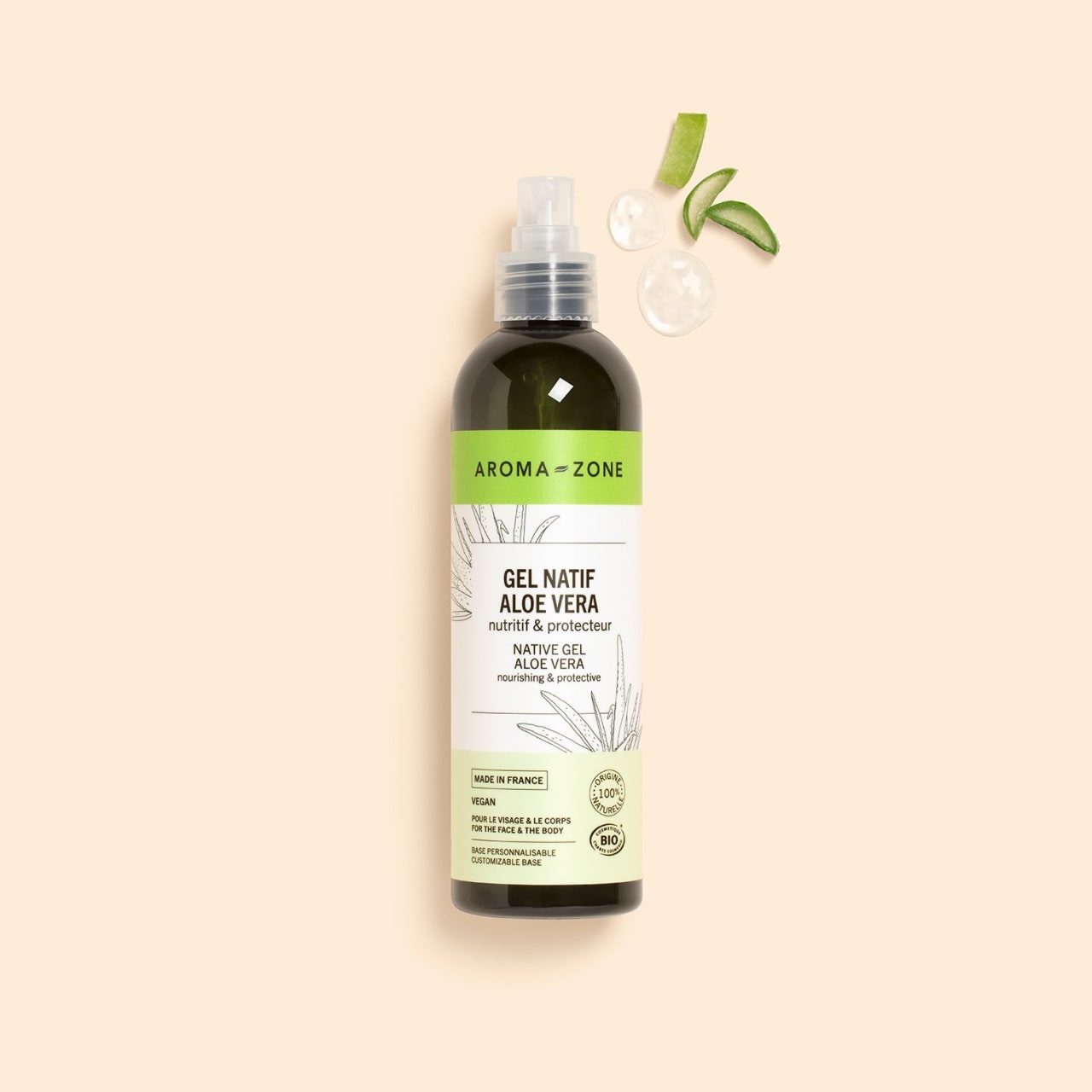
Focus on our Organic Pure Aloe Vera Gel

native-aloe-vera-gel-nourishing-and-protective-mc

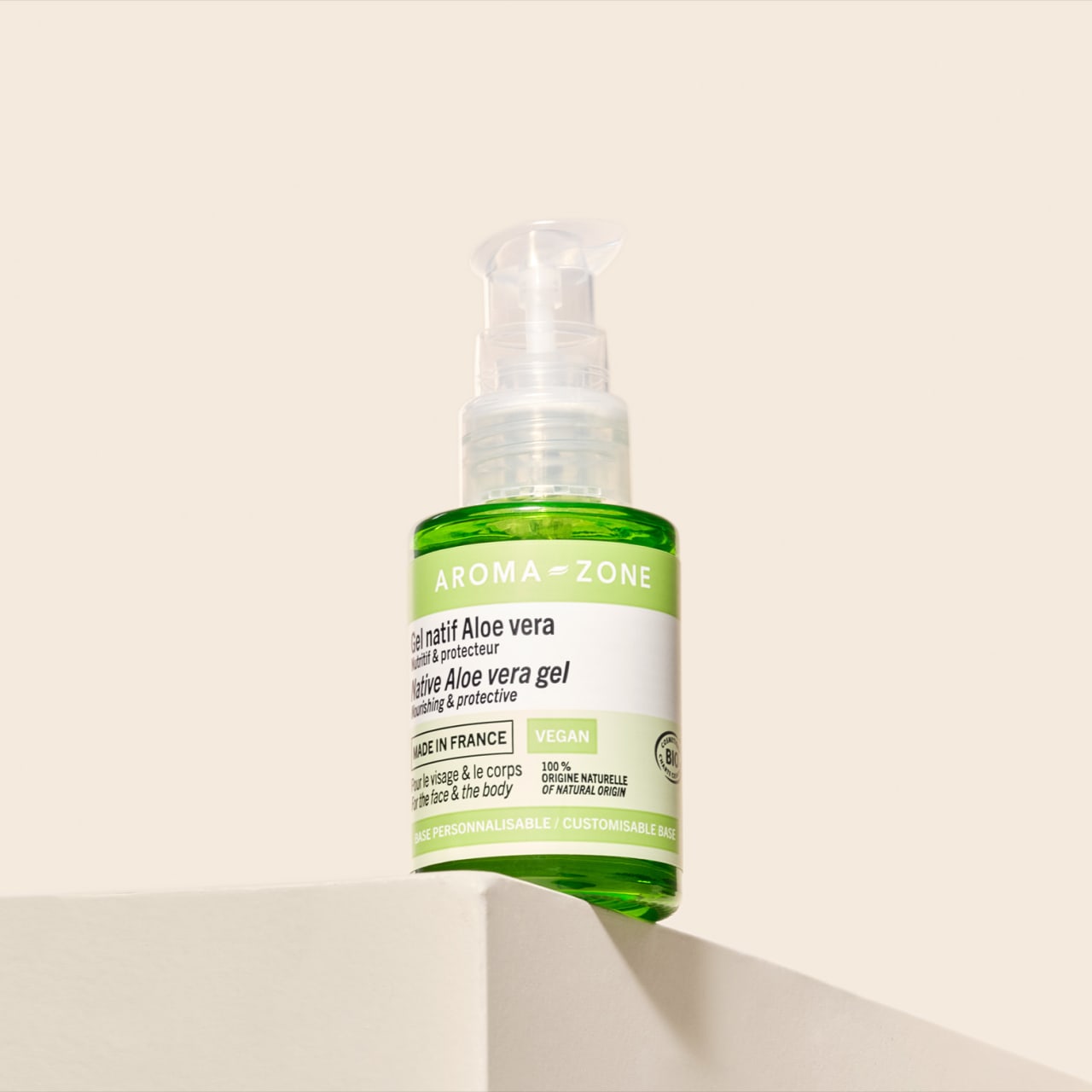
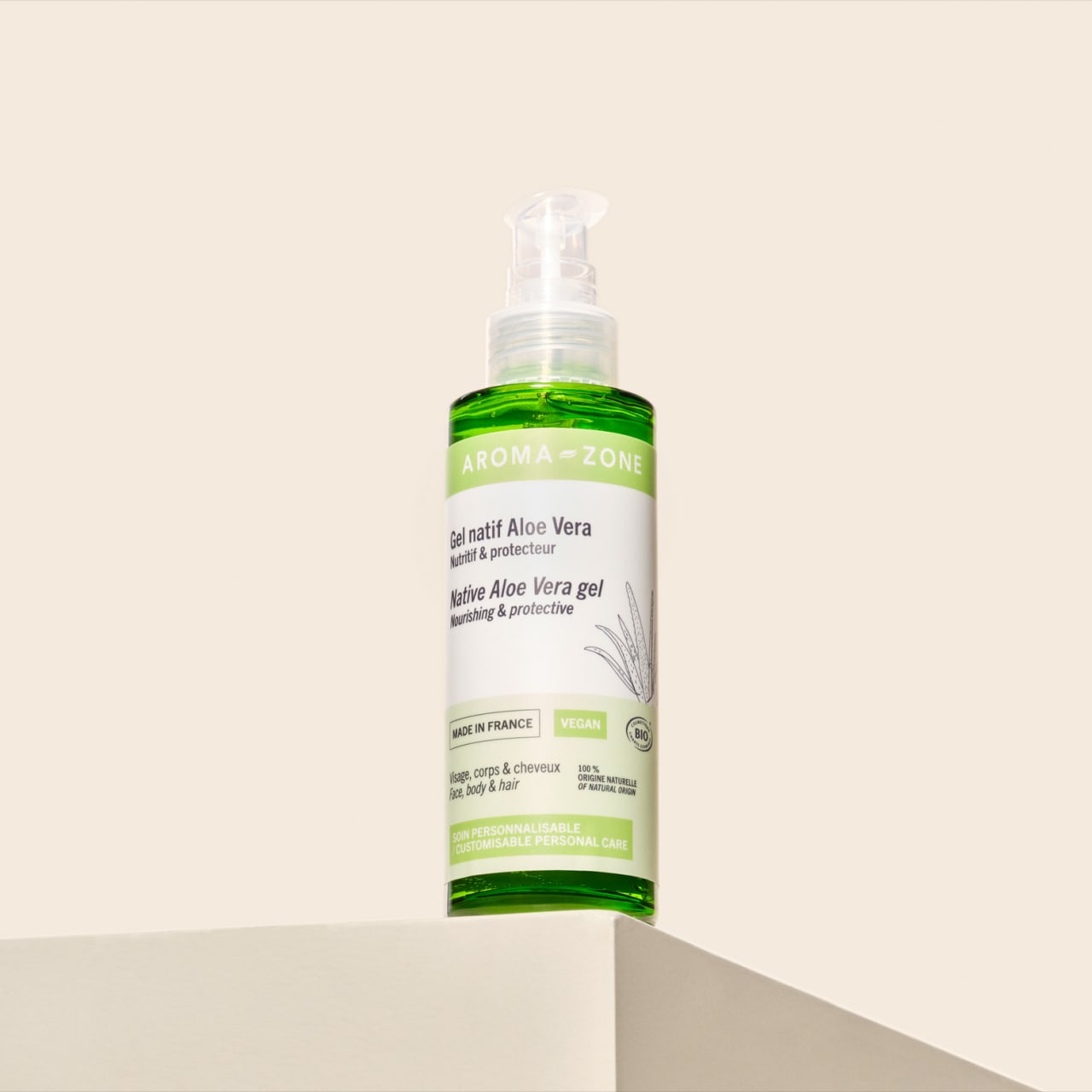
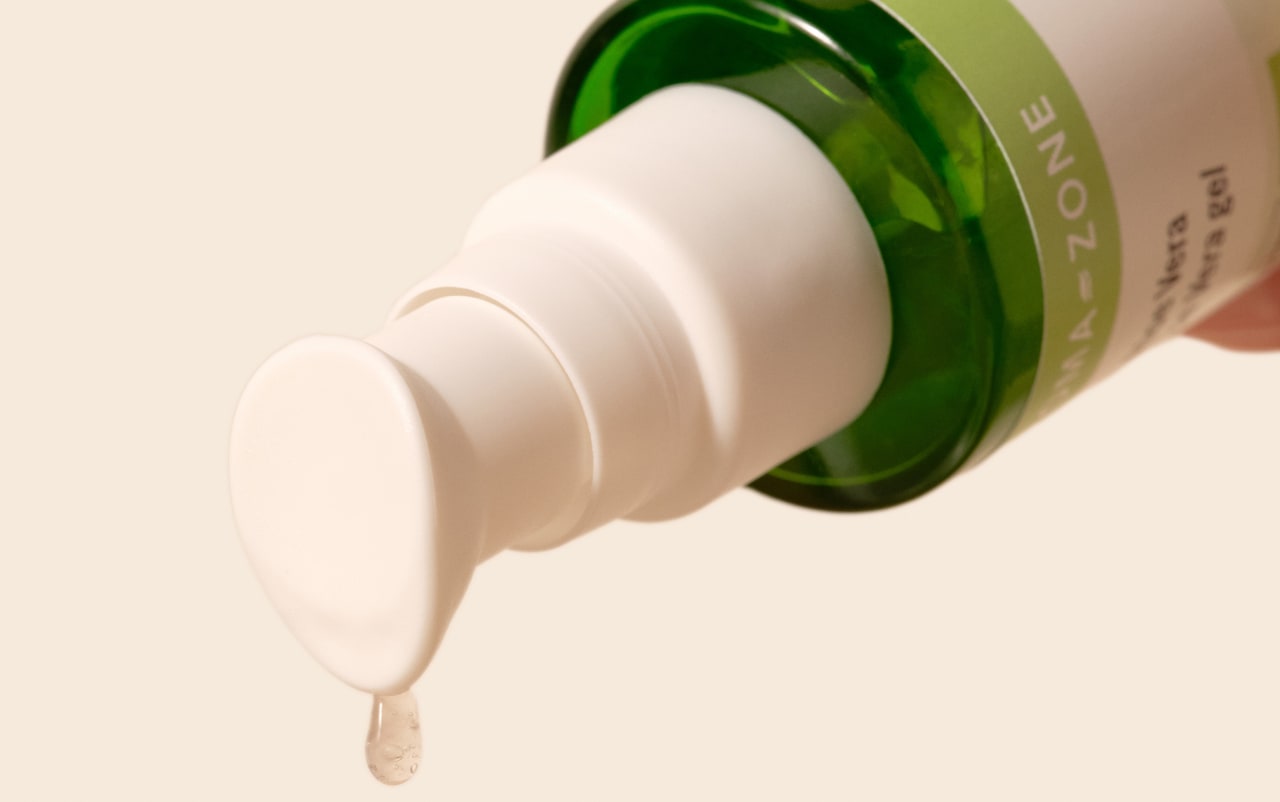
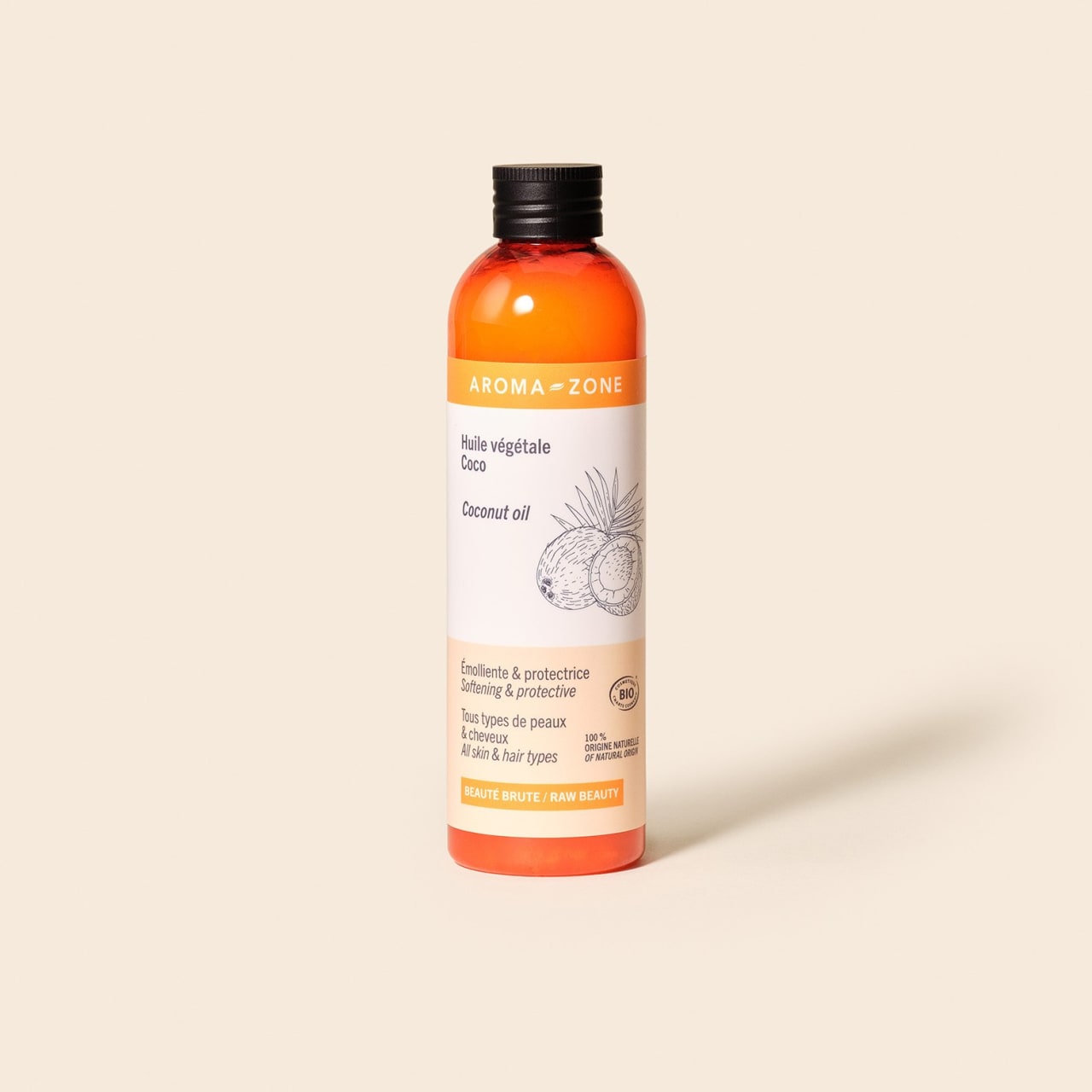
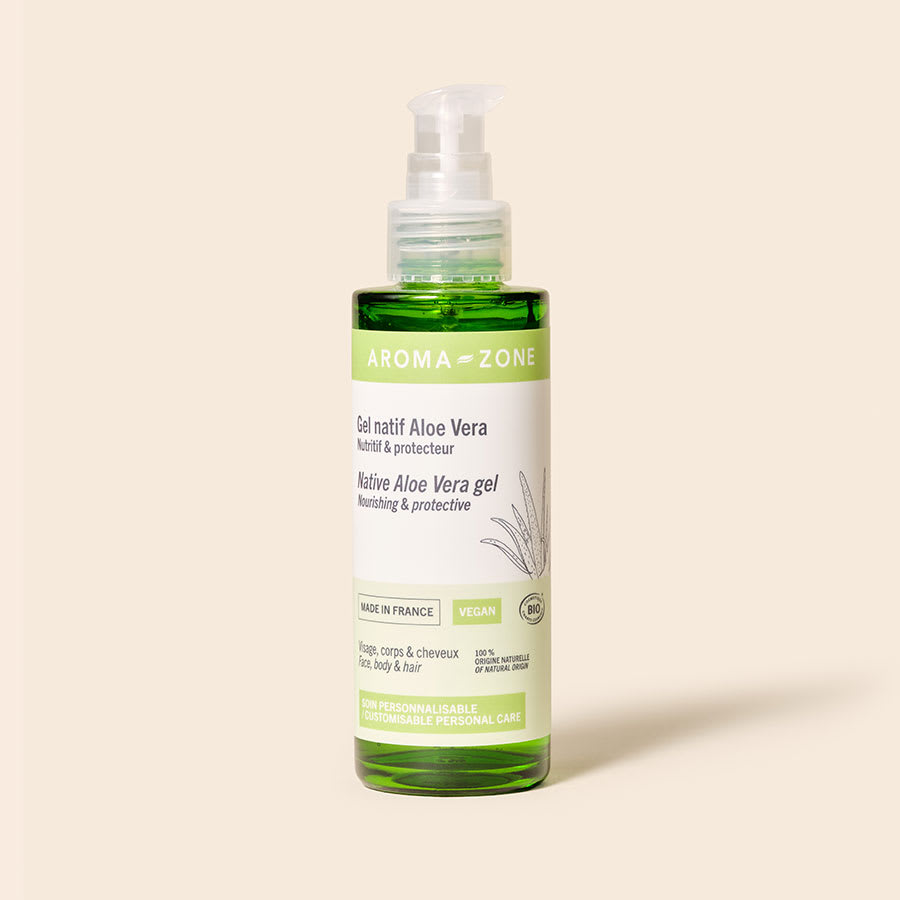
Aroma-Zone’s Organic Pure Aloe Vera Gel is suitable for skin prone to atopic conditions, which is often dry, sensitive and prone to redness or itching. Its guaranteed concentration of Aloe Vera (minimum 1200 mg/L) gives it exceptional restorative properties. It moisturises the outer layers of the epidermis and helps the skin retain moisture. Its refreshing texture quickly soothes feelings of discomfort and tightness. It can be used as and when needed, alongside a lipid-replenishing treatment, on clean, unbroken skin.

Directions for use : This pure Aloe vera gel can be used undiluted on the skin (or hair) and is suitable for all skin and hair types. Apply it as a firming gel for the face and eye area before your moisturiser, after your serum or moisturiser, or in a thick layer as a hydrating treatment.

Discover our Organic Aloe Vera Gel

Storage: The best-before date for this product is 18 months. To ensure your Aloe vera gel is kept in the best possible condition, we recommend storing it in the fridge and treating it as a fresh product: use it preferably within 6 months of opening, and check the product each time you use it for any changes: if you notice white strands, black spots or an unpleasant odour, do not use it and dispose of the product.

Precautions: Keep out of reach of children. Do not swallow. This gel is a cosmetic product; it is not suitable for consumption. To minimise the risk of contamination, avoid touching the product in the bottle with your fingers or with a non-sterile utensil. A slight darkening of the gel over time is completely normal and is due to the fact that our gel is made from fresh, native aloe vera juice. Personalisation is recommended for adults only.

How should aloe vera be used for skin prone to discomfort?

Here are a few tips:

  1. Check the condition of the skin: Aloe vera should only be considered for use on healthy skin that is not broken, weeping, cracked or covered in unusual scabs; if there are active lesions or damaged skin, it is best to seek medical advice before applying it

  2. Choose a product suitable for cosmetic use: You must use a product formulated for topical application, following the instructions, precautions and usage limits specified in the product information leaflet

  3. Test for tolerance on a small area: before first use, apply a small amount to a limited area of healthy skin; if redness, stinging, a burning sensation, itching or any unusual reaction occurs, discontinue use

  4. Apply a small amount to clean, dry skin: Apply sparingly to unbroken skin, avoiding repeated rubbing; the aim is to support the skin’s comfort, not to treat an eczema patch

  5. Avoid sensitive areas: do not apply the product to the eyes, mucous membranes, open wounds, cracks, weeping areas or severely irritated patches

  6. Monitor the skin’s reaction: skin prone to eczema is often more reactive; if the skin feels hot, stings, reddens or becomes more uncomfortable, stop using the product

  7. Seek advice if in doubt: if discomfort persists, if the patches spread, or if the skin becomes weeping, painful or crusty, a healthcare professional will be able to advise on the appropriate treatment.

What other natural remedies are available to soothe itching and redness?

Enjoy a soothing bath

Organic Colloidal Oat Powder

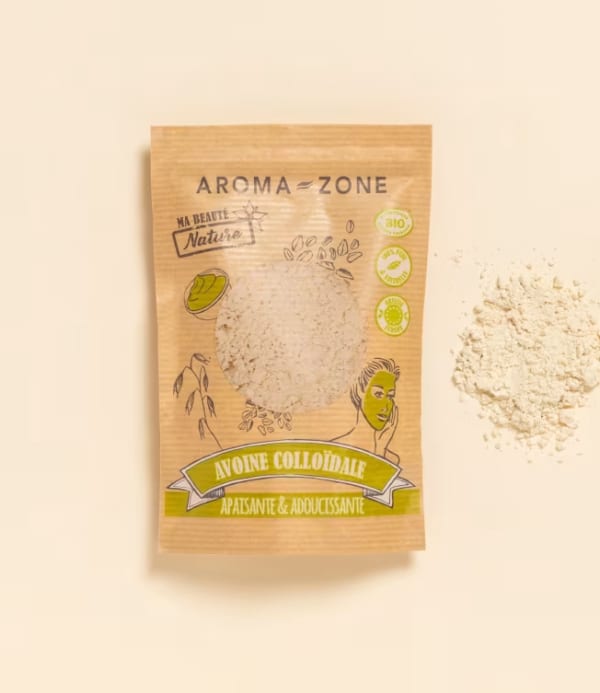
Aroma-Zone’s Organic Colloidal Oat Powder is suitable for the whole family, including young children and those with atopic-prone skin. Colloidal oats are valued for their soothing, softening and protective properties, which are particularly beneficial for dry, sensitive or discomfort-prone skin. Used as an ingredient in your bath powders, it creates a very gentle, milky bath that helps to soothe feelings of tightness and preserve the skin’s protective barrier. After bathing, the skin can be gently rinsed, patted dry without rubbing, and then moisturised with a lipid-replenishing product.

Usage : Use as an ingredient in your emollient and softening bath powders. 

Try Organic Colloidal Oat Powder.

Storage: This product is sensitive to moisture. Store in its original sachet in a cool, dry place, away from light. Seal the sachet carefully after each use.

Precautions: Powdered product; do not use near a ventilation source; do not inhale. For external use only; do not swallow. Keep out of reach of children.

Make your skincare routine a moment of pampering

Gentle organic donkey milk soap – plant-based & SAF

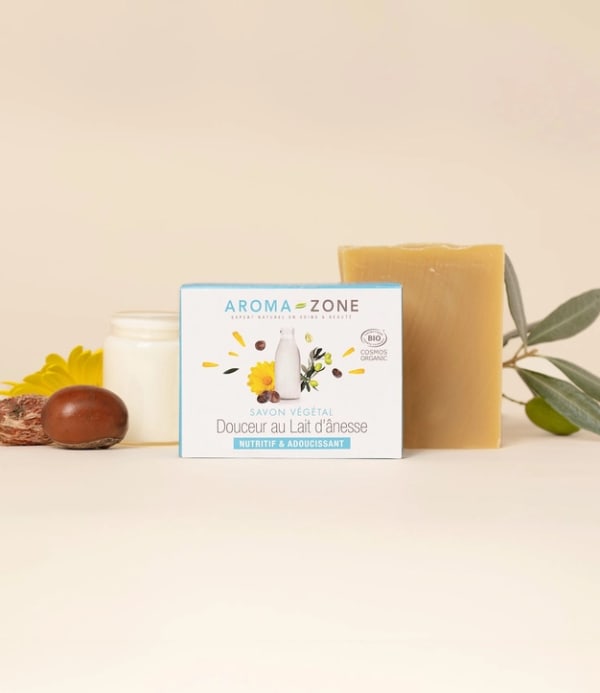
Aroma-Zone’s Gentle Organic Donkey’s Milk Soap is suitable for the whole family’s daily wash routine, including the youngest children and those with atopic-prone skin. Its superfatted formula, naturally rich in glycerine, contains 40% fresh organic donkey’s milk, combined with shea butter, olive oil, avocado oil and calendula. These ingredients help to nourish, soften and soothe dry, delicate or sensitive skin. It gently cleanses without damaging the skin’s already weakened barrier. 

Directions for use: For the whole family. Suitable for all skin types, even delicate skin. For the body, face and hands

Try the gentle organic donkey milk soap. 

Storage and precautions : The recommended use-by date for this product is 12 months. Store away from heat and light. Net weight as packaged; product is prone to drying out.

Wrap yourself in a protective barrier

Capture 02 02

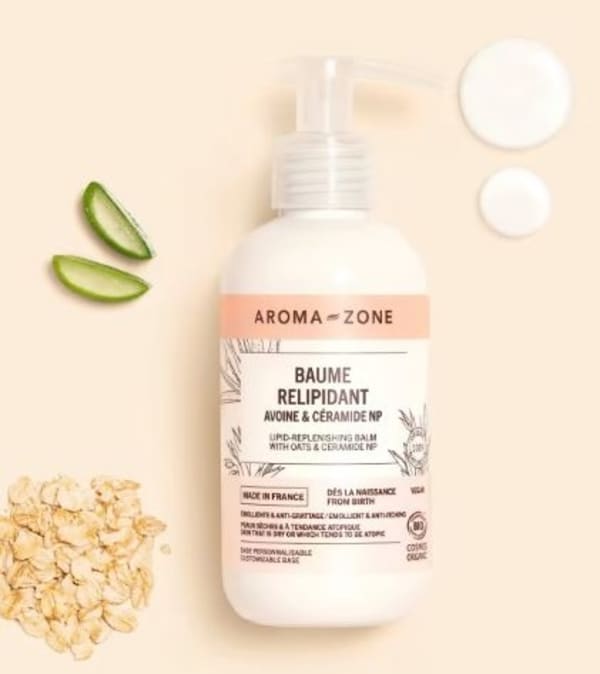
Clinically tested, the triple-action lipid-replenishing balm is designed for dry, fragile or atopic-prone skin. It helps to soothe redness and feelings of discomfort, reduce itching and intensely nourish the skin. Its formula combines oat oil, with its restorative properties, and Ceramide NP, a lipid that helps strengthen the skin barrier. Suitable for the face and body, it is suitable for the whole family from birth. For infants and young children, it is best used undiluted.

Directions for use: Apply to the face and/or body in the morning and/or evening on clean, completely dry skin. Then warm the product for a few moments in the palms of your hands before gently massaging it into the affected areas.

Discover the Oat and Ceramide NP Lipid-Restoring Balm

Storage: Store away from heat.

Precautions : The shelf life after opening (PAO) of this product is 9 months. Apply to healthy skin. Do not apply to severely irritated or damaged skin, or to weeping lesions. Personalisation is recommended for adults only.

What tips or home remedies can you try if you experience itching?

Here are a few tips:

  • Apply a cool compress with care: a clean, cool (but not ice-cold) compress can provide a soothing sensation on healthy skin; it should not be applied to cracked, weeping or irritated skin

  • Choose soft clothing: cotton or soft fabrics are generally better tolerated than wool or rough materials worn directly against the skin

  • Limit exposure to heat: excessively high temperatures, sweating or hot baths can exacerbate feelings of skin discomfort

  • Keep nails short: short, clean nails minimise marks caused by scratching, especially in children

  • Avoid repeated rubbing: tight clothing, irritating seams or scratching can make the skin more fragile

  • Opt for a very gentle cleansing routine: lukewarm water, a suitable cleanser and patting the skin dry are gentler on sensitive skin

  • Avoid home remedies on damaged skin: honey, lemon, vinegar, essential oils or food preparations must not be applied to patches, cracks, scabs or weeping areas

  • Take time to relax: slow breathing, relaxation or gentle activity can help reduce the urge to scratch when discomfort increases with stress

  • Identify triggers: noting when the itching gets worse can help pinpoint certain irritants, such as heat, a particular fabric, a perfumed product or washing too frequently.

Precautions for use

Aloe vera must not be presented as a treatment for eczema. Its use must be strictly cosmetic, on healthy skin, taking individual tolerance into account.

It must not be applied to broken, cracked, weeping, scabbed, infected or painful skin without medical advice. Active patches of eczema require assessment if they are extensive, very itchy, painful or if they interfere with sleep.

Before first use, a patch test on a small area of healthy skin should be carried out to check for tolerance. If redness, stinging, a burning sensation, itching or worsening discomfort occurs, use should be discontinued.

Medical advice is required in the event of weeping, unusual scabs, pain, fever, rapid spread of the patches, intense scratching, disruption to sleep or a lack of improvement despite appropriate treatment.

Expert advice

The first question to ask is not ‘which ingredient should I apply?’, but ‘what condition is the skin in?’. Dry, sensitive and intact skin can sometimes tolerate a simple skincare routine. Damaged, weeping, cracked or severely irritated skin should not be treated with home remedies or cosmetics chosen at random.

For skin prone to eczema, consistency and simplicity are often more helpful than using a multitude of products. Gentle cleansing, a skincare product suited to dry skin, non-irritating clothing and avoiding perfumes form a safer foundation.

If the patches recur frequently or if the itching disrupts sleep, you should consult a healthcare professional. The aim is to distinguish between simple dry skin and active eczema requiring appropriate treatment.

Spotlight on Our Naturopathic Writer: Stéphanie Catrysse

Stéphanie Catrysse is a naturopath (certified by the FENA), a wellness massage and lymphatic drainage practitioner, and a personal development coach. She is passionate about alternative medicine and practices a holistic approach to health.

Bibliography

  1. French National Health Insurance. Atopic eczema or atopic dermatitis: definition, symptoms and progression. June 2026.

    https://www.ameli.fr/assure/sante/themes/eczema-atopique/reconnaitre-eczema-atopique

  2. Health Insurance. Atopic dermatitis: what to do and when to seek medical advice? June 2026.

    https://www.ameli.fr/assure/sante/themes/eczema-atopique/que-faire-quand-consulter

  3. National Health Insurance. Consultation and treatment for eczema or atopic dermatitis. June 2026.

    https://www.ameli.fr/assure/sante/themes/eczema-atopique/consultation-traitement

  4. French Society of Dermatology. Recommendations: atopic dermatitis.

    https://reco.sfdermato.org/fr/recommandations-dermatite-atopique

  5. Regulation (EC) No 1223/2009 of the European Parliament and of the Council of 30 November 2009 on cosmetic products.

    https://eur-lex.europa.eu/legal-content/FR/TXT/?uri=CELEX:32009R1223

  6. Panahi Y, Sharif MR, Sharif A, Beiraghdar F, Zahiri Z, Amirchoopani G, et al. A randomised comparative trial on the efficacy of a topical combination of Aloe vera and olive oil versus betamethasone in atopic dermatitis. J Dermatolog Treat. 2020.

    https://pmc.ncbi.nlm.nih.gov/articles/PMC7540232/

Frequently Asked Questions

Frequently Asked Questions