What are the differences between Retinol and Bakuchiol?
Torn between the two for your skin? When performance is equal, the best way to make an informed decision is to base your choice on additional criteria: sensory, ethical and practical. Because there are real differences between retinol and bakuchiol! Despite having similar mechanisms, particularly in preventing the appearance of wrinkles, they do not have the same compatibility with sensitive skin, nor the same application methods. Vitamin A or Psoralea corylifolia extract: it's up to you to choose your winning cosmetic active ingredient.

Bakuchiol and retinol: definition
Bakuchiol is a plant extract from the seeds of Psoralea corylifolia, often used as a natural alternative to retinol. It has antioxidant, anti-inflammatory and anti-ageing properties, helping to improve skin texture and reduce wrinkles without causing irritation.
Retinol is a form of vitamin A used in dermatology for its anti-ageing effects. It stimulates cell renewal and collagen production, improving skin texture and reducing the appearance of wrinkles and age spots. However, it can cause irritation and increased sensitivity to the sun.
What are the benefits of bakuchiol and retinol?
Despite their differences, retinol and bakuchiol share similar benefits for the skin and perform equally well. Here are some of the properties they have in common when used in cosmetics:
Anti-ageing: they stimulate collagen synthesis and cell renewal, reducing the appearance of wrinkles and preserving skin firmness and elasticity.
Anti-oxidants: they help the skin neutralise free radicals, which are involved in oxidative stress and accelerated skin ageing.
Anti-blemish: they detoxify acne-prone skin and prevent the appearance of open or closed comedones (blackheads, for example).
Anti-dark spot: they reduce traces of hyperpigmentation (dark spots, age spots, marks left by pimples, etc.).
Bakuchiol vs retinol: a structural difference
The bottom line: apart from their chemical differences, bakuchiol is considered to be a plant-based alternative to retinol because the latter is of synthetic origin.
Retinol: a member of the retinoid family, which also includes retinaldehyde and retinoic acid. It is a derivative of vitamin A, naturally present in our skin and animal fats. In cosmetics, real retinol (not to be confused with "bio-retinol" or "retinol-like") is synthetic. Therefore, it is banned by most organic cosmetic charters.
Bakuchiol: this is a terpenophenol extracted from an Asian plant, Psoralea corylifolia, which has long been known in traditional Chinese medicine. It is thanks to this legume that bakuchiol serums can be made today. However, it is not the only source. Bakuchiol is also present in other plant species, such as David's Elm and Otholobium pubescens.
The difference for sensitive skin: is bakuchiol irritating?
The bottom line: bakuchiol is typically better tolerated than retinol. Generally speaking, bakuchiol and retinol are not recommended for very sensitive or atopic skin types.
Retinol: retinoids are often criticised for their 'backlash' on the skin. For some people, they cause irritation, overheating and flaking, among other symptoms. That's why manufacturers often recommend gradually introducing retinol into a skincare routine. This allows your skin to become accustomed to it, and it's up to you to adapt the dosage according to how you feel.
Bakuchiol: this study in the British Journal of Dermatology showed that it offers cosmetic results similar to those of retinol, but with fewer side effects. However, be careful if you have sensitive skin. The fact that it is better tolerated overall does not mean that it will automatically make your skin happy. Take the time to do a sensitivity test in the crease of your elbow at least 48 hours before use.
Vitamin A vs Psoralea corylifolia extract: a difference in application
The bottom line: retinol skincare products can only be applied in the evening, unlike those containing bakuchiol.
Retinol: unfortunately, one of the side effects of retinol is it increases the skin's sensitivity to sunlight. It is said to be photosensitising. As a result, you can't use it any time in your routine. It should only be applied in the evening, when your skin is no longer at risk from UV rays. The next morning, it is still essential to wear a sun cream to protect your sensitised skin.
Bakuchiol: conversely, one of the main advantages of bakuchiol is that it has no photosensitising effect. So you're free to apply it whenever you like, in the morning and/or evening. The frequency of application depends on your preferences, but you can apply it up to twice a day. Another difference with retinol is that it can be applied to the eye contour area to target dark circles and fine lines.
Bakuchiol vs retinol: differences in cosmetic compatibility
The bottom line: products enriched with retinol are incompatible with some active ingredients and not recommended for others. Bakuchiol serums offer more room for manoeuvre.
Retinol: this powerful active ingredient must be handled with care. It should not be combined with other potentially irritating ingredients, including AHAs and BHAs (salicylic acid). If you are undergoing acne treatment (benzyl peroxide), you should also avoid applying retinol (unless advised otherwise by your doctor or dermatologist). We also advise against using it with Vitamin C.
Bakuchiol: it has fewer cosmetic contraindications, making it easier for beginners to handle. As it has a keratolytic action, be careful not to apply it after exfoliation. For the rest of the time, avoid layering two highly concentrated serums on top of one another. It's better to use them separately (one in the morning and the other in the evening, for example) to keep your skin comfortable.
Bakuchiol serum vs Retinol serum: a different texture
The bottom line: pay attention to the galenic formulation of your retinol or bakuchiol products to optimise their penetration and your cosmetic combinations.
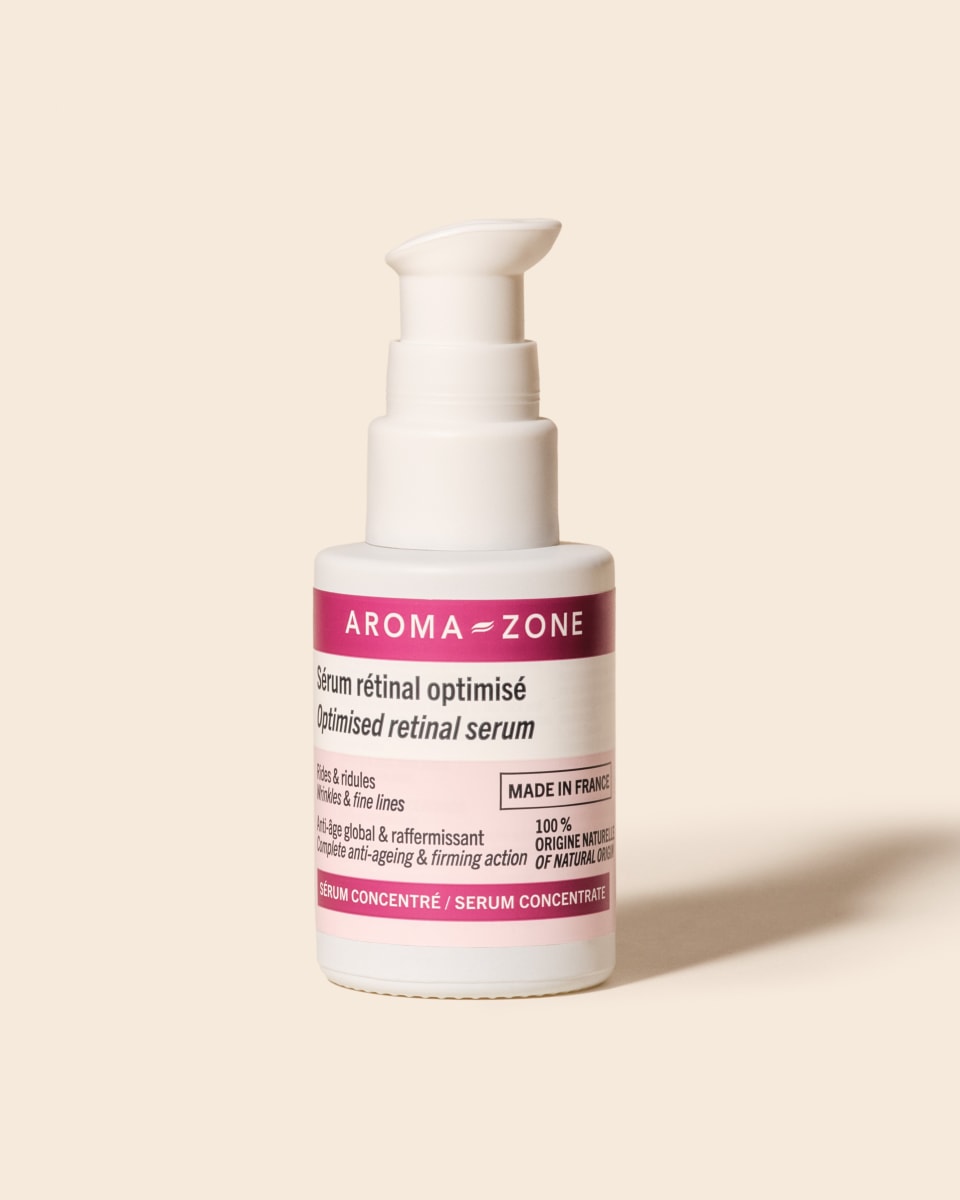
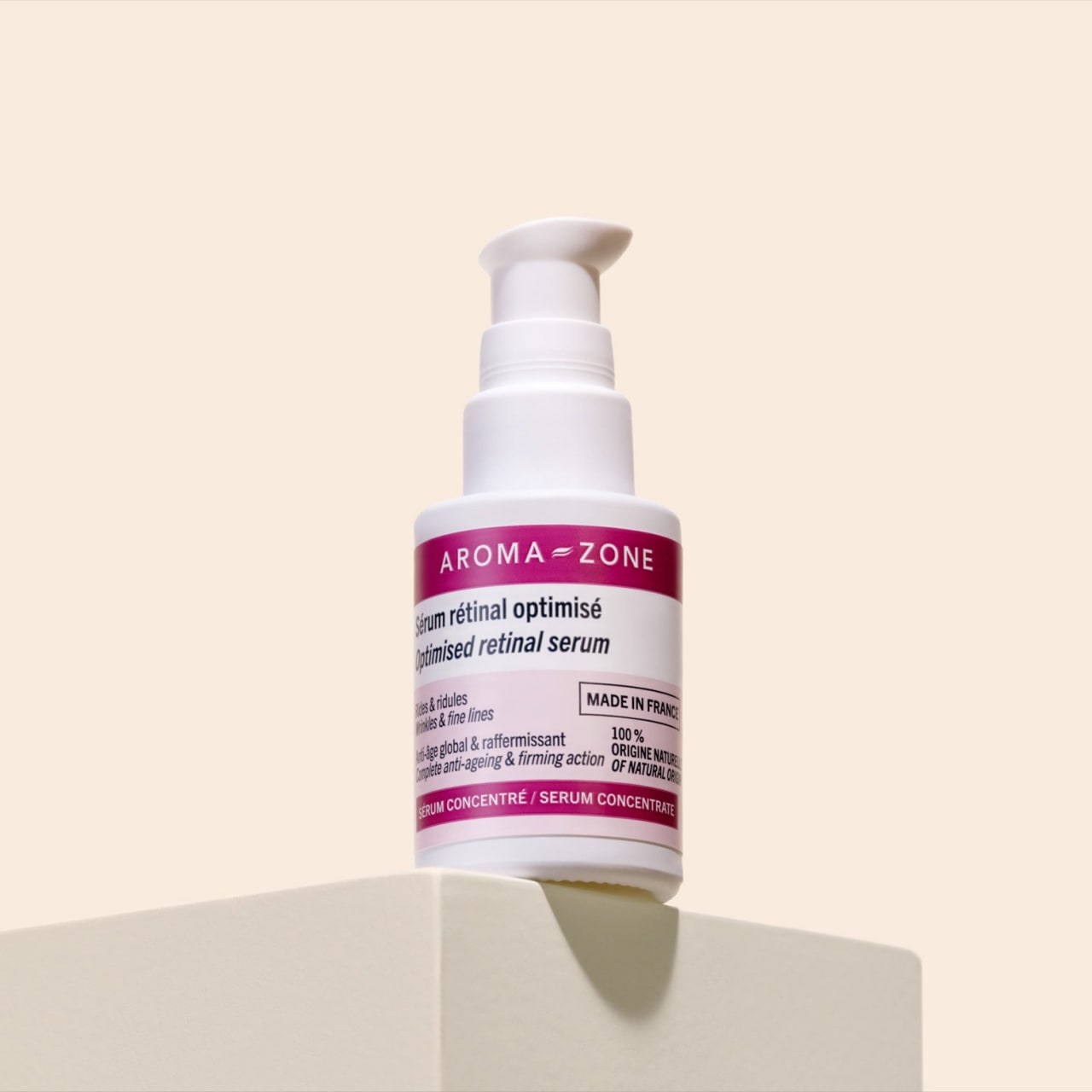
Retinol: many retinol serums are water-based. At Aroma-Zone, we've chosen this galenic formulation for our Optimised Retinal Serum. This gives it a fresher feel when applied, as well as a natural, lightweight feel. This type of serum follows the classic application protocol: place it under your moisturiser or skincare oil.
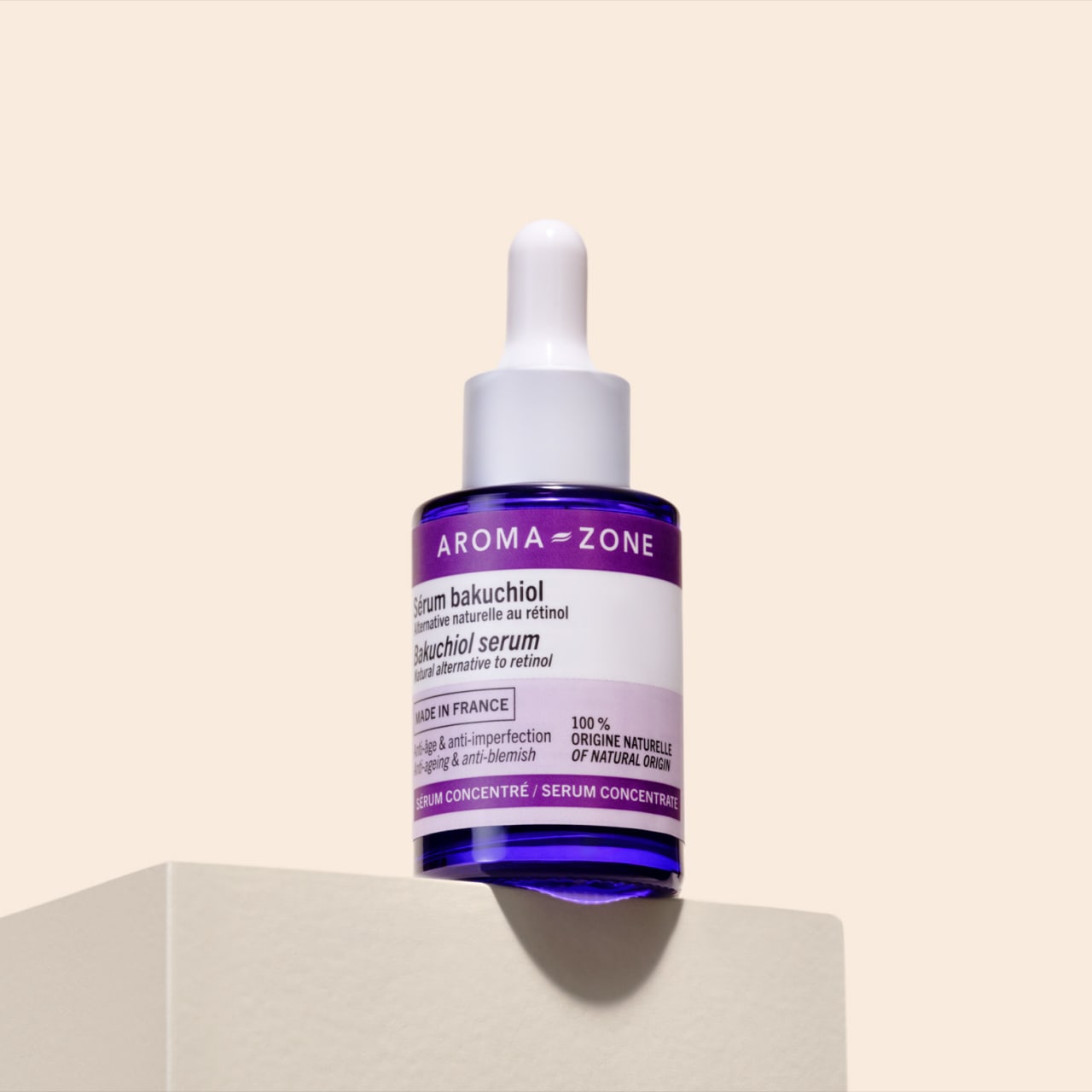
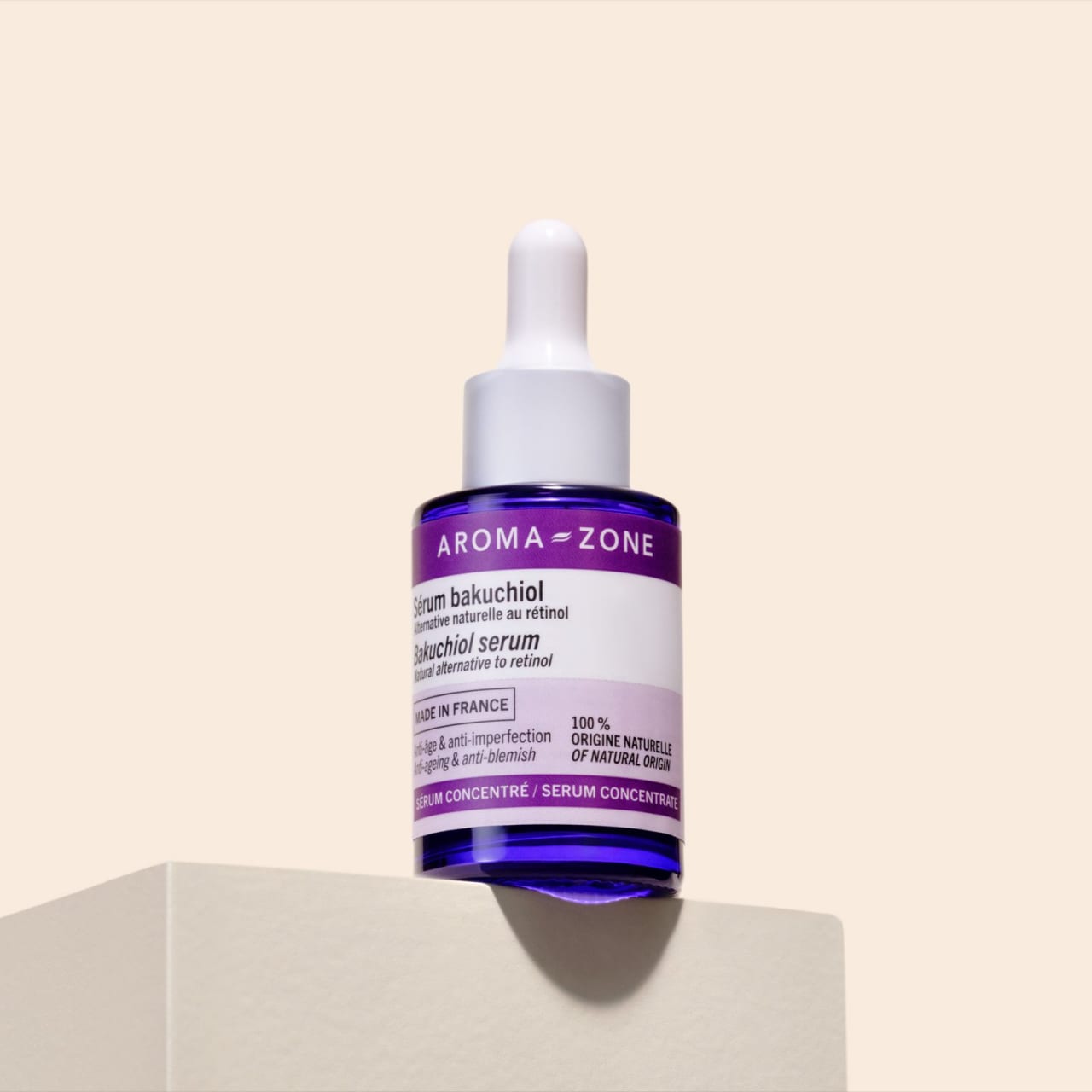
Bakuchiol: most serums with bakuchiol are formulated on an oily base. This is the case with our serum, which contains plant-derived olive squalane. Yet, it doesn't leave a greasy finish. That's because squalane has a fine texture and a good affinity with the skin's surface. So it penetrates quickly, leaving a "dry" feel. Just one golden rule to remember: if you're combining several serums, apply it on top of your water-based serum.
A closer look at our Bakuchiol Serum Concentrate

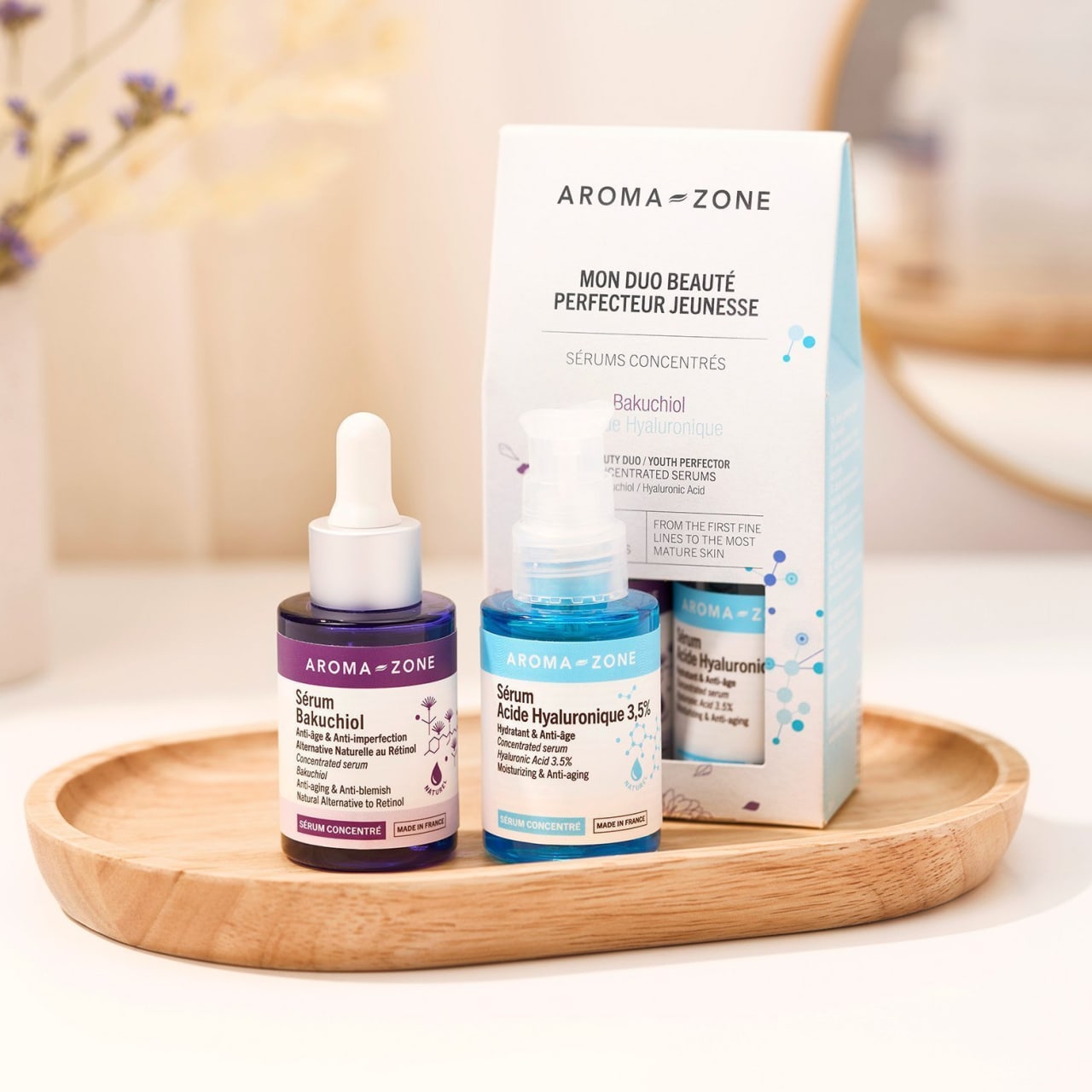
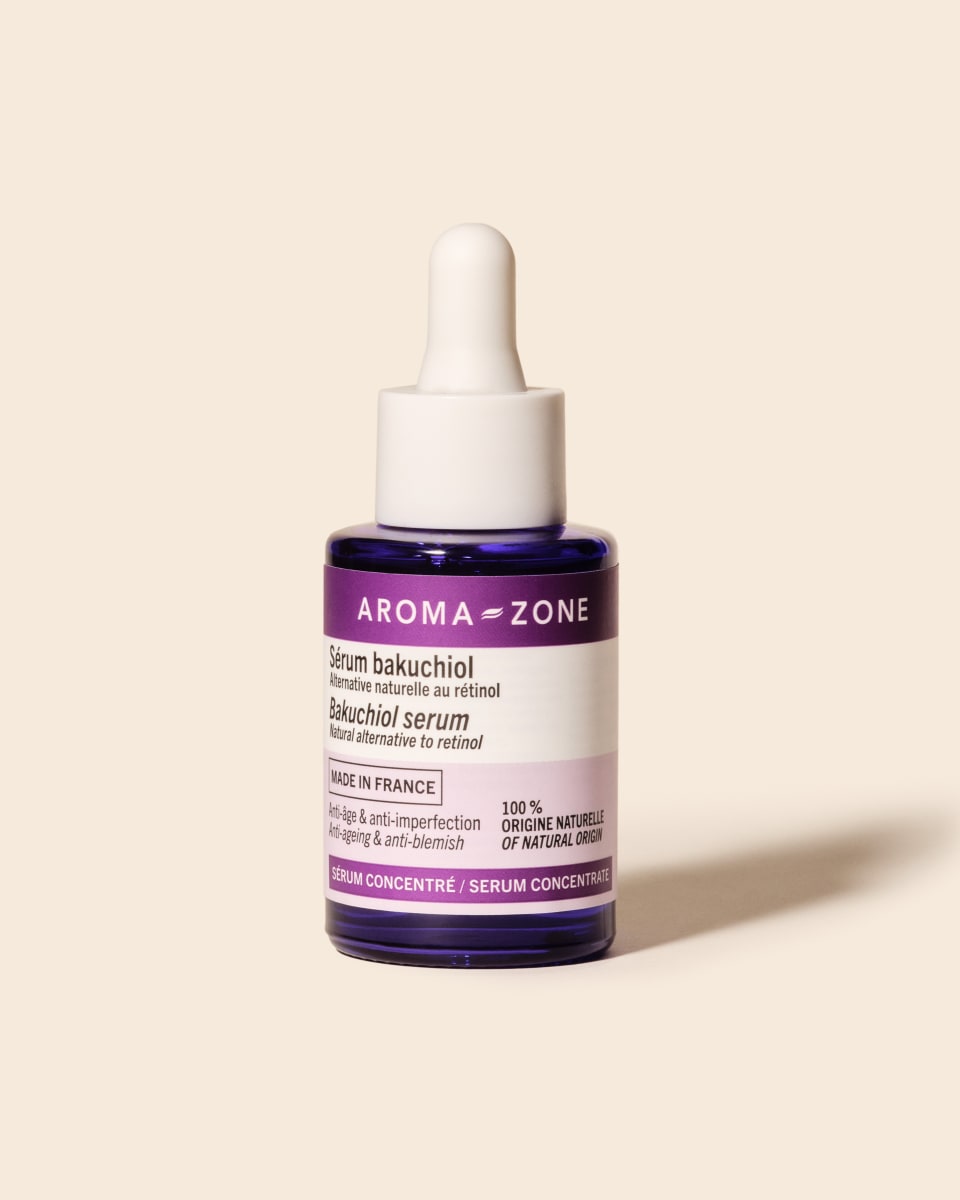
Concentrated Bakuchiol facial serum
This serum contains 1% Bakuchiol, the optimum concentration at which its efficacy is proven. Its active ingredient is 100% plant-based and highly purified to deliver Retinol-like performance, without the traditional irritating and photosensitising effects. Ideal for mature, dry or blemished skin, it combats both sagging skin and the formation of blackheads. It helps to keep skin looking firm, soothed and radiant.
Carry out a test application in the crease of the elbow 48 hours before the first application. This serum is not suitable for the most sensitive skin and/or skin with an atopic tendency. In the event of irritation, discontinue use. Keep out of reach of children.
Spotlight on our Optimised Retinal Serum Concentrate

Optimised retinal serum concentrate
It's not a Retinol serum, but a Retinal serum. What is Retinal? It's an intermediate form in the transformation of Retinol into Retinoic Acid by your skin cells. In fact, only Retinoic Acid is an active form of Vitamin A: this transformation of Retinol is therefore necessary to enable it to deliver its benefits. Eliminating one step, namely the transformation of Retinol into Retinal, has the advantage of saving the skin extra effort and at the same time limiting the undesirable effects of Retinol. This serum is therefore gentler on sensitive skin, suitable for use during pregnancy and not very photosensitising.
Spotlight on our specialist editor, Hélène Betoux

Hélène Betoux is a French beauty journalist specialising in web media. Every day she writes tips, advice and guides to help consumers choose the right beauty products. With a strong interest in natural, organic and clean cosmetics, she analyses and shares trends and innovations in the sector.