The benefits of iodine

Discover the many benefits of iodine, an essential trace element for our health. What is it used for? Is it dangerous? What are its effects? Read this article to understand the importance of iodine and how to ensure we get enough.

Reading time: 0 min.

What is iodine?

Iodine is a mineral compound that belongs to the family of trace elements: it must be supplied in small quantities to the body, where it plays an essential role.

Iodine occurs naturally, particularly in the form of iodide. It is found in significant quantities in the oceans, at a concentration of around 50 µg/L. Starting in seawater and via phytoplankton and algae, iodide is oxidised to elemental iodine by a photochemical process involving atmospheric ozone. The iodine then evaporates into the atmosphere and returns with precipitation in the form of aerosols or gaseous forms, reaching the surface of the soil and plants. It then finds its way into the food chain.

The presence of iodine in food varies according to environmental characteristics such as rainfall, distance from the sea and soil composition.

What is iodine used for?

The main role of iodine is to participate in the synthesis of thyroid molecules - tri-iodothyronine T3 and thyroxine T4 - which contain 3 and 4 iodine atoms respectively. This is why iodine is essential to the proper functioning of the thyroid gland. It is through thyroid hormones that the thyroid gland regulates metabolism, body temperature, development and growth. These hormones are essential to the functioning of the liver, kidneys, muscles, brain and central nervous system. They are also linked to cardiovascular health.

Iodine regulates energy metabolism and plays a fundamental role in the cerebral development of foetuses and children.

Did you know?

A healthy adult body contains 15 to 20 mg of iodine, 70 to 80% of which is found in the thyroid gland.

What are the effects of iodine deficiency?

According to the World Health Organisation, 35% of the world's population has inadequate iodine intakes and is therefore at risk of iodine deficiency. Iodine deficiency leads to a reduction in thyroid hormone secretion and thyroid dysfunction. The resulting symptoms are varied: weight gain, fatigue, memory problems, hair loss, dry skin, coldness, etc. Iodine deficiency can cause the thyroid gland to enlarge, leading to the appearance of a goitre and hypothyroidism.

It is certainly during pregnancy and the first years of life that iodine deficiency can have the most severe and sometimes irreversible consequences. A lack of iodine during pregnancy affects the child's future growth and cognitive performance. For a developing foetus, iodine deficiency is the most frequent cause of avoidable mental impairment in the world. When severe and chronic, it can be the cause of congenital hypothyroidism, characterised by severe intellectual impairment and stunted growth, among other things. This is why adequate iodine intake is important during childbearing age and in children, to ensure proper development of the foetus and child's brain early in life.

Who is at risk of iodine deficiency?

During pregnancy and while breastfeeding, iodine deficiency is an increased risk. This is also the case for vegans who do not eat the main iodine-containing foods (seafood, eggs, dairy products). Equally, people living in regions where the soil has a low iodine content may be at risk. Crops grown in these soils do not provide sufficient quantities of iodine.

Finally, not eating iodised salt is a risk factor for iodine deficiency. People on a low-salt diet are particularly at risk.

Can iodine be dangerous to health?

Although too little iodine can cause thyroid dysfunction, so can too much. However, too much iodine will always cause fewer negative health effects than too little. And the benefits of correcting an iodine deficiency outweigh the risks of taking supplements. A healthy thyroid is able to adapt to wide variations in iodine intake.

Iodine intakes of between 600 and 1100 µg/day are generally well tolerated in healthy people with a normally functioning thyroid. However, prolonged iodine deficiency can reduce this tolerance limit. Some people with autoimmune thyroid disease or a history of chronic iodine deficiency may be sensitive to iodine supplementation [9], leading to iodine deficiency conditions such as hypothyroidism and goitre. High iodine intakes, as in Japan where they are estimated at 1 to 3 mg/day, due to high consumption of seaweed, are generally well tolerated by the population but can lead to thyroid disorders. Excess iodine can lead to excessive production of thyroid hormones, resulting in hyperthyroidism.

According to ANSES, it is preferable not to exceed 600 µg/day of iodine, to avoid any risk of negative effects on health.

Which foods contain iodine?

Seaweed (kelp, nori, kombu and wakame) is one of the best food sources of iodine. It is also found in fish, seafood, eggs and dairy products.

However, according to the WHO, the main strategy for preventing iodine deficiency is the use of iodised salt. While this has proved effective, it could be undermined by the current trend to reduce salt consumption to reduce the risk of high blood pressure.

During pregnancy: is iodine authorised?

Iodine deficiency is particularly problematic during pregnancy, especially if it is severe. As we have seen, it can cause a delay in the cerebral development of the foetus. But that's not all: iodine deficiency has serious consequences for the outcome of pregnancy. It can lead to low birth weight, prematurity and an increased risk of perinatal and infant mortality.

During pregnancy, iodine intake should be monitored, especially as at this time needs are increased due to the increased production of thyroid hormones, greater kidney losses and the transfer of iodine from the mother to the foetus. Scientific data suggests that iodine intakes are inadequate among pregnant women in many countries around the world, and many women suffer from iodine deficiency, including in France.

Epidemiological studies are clear: an iodine deficiency in the mother - even if only moderate - has serious consequences for the health of the child.

Worth noting

Iodine supplements started before conception and continued during pregnancy are particularly effective in achieving the correct iodine status and ensuring the healthy development of the foetus. Correcting severe iodine deficiency is beneficial: the introduction of iodised salt into the diet has eliminated congenital hypothyroidism, which was particularly present in mountainous regions. However, the effect of iodine supplements during pregnancy on the growth and development of children in populations with mild to moderate deficiency is less clear. Clinical trials carried out in populations with more severe iodine deficiencies would perhaps lead to different results, but there are ethical problems involved in carrying them out (in particular by supplementing with iodine only some of those pregnant with severe deficiencies).

Did you know?

The Iodine Global Network (IGN) is an NGO that monitors the iodine status of the world's population. Over the last two decades, the number of countries with populations of adequate iodine status has doubled, from 67 countries in 2003 to 118 in 2021. However, iodine intakes are insufficient in 21 countries and too high in 13.

Why take an iodine supplement?

By combating iodine deficiency, taking a food supplement can help prevent the many consequences of having too little of this trace element in the body. Taking a food supplement is particularly useful if your diet does not cover your needs.

We would remind you that before taking an iodine food supplement, you should seek medical advice, particularly as iodine can interact with certain medicines (anticoagulants, lithium in particular) and iodine food supplements may not be recommended in certain cases (thyroid dysfunction, heart disease, kidney failure, etc.). During pregnancy and while breastfeeding, iodine supplements should only be taken on medical advice.

  • To support normal thyroid function: The thyroid works through thyroid hormones, the production of which requires iodine. An iodine-based food supplement ensures that the thyroid functions properly - by contributing to the normal production of thyroid hormones - and prevents the symptoms associated with its dysfunction.

  • To promote a normal energy metabolism: An iodine deficiency can slow down your metabolism and lead to weight gain. Supplementation, by restoring your iodine status if necessary, can be an ally in your slimming regime.

  • During pregnancy and while breastfeeding: To ensure a satisfactory supply of iodine, taking a food supplement may be useful for both mother and child to ensure normal growth and optimal neurological development during foetal life and early childhood. However, medical advice is essential.

  • To contribute to normal skin and hair health: Thyroid hormones support hair follicle renewal. If they are produced in too small quantities, due to a lack of iodine, the hair follicle can no longer renew itself properly, leading to hair loss. Similarly, dry, irritated, rough or even scaly and inflamed skin is a common sign of iodine deficiency, which can be corrected by taking a food supplement.

  • To improve cognitive and intellectual performance: Too low an iodine intake can have an impact on cognitive performance and IQ in children[21]. In fact, a randomised controlled trial conducted on 183 children showed that iodine supplementation, by correcting a slight deficiency, improved certain aspects of cognition[22].

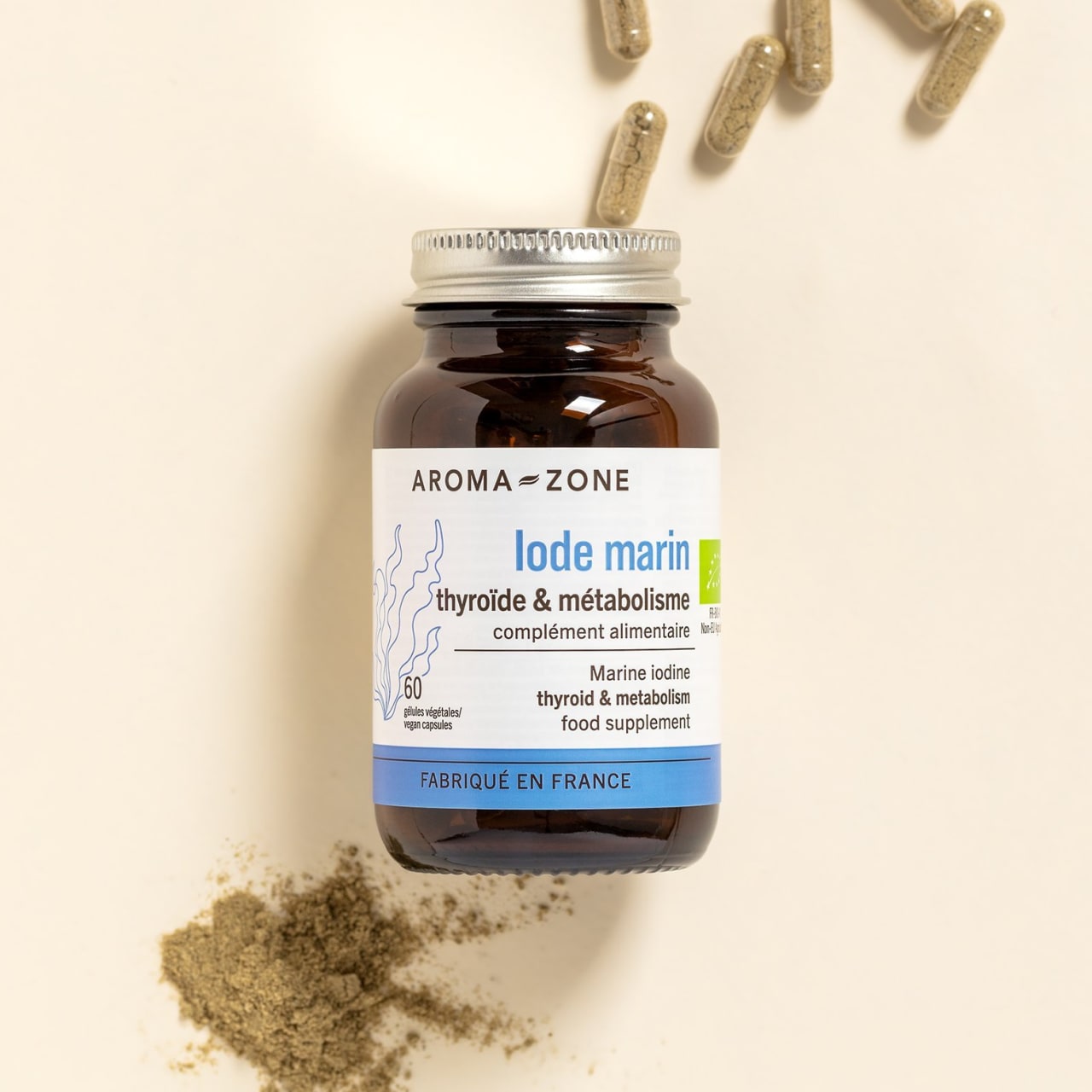
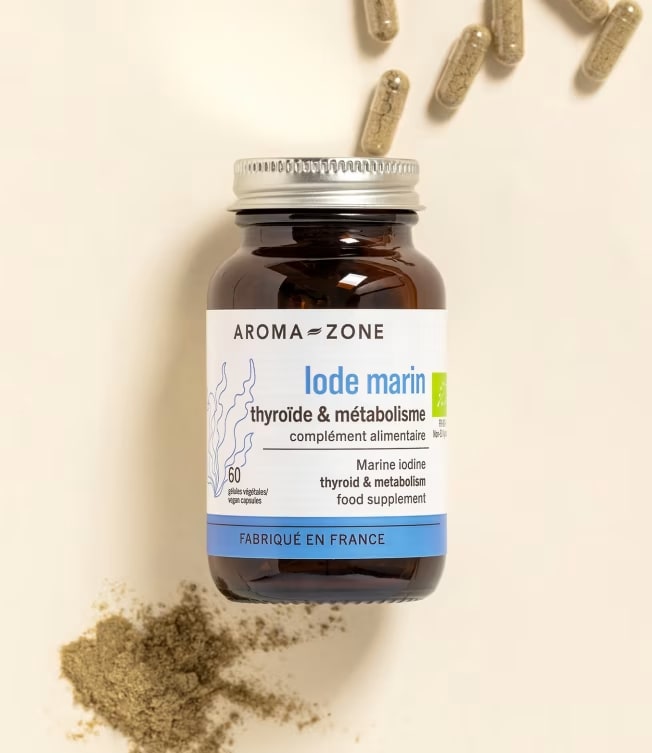
Focus on our ORGANIC Marine iodine food supplement

Focus on our ORGANIC Marine iodine food supplement

Where does the marine iodine in our food supplement come from?

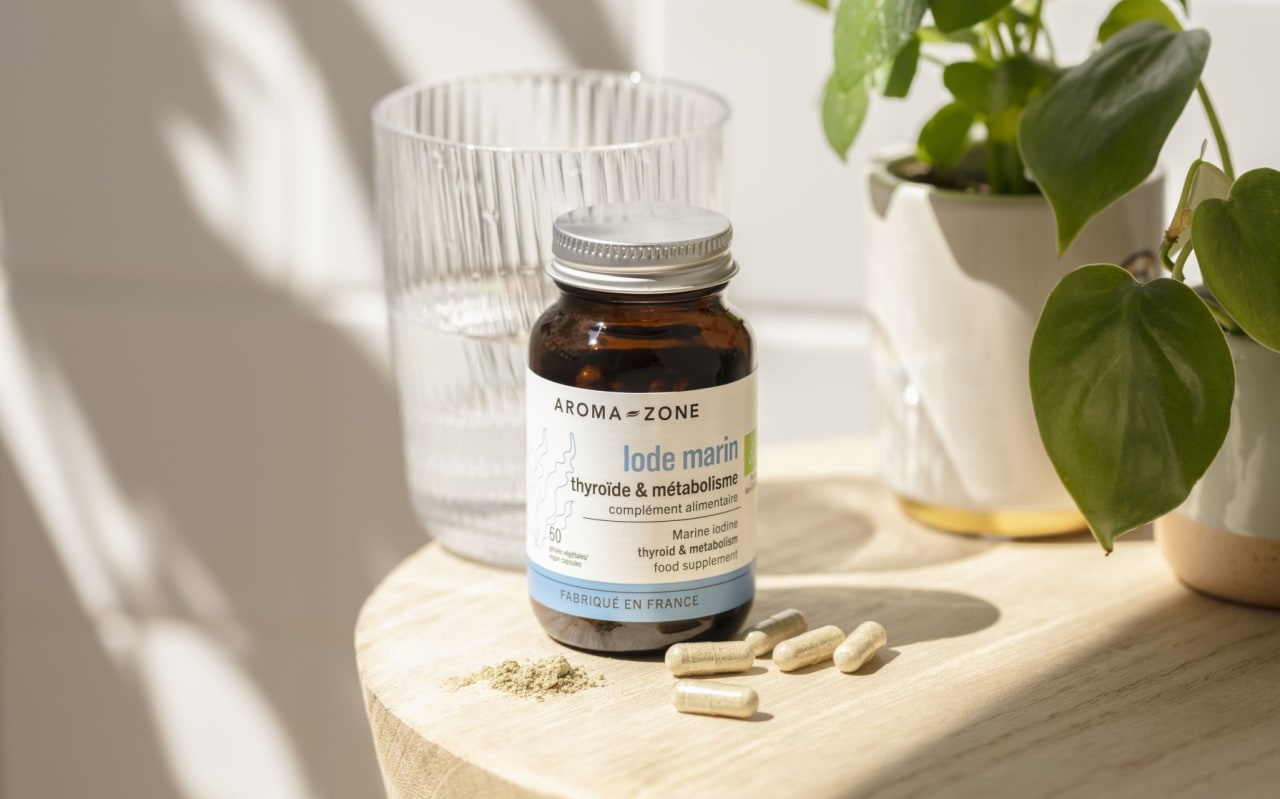
Our ORGANIC marine iodine food supplement is made from Ascophyllum nodosum seaweed, also known as kelp, a brown seaweed that is naturally rich in iodine. The seaweed we use for our food supplement is harvested off the coast of the Hebrides Islands in Scotland in a protected natural environment, guaranteeing a safe and effective food supplement.


How can we guarantee the quality of the seaweed used in our food supplement?

Wild, sustainable seaweed harvesting is carried out by selecting the best sites and cutting the seaweed using specialised vessels and techniques. Using exclusive technologies, the seaweed is then carefully dried and ground. This manufacturing process produces a high-quality product with preserved active ingredients.

Each batch of Ascophyllum nodosum seaweed is authenticated by its DNA, ensuring optimum traceability from harvest to finished product. Tests are carried out to guarantee the quality and safety of each batch.


What are the benefits of our food supplement?

Ascophyllum nodosum seaweed is a natural source of iodine that allows prolonged release of iodine, which is not the case with synthetic sources that are rapidly absorbed and excreted. One study[23] showed that peak iodine excretion occurred earlier in participants ingesting the synthetic iodine supplement than in those ingesting an algae supplement. The quantity of iodine excreted during the 24-hour period following ingestion was higher after ingestion of a synthetic source than after ingestion of an algae supplement.


What is the purpose of the acacia gum in our capsules?

In addition to Ascophyllum nodosum seaweed, one capsule of our food supplement contains acacia gum.

Its presence in the food supplement is essential to guarantee a precise dosage of the seaweed and therefore a controlled iodine content, as well as compensating for any differences that may occur from one batch of seaweed to another. Acacia gum is also a prebiotic, which means that it provides 'food' for the good bacteria in our intestines. It therefore encourages their growth, enabling them to play their beneficial role in our health.


What quantity?

One capsule a day is enough to provide 150 µg of iodine, a dose that covers the entire recommended daily intake for an adult and corresponds to the maximum daily dose of iodine for food supplements.

What precautions should be taken?

  • Keep out of reach of children

  • Not a substitute for a varied and balanced diet and a healthy lifestyle. Do not exceed the recommended daily dose.

  • For adults only.

  • Ask your doctor for advice if you have thyroid problems or are taking anticoagulants.

  • Suitable for pregnant or breastfeeding women subject to medical advice.

Spotlight on our scientific editor, Juliette Pouyat

Juliette Pouyat has been a scientific writer specialising in nutrition and health for 10 years. After studying chemistry, she wrote a thesis on the nutritional quality of infant milks and obtained a doctorate from the Institut National Agronomique Paris-Grignon. She is the author of numerous articles and several books on the links between food and health, food supplements and well-being. Juliette draws on recent scientific literature to write articles for the general public.

Bibliography

1

Thyroid and the heart.

Grais IM, Sowers JR.

2

3

Iodine status worldwide: WHO global database on iodine deficiency.

4

Can AS, Rehman A. Goiter.

2023 Mar 11. In: StatPearls [Internet]. 2023 Jan-. PMID: 32965832.

5

Effect of inadequate iodine status in UK pregnant women on cognitive outcomes in their children

Bath SC, Steer CD, Golding J, Emmett P, Rayman MP.

6

The role of iodine in human growth and development.

Zimmermann MB.

7

Vegans, Vegetarians, and Omnivores: How Does Dietary Choice Influence Iodine Intake?

Eveleigh ER, Coneyworth LJ, Avery A, Welham SJM.

8

Iodine Supplementation.

Delange, F., Lecomte, P.

9

Excess iodine intake: sources, assessment, and effects on thyroid function

Farebrother J, Zimmermann MB, Andersson M.

10

Assessment of Japanese iodine intake based on seaweed consumption in Japan

Zava TT, Zava DT.

11

Consequences of Severe Iodine Deficiency in Pregnancy: Evidence in Humans.

Toloza FJK, Motahari H, Maraka S.

12

Insufficient iodine intake in pregnant women in different regions of the world: a systematic review.

Candido AC, Morais NS, Dutra LV, Pinto CA, Franceschini SDCC, Alfenas RCG.

13

Iodine deficiency in northern Paris area: impact on fetal thyroid mensuration.

Luton D, Alberti C, Vuillard E, Ducarme G, Oury JF, Guibourdenche J.

14

Association of Maternal Iodine Status With Child IQ: A Meta-Analysis of Individual Participant Data

Levie D, J Clin Endocrinol

15

Women Remain at Risk of Iodine Deficiency during Pregnancy

Hynes KL, Burgess JR.

16

Iodine status and supplementation in pregnancy: an overview of the evidence provided

Croce, L., Rev Endocr

17

Effects of iodine supplementation during pregnancy on pregnant women and their offspring

Nazeri P, Shariat M, Azizi F.

18

Systematic review and meta-analysis of the effects of iodine supplementation.

Dineva M, Bath SC.

19

Iodine supplementation for women during the preconception, pregnancy and postpartum period.

Harding KB, De-Regil LM.

20

www.ign.org

21

Intelligence quotient and iodine intake: a cross-sectional study in children

Santiago-Fernandez P, León AG, Soriguer F.

22

Iodine supplementation improves cognition in mildly iodine-deficient children.

Gordon RC, Ruffman T.

23

Low-level seaweed supplementation improves iodine status in iodine-insufficient women

Combet, E., B., & Lean, M.