Relieving Lower Back Pain with Natural Methods

Relieving Lower Back Pain with Natural Methods


By The Aroma-Zone editorial team

Published on: Thursday, March 23, 2023, Updated on: Wednesday, October 28, 2026

There are times when our body seems to speak to us, quite literally. Have you ever found yourself flat on your back with pain so bad you can barely move? Doctors call it lower back pain, though you might know it as "lumbago" or a "thrown-out back." And did you know that nearly 4 out of 5 people have suffered, or will suffer, from lower back pain at some point? So, let's take a closer look at this common and troublesome condition.

Contents

What is lumbago?

Obviously, lumbago affects the back! But what exactly is lumbago? It is pain, often intense, felt in the lower back. It affects the area of the lumbar vertebrae, the vertebrae located in the lower back. The pain is often caused by muscles or ligaments. It can be triggered by overexertion or a sudden, awkward movement, even a routine daily activity. But sometimes, we simply don't know what caused it. The pain experienced can vary in intensity, ranging from moderate to severe. If not treated promptly, lumbago can lead to significant discomfort, potentially resulting in the need to take time off work.

The key, therefore, is to prevent lumbago from occurring in the first place, and if that's not possible, to limit the progression from an acute phase (a brief, painful episode) to a chronic phase (one that lasts). It is important to note that pain is not proportional to the severity of the injury. In fact, it is often a minor injury that causes us to move less and thus leads us to limit our activities. This behaviour results in a loss of conditioning for everyday movements, meaning that our posture changes, leading us to adopt different positions.
What are the symptoms of lumbago?

How do you really recognise lumbago? If you have trouble performing daily activities, or if certain movements or actions (like coughing) are painful, then you may be suffering from lumbago. Sometimes lumbago can even prevent you from getting out of bed. Overall, pain in the lower back is the common thread in this condition. Let's review the various symptoms you may experience:

  • Pain in this area.

  • Discomfort when performing daily movements.

  • Heaviness or stiffness in the lower back.

  • Pain radiating into the buttock: this is known as sciatica.

How long does lumbago last?

As you'll have gathered, when it comes to the question "But how long does it last?", the answer is far from straightforward.

In fact, it can vary enormously! This pain typically lasts anywhere from a few days up to 4 to 6 weeks during its so-called acute phase. Beyond 3 months, it's considered chronic lower back pain. And the goal is very much to prevent the pain from lingering, because once it becomes chronic, it's much harder to shake off.

How can you relieve lumbago?

How can you relieve lumbago quickly, since prompt treatment seems to work in our favour? Here are some natural solutions for quick relief from lumbago. First and foremost, remember not to do anything before consulting a healthcare professional (your GP or a physiotherapist).

Solution #1: Diet to Combat Lumbago

Diet should not be overlooked. In fact, many foods can have a natural anti-inflammatory effect.

This is the case with:

  • Omega-6 fatty acids —biologically active fatty acids—found in evening primrose oil, for example. When plant-based, these essential fatty acids promote the synthesis of anti-inflammatory compounds called PEG1.

  • Omega-3 —polyunsaturated fatty acids with beneficial properties—found in fatty fish or rapeseed oil.

  • Nor should we overlook foods rich in magnesium. In fact, magnesium helps relax muscles. A deficiency could thus contribute to muscle spasms and exacerbate lower back pain—regardless of its initial cause. Foods rich in magnesium include sardines, chocolate, and Brazil nuts. 

  • Turmeric is also, in high doses, a very effective anti-inflammatory. You can therefore try a turmeric regimen in powder form, either by sprinkling it (half to one teaspoon) over your meals or mixing it into your drinks.

Solution #2: Hot Baths for Lumbago

They help relax the muscles naturally. In fact, during an episode of lumbago, the pain causes the surrounding muscles to contract, which further increases the pain, creating a vicious cycle. By relaxing the muscles, the pain can be relieved. This is also how medications called muscle relaxants work. By taking a bath, the heat provides quick and natural pain relief.

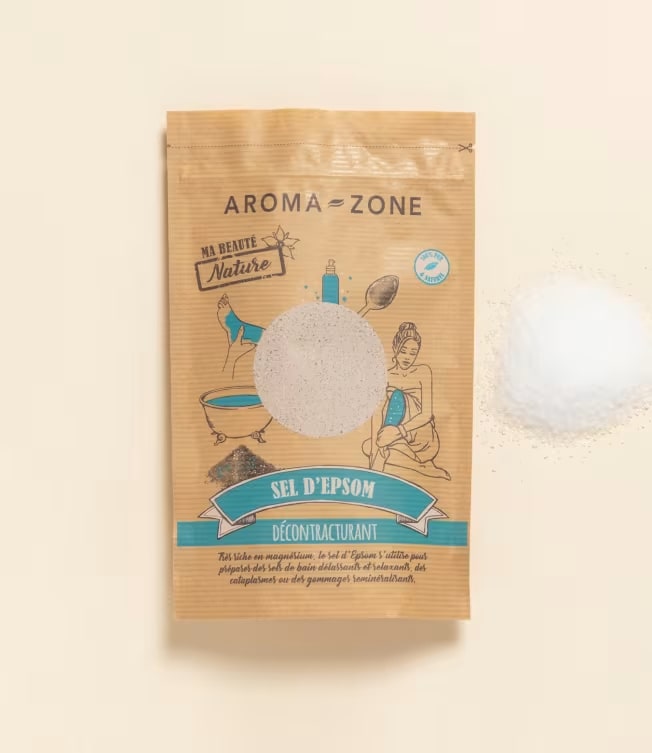
Epsom salt

Epsom salts

Epsom salts, also known as magnesium sulphate, can be used in a bath to relieve muscle soreness. They are valuable allies for relaxation and help naturally release muscles that have tightened during a painful episode. To enjoy their muscle-relaxing properties as well as their soothing effect, simply dissolve one cup of Epsom salt in a warm bath.

Discover Epsom Salts

There are also many recipes using Epsom salts. For example, you can try these:

Solution #3: Physical Activity and Lumbago

Practicing a gentle, suitable sport like yoga can be beneficial in many ways.

Yoga helps stretch the body and can therefore be particularly beneficial. Save it for when you’re past the acute pain phase to avoid a relapse. Australian researchers* have shown, through an analysis of several studies, that appropriate physical activity (stretching, strengthening the abdominal and back muscles, etc.) effectively prevents back pain. 

Solution #4: Auriculotherapy and lower back pain

This method, much like acupuncture, involves stimulating points on the ear to treat certain conditions.

Did you know that there are many auricular points, each corresponding to a specific area of the body? This technique works very well for treating pain such as lower back pain. Furthermore, it is recognised by the WHO and practiced by doctors.

Solution #5: Lumbago and Sleeping Position

Did you know that certain sleeping positions are better suited for back pain? This is especially true while we sleep. When sleeping, the side position is the most recommended for relieving lower back pain. This fetal position helps relieve pressure on your lower back and prevent tension throughout the night.

What exercises can you do to relieve lumbago?

It’s no secret: if you have back pain, you absolutely must keep moving. Movement should be gentle and appropriate, but physical exercise is essential. 

Ideally, these exercises should be done every day, even if only for a few minutes. If that’s not possible, you should do them at least three times a week. These exercises are designed to relax the lower back. They should not cause pain. If they do, stop the session immediately. However, when performed gently and slowly, they should not cause pain. Hold each position for 6 seconds, followed by a 6-second rest period, then repeat. Some easy exercises to try include:

  • With your legs straight, lean forward with your back straight so that your upper body is perpendicular to your legs.

  • Start by lying on your back on the floor, legs bent and feet flat on the floor. Then gently bring your knees toward your shoulders.

  • Kneel on the floor, sitting on your heels, rest your forehead on the floor, and breathe calmly.

  • Get on all fours with your back flat, then very gently arch your back like a cat. Then return to the starting position.

By practicing these stretches several times and regularly, you will feel relief in your lower back.

Home Remedies to Relieve Lumbago

Of course, there are also a few remedies to help relieve lumbago. Let’s talk specifically about these herbal teas that can help relieve your lumbago! 

  • The first plant to use for lower back pain is Harpagophytum. It’s also called “devil’s claw” because its fruits have curved hooks that resemble sharp claws. Its root can be used in a decoction (50g in 1 litre of water). 

  • Blackcurrant leaves also have an anti-inflammatory effect comparable to medications called NSAIDs. They also help relieve pain. These leaves can be used to make herbal tea. 

  • Meadowsweet is a plant that helps combat pain and inflammation. The flowering part, composed of a multitude of small white flowers, is used to make infusions. These can be drunk throughout the day. They contain active ingredients similar to aspirin. 

  • The roots of knotted figwort can be used in a decoction. Place the root shavings in water, bring to a boil, and let it boil for 15 minutes. This method extracts the active compounds from the roots (which are harder to extract because they are thicker and tougher than other parts of the plant). You can drink the resulting infusion throughout the day or use it as a compress on the lower back.

Homeopathy: Which Granules Can Relieve Lumbago?

To determine which remedy to use, you need to analyse the pain and the conditions under which it occurs:

  • If it is accompanied by pain radiating toward the abdomen: Take Berberis vulgaris in 9ch.

  • If it worsens with movement: It’s best to opt for Bryonia Alba in 9ch.

  • If it improves with movement and on a hard surface: Then Rhus Toxicodendron in 9 CH is preferred.

In all cases, a dose of 5 granules 3 times a day is recommended.

Find out more about muscle and joint pain

Bibliography

  1. vidal.fr

  2. ameli.fr

  3. inrs.fr

  4. The proper use of medicinal plants.

    Jacques Fleurentin

  5. Family Guide to Homeopathy,

    Dr. Alain Horvilleur

  6. Aromatherapy: Healing with Essential Oils

    D. Baudoux

  7. Practical and common aromatherapy,

    Michel Faucon

  8. centre-orthopedique-santy.com

  9. *February 2016, Prevention of Low Back Pain: A Systematic Review and Meta-analysis,

    Daniel Steffens, Chris G Maher