Glabridin acts on melanin production, making it effective for various types of pigmentation marks, particularly those caused by sun exposure, ageing or post-inflammatory hyperpigmentation. Its action is gradual and depends on the cause and duration of the marks, as some are deeper or more established than others.
Aroma-Zone Glabridine Active Ingredient
BRIGHTENING ANTI-DARK SPOTS
The natural active ingredient that targets melanin at the source
Naturally found in liquorice root, glabridin is recognised for its targeted action on pigmentation spots. It helps to even out the skin tone and reveal a more uniform glow.

Glabridine Aroma-Zone Profile
INCI Name: Glycyrrhiza Glabra Root Extract
VEGAN
METHOD OF EXTRACTION
Glabridin is obtained by oleo-eco-extraction from the root of liquorice.
BIOCHEMICAL COMPOSITION
Glabridine is a flavonoid belonging to the family of polyphenols, known for their antioxidant properties and their protective effects against oxidative stress.
SUSTAINABILITY / TRACEABILITY
100% naturally derived active ingredient
Glabridine: What Effect Does It Have on the Skin?
Glabridin is a naturally derived active ingredient extracted from liquorice root (Glycyrrhiza glabra), recognised for its targeted action on the mechanisms of skin pigmentation.
It works by inhibiting the activity of tyrosinase, a key enzyme involved in the production of melanin. By binding to its active site, it helps to limit the formation of new pigments and reduce the appearance of existing dark spots.
Its action also extends to the regulation of cellular signals involved in pigmentation. Glabridin plays a key role in reducing the activity of endothelin-1 in keratinocytes, a mediator that stimulates the proliferation and differentiation of melanocytes.
By acting at several stages of the pigmentation process, it helps to reduce the intensity of dark spots and improve skin evenness.
Furthermore, Glabridine possesses antioxidant properties, which help to neutralise the free radicals involved in oxidative stress and skin ageing. It also exhibits anti-inflammatory activity, which helps to soothe redness and limit post-inflammatory hyperpigmentation.

Skin Tolerance
A Note from Adeline Nalin, Head Pharmacist and Toxicologist at Aroma-Zone

“Glabridin, the main flavonoid in Glycyrrhiza glabra, is well tolerated by the skin at the concentrations used in cosmetics. The available data do not indicate any significant irritant or sensitising effects, although mild, temporary reactions (erythema, tingling) may occur in reactive skin or where the skin barrier is compromised. These observations are consistent with the conclusions of the CIR Expert Panel (2008), which considers liquorice extracts to be safe under normal conditions of cosmetic use.”
Adeline Nalin - Head Pharmacist and Toxicologist
A Safe Ingredient for your Health
A Note from Our Aroma-Zone Toxicologist
“Glabridin is considered safe for health when used at the recommended concentrations in cosmetic products. The CIR, in its 2008 report, and the EFSA (European Food Safety Authority), in its 2011 scientific opinion on the food ingredient Glavonoide® (an extract enriched with glabridin), confirm the absence of any toxicological concerns at the assessed exposure levels, reinforcing confidence in the safety of this active ingredient. Our Vitamin C & Glabridine Anti-Dark Spot Oil Serum has been tested in vitro on 3D reconstructed human epidermis and has been shown to have no irritant potential (with no cytotoxicity and no expression of inflammatory markers).”
Adeline Nalin – Head Pharmacist and Toxicologist

A Note from the Dermatologist
“Glabridin is a naturally derived active ingredient sourced from liquorice root, recognised for its effect on pigmentation spots. It works in particular by inhibiting the activity of tyrosinase, a key enzyme in melanin synthesis, thereby helping to reduce pigmentation spots and improve skin evenness.
It also possesses antioxidant properties, which help to neutralise the free radicals involved in skin ageing, thereby helping to preserve the skin’s condition over time.
To maximise its effectiveness, daily application of sun protection is essential to limit stimulation of melanocytes and prevent the appearance of new dark spots.
Glabridin can be combined with other complementary active ingredients. For example, Vitamin C can be used in the morning to enhance the antioxidant and skin-evening effects, whilst active ingredients such as AHAs or retinol can be incorporated into your evening routine to promote cell renewal.”
Dr Aoun – Dermatologist
Formulation Focus with the Aroma-Zone R&D Laboratory
Glabridin is an active ingredient extracted from liquorice root, recognised for its targeted action on melanogenesis.
Its fat-soluble nature makes it easy to incorporate into oily or emulsified formulations, such as oil-based serums or creams, whilst ensuring good affinity with the skin. This characteristic enables the development of skincare products that are both effective and sensorial, suitable for daily use.
For Which Skin Types?
Skin prone to pigmentation spots, dull and uneven skin, sensitive skin prone to redness, mature skin.
Which Concerns Does This Address?
Pigment spots (brown spots, sun- or age-related spots), uneven complexion, lack of radiance, redness and post-inflammatory marks, oxidative stress and skin ageing.
What Glabridine Does for the Skin
Reduces pigmentation spots
Evens out and brightens the skin
Protects the skin from oxidative stress
Soothes redness and inflammation
Improves the skin’s evenness.
Glabridine: An Essential Ingredient for the Skin

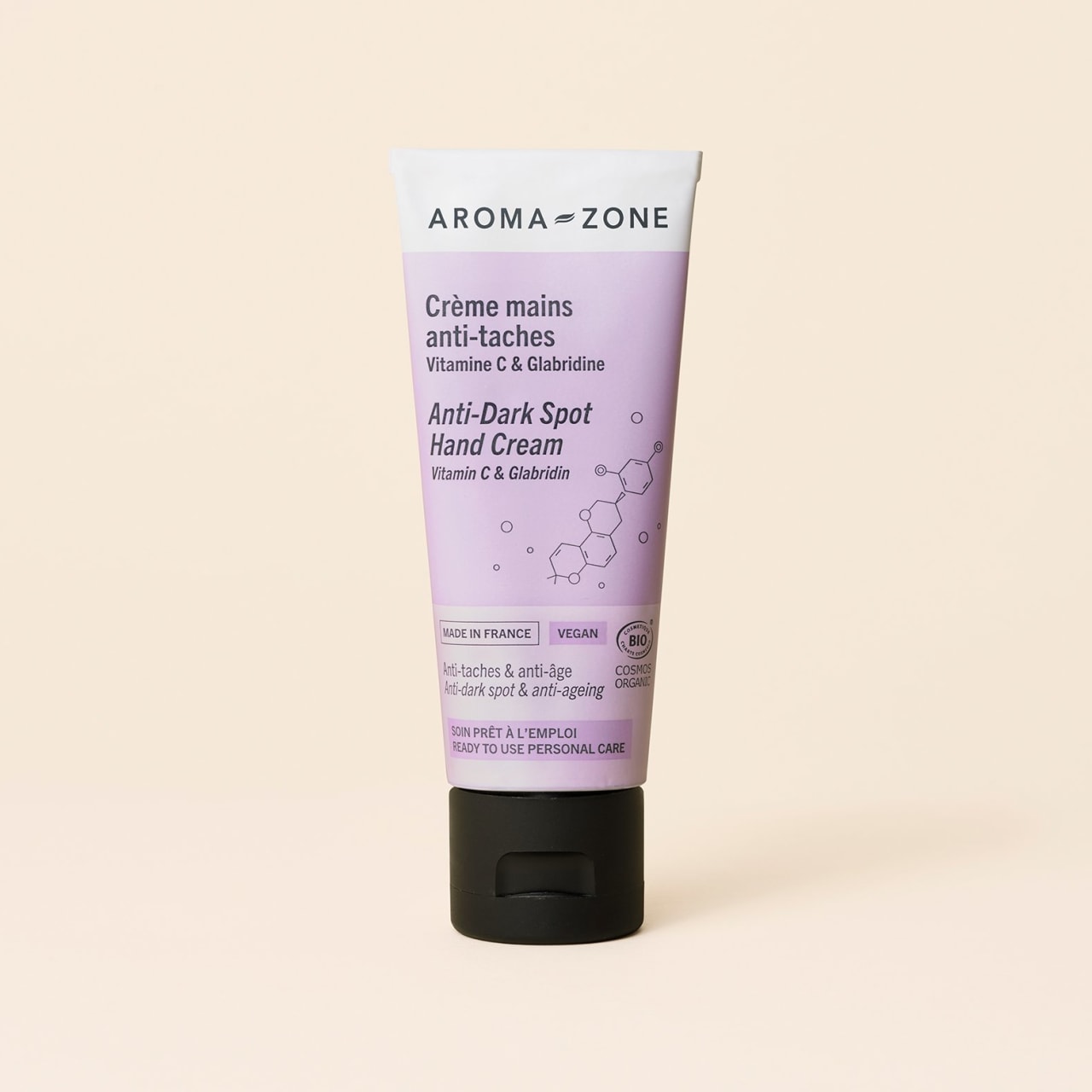
Vitamin C & Glabridine Anti-Dark Spot Hand Cream
Particularly exposed to the sun and environmental stressors, the hands are an area prone to the appearance of pigmentation spots.
This certified organic hand cream combines Glabridine and Vitamin C to target pigmentation irregularities and restore the skin’s radiance. Glabridine helps to reduce dark spots by targeting melanin production, whilst Vitamin C provides a protective antioxidant effect. Enriched with hyaluronic acid, it provides long-lasting hydration without leaving a greasy residue and improves the skin’s comfort on a daily basis.
Discover the Vitamin C & Glabridine Anti-Dark Spot Hand Cream
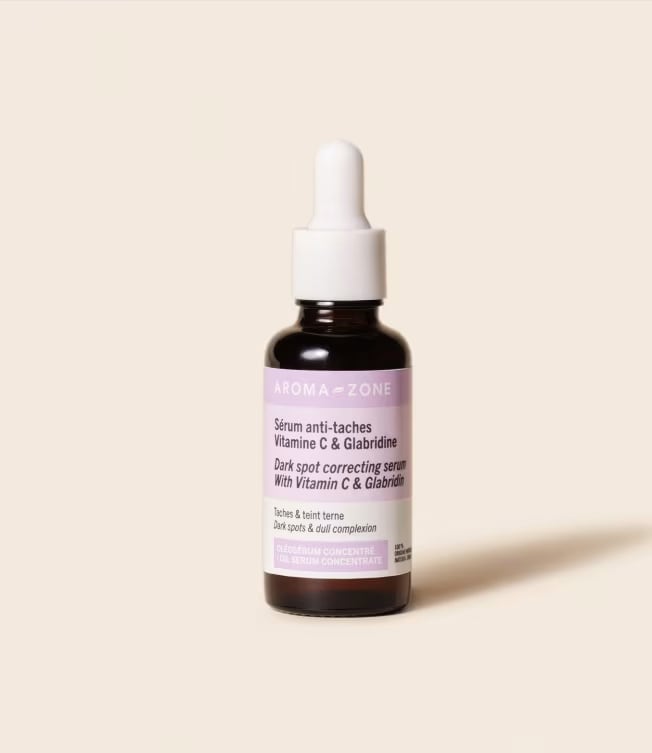
Vitamin C & Glabridine Anti-Dark Spot Oil Serum
This oil-based serum combines Glabridin with Vitamin C and Astaxanthin to deliver a comprehensive effect on pigmentation spots and the skin’s radiance. Glabridin targets the mechanisms of melanin production, whilst Vitamin C and Astaxanthin provide complementary antioxidant action, helping to protect the skin from oxidative stress linked to the appearance of dark spots.
Its fine, silky oil texture nourishes the skin without leaving a greasy film and fits easily into different skincare routines. Used on its own or alongside a serum, it helps to improve skin evenness and reveal a more radiant complexion.
Precautions
Avoid contact with the eyes. In case of contact, rinse immediately with clean water.
FAQ

Is Glabridine suitable for all types of pigmentation marks?

Is Glabridine suitable for all types of pigmentation marks?

Is Glabridine suitable for sensitive skin?

Is Glabridine suitable for sensitive skin?
Yes, Glabridine is generally well tolerated. Thanks to its soothing properties, it helps to calm the skin and minimise redness, making it suitable for sensitive or reactive skin, which is often prone to pigmentation irregularities.

Can Glabridine be used in summer?

Can Glabridine be used in summer?
Glabridine can be used all year round, including in summer. It is not photosensitising, but applying sun protection remains essential to limit melanin stimulation and prevent the appearance of new dark spots.

How long does it take to see results on dark spots?

How long does it take to see results on dark spots?
The reduction in pigmentation spots is gradual and depends on how long they have been present and their intensity.
With the Vitamin C & Glabridine Anti-Dark Spot Hand Cream, results were observed after 56 days of use: dark spots appeared less pronounced in 86% of volunteers*, with an average reduction of 33% in their intensity**. Regular application is essential to achieve visible and long-lasting results.
*Scoring carried out by a trained assessor on 42 volunteers after 56 days’ use.
**Self-assessment carried out on 42 volunteers after 56 days of use.

Can Glabridine be combined with other anti-dark spot active ingredients?

Can Glabridine be combined with other anti-dark spot active ingredients?
Yes, Glabridine can be combined with other active ingredients to work synergistically on the mechanisms of pigmentation.
In the Vitamin C & Glabridine Anti-Dark Spot Hand Cream, it is combined with Vitamin C, which enhances the anti-dark spot action thanks to its antioxidant and brightening properties. In the Vitamin C & Glabridine Anti-Dark Spot Oil Serum, it is combined with Vitamin C and Astaxanthin, an active ingredient recognised for its powerful antioxidant properties, helping to protect the skin from oxidative stress linked to the appearance of dark spots.
These combinations help to regulate melanin production, protect the skin and promote an even complexion.

Should Glabridine be applied in the morning or in the evening?

Should Glabridine be applied in the morning or in the evening?
Glabridine can be used in the morning and/or evening, depending on the product in which it is formulated. Regular application is essential to achieve visible results.

Does Glabridine lighten the skin?

Does Glabridine lighten the skin?
Glabridin does not act as a depigmenting agent in the sense of bleaching. It regulates melanin production to reduce dark spots and improve the skin’s evenness, without altering its natural tone.
Spotlight on our specialist editor, Marion Alves De Oliveira

Marion is a Doctor of Pharmacy, naturopath, and life coach. After twelve years in the cosmetics industry, she now guides her clients toward holistic balance and a more mindful lifestyle, drawing on her expertise in sustainable food practices. As the creator of a podcast, she shares her insights to promote a philosophy of living that respects both health and the environment.
Bibliography
1
Simmler, C., Pauli, G. F. & Chen, S.-N. Phytochemistry and biological properties of glabridin. Fitoterapia 90, 160–184 (2013).
https://doi.org/10.1016/j.fitote.2013.07.003.
2
Nguyen, T. V. T., Hoang, T. N. & Tran, M. A. Flavonoids with their anti-melanogenic activity from Glycyrrhiza glabra L. in Vietnam. Engineering and Technology For Sustainable Development 35(2), 9–17 (2025).
https://doi.org/10.51316/jst.181.etsd.2025.35.2.2.
3
Li, L., Zhang, X., Tang, G., Wu, J. & Huang, Q. Glabridin inhibits melanogenesis and melanin transfer via the Wnt/β-catenin pathway and Rho family GTPase-mediated suppression of dendritic formation. Pharmaceuticals 19, 469 (2026).
https://doi.org/10.3390/ph19030469.
4
Ablise, M., Kasimu, R., Ma, S.-Y., Ioppinet, V. & Siest, G. Isolation and antioxidant properties of glabridin.
Natural Product Research & Development 19(4), 675 (2007).