
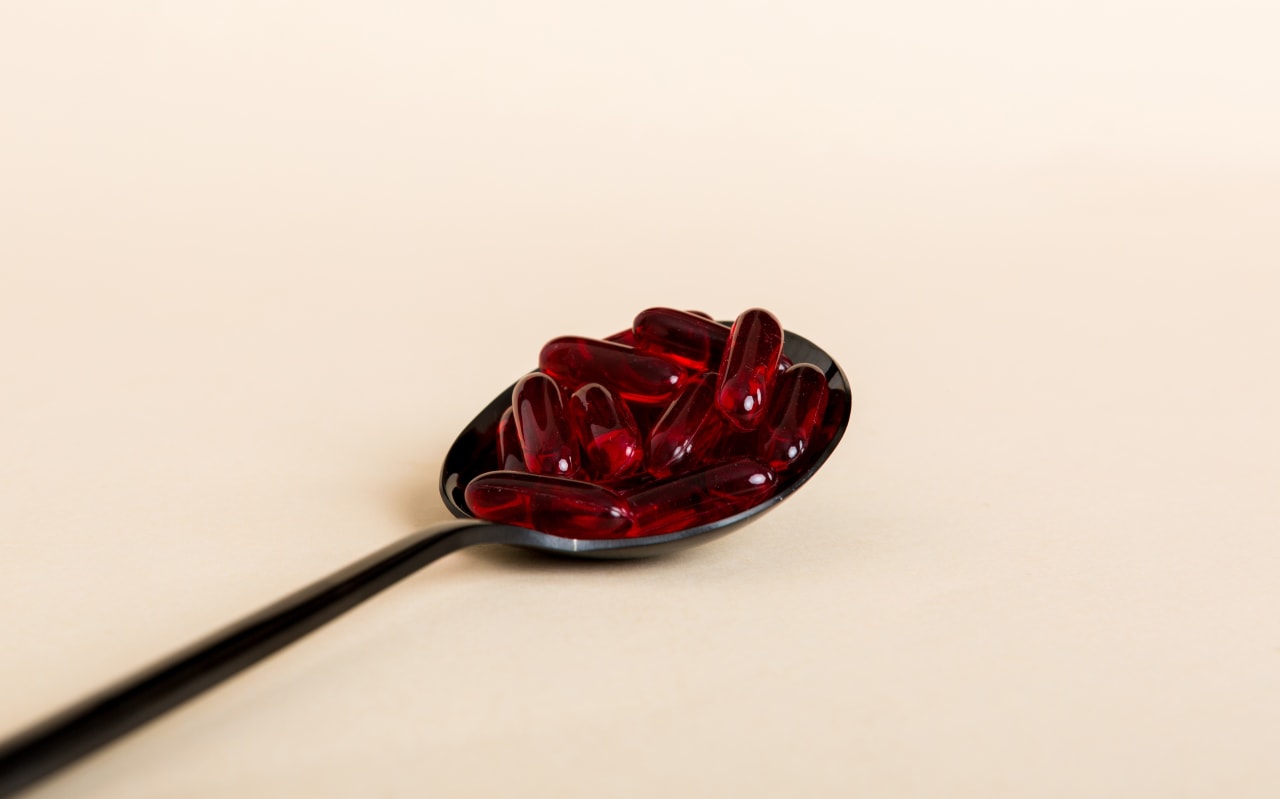
Astaxanthin is a red-orange carotenoid pigment naturally present in various marine organisms, including microalgae, crustaceans and fish, such as salmon. It is renowned for its powerful antioxidant properties, surpassing those of many other similar substances. Thanks to its ability to neutralise free radicals, astaxanthin is beneficial for skin and eye health and the immune system. It is also used in food supplements for its potential effects on reducing inflammation and improving athletic performance. Its growing popularity stems from its many health benefits.
What is astaxanthin?
Published on: Wednesday, June 14, 2023, Updated on: Wednesday, September 30, 2026
Astaxanthin is an antioxidant compound belonging to the carotenoid family, specifically the xanthophyll group. It is a bright red pigment that is synthesised by various marine micro-organisms[1], such as the unicellular green alga Haematococcus pluvialis - which is probably the best source of natural astaxanthin[2] - or fungi, such as the red yeast Phaffia rhodozyma. Astaxanthin is also present in wild salmon and certain crustaceans (lobsters and prawns) that feed on astaxanthin-producing micro-organisms.
Thanks to its exceptional antioxidant properties, astaxanthin is a valuable ally in the fight against oxidative stress, inflammation and associated diseases (cancer, cardiovascular disease, diabetes, neurodegenerative disorders, etc.). Astaxanthin is also effective for skin health, helping to combat the signs of ageing and sun damage.
Contents
Related products
Triple Magnesium Complex - 120 Capsules
Vitality
Stress
£15.00
article
Marine Iodine - 60 Capsules
Metabolism
Thyroid support
£7.00
article
Hyaluronic Acid - 60 Capsules
Anti-ageing
£14.00
1 article
Ashwagandha - 60 Capsules
Mental & physical well-being
£15.00
article
Optimised Curcumin - 30 Capsules
Joint comfort
£15.00
article
What is astaxanthin?
What are the benefits of astaxanthin?
Numerous studies have been conducted on the benefits of astaxanthin. Above all, it is its antioxidant and anti-inflammatory properties that give it beneficial effects in preventing or helping to combat certain diseases and/or disorders in which oxidative stress and inflammation are involved.
Powerful antioxidant activity
Reactive oxygen species, when present in excess in our bodies, cause damage to cellular components, such as DNA, lipids and proteins, leading to various diseases. Our bodies are equipped to defend themselves against oxidising species, but they can be overwhelmed by too many reactive oxygen species. This is where exogenous antioxidants can play an essential role in combating oxidative stress. Astaxanthin is considered to be a powerful antioxidant[3]. Among multiple carotenoids, including lycopene, β-carotene and lutein, astaxanthin has shown the highest antioxidant activity[4]. Its antioxidant power is far greater than that of vitamin C and vitamin E. Astaxanthin owes its exceptional antioxidant properties to its unique molecular structure. It also has the advantage of never becoming a pro-oxidant, unlike vitamin E, which can promote oxidation in high doses.
A meta-analysis of 12 randomised controlled trials involving 380 participants[5] showed that astaxanthin supplementation reduced blood levels of malondialdehyde, a compound produced by lipid peroxidation and used as a marker of oxidative stress.
Astaxanthin's powerful antioxidant properties enable it to combat the signs of ageing, particularly with regard to skin health and the functioning of the central nervous system[6]. Astaxanthin can compensate for the reduced effectiveness of the antioxidant defence system during the ageing process, helping to combat the damage caused by oxidative stress.
Anti-inflammatory properties
Astaxanthin has anti-inflammatory properties, mainly because it has the ability to act on the expression of inflammatory cytokines. These anti-inflammatory properties are beneficial and could be put to good use in a number of diseases caused by chronic inflammation. Additionally, by acting on inflammation, astaxanthin has been shown to have beneficial effects in animal models or cell lines as a neuroprotective compound in Alzheimer's and Parkinson's disease, as well as on eye and skin health. Astaxanthin is also thought to protect the liver and kidneys, as well as prevent atherosclerosis[7].
Randomised controlled trials have corroborated these results and confirmed astaxanthin's ability to fight inflammation. For example, taking 2 mg of astaxanthin a day for 8 weeks reduced plasma levels of C-reactive protein, a marker of inflammation, in young women in good health. At a dose of 8 mg/day, astaxanthin stimulates the immune system[8].
Beneficial effects on immunity
According to an experimental study, astaxanthin is capable of modulating lymphocyte immune responses[9]. In a randomised controlled trial[10], researchers noted an improvement in the immune response of healthy female participants who had received daily astaxanthin supplementation for 8 weeks.
A go-to for healthy skin
Studies report that astaxanthin can improve the general appearance of the skin, helping it to combat damage caused by external stressors, as well as relieving certain skin conditions. Astaxanthin can build up in the skin[11].
Sun exposure also subjects the skin to stress, particularly by encouraging the build-up of reactive oxygen species in the dermis and epidermis. Chronic exposure to the sun's ultraviolet rays contributes to sun-related skin ageing, clinically characterised by dryness, pigmentation, sagging skin and deep wrinkles[12].
Astaxanthin supplementation helps prevent skin ageing by improving hydration and elasticity, according to the results of a meta-analysis[13]. Another meta-analysis[14] reported similar results, concluding that a dose of 3 to 6 mg/day of astaxanthin could protect against skin damage caused by UV exposure.
In a study conducted on mice[15] suffering from atopic dermatitis, astaxanthin supplementation reduced skin irritation, inflammation and itching.
Astaxanthin can also be applied to the skin. One study[16] evaluated the effect of the combination of oral supplementation and topical administration of astaxanthin. A number of improvements in the appearance of the skin were observed, notably wrinkles, age spots, skin elasticity and texture, and the water content of corneocytes, the outermost layer of the skin. The combination of the two methods of administration amplifies the cosmetic effects of astaxanthin.
Healthier hair
A powerful antioxidant, astaxanthin also offers significant hair health benefits. By protecting cells from free radical damage, it helps to maintain healthy hair and strengthens its structure. Astaxanthin's anti-inflammatory properties may also play a role in reducing scalp inflammation, promoting an environment conducive to hair growth.
A beneficial effect on cognitive health
Multiple scientific articles suggest that astaxanthin is capable of preserving cognitive function. In a study conducted on mice, astaxanthin supplementation encouraged new neurons to form in the hippocampus, an area of the brain involved in memory[17]. Researchers also noted that astaxanthin improved spatial memory in mice. Astaxanthin's neuroprotective properties are linked to its antioxidant and anti-inflammatory properties, but also to its ability to maintain neuronal plasticity[18].
A randomised controlled trial[19] conducted on people complaining of memory loss concluded that astaxanthin supplementation at doses ranging from 6 to 12 mg/day for 12 weeks improved certain cognitive parameters.
A beneficial effect on heart health
Oxidative stress and inflammation are implicated in the development of cardiovascular disease. Astaxanthin is effective in combating both these phenomena[20]. In addition, one study[21] reported that astaxanthin had beneficial effects in preventing atherosclerosis - a cardiovascular risk factor - thanks to its antioxidant potential and anti-inflammatory properties[22], as well as its ability to slightly reduce blood sugar levels[23] and improve lipid profiles[24].
A meta-analysis of 7 studies involving 321 participants[25] suggests that astaxanthin may improve certain markers of metabolic syndrome, which is in itself a risk factor for cardiovascular disease. However, the researchers conclude that their results need to be consolidated by other studies.
Support for sports enthusiasts
Astaxanthin has been tested in top-level footballers. Supplementation for 90 days reduces the production of reactive oxygen species during physical training and strengthens the antioxidant defence system, thereby reducing muscle damage[26]. Its consumption is also recommended as part of sports nutrition.
Beneficial effects on gastrointestinal health
The gastrointestinal mucosa is constantly exposed to various sources of oxidative stress and inflammation, such as bacterial infections (Helicobacter Pylori), chronic alcohol consumption, smoking and non-steroidal anti-inflammatory drugs. Oxidative stress and inflammation are implicated in the development of gastrointestinal disorders (gastric ulcer, ulcerative colitis, gastric cancer, colorectal cancer, etc.). One article[27] listed the studies conducted on the impact of astaxanthin on gastrointestinal health. The authors came to multiple conclusions: astaxanthin could improve gastric ulcers by modulating the immune response and reducing oxidative stress, particularly when linked to the presence of Helicobacter Pylori bacteria; astaxanthin appears to inhibit cancer cell growth and metastasis (in experimental models of stomach and colon cancer) by modulating signalling pathways linked to cell spread and apoptosis. Finally, the authors reported a beneficial effect of astaxanthin on ulcerative colitis, a chronic inflammatory bowel disorder, thanks to its antioxidant and anti-inflammatory properties.
Astaxanthin for eye health
Astaxanthin's exceptional properties mean it has a positive impact on eye health[28]. Multiple studies suggest its possible beneficial effects for preventing and treating eye diseases, in particular dry eye syndrome and age-related macular degeneration. In a study of 60 people, astaxanthin supplementation at a dose of 6 mg twice a day improved the symptoms of dry eye syndrome[29]. Taking an antioxidant supplement containing astaxanthin increases tear production and improves the stability of the tear film needed to protect the eye. Researchers have noted a reduction in the level of reactive oxygen species present in tears when antioxidants are administered orally[30]. A number of studies have also shown a beneficial effect of supplementation with a mixture of antioxidants - including astaxanthin - on certain symptoms of AMD.
Possible anti-cancer properties
Laboratory studies on cells and animal models suggest that astaxanthin has anti-cancer properties. In colorectal cancer, melanoma and gastric carcinoma cell lines, astaxanthin has been shown to induce apoptosis - the mechanism by which cells destroy themselves. Astaxanthin also appears to restrict spreading in numerous experimental models and could improve the efficacy of conventional chemotherapeutic drugs on tumour cells[31].
All these results need to be confirmed in clinical trials.
Where does the astaxanthin in food supplements come from?
Natural astaxanthin has a higher antioxidant activity than synthetic astaxanthin, and is currently considered to be the only effective and safe source for human consumption[32]. It is obtained by extraction after cultivating the algae in bioreactors. The green microalga Haematococcus pluvialis builds up a high astaxanthin content under stressful conditions, such as high salinity, nitrogen deficiency, high temperature and light[33],[34].
Where can I find astaxanthin?
Astaxanthin is mainly found in natural sources, such as the green alga Haematococcus pluvialis, the red yeast Phaffia rhodozyma, wild salmon and certain shellfish. Organic farming guarantees the highest quality astaxanthin, with no residues of pesticides or other undesirable substances.
When should I take astaxanthin?
The ideal period for a course of astaxanthin can vary according to individual needs. Some people choose to take it during periods of intense sun exposure to boost protection against UV-induced damage. Others opt to take it regularly to enjoy its ongoing benefits.
What does of astaxanthin should I take?
Astaxanthin-rich oleoresin from the algae Haematococcus pluvialis is authorised for use in food supplements at doses ranging from 40 to 80 mg/day, corresponding to a maximum dose of 8 mg of astaxanthin per day. This dose is considered safe and takes into account any dietary intake, whose high estimate is 0.06 mg/kg body weight per day[35] for an adult.
How is astaxanthin used?
Astaxanthin can be used in a variety of ways:
As a food supplement in capsule form for its health, skin and hair benefits.
By adding foods rich in astaxanthin, such as salmon, to your diet.
By using astaxanthin-enriched hair care products or masks.
Precautions for use and contraindications to the use of astaxanthin
Although astaxanthin is generally well tolerated, precautions should be taken:
Follow recommended doses.
Consult a healthcare professional if you are pregnant, breastfeeding or have pre-existing medical conditions. Astaxanthin is not recommended for pregnant women.
Avoid excessive consumption, as it may lead to adverse effects.
Astaxanthin supplements should not be used as a substitute for a varied, balanced diet or a healthy lifestyle.
Keep out of reach of children.
Spotlight on Our Scientific Editor, Juliette Pouyat

Juliette Pouyat has been a scientific writer specialising in nutrition and health for 10 years. After studying chemistry, she wrote a thesis on the nutritional quality of infant milks and obtained a doctorate from the Institut National Agronomique Paris-Grignon. She is the author of numerous articles and several books on the links between food and health, food supplements and well-being. Juliette draws on recent scientific literature to write articles for the general public.
Bibliography
Astaxanthin: a review of its chemistry and applications
Higuera-Ciapara I, Félix-Valenzuela L, Goycoolea FM.
Astaxanthin: sources, extraction, stability, biological activities and its commercial applications--a review.
Astaxanthin as a King of Ketocarotenoids: Structure, Bioavailability and Antioxidant Properties.
Nair, A.; Ahirwar, A.; Singh, S.; Lodhi, R.; Lodhi, A.; Rai, A.; Jadhav, D.A.; Harish; Varjani, S.; Singh, G.; Marchand, J.; Schoefs, B.; Vinayak, V.
Antioxidant activities of astaxanthin and related carotenoids.
Naguib YM
Astaxanthin supplementation mildly reduced oxidative stress and inflammation biomarkers.
Baolan Ma, Jialin Lu, Tong Kang, Ming Zhu, Ke Xiong, Jinyu Wang.
The Role of Astaxanthin as a Nutraceutical in Health and Age-Related Conditions.
Bjørklund, G.; Gasmi, A.; Lenchyk, L.; Shanaida, M.; Zafar, S.; Mujawdiya, P.K.; Lysiuk, R.; Antonyak, H.; Noor, S.; Akram, M.; Smetanina, K.; Piscopo, S.; Upyr, T.; Peana, M.
Anti-inflammatory action of astaxanthin and its use in the treatment of various diseases Biomedicine & Pharmacotherapy, Volume 145
Zeynab Kohandel, Tahereh Farkhondeh, Michael Aschner, Ali Mohammad Pourbagher-Shahri, Saeed Samarghandian
Astaxanthin decreased oxidative stress and inflammation and enhanced immune response in humans.
Park JS, doi: 10.1186/1743-7075-7-18. PMID: 20205737; PMCID: PMC2845588.
Astaxanthin, a Carotenoid Stimulates Immune Responses by Enhancing
Lin KH, Lin KC, Lu WJ, Thomas PA, Jayakumar T, Sheu JR
Astaxanthin decreased oxidative stress and inflammation and enhanced immune response in humans.
Park JS, Chyun JH, Kim YK, Line LL, Chew BP.
Preventive effect of dietary astaxanthin on UVA-induced skin photoaging in hairless mice.
Komatsu T, Sasaki S, Manabe Y, Hirata T, Sugawara T.
Systematic Review and Meta-Analysis on the Effects of Astaxanthin on Human Skin Ageing. Nutrients.
Zhou X, Cao Q, Orfila C, Zhao J, Zhang L.
Effects of Astaxanthin Supplementation on Skin Health: A Systematic Review of Clinical Studies.
Ng QX, De Deyn MLZQ, Loke W, Foo NX, Chan HW, Yeo WS
Cosmetic benefits of astaxanthin on human subjects.
Tominaga K, Hongo N, Karato M, Yamashita E.
Neuroprotective mechanisms of astaxanthin: a potential therapeutic role in preserving cognitive function in age and neurodegeneration.
Grimmig B, Kim SH, Nash K, Bickford PC, Douglas Shytle R.
Effects of astaxanthin-rich Haematococcus pluvialis extract on cognitive function: a randomised, double-blind, placebo-controlled study.
Katagiri M, Satoh A, Tsuji S, Shirasawa T. J
Astaxanthin, oxidative stress, inflammation and cardiovascular disease.
Fassett RG, Coombes JS.
Potential Anti-Atherosclerotic Properties of Astaxanthin.
Kishimoto Y, Yoshida H, Kondo K.
Antioxidant and anti-inflammatory mechanisms of action of astaxanthin in cardiovascular diseases (Review).
Pereira CPM, Souza ACR, Vasconcelos AR, Prado PS, Name JJ.
Lipid profile and glucose changes after supplementation with astaxanthin: a systematic review and meta-analysis of randomized controlled trials.
Ursoniu S, Sahebkar A, Serban MC, Banach M.
Administration of natural astaxanthin increases serum HDL-cholesterol and adiponectin in subjects with mild hyperlipidemia.
Yoshida H, Yanai H, Ito K, Tomono Y, Koikeda T, Tsukahara H, Tada N.
Astaxanthin Influence on Health Outcomes of Adults at Risk of Metabolic Syndrome: A Systematic Review and Meta-Analysis.
Leung, L.Y.-L.; Chan, S.M.-N.; Tam, H.-L.; Wong, E.S.-W.
Effect of astaxanthin supplementation on muscle damage and oxidative stress markers in elite young soccer players.
Djordjevic B, Baralic I, Kotur-Stevuljevic J, Stefanovic A, Ivanisevic J, Radivojevic N, Andjelkovic M, Dikic N.J
Anti-Oxidant and Anti-Inflammatory Effects of Astaxanthin on Gastrointestinal Diseases
Lee, J.; Kim, M.-H.; Kim, H.
Recent Advances and the Mechanism of Astaxanthin in Ophthalmological Diseases.
Yang M, Wang Y.
Benefits and Safety of Astaxanthin in the Treatment of Mild-To-Moderate Dry Eye Disease. Front Nutr.
Tian L, Wen Y, Li S, Zhang P, Wang Y, Wang J, Cao K, Du L, Wang N, Jie Y.
A randomized, double-blind, placebo-controlled study of oral antioxidant supplement therapy in patients with dry eye syndrome.
Huang JY, Yeh PT, Hou YC.
Astaxanthin anticancer effects are mediated through multiple molecular mechanisms: A systematic review.
Faraone I, Sinisgalli C, Ostuni A, Armentano MF, Carmosino M, Milella L, Russo D, Labanca F, Khan H.
Astaxanthin sources: Suitability for human health and nutrition.
Capelli, B.; Talbott, S.; Ding, L.
Influence of stress on astaxanthin production in Haematococcus pluvialis grown under different culture conditions
R Sarada, Usha Tripathi, G.A Ravishankar.
Influence of different culture conditions on yield of biomass and value added products in microalgae.
Sarada R., Ranga Rao A., Sandesh B.K., Dayananda C., Anila N., Chauhan V.S., Ravishankar G.A.
Safety of astaxanthin for its use as a novel food in food supplements.
Turck D, Castenmiller J, de Henauw S, Hirsch-Ernst KI, Kearney J, Maciuk A, Mangelsdorf I, McArdle HJ, Naska A, Pelaez C, Pentieva K, Siani A, Thies F, Tsabouri S, Vinceti M, Cubadda F, Engel KH, Frenzel T, Heinonen M, Marchelli R, Neuhäuser-Berthold M, Poulsen M, Sanz Y, Schlatter JR, van Loveren H, Ackerl R, Gelbmann W, Steinkellner H, Knutsen HK.

Frequently Asked Questions
Associated tips
Nutrition tips
Nutrition tips

Nutrition tips
Muscle and joint comfort tips
Nutrition tips


