Iron is a trace element essential for life and occurs in nature in various forms. In its pure state, it is a metal found in ores such as haematite and magnetite. In the environment and within the body, it exists in aqueous solutions, where it can dissolve in water in the form of ferrous ions Fe²⁺ or ferric ions Fe³⁺. These ions play a crucial role in numerous biological and environmental processes.
In the human body, iron is mainly present in two forms:
Haem Iron: Bound to haemoglobin (in red blood cells) and myoglobin (in muscles), it is essential for the transport and storage of oxygen
Non-Haem Iron: Found in plant-based foods, it is absorbed less efficiently than haem iron but remains a significant source for the body
Why Is Iron Important? It plays a role in forming haemoglobin, a protein in red blood cells that transports oxygen from the lungs to tissues. It also contributes to the synthesis of myoglobin, a metalloprotein essential for muscles and involved in numerous enzymatic reactions.
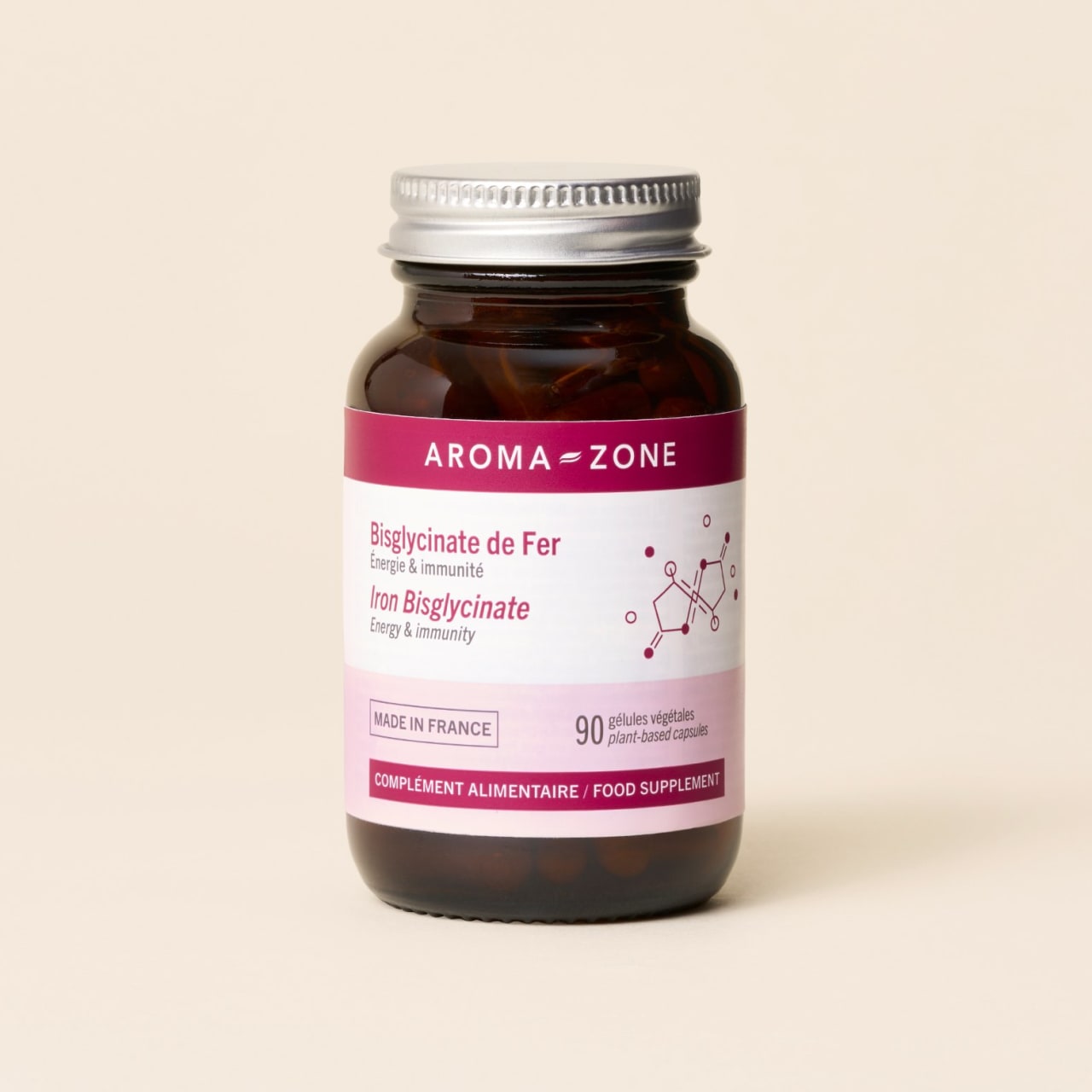
You may therefore need to take supplements. In reality, not all forms of iron are created equal. Iron bisglycinate is a chelated form, meaning the iron is bound to two molecules of glycine, an amino acid. This combination makes the iron more stable and easier for the body to absorb. It reduces the potential side effects often associated with traditional iron supplements such as ferrous sulphate, gluconate or fumarate: digestive problems, a metallic taste, nausea, etc.