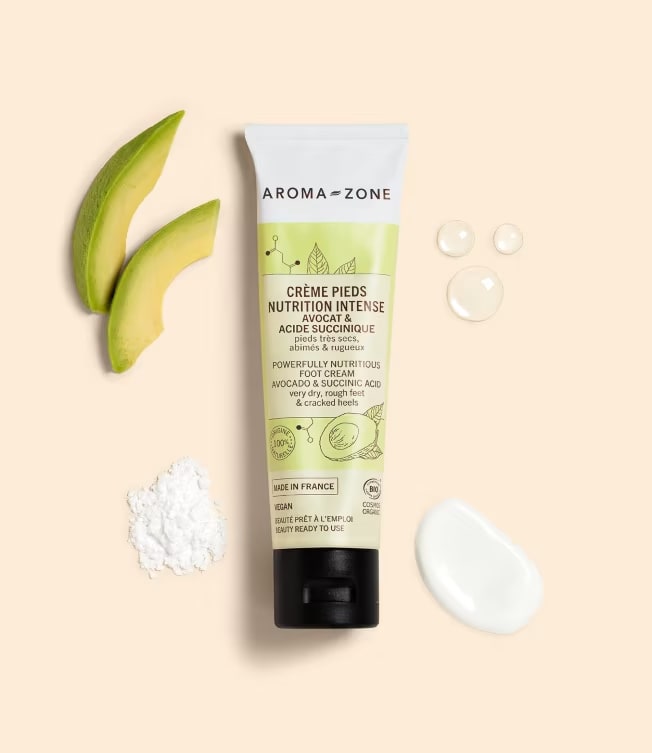
Dry feet are a common problem affecting many people. Indeed, this part of our body is put under a great deal of strain every day. On average, we take 7,000 steps a day. Faced with repeated pressure and strain on our feet, the skin thickens and hardens. This is a natural protective mechanism known as hyperkeratosis.
It’s also important to note that the feet contain very few sebaceous glands. These glands produce sebum, an oily substance that forms part of the hydrolipidic film and ensures the skin’s protection and hydration. Our feet, on the other hand, are densely populated with sweat glands, which are responsible for secreting sweat. And contrary to popular belief, water does not moisturise the skin! In fact, it tends to dry it out by stripping away the lipid film. This is particularly true of very hot water, salt water and chlorinated water.
Consequently, repeated pressure and friction on the feet, combined with a lack of hydration, contribute to dry skin. The areas most affected are the heel, the sides of the foot and the arch beneath the toes. It is on these areas that calluses develop. The skin becomes very dry, rough and yellow. The condition is initially superficial, and cracks may begin to appear in the epidermis. If left untreated, the cracks can deepen and reach the lower layers of the epidermis, resulting in very painful fissures. If your skin is affected by this type of problem, you’ll certainly find our article on naturally soothing cracks on the hands and feet of interest.