Short answer: not necessarily, but often so if you neglect the basics.
Lab vs. DIY at a glance
By Lou Dumas
Published on: Friday, October 24, 2025, Updated on: Tuesday, October 13, 2026
In recent years, homemade cosmetics , or Do It Yourself (DIY), has been attracting a growing number of people keen to take back control of their skincare. Making your own products does indeed allow you to choose each ingredient, avoid certain controversial substances and create bespoke formulas. But this freedom often raises a key question: is making cosmetics at home really safe? Opinions are divided. We aim to shed some light on the matter by examining scientific data, user feedback and best practice.
Contents
The belief that DIY (Do It Yourself) cosmetics are riskier than laboratory-produced products is not an absolute truth. Whilst a reputable laboratory offers safety guarantees through quality controls, compliance with regulations and numerous validation stages, a well-guided and meticulous homemade preparation can also be safe, provided you know your limits.
Short answer: not necessarily, but often so if you neglect the basics.
Lab vs. DIY at a glance
Laboratory-produced products all undergo structured testing (stability, compatibility, tolerance, microbiological checks) and have documented traceability. | At home, the most common problems stem from a lack of validation (pH, water activity, choice of preservative), incorrect dosing of active ingredients and poor hygiene. |
A recent review highlights, with regard to conventional products, toxicological challenges linked to certain compounds and the effects of mixtures, which have undoubtedly helped to fuel demand for safer alternatives. However, this does not excuse formulation errors in DIY products. In other words, safety is not an inherent quality: it is achieved through method, whether in the laboratory or at home (1).
Three main categories of risk stand out:
Microbiology and stability: any product containing water (hydrolates, gels, emulsions, etc.) is at risk of contamination and degradation if the preservative system is poorly chosen, underdosed, or if the pH is not correctly adjusted. Without microbial load testing, the risk may be underestimated (6).
Formulation errors: overdosing of active ingredients (acids, essential oils), unexpected interactions between ingredients, emulsion instability (phase separation, oxidation)... Analyses of DIY blogs reveal a frequent lack of chemical knowledge and inaccuracies in dosing (2).
Claims and a false sense of security: ‘natural’ is not synonymous with ‘harmless’. Certain natural molecules are irritants and/or sensitising agents. Conversely, the industry is making progress on better-characterised substitutes, tested for their efficacy and safety (3).
Consequently, the safety of a cosmetic product depends not only on the quality of the ingredients, but also on their combination, their proportions and the conditions under which they are prepared. Before embarking on making , it is therefore essential to think like a formulator.
We’ve put together a checklist inspired by best practices from industry professionals to help you think “like a pro” at home:
DIY areas | Points to bear in mind |
Formula | Calculate in mass percentages (express each ingredient as a percentage of the total weight of the formula), check for compatibility (electrolytes/gelling agents, surfactant charges) and the target pH range for each active ingredient. Consult reference works on natural ingredients (4). |
Hygiene and equipment | Disinfect and prepare the work surface; use only sterilised containers; keep a batch record (date, ingredients, pH, density). |
Preservation | Select a preservative suited to the nature of the formulation (emulsion, aqueous gel, lotion), its pH and water activity; incorporate antioxidants where necessary. |
Stability | Carry out in-house mini-tests (heat/cold cycles, light exposure, 2–4 weeks) to monitor odour, appearance, viscosity and pH. Reformulate in the event of degradation. |
Tolerance | Adhere to the recommended usage ranges for active ingredients; avoid using essential oils on sensitive areas or where there are contraindications; carry out a patch test before widespread use. Exercise particular caution with at-risk groups. |
Labelling and traceability | Note the product name, its use-by date (UBD), storage conditions and any precautions. Keep a record of the formula and calculations so that it can be reproduced or corrected if necessary. |
Good to know: ‘Water activity’ refers to the amount of free water available in a formulation: the higher it is, the greater the potential for microbial growth, hence the need for a suitable preservative. The pH, meanwhile, determines the acid-base balance of the skincare product: it influences both skin tolerance and the effectiveness of the preservative. A pH that is too high encourages bacterial growth, whilst a pH that is too low irritates the skin, hence the importance of measuring and adjusting it precisely.
Partly true. DIY cosmetics are not, in theory, any less safe than lab-formulated products: they only become so when made without a proper method, without monitoring key parameters and without sufficient knowledge (1)(2). Conversely, the cosmetics industry still has room for improvement regarding certain ingredients and is moving towards safer alternatives (3).
Highly personalised formulations: textures, active ingredients, fragrances
Transparency regarding composition combined with the ability to avoid certain ingredients (such as some preservatives, colourants and strong fragrances), within the limits of stability requirements
Fresh, minimalist formulations, beneficial for reactive skin, provided preservation is properly ensured.
The possibility of systematic microbiological analyses and extensive stability testing
The correct dosage of active ingredients, which can lead to a pH outside the target range or emulsification errors
Adequate hygiene and traceability .
DIY cosmetics reflect a profound shift in our relationship with beauty products. According to several recent market studies, nearly a third of French female consumers say they have made a homemade cosmetic at least once, and over 60 per cent of them state that they are looking for more natural and transparent formulations. This craze is part of a wider movement towards simplicity, where understanding ingredients and reducing waste are valued. This quest for transparency is part of an international trend that began in the 2010s with the rise of the clean beauty, analysed by O’Connor and Dunn in *No More Dirty Looks* (5).
At the same time, the cosmetics industry is tightening its safety and sustainability standards: the gradual phasing out of controversial preservatives, increased use of naturally derived ingredients and the development of responsible supply chains. According to a 2025 review, over 40 per cent of new ingredients registered in Europe now come from renewable sources or green chemistry processes (3).
Rather than a dichotomy between DIY and the laboratory, we are therefore witnessing a convergence of practices: the rigour of the laboratory inspires homemade formulations, whilst the creativity and transparency stemming from DIY influence established beauty brands. The challenge is no longer really about choosing a side, but about fostering a shared sense of maturity: understanding, testing, documenting and ensuring the safety of every stage of production, whether artisanal or industrial. Within this movement, Aroma-Zone occupies a unique position as a French pioneer in DIY cosmetics, capable of combining scientific knowledge, transparency and the joy of making things at home.
To put theory into practice, here are a few simple and reliable formulas that have been highly praised by our community. These recipes are an excellent introduction to the world of DIY cosmetics. Easy to make, they allow you to familiarise yourself with the right techniques whilst creating natural skincare products that are highly valued for their effectiveness.
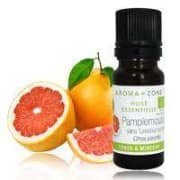
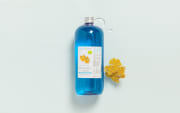
Clear Skin Facial Cleansing Gel: a refreshing gel infused with grapefruit essential oil, which has toning properties, and enriched with moisturising active ingredients to cleanse the skin without drying it out – ideal for combination skin.
Toner for oily skin: a perfect formula to purify the skin and clear it of blemishes thanks to the purifying action of tea tree. Helichrysum hydrosol provides soothing and anti-redness benefits to even out the complexion.
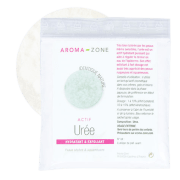
“Hydration Concentrate” Face Serum: containing just three ingredients (Aloe vera gel, urea and lemon essential oil), this ultra-easy-to-make moisturising face serum recipe allows you to create a natural skincare product with a precisely controlled formulation.
For all Aroma-Zone recipes, please remember to follow the ‘Precautions’ section and the pH guidelines provided on each recipe sheet, and to adhere to the storage advice given.
These testimonials illustrate the pleasure and confidence that comes from making your own skincare products, in a safe and accessible environment.
“I’ve been a customer for several years now. As I’m very sensitive to cosmetics in general, I’m delighted to be able to use hypoallergenic products that offer good value for money. I really like the recipe guides that let you make your own products. Since then, I’ve got stuck in: washing powder, soap, hair care, anti-acne lotion for my sons...” Loïs
“Aroma-Zone is a brilliant guide for taking your first steps into DIY cosmetics – accessible to everyone. No more chemicals of any kind – it’s back to nature!” Salimata
To practise safe DIY cosmetics, you must start with certified and well-documented ingredients, work on a clean surface with disinfected equipment and sterilised containers. It is also important to measure percentages to the nearest hundredth using a balance, check the pH and choose a preservative suited to the formula (aqueous nature, pH range, water activity), without improvising the doses. Keeping a batch record (date, ingredients, suppliers, batch number, pH, stability observations), carrying out mini-tests (heat/cold, light) and discarding any preparation that changes in smell, colour or texture remains essential. Finally, it is recommended to carry out a patch test before widespread application and to exercise greater caution in cases of sensitive skin, pregnancy or breastfeeding, and skin conditions.
Safety requires a methodical approach; it is never a matter of luck. Always design your formulations based on the physico-chemical context: first target the desired pH and texture, then choose compatible active ingredients and a suitable preservative system. Monitor the water activity (gels and emulsions with a high water content require robust preservation) and package in suitable containers (airless dispensers, opaque bottles) to minimise oxidation and contamination. Document each trial and repeat the process.

Lou graduated from HEC in 2012. She gained ten years of experience in marketing for cosmetics and perfumes before becoming an independent consultant in this field. She recently completed a three-year naturopathy program at the European College of Holistic Naturopathy (CENATHO, Paris) with the goal of supporting the physical and mental health of the people she works with through a holistic approach to lifestyle.
Alnuqaydan A. The dark side of beauty: an in-depth analysis of the health hazards and toxicological impact of synthetic cosmetics and personal care products.
Frontiers in Public Health, 2024. https://pubmed.ncbi.nlm.nih.gov/39253281/
Couteau C. A review of homemade cosmetics based on a study of 150 blogs.
International Journal of Cosmetic Science, 2023. https://onlinelibrary.wiley.com/doi/full/10.1111/ics.12862?
Couceiro B. Promoting health and sustainability: exploring safer and innovative replacements for harmful cosmetic ingredients.
Current Opinion in Green and Sustainable Chemistry, 2025. https://www.sciencedirect.com/science/article/pii/S2352554124004765?
Modern Cosmetics: Ingredients of Natural Origin, A Scientific View.
2018 edition. Reference work cited and presented by Humblebee & Me: https://www.humblebeeandme.com/modern-cosmetics-ingredients-of-natural-origin/
O’Connor S., Dunn J. No More Dirty Looks
The Truth About Your Beauty Products and the Ultimate Guide to Safe and Clean Cosmetics. 2010
DIY Skincare Products vs Store-Bought (Guide).
Minerva Magazine, 2024: https://www.revistaminerva.pt/comprehensive-guide-to-crafting-quality-control-and-safety-in-homemade-cosmetics/

Home Fragrances