

Does magnesium for sleep really work?
By Lou Dumas
Published on: Tuesday, March 12, 2024, Updated on: Thursday, October 29, 2026
Found naturally in many foods such as dark chocolate, wholegrains, nuts, legumes, spinach and oysters, magnesium is an essential mineral involved in numerous bodily functions, yet many of us are currently deficient in it! The cause? A stressful lifestyle and a fast-paced routine that depletes magnesium reserves, not to mention the emotional upheavals that can occur.
In this context, what impact can a magnesium deficiency have on sleep, a problem many of us struggle with, including difficulty falling asleep, waking up during the night and insomnia?
That's what Aroma-Zone invites you to discover in this article, complete with solutions.
Contents
Related products
Vitality
Stress
£15.00
article
Mental & physical well-being
£15.00
article
What is magnesium?
Magnesium is an essential mineral for our health and well-being; it is indispensable for many of our body’s vital functions and can also contribute to skin hydration, elasticity, and radiance. Magnesium is a fundamental element for our overall health, contributing to the proper functioning of our body on various levels.
How Much Magnesium Do You Need?
Symptoms of magnesium deficiency manifest as cramps, particularly nighttime cramps in the calves, but also eyelid twitching and, more generally, fatigue and muscle pain. Feeling particularly nervous and irritable can also be a clear sign of a magnesium deficiency.
To learn more about the symptoms, see our article: Magnesium deficiency: How to recognise the signs and treat it naturally?
In adults, daily magnesium requirements range from 250 to 400mg. Note that, on average, men have higher magnesium requirements than women. Pregnant and breastfeeding women, as well as athletes, have increased daily magnesium needs.
Magnesium deficiencies are also very common. Some studies estimate that a significant proportion of the population may be deficient in magnesium, with certain experts suggesting the figure could be as high as 80% or more.
What effects can a magnesium deficiency have on sleep?
Magnesium is an essential mineral for the human body, involved in numerous biological functions, including those related to sleep:
Difficulty falling asleep: Magnesium helps regulate the cascade of neurotransmitters involved in the onset of sleep. A magnesium deficiency can, among other factors, disrupt these natural processes, making it harder to fall asleep.
Restless sleep: A magnesium deficiency can lead to lighter, disrupted sleep, with frequent awakenings preventing the deep sleep phases necessary for restful nights.
Muscle cramps and tension: Magnesium plays a key role in muscle relaxation. A magnesium deficiency can cause muscle cramps and tension that may disrupt sleep. Some studies suggest that a magnesium deficiency may be linked to restless legs syndrome, another potential sleep disturbance. On this topic, see our article: Restless Legs Syndrome: What Is It, What Causes It, and How Can It Be Effectively Treated? may be of interest to you.
Increased stress and anxiety: Magnesium has a calming effect on the nervous system. Low magnesium levels increase stress and anxiety, which can also interfere with the ability to sleep well.
The Benefits of Magnesium for Sleep
In adults, scientific research is conclusive: regularly taking magnesium supplements can help improve sleep quality, particularly by promoting muscle relaxation and regulating the hormones and neurotransmitters involved in the sleep-wake cycle, foremost among which is melatonin. For more details on what is known as the sleep hormone and its implications for the biological clock, you can consult our other article: Everything You Need to Know About Melatonin.
The benefits of magnesium on sleep are therefore both direct and indirect: on the one hand, daily magnesium intake undeniably impacts physiology, leading to more restful sleep and reduced fatigue. On the other hand, magnesium supplementation also contributes to more restful nights by alleviating stress and muscle tension.
When and how should you take magnesium to sleep better?
What is the best magnesium supplement to help you sleep?
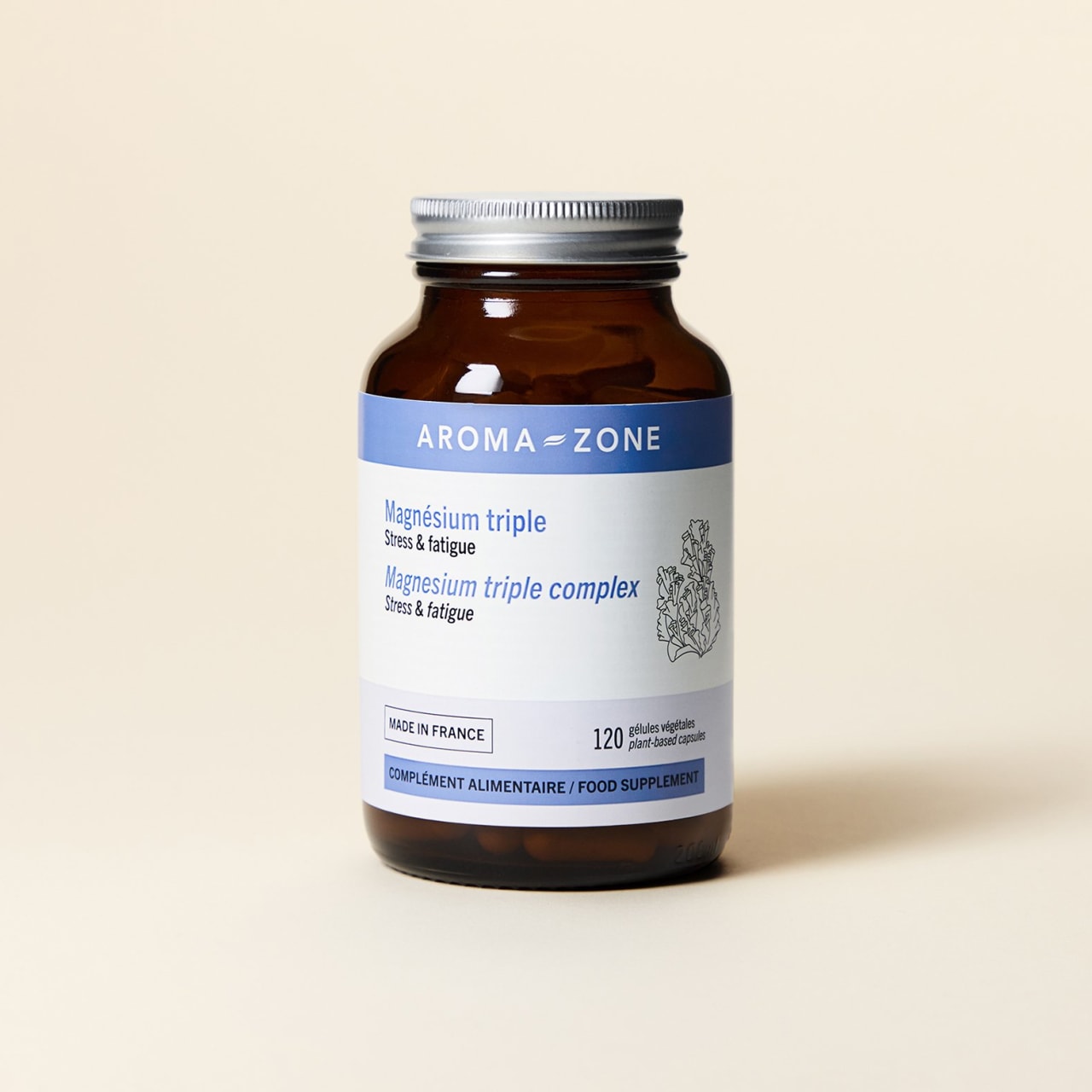
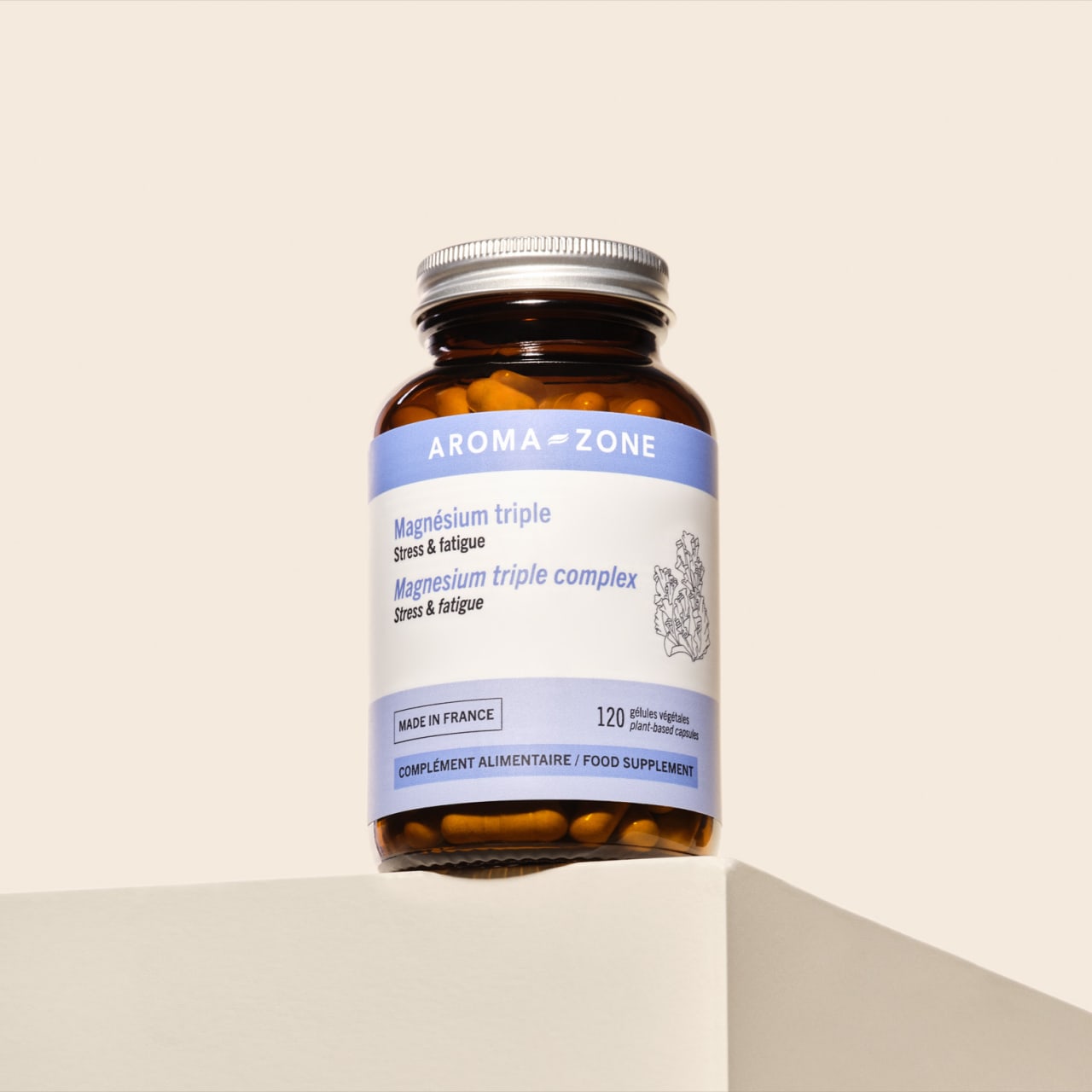
At Aroma-Zone, we’ve chosen to offer you Triple Magnesium Capsules, a blend of three forms of magnesium:
Magnesium bisglycinate, renowned as one of the best forms of magnesium due to its high bioavailability and excellent digestive tolerance. This magnesium bisglycinate is 100% pure, 100% chelated, and free of magnesium oxide, which is often added to increase the magnesium content of bisglycinate, but which has low bioavailability. This high-quality magnesium bisglycinate naturally contains 11% magnesium by weight.
Marine magnesium derived from a highly purified seawater extract sourced off the coast of Ireland: this 100% naturally sourced form of magnesium contains 72 other trace minerals that work synergistically to optimize magnesium’s effectiveness in the body. Studies also show that it is well absorbed by the body.
Organic sea lettuce extract, a 100% natural form of magnesium at a 25% concentration: which increases the magnesium content of this dietary supplement, thereby reducing the number of capsules needed daily.
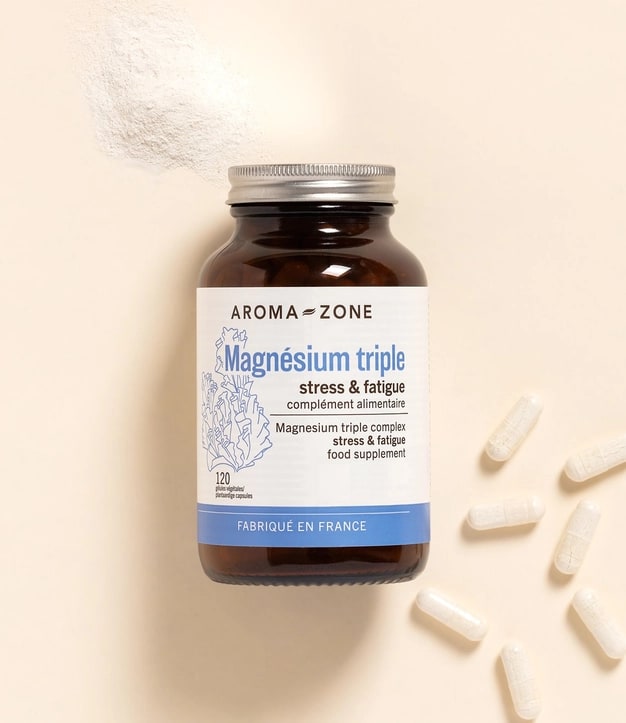
Magnesium Triple 120 capsules - Dietary supplement
This dietary supplement combines three forms of magnesium for optimal effectiveness, combining high bioavailability with a high magnesium content: Magnesium Bisglycinate, Marine Magnesium, and Organic Sea Lettuce extract.
What is the recommended dosage?
As a result, taking 3 capsules per day of this dietary supplement with a large glass of water covers the most commonly recommended daily intake of magnesium, contributing to better sleep quality. It is important to note that this formula contains no unnecessary additives.
When should you take magnesium: morning or evening?
In reality, Magnesium capsules can be taken at any time of day, with or without meals. However, if the goal of the treatment is to improve sleep quality, taking them at bedtime should be considered, as their relaxing effects can only be beneficial for a restful night’s sleep.
How long does it take for magnesium to take effect?
When dealing with a magnesium deficiency, it may take anywhere from a few hours to several weeks of treatment to see significant improvements.
Magnesium and Sleep: Contraindications
Generally speaking, there are few contraindications associated with magnesium treatments aimed at improving sleep quality. However, our dietary supplement Triple Magnesium remains:
For adults only
Subject to consultation with a healthcare professional during pregnancy and breastfeeding
May have a laxative effect in some people
Subject to a doctor’s advice in case of thyroid issues, as the organic sea lettuce extract (seaweed) provides a small amount of iodine (< 10 µg for the daily dose of 3 capsules, or less than 6.7% of the Reference Nutrient Intake of 150 µg/day for iodine).
Expert advice
Don’t forget essential oils to give your sleep a boost! Our trio of anti-stress and sleep-promoting essential oils: Sweet Orange, Marjoram, and Petitgrain Bigarade is the perfect place to start.
Finally, if you have persistent sleep problems—regardless of your situation—we can’t stress this enough: don’t go it alone; seek help. Your primary care physician can refer you to more specialised support if needed.
Article written by Lou Dumas, Naturopath

Lou graduated from HEC in 2012. She spent ten years working in marketing for the cosmetics and fragrance industries before becoming an independent consultant in the field. She recently completed a three-year naturopathy programme at the European College of Holistic Naturopathy (CENATHO) in Paris, with the aim of supporting the physical and mental wellbeing of the people she works with through a holistic approach to lifestyle.
Bibliography
ANSES - Nutritional Reference Values for Vitamins and Minerals
https://www.anses.fr/fr/content/les-r%C3%A9f%C3%A9rences-nutritionnelles-en-vitamines-et-min%C3%A9raux
EREN - The SU.VI.MAX Study
https://eren.univ-paris13.fr/index.php/fr/etudes-et-cohortes/75-l-etude-su-vi-max.html
Alternative Santé - Better than capsules: magnesium that’s 250 million years old
https://www.alternativesante.fr/magnesium/mieux-que-les-gelules-du-magnesium-vieux-de-250-millions-d-annees

Frequently Asked Questions
Associated recipe

Associated tips

Muscle and joint comfort tips
Dietary supplements

Nutrients, Vitamins, Minerals & Antioxidants
Nutrients, Vitamins, Minerals & Antioxidants
Dietary supplements
Nutrients, Vitamins, Minerals & Antioxidants


