Which active ingredients help you sleep better?
Published on: Monday, November 09, 2026, Updated on: Thursday, November 12, 2026
Active ingredients for better sleep give pride of place to naturally sourced ingredients, and Aroma-Zone offers a range of these in the form of herbal teas or botanical blends. This is particularly true of the brand’s melatonin food supplement, whose key active ingredient is derived from St John’s Wort using gentle extraction methods that avoid the use of chemical solvents. At a time when nearly one in five French people are said to be struggling with insomnia (4), these approaches, inspired by aromatherapy and phytotherapy, offer real cause for hope.
Contents
Related products
Falling asleep
£15.00
article
Anti-ageing
Repairing
£4.00
100 g
Mental & physical well-being
£15.00
article
In brief
All active ingredients designed to improve sleep work in their own specific ways and do not address the same sleep disorders.
Sedative plants are often regarded as essential, but few of them have proven efficacy in humans.
Melatonin remains a solid clinical benchmark, particularly in cases of transient circadian rhythm disorders.
What are the common causes of insomnia, and which active ingredients should you choose?
KEY POINTS
Occasional insomnia is usually linked to temporary events and disappears once these have passed, whilst chronic insomnia is caused by several factors that perpetuate sleep difficulties over the long term, even after the initial trigger has disappeared.
Insomnia refers to involuntary sleep deprivation, which may be occasional (linked to a specific trigger) or chronic (more than three episodes of insomnia per week for at least three months) (4). It often manifests as difficulty falling asleep, waking up during the night or waking up too early. Contrary to popular belief, the problem is not confined to our nights, as the impact of insomnia extends into the day, with, for example, a tendency to doze off during the day or even to fall asleep.
According to Spielman’s 3P model (5), the development of chronic insomnia is thought to be based on:
the presence of predisposing factors (genetic vulnerability, sensitivity to stress, etc.);
the emergence of precipitating factors (emotional shock, physical pain, stressful events, etc.);
the persistence of perpetuating factors (changes in habits, time spent in bed, etc.).
If you have recently started experiencing sleep difficulties, the key is to start addressing your predisposing factors (as far as possible…) as well as the precipitating factors. Again, not all of these can be changed; the main aim is to minimise their impact on your sleep. The choice of which category of active ingredients to prioritise therefore depends heavily on the factor you identify. In the case of stress, for example, you might opt for active ingredients that help to calm the nervous system.
Another scenario: if you want to prevent a brief bout of insomnia from turning into chronic insomnia, it is the perpetuating factors that will make the difference. The good news is that it is generally easier to address these factors than the predisposing or precipitating ones. Whilst certain active ingredients designed to improve sleep (e.g. relaxants) may well help you sleep more comfortably, research suggests that cognitive behavioural therapy for insomnia is a better option (6).
Which active ingredients help you fall asleep more quickly?
KEY POINTS
Certain active ingredients can help you fall asleep more quickly by targeting the physiological mechanisms involved in falling asleep.
Sedative active ingredients are probably the best known for reducing the time it takes to fall asleep. However, there are other categories of substances that can help you fall asleep more quickly.
Categories of active ingredients | Explanations |
Active ingredients that regulate the circadian rhythm. | They act on the biological signals that tell the body to prepare for sleep. They are particularly recommended when there is an imbalance in the sleep-wake cycle. The best-known active ingredient in this category is melatonin (10). |
Active ingredients that act on feelings of stress. | They help to alleviate feelings of tension and anxiety that may interfere with falling asleep. However, it is sometimes difficult to say for certain whether they are truly effective in reducing the time taken to fall asleep. Lavender, Ashwagandha (11) and lemon balm (12) fall into this category. |
Active ingredients that modulate brain activity. | They are capable of influencing certain neurophysiological systems involved in the mechanisms of wakefulness and sleep. However, studies on these substances remain few in number and lack depth. Some examples: GABA (7), L-theanine (8), glycine (9). |
Active ingredients that promote thermoregulation. | They target the mechanisms that regulate body temperature as we fall asleep, such as the redistribution of heat to the extremities. Whilst this phenomenon is well understood, the efficacy of active ingredients capable of influencing thermoregulation is less well established. glycine is one of the main active ingredients studied to date (13). |
Are valerian, passionflower and lime blossom the only effective sedative plants?
KEY POINTS
Lemon balm, valerian, hops and California poppy are among the plants traditionally recommended for consumption to help you sleep better.
Passionflower has been studied more for its anxiolytic effects than for any potential sedative effects, as has lime blossom. Strictly speaking, sedative plants help to lower alertness levels or reduce the activity of the central nervous system, which can sometimes cause drowsiness. Valerian does indeed have a reputation as a sedative plant, but it is not the only one, nor even the most well-documented in this category. Read also: Sleep better with natural plants and herbal teas.
Plant | Details |
Lemon balm | In a randomised study conducted in 2002, participants reported reduced alertness as well as changes in cognitive performance that varied depending on the dose taken (14). |
Valerian | It contains, in particular, valerenic acid, an active compound that has been the subject of several studies for its interactions with the GABAergic system (which plays a role in the sleep-wake cycle, particularly via brain alertness). |
Hops | Its bitter acids and oil may be involved in sedative effects. |
Eschscholtzia | Also known as ‘California poppy’, it is sometimes recommended for its relaxing and potentially sedative effects, although it has mainly been studied in combination with other plants (15). |
Which active ingredients are most effective for a better night’s sleep?
KEY POINTS
According to the current state of research, melatonin still appears to be the most promising active ingredient for a better night’s sleep.
There is sometimes a significant gap between the active ingredients traditionally reputed to have sleep-enhancing benefits and those backed by the strongest scientific evidence. The selection below lists five active ingredients that have the advantage of being supported by relatively robust clinical evidence of their effectiveness.
Active ingredient | Key features |
Melatonin | This is a hormone involved in synchronising sleep-wake cycles. In particular, it is thought to reduce the time taken to fall asleep (16). |
L-theanine | This amino acid may improve overall sleep quality, albeit subjectively (17). It occurs naturally in tea. |
Saffron | A recent randomised trial from 2025 suggests that it may help reduce the severity of discomfort associated with insomnia (18). |
Ashwagandha | Regarded as an adaptogen, it has shown very encouraging effects on sleep, particularly in people with insomnia (11). |
Lavender | Its benefits for sleep are thought to stem mainly from its ability to reduce anxiety (19). |
How do you choose the right active ingredient for your sleep problem?
KEY POINTS
The active ingredients best suited to helping you sleep better may vary depending on whether you have trouble falling asleep, are experiencing occasional stress, or wake up during the night.
Not all sleep problems stem from the same causes or involve the same physiological processes. Similarly, active ingredients designed to improve sleep can rarely address all these factors at once. Here, then, is some guidance to help you make the right choice.
Difficulty falling asleep
This may apply to you if… it takes you more than thirty minutes to fall asleep after getting into bed, even if you’re tired and didn’t get much sleep the night before. This delay may be accompanied by rumination and physical or psychological tension.
Substances to consider: opt for melatonin if your difficulty falling asleep stems from a disruption to your biological clock. In other cases, you could try L-theanine, which appears to produce subjective but encouraging results in reducing the time it takes to fall asleep.
Stress and anxiety
This may apply to you if… you remain mentally hyperactive at bedtime, with a tendency to overreact to your surroundings and let yourself be overwhelmed by a flood of thoughts. This arousal also manifests physically: a racing heart, sweating and startling easily.
Ingredients to look out for: Lavender and saffron are both traditional remedies for anxiety and stress that interfere with sleep.
Waking up during the night
This may apply to you if… you are fully awake and aware of your surroundings for around twenty minutes and find it difficult to get back to sleep. These episodes occur several times a night, usually at regular intervals, or have persisted for several weeks.
Active ingredients to consider: These are more difficult to identify, as there may be multiple causes for these episodes of waking. Ashwagandha may be worth considering due to its beneficial effects, which have been validated in studies involving people with insomnia (11), as may L-theanine (17) or saffron (18). Note, however, that these scientific findings are still not well substantiated and that many of them are, at this stage, based on subjective assessments.
Our related products
Organic Fine Lavender essential oil from Provence
A cornerstone of aromatherapy, it is traditionally used to regulate and soothe the minor stresses of everyday life. To help you drift off to sleep, you could, for example, mix a few drops into an oil-based blend and apply it to the inside of your wrists before going to bed.
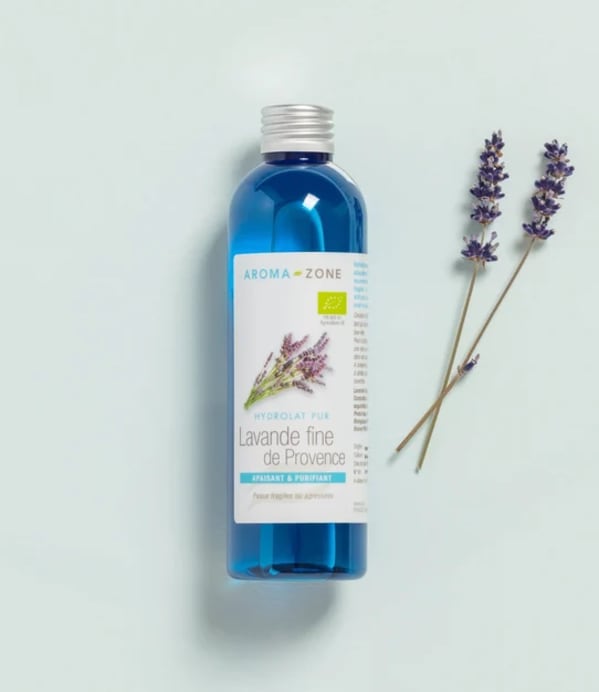
Organic Fine Lavender Hydrosol from Provence
The perfect solution for those who cannot use lavender essential oil. It concentrates the plant’s soothing benefits in a gentler form that is easier to use on a daily basis, particularly in aromatherapy. You can use it as an ingredient in a massage treatment to be applied to your solar plexus before going to sleep.
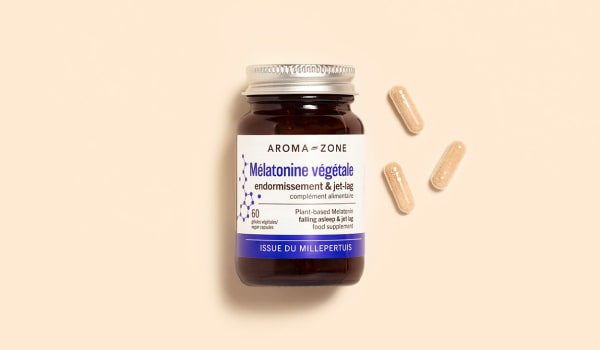
Natural plant-based melatonin (dietary supplement)
Ideal for alleviating the effects of jet lag and reducing the time it takes to fall asleep, whilst preventing difficulty waking up the following morning. Causes no drowsiness, is non-addictive and does not lead to dependence. Recommended dosage: 1 to 2 capsules per day. Not recommended for pregnant or breastfeeding women, or for those with inflammatory or autoimmune conditions; should not be taken without medical advice by people with epilepsy, asthma, mood, behavioural or personality disorders, or those taking medication. Do not drive for several hours after taking this product.
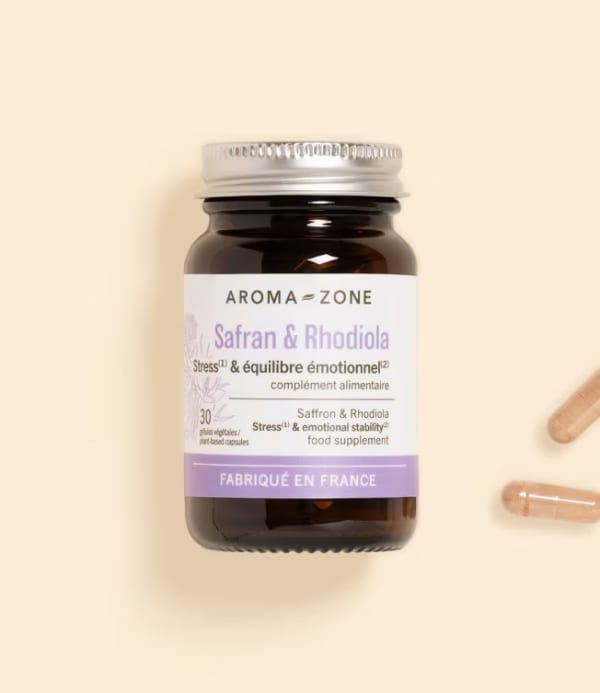
Saffron & Rhodiola (dietary supplement)
Ideal for minimising the harmful effects of stress, improving sleep quality and balancing emotions, particularly for women going through the menopause or experiencing difficult phases of their menstrual cycle. Recommended dosage: 1 capsule per day. Do not use during pregnancy or whilst breastfeeding. Not recommended for people taking antidepressants.
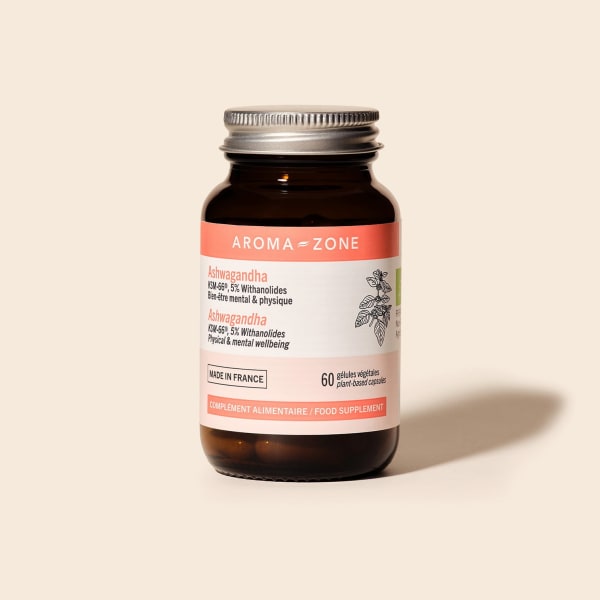
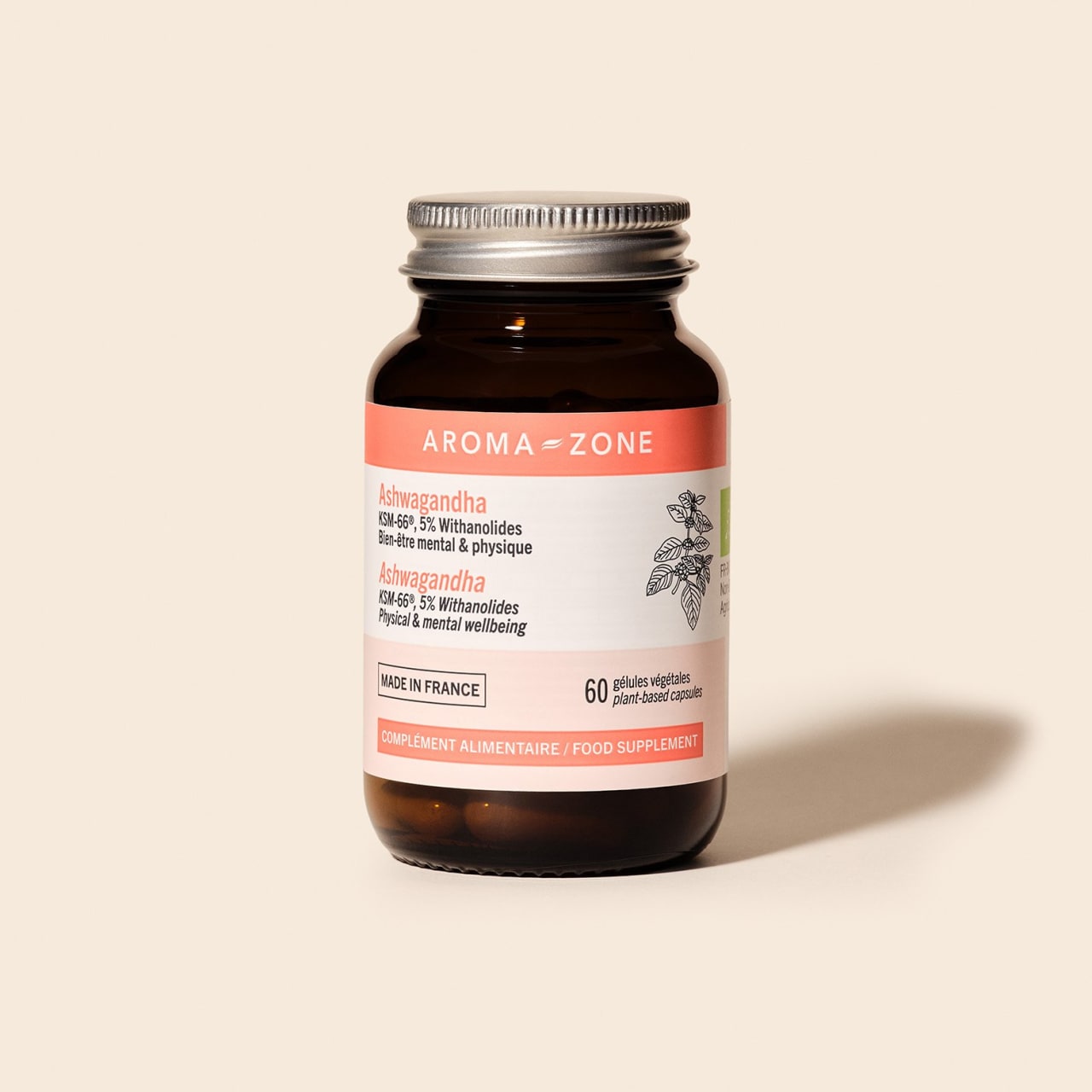
Organic Ashwagandha (food supplement)
Ideal for promoting restful sleep without causing dependency and supporting overall vitality, for example in cases of overwork, low energy or a change in routine. Recommended dosage: 1 to 2 capsules per day. Not suitable for pregnant or breastfeeding women. Not recommended for those with endocrine, thyroid, liver or heart conditions, or for people taking medication that depresses the central nervous system.
Advice from a doctor of nutrition
Lila Bouber, PhD in Nutrition and Scientific Consultant
"Melatonin is one of the best-documented active ingredients for promoting sleep, particularly due to its ability to reduce the time it takes to fall asleep. A meta-analysis published in 2024, comprising 26 randomised clinical trials (1), showed that it reduced the time taken to fall asleep by an average of 9 minutes and increased total sleep time by nearly 20 minutes compared with a placebo. Although the results remain modest, they demonstrate measurable efficacy.
The effects of valerian are also the subject of extensive research into sleep. A literature review (2) highlighted valerian’s potential both to improve sleep quality and to alleviate the symptoms of insomnia.
In aromatherapy, true lavender is one of the most widely studied essential oils. A review from 2022 (3) examined 20 randomised controlled trials concerning the effects of its essential oil on sleep quality (using both subjective and objective indicators). Fourteen of these showed positive effects on improving sleep quality in people without sleep disorders.
Overall, the studies demonstrate the benefits of these active ingredients on sleep quality, whether used as an occasional or complementary aid. However, in the case of persistent sleep disorders, it is best to consult your doctor."
Precautions
Active ingredients designed to help you sleep better are often intended to make your daily life more comfortable, but they cannot address the underlying cause of your sleep problems. If your insomnia persists or if you suspect there may be a medical cause, we recommend that you consult your doctor.
Even if you opt for natural active ingredients, be sure to follow a few precautions for greater peace of mind. Essential oils, in particular, are powerful natural concentrates. Always refer to the intended uses and precautions for use on each product information sheet. Store them in a suitable glass bottle, away from light and air. Keep out of reach of children. Do not use on pregnant or breastfeeding women, or on children under 6 years of age. Avoid contact with the eyes and mucous membranes. Consult the general information sheet on precautions relating to essential oils as well as the specific information sheet for each essential oil.
The food supplements mentioned in this guide are not a substitute for a varied and balanced diet and a healthy lifestyle. Adhere to the recommended daily doses. If in doubt, seek advice from a healthcare professional before considering taking any supplement, even on an occasional basis.
Expert advice
Before choosing active ingredients to help you sleep better, make sure your sleeping environment offers suitable conditions. If there is too much light, opt for blackout curtains, shutters or a sleep mask. If it’s too hot, choose breathable bed linen and focus on your pulse points to cool down. And if there’s noise pollution, bear in mind that there are very comfortable, sound-insulating earplugs available.
Spotlight on our writer, Hélène Betoux

Hélène Betoux is a French beauty journalist specialising in online media. She writes daily advice, recommendations and guides to help consumers choose the beauty products best suited to their needs. A firm advocate of natural, organic and ‘clean’ cosmetics, she closely follows trends and innovations in the sector, which she enjoys analysing and sharing.
Bibliography
Cruz-Sanabria, F., Bruno, S., Crippa, A., Frumento, P., Scarselli, M., Skene, D. J., & Faraguna, U. (2024). Optimising the timing and dose of melatonin as a sleep-promoting drug: A systematic review of randomised controlled trials and a dose-response meta-analysis. Journal of Pineal Research, 76(5), e12985. https://doi.org/10.1111/jpi.12985
Yeom, J. W., & Cho, C.-H. (2024). Herbal and natural supplements for improving sleep: A literature review. Psychiatry Investigation, 21(8), 810–821. https://pubmed.ncbi.nlm.nih.gov/39086164/
Chen, T. Y., Hiyama, A., Muramatsu, M., & Hinotsu, A. (2022). The effect of lavender on sleep quality in individuals without insomnia: A systematic review. Holistic Nursing Practice, 36(4), 223–231. https://doi.org/10.1097/HNP.0000000000000528
Inserm (2017). Sleep: shedding light on our nocturnal activity. https://www.inserm.fr/dossier/sommeil/ [online, accessed 27/10/2026]
Ellis, J. G., Perlis, M. L., Espie, C. A., Grandner, M. A., Bastien, C. H., Barclay, N. L., Altena, E., & Gardani, M. (2021). The natural history of insomnia: predisposing, precipitating, coping, and perpetuating factors over the early developmental course of insomnia. Sleep, 44(9), zsab095. https://doi.org/10.1093/sleep/zsab095
Riemann, D., Espie, C. A., Altena, E., Arnardottir, E. S., Baglioni, C., Bassetti, C. L. A., Bastien, C., Berzina, N., Bjorvatn, B., Dikeos, D., Dolenc Groselj, L., Ellis, J. G., Garcia-Borreguero, D., Geoffroy, P. A., Gjerstad, M., Gonçalves, M., Hertenstein, E., Hoedlmoser, K., Hion, T., … Spiegelhalder, K. (2023). The European Insomnia Guideline: An update on the diagnosis and treatment of insomnia 2023. Journal of Sleep Research, 32(6), e14035. https://doi.org/10.1111/jsr.14035
Jones, B.E. Arousal and sleep circuits. Neuropsychopharmacol. 45, 6–20 (2020). https://doi.org/10.1038/s41386-019-0444-2
Cotter, J., Caddick, C. E., Harper, J. L., & Ebajemito, J. K. (2026). Examining the effect of L-theanine on sleep: a systematic review of dietary supplementation trials. Nutritional neuroscience, 29(2), 224–238. https://doi.org/10.1080/1028415X.2025.2556925
YAMADERA, W., INAGAWA, K., CHIBA, S., BANNAI, M., TAKAHASHI, M. and NAKAYAMA, K. (2007), Glycine ingestion improves subjective sleep quality in human volunteers, correlating with polysomnographic changes. Sleep and Biological Rhythms, 5: 126–131. https://doi.org/10.1111/j.1479-8425.2007.00262.x
van Geijlswijk, I. M., Korzilius, H. P., & Smits, M. G. (2010). The use of exogenous melatonin in delayed sleep phase disorder: a meta-analysis. Sleep, 33(12), 1605–1614. https://doi.org/10.1093/sleep/33.12.1605
Cheah, K. L., Norhayati, M. N., Husniati Yaacob, L., & Abdul Rahman, R. (2021). Effect of Ashwagandha (Withania somnifera) extract on sleep: A systematic review and meta-analysis. PloS one, 16(9), e0257843. https://doi.org/10.1371/journal.pone.0257843
Mathews, I. M., Eastwood, J., Lamport, D. J., Cozannet, R. L., Fanca-Berthon, P., & Williams, C. M. (2024). Clinical Efficacy and Tolerability of Lemon Balm (Melissa officinalis L.) in Psychological Well-Being: A Review. Nutrients, 16(20), 3545. https://doi.org/10.3390/nu16203545
Kawai, N., Sakai, N., Okuro, M., Karakawa, S., Tsuneyoshi, Y., Kawasaki, N., Takeda, T., Bannai, M., & Nishino, S. (2015). The sleep-promoting and hypothermic effects of glycine are mediated by NMDA receptors in the suprachiasmatic nucleus. Neuropsychopharmacology: official publication of the American College of Neuropsychopharmacology, 40(6), 1405–1416. https://doi.org/10.1038/npp.2014.326
Kennedy, D. O., Scholey, A. B., Tildesley, N. T., Perry, E. K., & Wesnes, K. A. (2002). Modulation of mood and cognitive performance following acute administration of Melissa officinalis (lemon balm). Pharmacology, Biochemistry and Behaviour, 72(4), 953–964. https://doi.org/10.1016/s0091-3057(02)00777-3
Abdellah, S. A., Berlin, A., Blondeau, C., Guinobert, I., Guilbot, A., Beck, M., & Duforez, F. (2019). A combination of Eschscholtzia californica Cham. and Valeriana officinalis L. extracts for adjustment insomnia: A prospective observational study. Journal of Traditional and Complementary Medicine, 10(2), 116–123. https://doi.org/10.1016/j.jtcme.2019.02.003
Ferracioli-Oda, E., Qawasmi, A., & Bloch, M. H. (2013). Meta-analysis: melatonin for the treatment of primary sleep disorders. PLoS ONE, 8(5), e63773. https://doi.org/10.1371/journal.pone.0063773
Bulman, A., D’Cunha, N. M., Marx, W., Turner, M., McKune, A., & Naumovski, N. (2025). The effects of L-theanine consumption on sleep outcomes: A systematic review and meta-analysis. Sleep Medicine Reviews, 81, 102076. https://doi.org/10.1016/j.smrv.2025.102076
Schuster, J., Mundhenke, C., Nordsieck, H., Pouchieu, C., Pourtau, L., & Hahn, A. (2025). Effect of a saffron extract on sleep quality in adults with moderate insomnia: A decentralised, randomised, double-blind, placebo-controlled trial. Sleep Medicine: X, 10, 100147. https://doi.org/10.1016/j.sleepx.2025.100147
Seifritz, E., Schläfke, S., & Holsboer-Trachsler, E. (2019). Beneficial effects of Silexan on sleep are mediated by its anxiolytic effect. Journal of Psychiatric Research, 115, 69–74. https://doi.org/10.1016/j.jpsychires.2019.04.013
Matek Sarić, M., Sorić, T., Juko Kasap, Ž., Lisica Šikić, N., Mavar, M., Andruškienė, J., & Sarić, A. (2025). Magnesium: Health Effects, Deficiency Burden, and Future Public Health Directions. Nutrients, 17(22), 3626. https://doi.org/10.3390/nu17223626