
Guide to essential oils

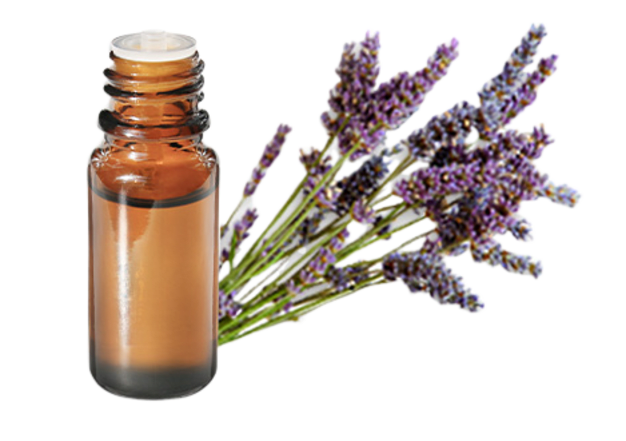
Essential oil of Organic Lavender fine from Provence

An exceptionally calming agent, organic Provençal Lavender Fine essential oil is known for its relaxing and balancing properties. It is also recognised for its regenerative and restorative effects on the skin, making it an essential ingredient in body and facial care. Its purifying properties are particularly beneficial for problematic, oily, or flaky skin. In psycho-emotional aromatherapy, it is associated with the figure of the mother, supporting those in need on their journey towards forgiveness and emotional healing.

How to use

  • Skin application and massage

    Skin application and massage

    Suitable

  • Cosmetic active ingredient

    Cosmetic active ingredient

    Suitable

  • Aromatherapy bath

    Aromatherapy bath

    Suitable

  • Diffusion

    Diffusion

    Suitable

  • Food grade

    Food grade

    Appropriate

Features

Properties and uses

Precautions

Find out more

Features

Production process

Complete steam distillation

Part of the plant used

Flowering tops

Botanical name

Lavandula angustifolia ssp. angustifolia

Warning

The properties, information and methods of use below are quotes from reference books or websites on aromatherapy, hydrolatherapy and phytotherapy. This general information is provided for informative purposes only and in no way constitutes medical guidance. Under no circumstances can this information be used as a substitute for a medical diagnosis, consultation or follow-up, nor can it incur our liability. We recommend that you consult the guide to essential oils before using them, so that you are aware of any precautions that need to be taken. If in doubt, consult a doctor before using essential oils.

Properties and uses

Provençal Lavender Fine essential oil is traditionally used to treat: eczema, anxiety, panic attacks, chapped and cracked skin, burns, abrasions, grazes, cuts, insomnia, migraines, headaches, and stress.

Health

Wellness

Beauty

Find out more

As a flagship oil in aromatherapy, organic Provençal Lavender Fine essential is traditionally recommended for topical application to relieve skin issues, promote healing, and release tension. When diffused, it works wonders to calm the nervous system and combat stress and insomnia.

Properties

Provençal Lavender Fine essential oil is recognised for its health benefits:

  • Powerful antispasmodic, muscle-relaxing properties

  • Powerfulhealing and skin-regenerating properties****

  • Soothing, anti-inflammatory, analgesic

  • Hypotensive, powerful, calming and balances the nervous system

  • <3>General and pulmonary antiseptic

Uses

Organic Provençal Lavender Fine essential oil is traditionally used to address the following conditions:

  • Infectious, scar-related, or allergic skin issues: eczema, psoriasis, itching (pruritus), pressure sores, ulcers, stretch marks, and scars

  • Nervous system disorders: asthma, digestive spasms, nausea, migraines, and headaches

  • Cramps, muscle contractions, and spasms

  • High blood pressure, palpitations, and tachycardia

  • Rheumatism and pain

Synergies

  • Soothing and relaxing : Ylang-ylang, Petitgrain bigarade and Roman chamomile essential oils.

  • Skin problems : Italian Helichrysum, German chamomile, Rose Geranium essential oils

In practice

Joint and muscle health: Mix with your oil blend. Apply your mixture locally, massaging lightly into the area concerned.

Precautions

  • Not recommended during the first three months of pregnancy.

  • Keep out of reach of children.

  • Some natural compounds in this essential oil may pose an allergy risk to sensitive individuals when incorporated into a cosmetic formulation (according to the 7th Amendment of the European Directive on Cosmetic Products (2003/15/EC)): linalool and, to a lesser extent, limonene.

  • As a general rule, always perform a patch test of your mixture in the crook of your elbow at least 48 hours before use.

  • For use as a cosmetic ingredient, please refer to specific precautions.

Find out more

Lavender is still the best-known and most widely used essential oil. The Romans took advantage of Lavender's aromatic qualities to perfume their clothes and baths. Its name is derived from the Latin " lavare ", meaning " to wash ". The term "lavandière" comes from the fact that Lavender was added to washing water to perfume the clothes. In the Middle Ages, its disinfectant properties were used in steam treatments. At the beginning of the 20th century, René-Maurice Gattefossé, a perfumer-chemist who had burned his hands in an explosion at his laboratory,

Equivalents

Essential Oils

1 ml = approximately 35 drops (with our Aroma-Zone dropper caps)

Carrier oils

1 pump (Aroma-Zone aluminium pump) = approx. 0.15 ml

Mass / Volume conversion (for a liquid)

Mass (g) = Density x Volume (ml) at 20°C

Further information

1 full teaspoon = between 3 and 4.5 ml

1 full tablespoon = between 7.5 and 10 ml


However, these spoon ratios depend on a number of factors (e.g. viscosity of the liquid, temperature, depth and size of the spoon, rheological behaviour of the liquid), and we strongly advise you to use precise measuring equipment, such as graduated test tubes, graduated pipettes, and precision scales.

Aromatherapy recipes from the bibliography

EO = Essential Oil VO = Carrier Oil or Macerated Oil

Floating islands of Lavender (N. Le Foll and B. Da Costa)

Kitchen

Serves 4 - Preparation: 20 minutes - Cooking time: 10 minutes

  • 5 eggs

  • 60 cl lotion

  • 90 g caster sugar

  • 1 tablespoon lavender honey

  • 2 drops vanilla extract

  • 1 drop real lavender essential oil

Procedure: Bring the lotion to the boil. Remove from the heat and add the honey previously mixed with the vanilla extract and Lavender essential oil. Break the eggs, separating the whites from the yolks. Whisk the egg yolks with 60g sugar until the mixture whitens. Pour in the hot lotion, stir and cook over a low heat until the cream coats the spoon. Pour into a bowl and leave to cool. Beat the egg whites until stiff. When they are almost stiff, add 30g of sugar and continue whisking for 2 minutes. Bring a large pan of simmering water to the boil. Scoop out spoonfuls of egg whites and carefully drop them into the water. Poach for 15 seconds on each side; drain on kitchen paper. Place the floating islands on the cream and serve chilled. If available, decorate the egg whites with a few lavender flowers.

Bibliography

1

'Huiles essentielles - 2000 ans de découvertes aromathérapeutiques pour une médecine d'avenir' by Dominique Baudoux

2

'The Practice Of Aromatherapy' by Dr Jean Valnet Éditions Maloine

3

'L'Aromathérapie exactement' by P. Franchomme and Dr D. Pénoël

4

'La Bible de l'aromathérapie' by Nerys Purchon

5

'ABC des huiles essentielles' by Dr Telphon

6

"Aromatherapy" by Nelly Grosjean

7

'Les huiles essentielles pour votre santé' by G. Roulier

8

'Les cahiers pratiques de l'aromathérapie française - Pédiatrie' by Dominique Baudoux - Editions Amyris

9

Aroma-News newsletters from the NARD association

10

'Aromatherapy: Healing with Essential Oils' by Dominique Baudoux - Editions Amyris

11

Le Foll N. and Da Costa B. (2005) 'Saveurs et bien-être. Cooking with essential oils'. Editions Filipacchi.