
Name: Folic acid or vitamin B9
Origin: Water-soluble vitamin (soluble in water), B-complex vitamin, essential vitamin (not synthesised by the human body) found in foods in the form of folates.
Functions: Folic acid plays a role in cell division, regulating gene activity, producing red and white blood cells, renewing the skin and intestinal lining, and supporting the proper functioning of the immune and nervous systems.

What are the benefits of folic acid?
By Emilie Ondet
Published on: Wednesday, January 29, 2025, Updated on: Wednesday, October 28, 2026
We often hear about folic acid, especially in relation to pregnant women, but can you explain what role folic acid plays in our bodies? Why is this vitamin essential for our well-being and health? Let’s take a closer look at this vitamin with its many benefits…
Contents
Related products
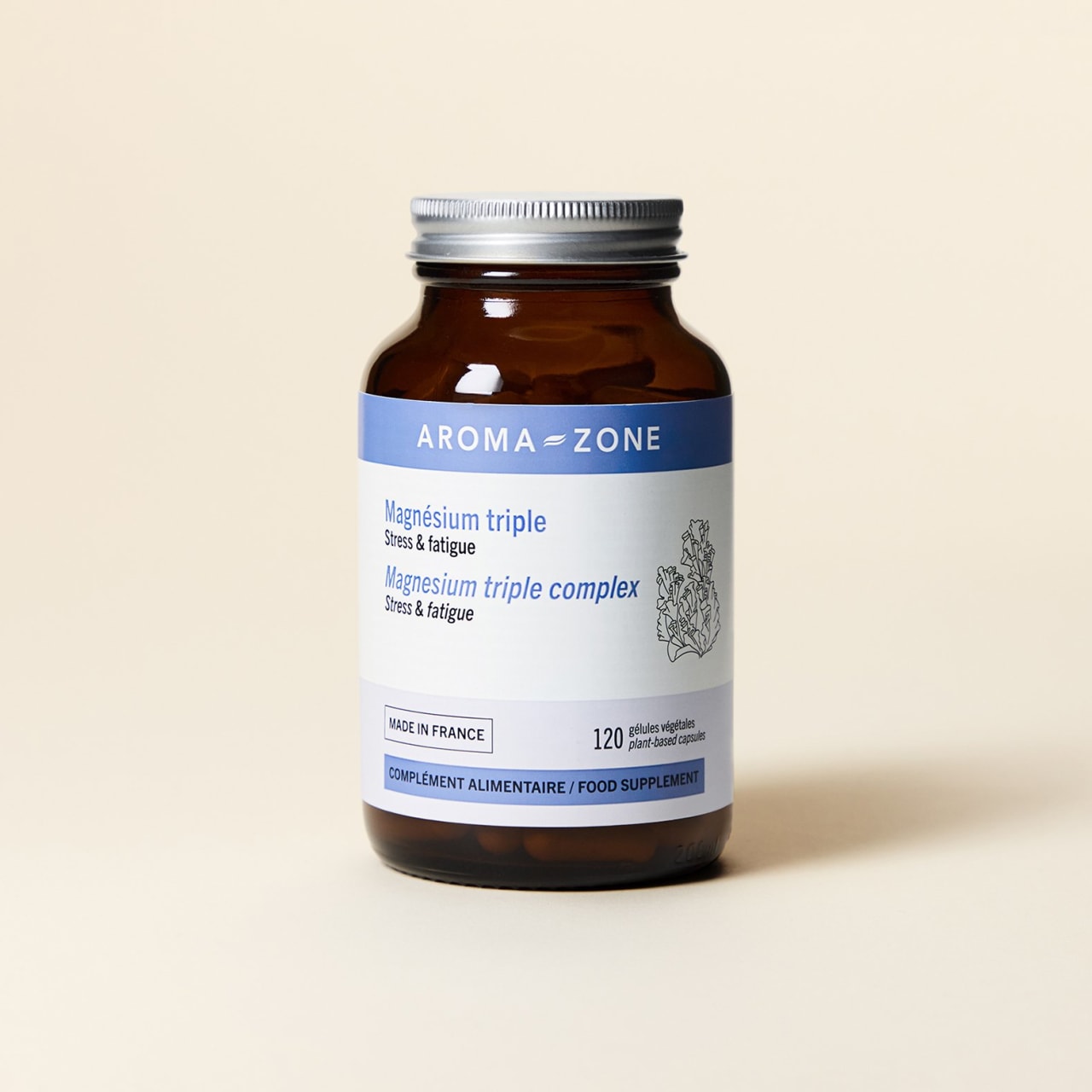
Triple Magnesium Complex - 120 Capsules
Vitality
Stress
£15.00
article
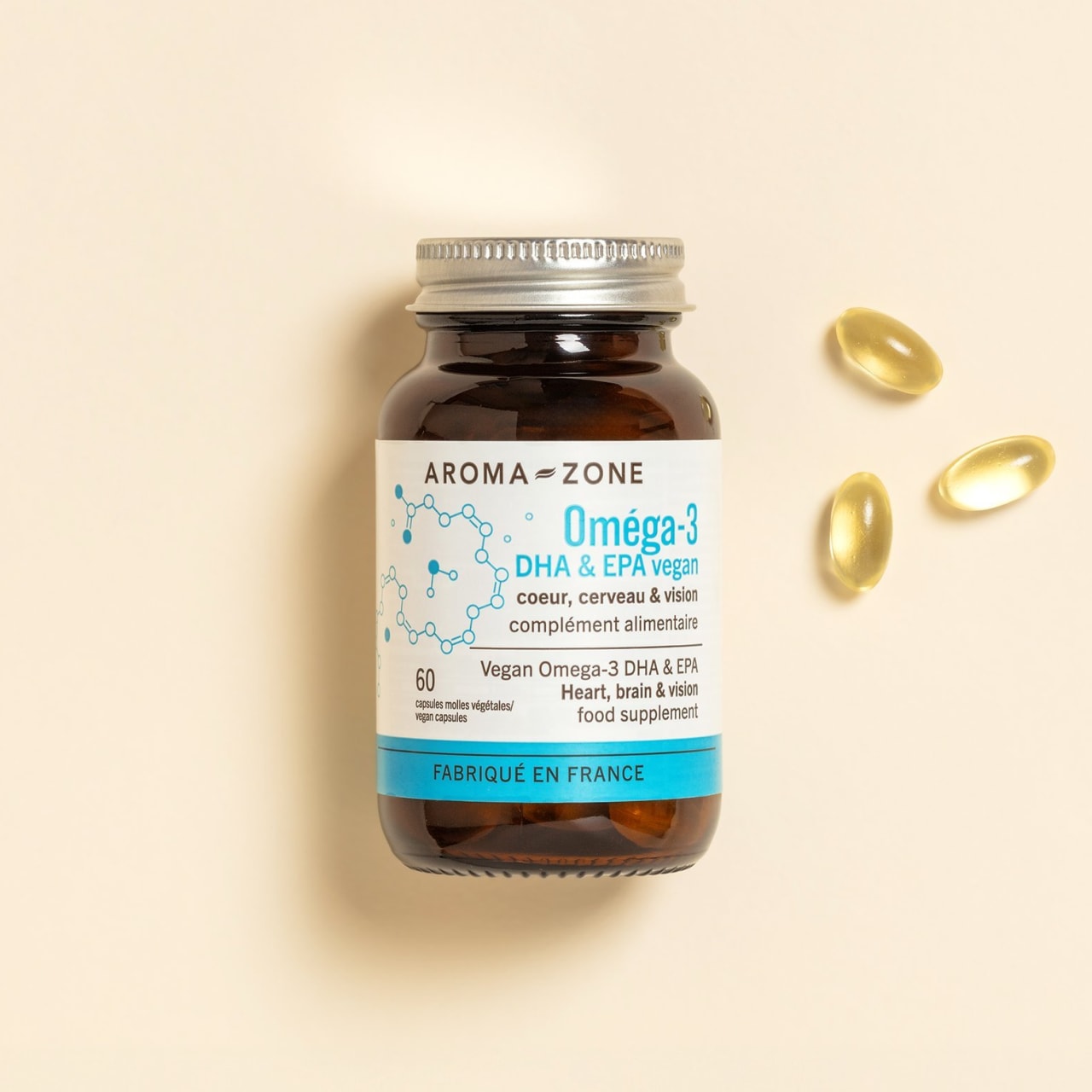
Vegan Omega-3 - 60 Capsules
Heart
Vision
£20.00
article
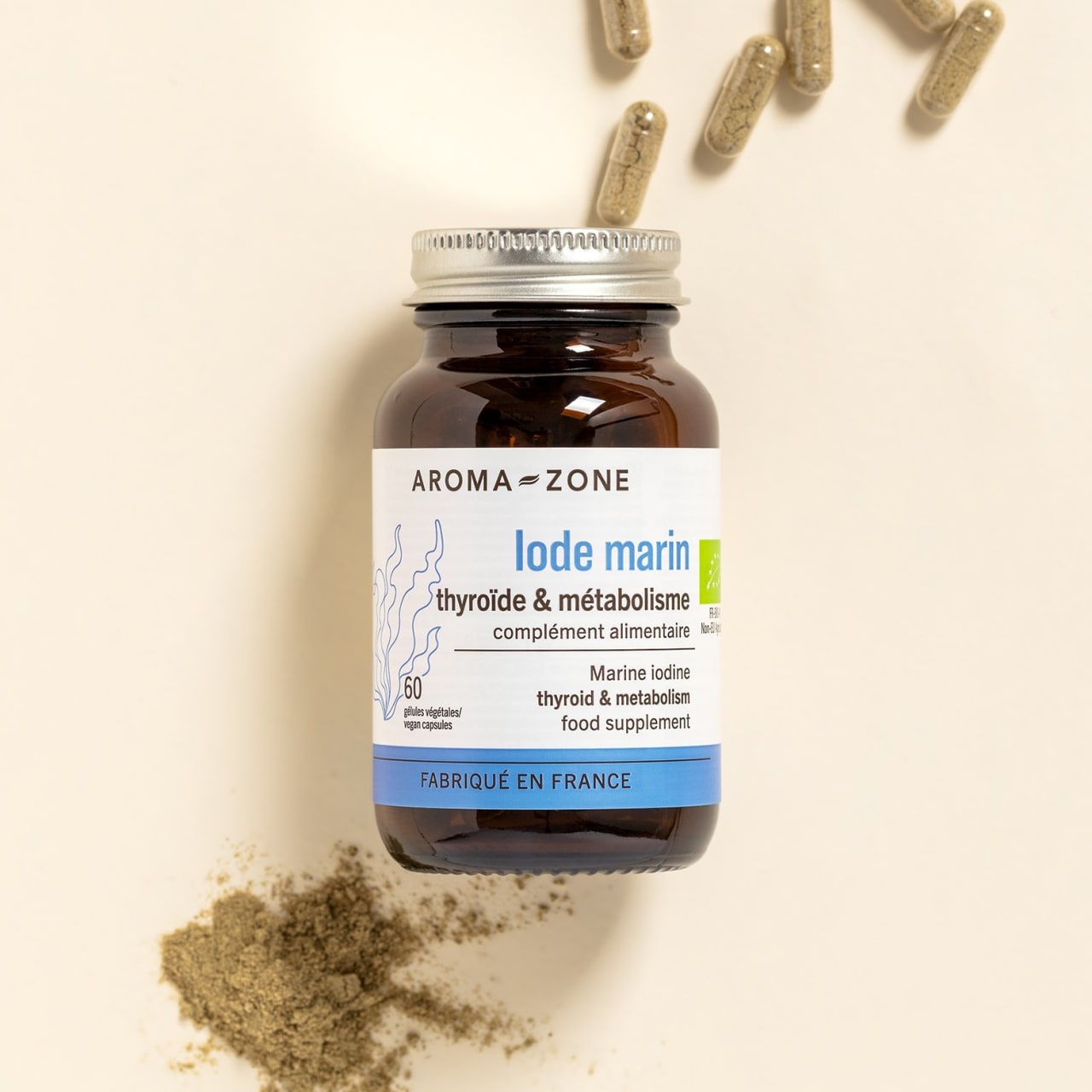
Marine Iodine - 60 Capsules
Metabolism
Thyroid support
£7.00
article
In brief
Folic acid, or vitamin B9, is used to support the formation of red and white blood cells, prevent neural tube defects in the foetus, boost vitality, and promote radiant skin thanks to its role in cell regeneration.
Its effectiveness depends on an appropriate intake regimen: requirements vary during pregnancy or in cases of deficiency, with recommendations generally ranging from 300 to 400 micrograms per day.
The article details potential interactions with certain medications and outlines precautions to consider regarding the dietary supplements mentioned.
Active ingredient profile
Food sources of vitamin B9
Folic acid is essential for certain bodily functions, particularly the production of genetic material. Like all essential vitamins, it is found exclusively in our diet.
Folic acid is found in the form of folates in foods, particularly in:
green vegetables such as cabbage, spinach, lamb’s lettuce, Swiss chard, broccoli, and arugula
legumes such as lentils, chickpeas, beans
seaweed
brewer’s yeast, baker’s yeast
liver
What are the benefits of folic acid?
Vitamin B9, also known as folic acid, plays a role in many essential bodily processes. It actively participates in cell renewal and supports key functions at every stage of life.
Cell renewal and synthesis of genetic material: Folic acid is essential for the production and regulation of DNA and RNA. It thus plays a central role in the growth, division, and renewal of all the body’s cells.
Blood cell formation: It contributes to the normal formation of red and white blood cells. By supporting blood cell renewal, it helps prevent certain forms of anemia and reduce the fatigue that may be associated with it.
Normal immune system function: Through its role in the production of leukocytes (white blood cells), vitamin B9 contributes to the proper functioning of the body’s natural defences, particularly during the winter months or during periods of temporary fatigue.
Support for normal mental functions: Vitamin B9 participates in the synthesis of compounds involved in brain activity. It thus helps maintain normal mental functions, which can be particularly beneficial during periods of intense work or low energy.
Reduction of homocysteine levels: alone or in combination with vitamins B6 and B12, it helps lower plasma homocysteine levels. Excess homocysteine is associated with an increased risk of cardiovascular and neurodegenerative disorders.
Normal foetal development: Folic acid plays a key role in preventing neural tube defects (the early development of the brain and spinal cord). An intake of 400 µg per day is recommended starting one month before conception and continuing through the first two months of pregnancy. Health authorities recommend routine supplementation for women planning to become pregnant.
What are the benefits of folic acid for the skin?
Scientific data specific to the skin remains limited. However, several studies and known biological mechanisms point to interesting insights regarding the role of vitamin B9 in skin health.
Support for skin cell renewal: Vitamin B9 plays a role in cell division and renewal. As such, it contributes to the normal renewal of epidermal cells, thereby promoting natural regeneration and healing processes.
Radiant complexion and reduction of pallor associated with anaemia: By contributing to the normal formation of red blood cells, folic acid helps reduce the pallor associated with certain forms of anaemia caused by vitamin B9 deficiency. Improved tissue oxygenation can thus contribute to a less dull and more luminous complexion.
Dull and tired skin: Thanks to its role in cell regeneration and the proper functioning of blood cells, vitamin B9 can help skin lacking radiance. It supports skin renewal and helps restore vitality to tired complexions.
Inflammatory skin conditions: Some observational studies have shown that patients with chronic plaque psoriasis or systemic lupus erythematosus have elevated homocysteine levels (Gisondi, 2007). Since vitamin B9 plays a role in regulating this amino acid, supplementation has been considered as a complementary option in these contexts. However, these data should be interpreted with caution.
Protective role against environmental stressors: Research (Williams, 2012) suggests a link between skin pigmentation, sun exposure, vitamin D production, and the maintenance of folate levels in the skin. Folic acid may thus help preserve skin balance in the face of UV radiation damage, although this mechanism requires further investigation.
What are the benefits of folic acid for hair?
Scientific data specific to hair is limited. However, its role in cell renewal suggests it may be beneficial as part of an overall nutritional balance.
Contribution to scalp cell renewal: Hair grows from the hair follicle, an area where cells renew rapidly. Since vitamin B9 plays a role in cell division, an adequate intake therefore contributes to the proper functioning of the tissues involved in hair growth.
Prevention of deficiency effects: A vitamin B9 deficiency can impair cell renewal and may sometimes lead to weakened hair. Correcting a deficiency can thus help restore a normal hair growth cycle.
Thinning hair or loss of density: While vitamin B9 is not specifically targeted against hair loss per se, an adequate intake may be beneficial when hair loss is associated with a nutritional deficiency or general fatigue. In this context, it helps maintain the normal functioning of the cells involved in hair growth.
What hair care routine should you adopt?
Inside-and-out routine to support hair growth:
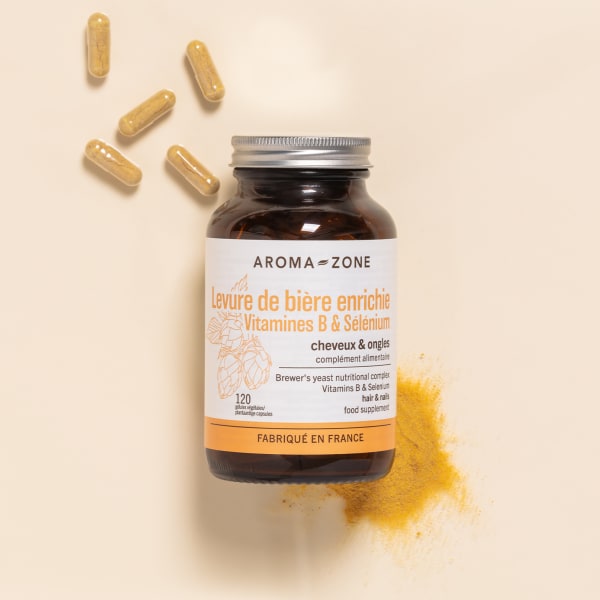
1. Take one capsule of enriched brewer’s yeast at breakfast and one at dinner.
2. Before shampooing, apply an oil treatment with an oil-based rosemary macerate, which promotes hair growth. Massage the scalp thoroughly and leave it on for at least 30 minutes.

3. Wash your hair with a mild shampoo.

4. Use the hair serum with peptides and pea extract daily, applying it once a day to the entire scalp. Massage until fully absorbed.
Our natural solutions containing folic acid

Enriched brewer’s yeast
Enriched with vitamins B1, B2, B3, B5, B6, B8, B9, B12, and selenium-enriched yeast, this dietary supplement supports nervous system balance and psychological well-being. It is very helpful in cases of stress and fatigue.
The brewer’s yeast matrix helps improve the bioavailability of B vitamins, meaning the amount of vitamins the body can actually use.
Discover our Enriched Brewer's Yeast Dietary Supplement, 120 capsules
What are the combinations and interactions?
Because vitamins and minerals work together for our well-being and a single deficiency can disrupt our body’s proper functioning, it’s beneficial to combine folic acid with other vitamins, minerals, and fatty acids.
We recommend the following products for chronic or temporary fatigue:

Spirulina is a type of algae. Its high content of phycocyanin proteins, vitamin B12, iron, and antioxidants helps combat oxidative stress and supports the body during periods of temporary fatigue.
It is recommended to take 3 to 10 tablets per day (gradually increasing the dose over the course of the treatment).

Aroma-Zone’s Triple Magnesium combines three forms of magnesium: Magnesium Bisglycinate, Marine Magnesium, and Organic Sea Lettuce extract. Ideal for fatigue, stress, or muscle recovery, magnesium supports the proper functioning of the nervous system.
Taking 3 capsules per day covers your daily magnesium needs
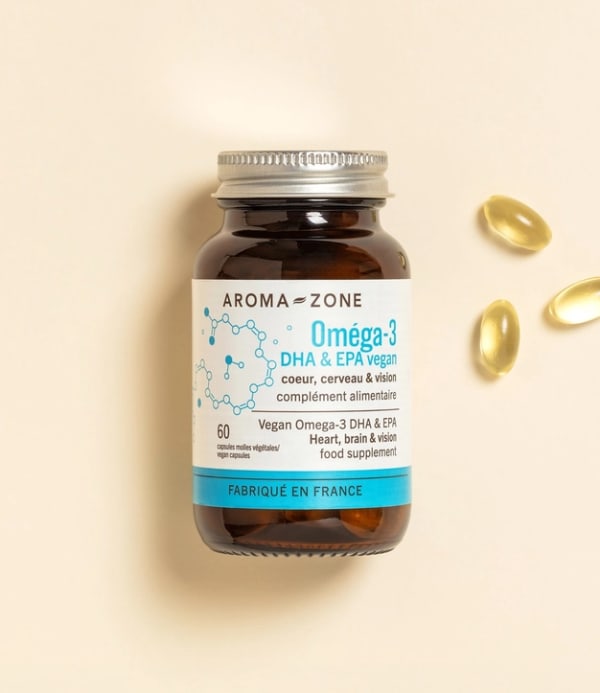
Omega-3s are known to support brain function and cognitive function, the normal functioning of the nervous system, and psycho-emotional balance, as well as normal cardiovascular function. They work in synergy with B vitamins to protect neurons.
Highly concentrated in DHA and EPA derived from Schizochytrium sp. microalgae, these vegan Omega-3 capsules are recommended at a dose of one capsule per day.
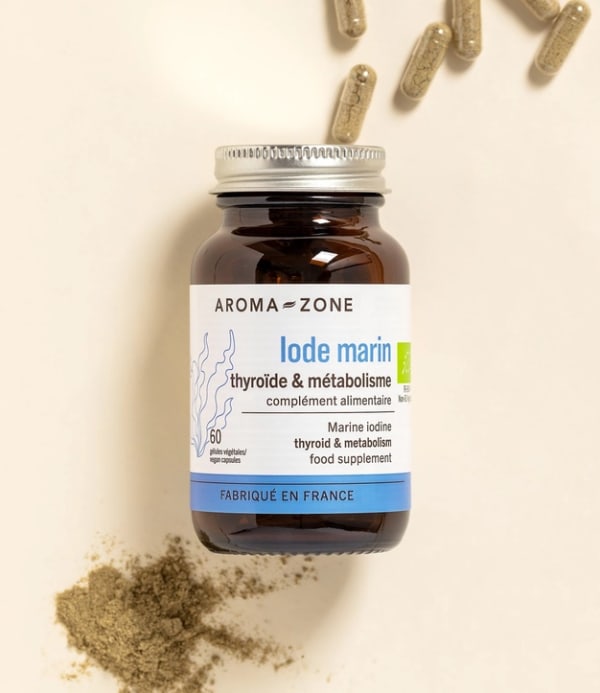
Renowned for its many benefits, particularly for thyroid function and metabolism, iodine is essential for the body’s proper functioning, healthy skin and hair, and the maintenance of cognitive function. It can be taken during pregnancy.
This marine-derived iodine dietary supplement provides the recommended daily intake of iodine with just one capsule per day.
Note: Always consult a doctor before taking dietary supplements, especially if you are already taking medication. Some supplements may not be compatible with current treatments, thereby reducing their intended effectiveness.
Storage instructions
The Enriched brewer’s yeast, as well as the other products mentioned from Aroma-Zone, should be stored away from light, heat, and humidity, in a tightly sealed container.
Contraindications / precautions for use
All dietary supplements mentioned here are not intended to replace a varied and balanced diet and a healthy lifestyle and must be kept out of the reach of children
Enriched brewer’s yeast has not been specifically formulated or evaluated for pregnant or breastfeeding women, so we do not recommend it.
Spirulina is not recommended for people with phenylketonuria, haemochromatosis, high uric acid levels, or muscle or liver conditions. Phycocyanin may cause allergic reactions. Pregnant and breastfeeding women should consult their doctor.
Omega-3s may be taken by pregnant or breastfeeding women and children with the approval of a healthcare professional.
Magnesium may be taken by pregnant or breastfeeding women and children with the approval of a healthcare professional. If you have thyroid issues, consult your doctor. Magnesium may have a laxative effect in some people.
Iodine may be contraindicated in cases of thyroid disorders or anticoagulant therapy. Consult your doctor. This dietary supplement is suitable for pregnant or breastfeeding women under medical supervision.
Expert advice
Vitamin B9, when combined with vitamins B12 and B6, helps reduce high levels of homocysteine in the blood. In fact, when present in excess, homocysteine becomes toxic to our bodies and especially to our brains. Studies show that high homocysteine levels are a risk factor for cognitive impairment and neurodegenerative diseases. This is a modifiable risk that can be addressed by ensuring an adequate intake of vitamins B6, B9, and B12 through our diet. Vitamin B6 is found in avocados, bananas, fish, and poultry, and vitamin B12 in animal-based foods.
Article Written by Emilie Ondet, Biochemistry Engineer

Emilie is a biochemistry and natural active ingredients engineer. Emilie is also a naturopath, nutrition adviser and writer specialising in health, nutrition and wellbeing. She has worked for over 10 years in the pharmaceutical industry and in scientific communication, which gives her a comprehensive understanding of health and enables her to discuss the subject with authority and clarity. Science is her foundation; words are her tools. She advocates a more preventative, more reasoned, more scientific and, of course, more natural approach to health!
Bibliography
Vitamin B9, Vidal
Everything You Need to Know About Vitamin B9, ANSES
Folic acid content in foods, Ciqual Table, ANSES.
Gisondi P, Fantuzzi F, Malerba M, Girolomoni G. Folic acid in general medicine and dermatology. J Dermatolog Treat. 2007;18(3):138-46. doi: 10.1080/09546630701247930. PMID: 17538801.
Williams JD, Jacobson EL, Kim H, Kim M, Jacobson MK. Folate in skin cancer prevention. Subcell Biochem. 2012;56:181-97. doi: 10.1007/978-94-007-2199-9_10. PMID: 22116700; PMCID: PMC3795437.
Smith AD, Smith SM, de Jager CA, Whitbread P, Johnston C, Agacinski G, Oulhaj A, Bradley KM, Jacoby R, Refsum H. Homocysteine-lowering by B vitamins slows the rate of accelerated brain atrophy in mild cognitive impairment: a randomized controlled trial. PLoS One. 2010 Sep 8;5(9):e12244. doi: 10.1371/journal.pone.0012244. PMID: 20838622; PMCID: PMC2935890.
Smith AD, Refsum H. Homocysteine, B Vitamins, and Cognitive Impairment. Annu Rev Nutr. 2016 Jul 17;36:211-39. doi: 10.1146/annurev-nutr-071715-050947. PMID: 27431367.

Frequently Asked Questions
Associated tips

Nutrients, Vitamins, Minerals & Antioxidants

Nutrients, Vitamins, Minerals & Antioxidants

Nutrients, Vitamins, Minerals & Antioxidants


