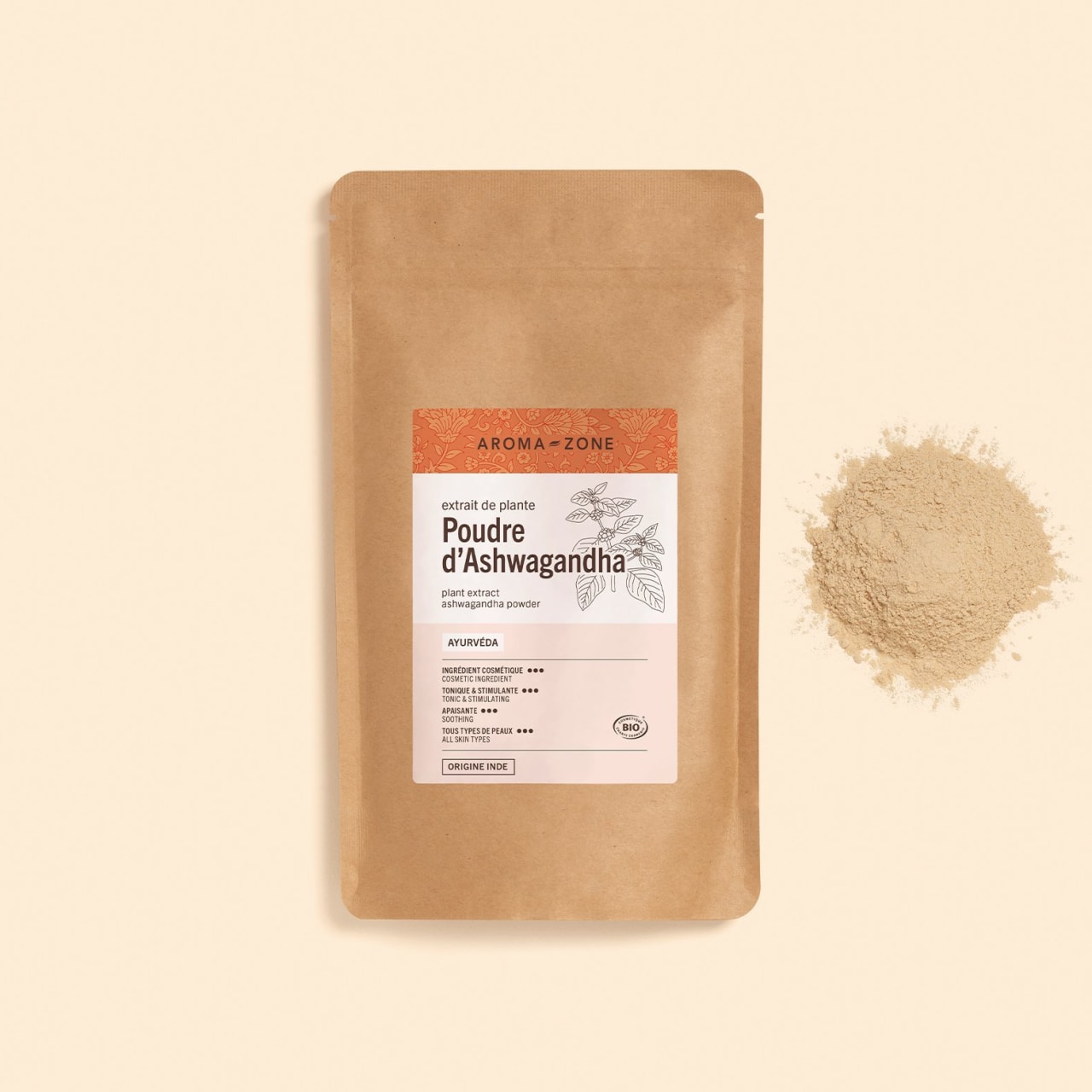
What are the benefits and properties of ashwagandha (Withania somnifera or Indian ginseng)?

Ashwagandha, also known as Indian ginseng, is a plant from the Solanaceae family. Its botanical name is Withania somnifera. An essential part of Ayurvedic medicine, it is an adaptogen. It is recommended when you are feeling fragile, whether that is physically or emotionally.

Often used as a regenerative and strengthening tonic, it is believed to have unparalleled restorative properties, giving you energy and vitality. Its Sanskrit name, ashwagandha, means "with the strength of a horse".

Here's how it works.

Reading time: 0 min.

History and origins of ashwagandha

Ayurveda is a sacred and comprehensive therapeutic science, which combines nurturing the body and the mind. It has been used in India for over 5,000 years. The history of ashwagandha is closely linked to Ayurvedic history, much like ginseng is strongly connected to Chinese medicine.

According to Ayurvedic principles, ashwagandha is capable of soothing the vâta and kapha doshas. It is considered to be one of the best rasayanas, a powerful regenerating agent for the body, particularly for fatigue or convalescence. To learn more about the fundamental principles of Ayurveda and the vâta and kapha doshas, take a look at our article: The 3 fundamental energies in Ayurveda: vâta, pitta and kapha.

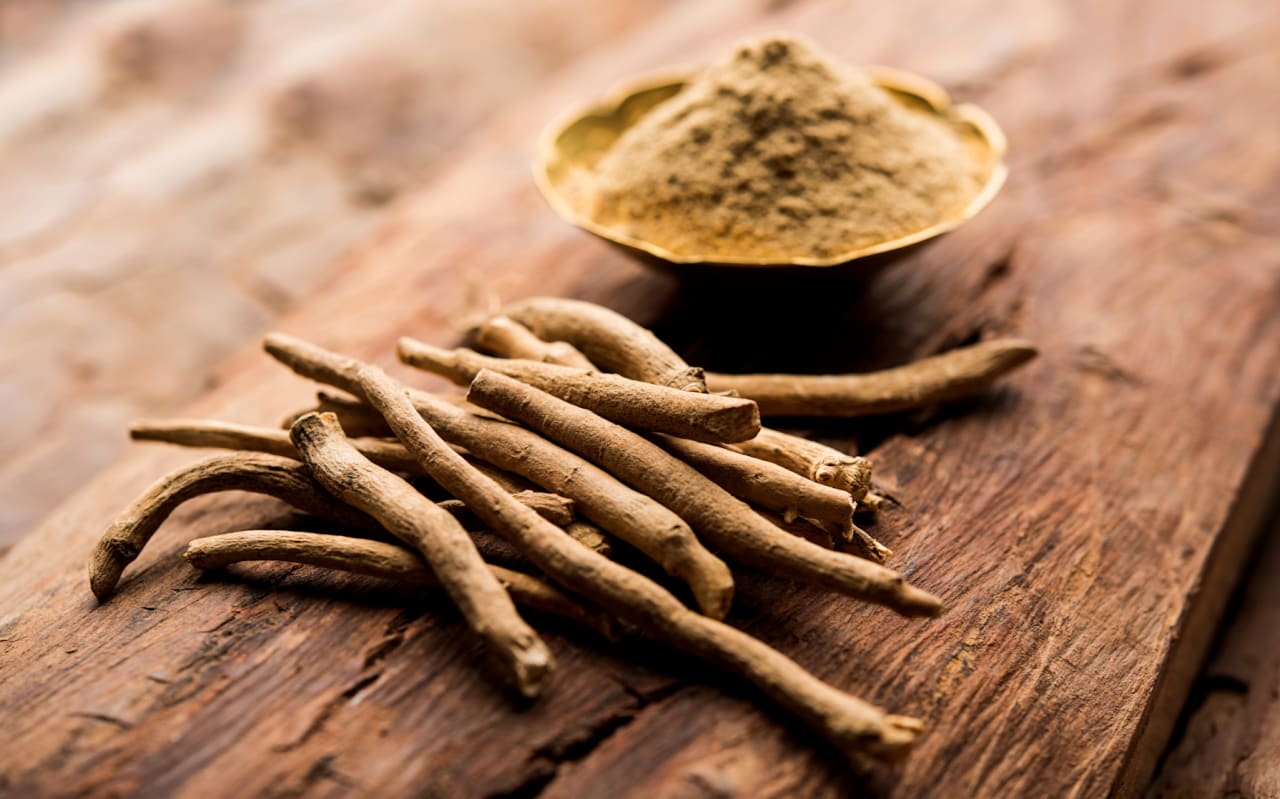
The root of the Withania somnifera is used in traditional Indian medicine. It is usually made into a decoction in water or milk. It has a wealth of active ingredients. Chief among them are withanolides, which are key to ashwagandha's recognised properties. Research has recently focused on verifying the plant's effectiveness in strengthening and supporting the body when coping with stress, fatigue, ageing and mental health conditions.

Ashwagandha's composition and active ingredients

It has now been established that ashwagandha root contains numerous active ingredients, with recognised properties. However, the exact composition can vary greatly, depending on the climate, soil and time of harvest.

Withanolides are the main active ingredient in ashwagandha root. They are responsible for its adaptogenic properties, as well as its first-rate anti-inflammatory and antioxidant properties, which strengthen the immune system and reduce stress.

But they are not the only remarkable components of this plant, as ashwagandha also contains:

  • Alkaloids, such as withanine and somnine, which have relaxing effects.

  • Anti-inflammatory and antioxidant tannins, which protect cells against free radicals.

  • Sitoindosides, which have stress relieving properties.

  • Essential fatty acids, such as linoleic acid.

To experience the full effect of ashwagandha's benefits, it is important that extracts contain the full spectrum of the plant's active ingredients and do not impair their properties. In fact, Indian ginseng's effectiveness stems from its complex combination of active ingredients. They must be extracted correctly to preserve their beneficial effects and replicate the properties of the root in its wild state.

What are the benefits of ashwagandha?

To explain ashwagandha's benefits for your skin's well-being and health, we are purely describing the effects of our Organic Ashwagandha Food Supplement. This full spectrum supplement is highly concentrated with over 5% withanolides. Grown and extracted in India and manufactured and packaged in France, it may be considered one of the best extracts available on the market: patented extract KSM-66®. 24 scientific studies now attest to its benefits.


Ashwagandha, an adaptogenic plant

Ashwagandha is an adaptogenic plant renowned for its ability to help the body adapt to the various stressors it is likely to encounter, whether they're physical, mental or emotional. As an adaptogen, it works by regulating the body's response to stress, helping to build resistance and promote overall balance.

Adaptogenic plants, such as ashwagandha, work by harmonising physiological systems, enabling them to support the body's natural stress-regulating functions. They help to reduce the production of the stress hormone cortisol, countering the negative effects of chronic stress on mental health. In addition, ashwagandha is renowned for its calming and soothing properties. This makes it a valuable ingredient for promoting relaxation and improving sleep quality, particularly for stress-related disorders.

Ashwagandha is also known for its beneficial effects on cognitive abilities. It can improve concentration, memory and mental performance, making it an ideal supplement to support brain function, particularly during periods of stress or mental fatigue.


Ashwagandha's anti-inflammatory effects

Ashwagandha has anti-inflammatory effects on multiple levels:

  • Its active ingredients regulate the body's pro-inflammatory molecules in the broadest sense.

  • It's antioxidants neutralise the oxidative damage usually caused by inflammation.

  • It effectively reduces stress, which also gives it indirect anti-inflammatory properties.


Ashwagandha, a recognised stress reliever and sleep aid

Ashwagandha is the ideal food supplement for coping with stress, particularly chronic stress. It does not make you feel drowsy. So, anyone with a fast-paced lifestyle and no specific contraindications to Indian ginseng will benefit from supplements containing ashwagandha.

Ashwagandha can also help you get a good night's sleep, particularly if you have trouble falling asleep or a tendency to wake up at night. To find out more, please see our article: How can ashwagandha help you sleep better?


Ashwagandha, a concentration aid

As you may have gathered, ashwagandha provides invaluable support for the nervous system at all levels. It also helps cognitive abilities, including our ability to concentrate.

The plant mainly inhibits the undesirable effects of stress, supporting your ability to concentrate and memorise things, particularly during exam periods.


Ashwagandha and bodybuilding

By improving the body's physical endurance, in particular VO2 max, muscle strength and recovery, ashwagandha is also a go-to for bodybuilders.

To find out more, we have a detailed article on the subject: Ashwagandha: the bodybuilding go-to.


Ashwagandha and weight loss

For some people, the effects of chronic stress may mean they have difficulty losing weight. Ashwagandha can effectively help with weight loss and digestive health in this way.

For more information read our dedicated article: Ashwagandha and weight loss: everything you need to know.


Ashwagandha and healthy skin

Ashwagandha is traditionally used to help the skin repair itself. It can be used either as a food supplement or as a powder that you can apply as a poultice to damaged skin for fast tissue regeneration. Its antioxidant components also give it anti-ageing properties.

Less well known are its strengthening and anti-ageing effects on the hair, which are covered in this article: Ashwagandha and hair: everything you need to know.


Ashwagandha to boost libido

Last but not least, ashwagandha is renowned for boosting libido and supporting sexual function in both men and women. There is a reason why this plant's common name refers to it making you as strong as a horse, and that includes sex drive.

Ashwagandha uses and dosage

A promising medicinal plant with few contraindications, ashwagandha is becoming increasingly popular in modern Western societies, where stress is a major issue. Interested in trying Indian ginseng? But how do we take ashwagandha from a practical point of view?


Recommended dosages

The recommended dosage for organic ashwagandha food supplements is 1 to 2 capsules of 500 mg per day. Preferably, take the capsules just before or after a meal to help the body assimilate them properly**.** Therefore, 1 jar will give you a 1 to 2 month dose of ashwagandha.

  • If you want to benefit from the strengthening and toning properties of ashwagandha root or manage stress and anxiety as much as possible during the day, we recommend taking them in the morning or at lunchtime.

  • For support with increasing muscle mass, improving sleep and boosting libido, we advise taking them in the evening.

  • You can also opt to take one capsule in the morning and one in the evening.

It is important to take food supplements regularly for them to be effective. Therefore, we recommend that, as much as possible, you establish a routine where you take your capsules at the same time every day.

There are no known contraindications to taking ashwagandha KSM-66 long-term, but we recommend taking a break of 2 to 3 months between 2 courses of treatment.


Find out more

Here are the answers to the most frequently asked questions about ashwagandha at a glance.

When should you avoid ashwagandha?

Pregnant and breastfeeding women, children and adolescents should not take ashwagandha. People suffering from hyperthyroidism should also avoid taking ashwagandha.

Anyone taking long-term medication should seek their doctor's advice before taking ashwagandha.

Does ashwagandha make you sleepy?

Withania somnifera is a sleep aid. In Latin, somnifera means "sleep inducer". However, Indian ginseng does not cause drowsiness and is not used in Ayurvedic medicine as a sedative.

Instead, it is popular for promoting sleep by reducing stress and anxiety and relaxing the nervous system.

Does ashwagandha help you lose weight?

Ashwagandha does not directly make you lose weight. In certain cases, it can positively contribute towards weight loss by combating the negative effects of stress and promoting hormonal and emotional balance.

How much ashwagandha should I take in a day?

We recommend a maximum intake of 1000 mg of ashwagandha taken orally per day, based on the characteristics of our Organic Ashwagandha Food Supplement (more details in the fact sheet).

Article written by Lou Dumas, Naturopath

Lou graduated from HEC in 2012. She gained ten years of experience in marketing for cosmetics and perfumes before becoming an independent consultant in this field. She recently completed a three-year naturopathy program at the European College of Holistic Naturopathy (CENATHO, Paris) with the goal of supporting the physical and mental health of the people she works with through a holistic approach to lifestyle.

Bibliography

1

Effect of Ashwagandha (Withania somnifera) extract on sleep: A systematic review and meta-analysis

Kae Ling Cheah, Mohd Noor Norhayati, Lili Husniati Yaacob, Razlina Abdul Rahman

2

Effect of Indian Ayurvedic medicine Ashwagandha on measurement of serum digoxin and 11 commonly monitored drugs using immunoassays : study of protein binding and interaction with Digibind.

Dasgupta A, Peterson A, Wells A, Actor JK.