
The "intimate flora," also known as Doderlein's flora, refers to the collection of microorganisms that colonize the vaginal mucosa. It plays a role in the proper functioning and protection of this delicate area. Unlike the gut microbiota, in most women, a balanced vaginal microbiota is characterized by low bacterial diversity (about 200 species), with lactobacilli making up over 90% of the population. These natural probiotics colonize the vaginal mucosa after birth, and then again during puberty, under the influence of hormonal changes. They produce lactic acid, hydrogen peroxide, and bacteriocins that limit the growth of pathogenic microorganisms (yeasts, fungi, or bacteria responsible for infections) by maintaining an acidic pH (between 3.8 and 4.5).,In addition to its effect on the acidity of the genital environment, the intimate flora also plays a role in strengthening the local immune system and maintaining the integrity of the vaginal mucosa. It therefore acts as a natural protective barrier. This is particularly true of bacterial strains such as Lactobacillus crispatus, Lactobacillus gasseri, or Lactobacillus jensenii, whose beneficial effects are well-documented in the scientific literature. However, this balance is fragile and can be influenced by many factors: hormonal fluctuations (menstruation, pregnancy, menopause, contraception); use of unsuitable hygiene products; sexual intercourse with multiple partners or unprotected sex; stress; an unbalanced diet; and the use of antibiotics, which destroy not only pathogenic bacteria but also beneficial ones.

How can probiotics support your intimate flora?
By Lila Bouber
Published on: Monday, May 12, 2025, Updated on: Wednesday, November 04, 2026
Probiotics for intimate flora are attracting growing interest. These beneficial bacteria play an important role in maintaining the balance of the vaginal microbiome and protecting this sensitive area. An imbalance can lead to discomfort, unusual discharge and recurrent yeast infections, including thrush. Probiotic bacteria can offer a natural and gentle way to help address or prevent these issues. We explain how these microorganisms work to protect the vaginal ecosystem and explore the best ways to incorporate them into your intimate wellness routine.
Contents
Related products
£14.00
£20.00
11.2 g
Digestive comfort
£17.00
1 article
£16.00
article
Relaxing
£6.00
200 ml
In brief
Probiotics can help maintain the balance of the intimate flora, particularly when it is disrupted or following certain treatments, such as antibiotics. However, their benefits may vary from person to person.
They are generally taken as a course of supplements, with a preference for strains specifically selected for intimate health. Their effectiveness depends on regular use, the duration of supplementation and the choice of high-quality products.
Probiotics are not a substitute for medical advice if symptoms persist. Any potential contraindications should also be considered, depending on individual circumstances.
What is "intimate flora"?
Probiotics: Definition
Probiotics are living microorganisms—primarily bacteria or yeast—that, when ingested or applied in sufficient quantities, have a beneficial effect on health. This effect is achieved by strengthening or rebalancing the microbiota. They are found naturally in certain fermented foods such as yogurt, kefir, raw sauerkraut, miso, or kombucha, but also in the form of dietary supplements or in skincare products (gels, creams, ovules, etc.). Probiotics specifically designed for the intimate flora include strains of vaginal lactobacilli such as Lactobacillus crispatus, Lactobacillus rhamnosus, and Lactobacillus reuteri. Probiotics for the intimate flora are often recommended after antibiotic treatment, during recurrent yeast infections, or even as a preventive measure to support the female genital flora on a daily basis.
Why use a probiotic supplement for intimate health?
The intimate flora is a fragile ecosystem that can become unbalanced due to numerous factors: stress, menstruation, menopause, improper hygiene, antibiotics, hormonal contraception, etc. The resulting vaginal dysbiosis causes discomfort, itching, unusual discharge, yeast infections, or even bacterial vaginosis. A probiotic dietary supplement offers a natural and targeted solution to strengthen and restore the balance of the intimate microbiome. Its use is becoming increasingly widespread, both for prevention and treatment. Numerous clinical studies demonstrate the potential of probiotic supplementation to support women’s intimate health. For instance, a team of Italian researchers (Montella et al., 2013) demonstrated the ability of oral probiotics, specifically a patented strain of Lactobacillus plantarum, to migrate from the intestine to the vagina, adhere there, and persist long-term. The results were confirmed in 80% of participants after 30 days of treatment and persisted after 15 days without further administration. This colonization is accompanied by stability in the overall lactobacilli microbiota and, in some cases, a reduction in vaginal pathogens.
Focus on the Intimate Comfort dietary supplement
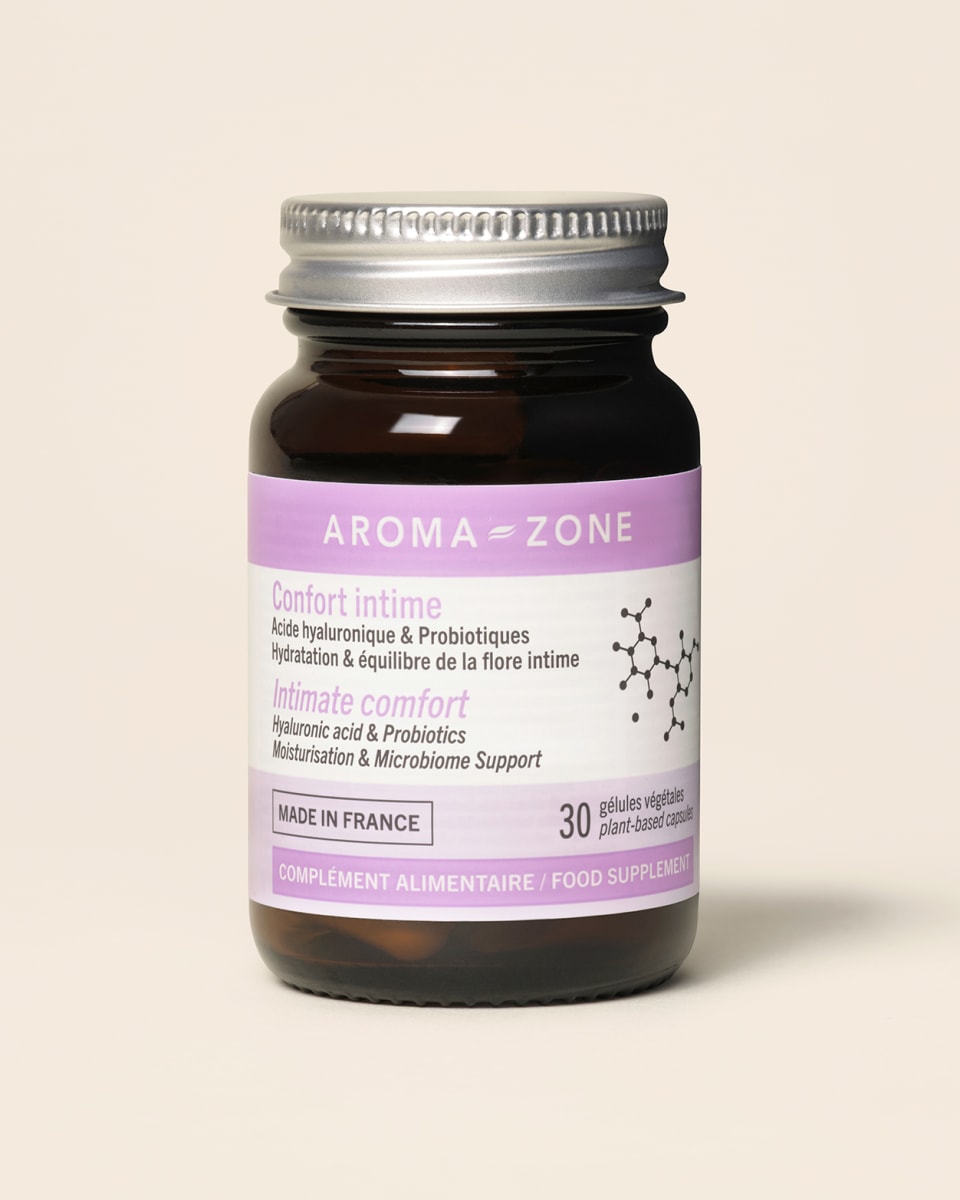
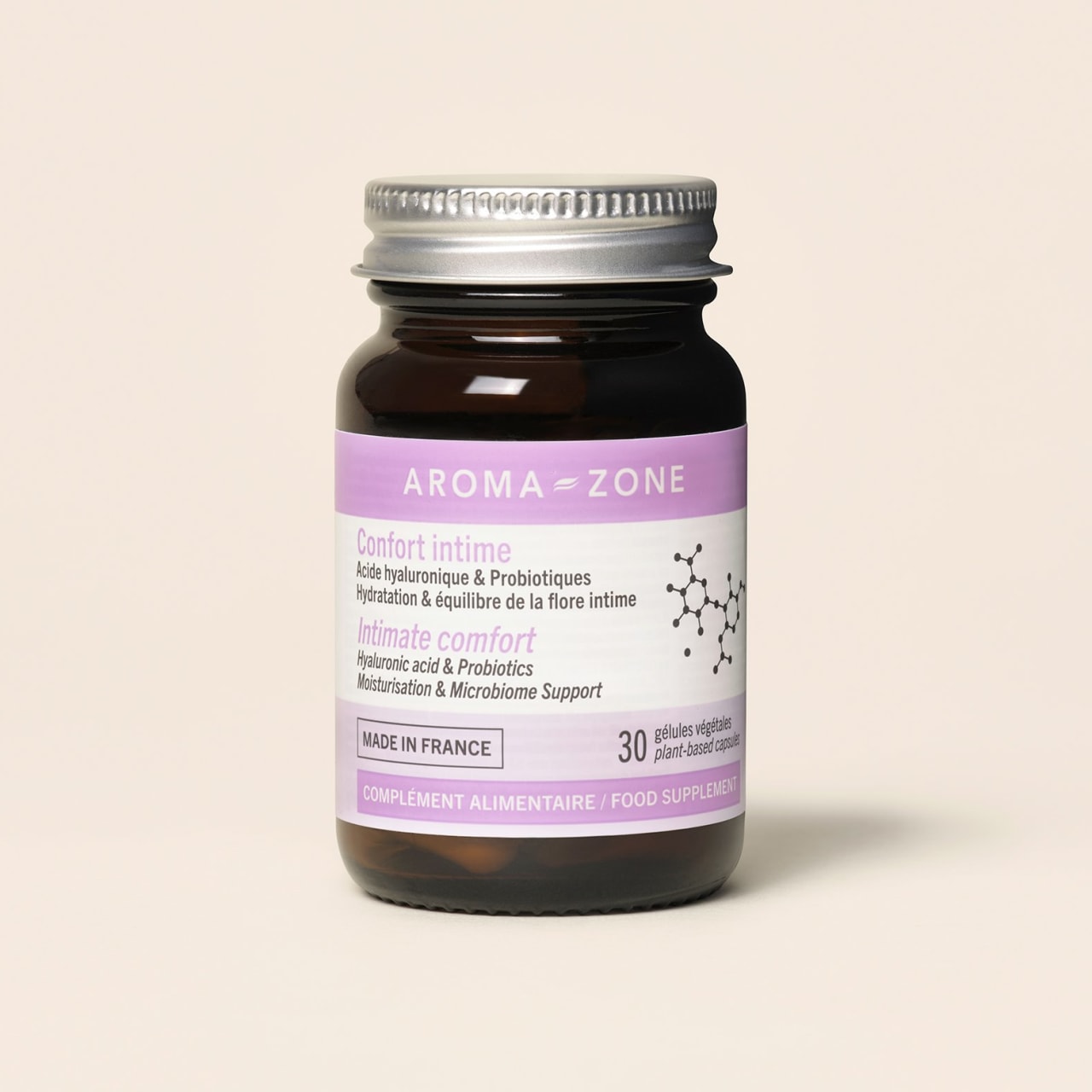
Specifically formulated for intimate comfort, this innovative dietary supplement combines ExceptionHYAL® Blossom hyaluronic acid, probiotic strains specifically selected for their targeted action on the vaginal microbiome, and naturally sourced vitamin B2, recognized for its role in maintaining healthy mucous membranes. A unique formula, designed to support women from their menstrual years through menopause and beyond, to promote vaginal balance, hydration, and sexual comfort.
What are the benefits of probiotics for the intimate flora?
By naturally rebalancing the vaginal flora, probiotics for intimate health offer numerous daily benefits, both for prevention and as support in cases of imbalance.
Reducing symptoms associated with an imbalance in the vaginal microbiota: Intimate flora probiotics containing specific lactobacilli help relieve itching, abnormal discharge, dryness, or discomfort, while restoring an acidic pH that is unfavorable to Candida albicans and pathogenic bacteria.
Preventing recurrent yeast infections, bacterial vaginosis, or cystitis: by strengthening the vaginal microbiota and local immunity, certain probiotic strains reduce the frequency of infectious episodes. Clinical studies (Rosati et al., 2020; Seta et al., 2014; Vladareanu et al., 2018) confirm their efficacy, when administered orally or vaginally, in preventing recurrences of vulvovaginal candidiasis.
Alleviating the side effects of antifungal treatment: Adding a probiotic after treatment improves recolonization by lactobacilli, accelerates the return to balance, and reduces discomfort (burning, swelling, discharge).
Restore the intimate flora after antibiotic therapy: Antibiotics can deplete the vaginal flora and promote fungal infections. Probiotics help quickly rebuild a healthy microbiota after taking antibiotics.
Supporting the intimate flora during sensitive hormonal periods: During pregnancy, menopause, or certain phases of the cycle, probiotics can preserve vaginal balance, alleviate dryness, and reduce the risk of infections. In postmenopausal women, they even represent an alternative or a supplement to hormone replacement therapy (Muhleisen et al., 2016).
Strengthening the local immune response: The vaginal microbiota plays a role in defending against pathogens. Probiotics for intimate flora support this natural barrier, with potential exploratory benefits for HPV infection, according to in vitro data.
How can you maintain your intimate flora on a daily basis?
In addition to the preventive or curative use of probiotics targeted at the intimate flora, certain daily habits are important to adopt:
Opt for gentle hand washing, rather than using a washcloth or loofah, which can trap bacteria or irritate the delicate skin of the intimate area. Washing the intimate area once a day is sufficient to maintain the balance of the vaginal flora, except in specific situations (menstruation, exercise, heat, etc.).
Choose a gentle cleanser with a physiological pH to avoid disrupting this naturally protective area.
Avoid douching, which disrupts the natural balance of the local microbiota, and limit yourself to external cleansing of the vulva.
Wear cotton underwear, changing it daily.
Wipe from front to back to avoid the risk of contaminating the vagina with fecal bacteria.
Pay attention to your diet. What we eat directly influences our gut flora and vaginal flora as well. A diet rich in fiber, prebiotics (garlic, onions, leeks, etc.) and fermented foods (yogurt, kefir, miso, sauerkraut...) can help naturally support the microbiome. On the other hand, certain foods such as refined sugars promote the proliferation of yeasts like Candida albicans.
Take time each day to relax. Chronic stress disrupts hormonal and immune balance and can affect the vaginal flora. Practicing sophrology, yoga, or meditation can help restore overall balance, including vaginal health.
Precautions for use
Probiotics for intimate health are not a substitute for medical consultation, especially in cases of persistent or recurring symptoms, strongly odorous discharge, or acute pain. They provide natural support but are not a medical treatment.
Expert Advice
To choose the probiotic best suited to your intimate flora, opt for formulas containing specific strains (such as Lactobacillus rhamnosus or reuteri), that are clinically tested and tailored to your needs: preventing yeast infections, restoring balance after antibiotic use, or supporting hormonal health.
Spotlight On Our Editor, Nutrition Expert Lila Bouber

An agricultural engineer specialising in nutrition and a Doctor of Food Science, Lila is a journalist and science writer. She contributes to B2B trade magazines and works with innovative companies in the health and wellbeing sector. Passionate about sharing knowledge, she is committed to making complex scientific information accessible to everyone. Convinced of the essential role played by micronutrients, plants and the microbiome, she explores the links between science and nature to better understand the foundations of our well-being.
Bibliography
Greenbaum S, Greenbaum G, Moran-Gilad J, Weintraub AY. Ecological dynamics of the vaginal microbiome in relation to health and disease. Am J Obstet Gynecol. 2019 Apr;220(4):324-335. doi: 10.1016/j.ajog.2018.11.1089.
Mei Z, Li D. The role of probiotics in vaginal health. Front Cell Infect Microbiol. 2022 Jul 28;12:963868. doi: 10.3389/fcimb.2022.963868.
Vladareanu R, Mihu D, Mitran M, Mehedintu C, Boiangiu A, Manolache M, Vladareanu S. New evidence on oral L. plantarum P17630 product in women with a history of recurrent vulvovaginal candidiasis (RVVC): a randomized double-blind placebo-controlled study. Eur Rev Med Pharmacol Sci. 2018 Jan;22(1):262-267. doi: 10.26355/eurrev_201801_14128.
Rosati D, Bruno M, Jaeger M, Ten Oever J, Netea MG. Recurrent Vulvovaginal Candidiasis: An Immunological Perspective. Microorganisms. 2020 Jan 21;8(2):144. doi: 10.3390/microorganisms8020144.
De Seta F, Parazzini F, De Leo R, Banco R, Maso GP, De Santo D, Sartore A, Stabile G, Inglese S, Tonon M, Restaino S. Lactobacillus plantarum P17630 for preventing Candida vaginitis recurrence: a retrospective comparative study. Eur J Obstet Gynecol Reprod Biol. 2014 Nov;182:136-9. doi: 10.1016/j.ejogrb.2014.09.018.
Martin R, Suárez JE. Vaginal microbiota: composition, protective role, associated pathologies, and therapeutic perspectives. Front Microbiol. 2013.
Montella, R., Malfa, P., Giuliano, A. et al. Vaginal adhesion of Lactobacillus plantarum P17630 after oral administration of a probiotic food supplement: a preliminary in vivo study. Nutrafoods 12, 35–42 (2013). https://doi.org/10.1007/s13749-013-0030-x
Muhleisen AL, Herbst-Kralovetz MM. Menopause and the vaginal microbiome. Maturitas. 2016 Sep;91:42-50. doi: 10.1016/j.maturitas.2016.05.015.


Frequently Asked Questions
Associated tips

Sexual wellness tips
Sexual wellness tips

Intimate care tips
Hormonal balance
Intimate care tips


