


Getting started with tantra to nourish your relationship

Tantrism is a subtle art of connection between two people, a form of mindful, sensual meditation that helps awaken the senses and strengthen the bond with your partner. Gentle and accessible, it invites you to explore both the emotional and physical dimensions of intimacy, while offering a moment of shared presence and mindfulness. In this article, discover how to practice tantra as a couple to awaken your senses and enrich your connection, in a way that feels aligned with your own desires.

Reading time: 0 min.

What is tantra?

Tantra is an ancient spiritual tradition originating in India, which focuses on harmonising the body, mind and energy. The term tantra literally means "weaving" or "thread," symbolizing the interconnection between all aspects of existence. Tantra encompasses a series of practices, rituals, and philosophies designed to transcend dualities and access a higher state of consciousness. Tantra aims to awaken the kundalini, the vital energy said to lie at the base of the spine, and to allow it to flow through the chakras to to reach a state of expanded consciousness or enlightenment.

What are the 7 chakras of tantra?

In tantra, the seven chakras are considered energy centres aligned along the spine, each linked to specific physical, emotional and spiritual aspects. Here’s a clear overview, from the base of the spine to the crown of the head:

Muladhara (root chakra): located at the base of the spine, it is linked to security, stability, and grounding.

Svadhisthana (sacral chakra): located in the lower abdomen, it is associated with sensuality, sexuality, and creativity.

Manipura (solar plexus chakra): located in the stomach, it regulates self-confidence and willpower.

Anahata (heart chakra): located in the center of the chest, it governs love, compassion, and relationships.

Vishuddha (throat chakra): supports communication, self-expression, and truth.

Ajna (third eye chakra): located between the eyebrows, it is linked to intuition and mental clarity.

Sahasrara (crown chakra): at the top of the head, it represents spiritual awareness and connection to the divine.


Good to know: in tantric practice, harmonising these chakras supports a more conscious, deeper, and more unified approach to sexuality.

Tantra and Tantrism: what's the difference?

The terms "tantra," "tantric," and "tantrism" are often used interchangeably, but they have distinct meanings. "Tantra" refers to the tradition and sacred texts that form the basis of spiritual teachings. "Tantric" is an adjective that describes anything related to the practice or philosophy of tantra, for example, tantric yoga or tantric rituals. "Tantrism," on the other hand, refers to the movement or doctrine that encompasses all tantric practices and beliefs. Tantrism can be seen as a complete spiritual path that integrates ritual, meditative, and sometimes sexual aspects to encourage spiritual awakening and union with the divine. Thus, Tantrism is not just a sex-oriented approach. It is first and foremost an ancient philosophy that originated in India and has been practiced for 7,000 years. The essence of Tantrism lies in establishing total harmony between partners.

This harmony exists on three levels:

On a physical level: through touch, caresses, and physical contact.

On a mental level: through availability, the mind, and the senses.

On an energetic level: the harmony of both partners in this special moment.

In short, the goal is not to reach orgasm at all costs or to perform, but rather to create an exceptional connection with your partner.

What is the purpose of tantrism and what are its benefits for your relationship?

Before getting into the practice, let's discuss the impact it can have on your relationship and your sexual practices: 

  • Improve communication: First, it allows you to improve communication with your partner. By learning this practice, you open the door to greater intimacy and closeness.

  • Strengthen self-confidence and trust in your partner: This intimate practice helps develop self-confidence and trust in your partner. By taking the time, we listen to each other more and therefore understand each other better

  • Promote a deep connection: Tantrism allows you to open up deeply to each other, creating moments of intense sharing and a more lasting bond. It thus allows for a much stronger emotional and spiritual connection.

  • Supporting libido: The practice of tantrism stimulates the senses and bodily awareness, promoting desire and a more vibrant and harmonious sexuality within the couple, while respecting each other's desires.

  • Reducing stress and anxiety: by immersing oneself in sensual meditation, one learns to slow down, breathe, and refocus, which calms the mind and body by simply being in the present moment.

More broadly, the practice of tantra allows us to move from a performance-based sexuality, in which we perform a series of gestures and practices without any particular connection to the other person, to a sexuality based on connection, slowness, and complicity.

How can you practice this method and which tantric exercises should you focus on?

Diving into tantrism may seem intimidating at first, but it is above all a journey of self-discovery and discovery of the other. This practice combines sensory awakening, meditation, and intimate connection, and can be practiced step by step, at your own pace and according to your desires. In this section, discover how to get started easily and lay the foundations for an enriching experience as a couple through simple exercises to practice with your partner step by step.

Why adopt the prolonged gaze?

Prolonged eye contact, or "eye gazing," is a simple but powerful tantric exercise that involves looking into each other's eyes to strengthen your connection and presence with one another. Sit face to face, close enough for your knees to touch, and choose one eye to focus your gaze on. During the exercise, observe your thoughts and emotions: are you judging the other person, trying to influence them, or are you able to remain fully present? If distractions or fears arise, identify them and explore how to overcome them in order to maintain a sincere and deep connection with your partner.

How to give a tantric massage?

Tantric massage is an excellent way to familiarize yourself with tantra, focusing on sensuality and awakening the senses rather than the sexual act. It is usually practiced on a mattress on the floor, in a relaxing environment, with slow, conscious movements that cover the entire body, including the genital areas, which are massaged with the same attention as the rest of the body. Massage oil helps the touch to glide and be gentle, while eye contact between partners strengthens the connection and intimacy. The goal is not sexual stimulation, but rather listening to sensations, emotions, and breathing, allowing for the creation of a deep bond and a space of full presence with the other person.

What do you need to do to practice tantric yoga?

Tantric yoga, derived from the tantric tradition, combines postures (asanas), breathing techniques (pranayama), and meditation to harmonize and support inner energies. It emphasizes the union of masculine and feminine energy, symbolized by Shiva and Shakti, and seeks to awaken the kundalini in order to circulate it throughout the body and balance the chakras. Practiced alone or as a couple, it improves mindfulness, body-mind alignment, and an intimate and spiritual connection with oneself or one's partner.

Why not try tantric dance?

Tantric dance is a sensory and energetic practice that awakens the chakras and circulates vital energy. Based on spontaneous, slow movements synchronized with the breath, it releases blockages when practiced solo and strengthens presence, listening, and intimacy as a couple. This gentle physical exploration promotes relational and sexual fulfillment.

Our natural solutions to support your practice

Organic Ylang-Ylang Essential Oil

This essential oil is a classic for its exotic floral notes. It is often used in massage or diffusion to create a sensual and soothing atmosphere, ideal for preparing a relaxing environment for you and your partner before your tantric sessions. Please note that this essential oil should not be used during pregnancy or breastfeeding. It can cause skin irritation, so it is important to always use it well diluted and keep it out of the reach of children. Certain natural compounds it contains (benzyl benzoate, linalool, benzyl salicylate, geraniol, farnesols, eugenol, citral) may cause allergic reactions in sensitive individuals. It is recommended to test the preparation on the crook of the elbow at least 48 hours before use and to refer to the specific precautions for cosmetic use. Please note that if you use this oil diluted in massage, be sure to avoid the mucous membranes.

Discover organic Ylang-Ylang essential oil

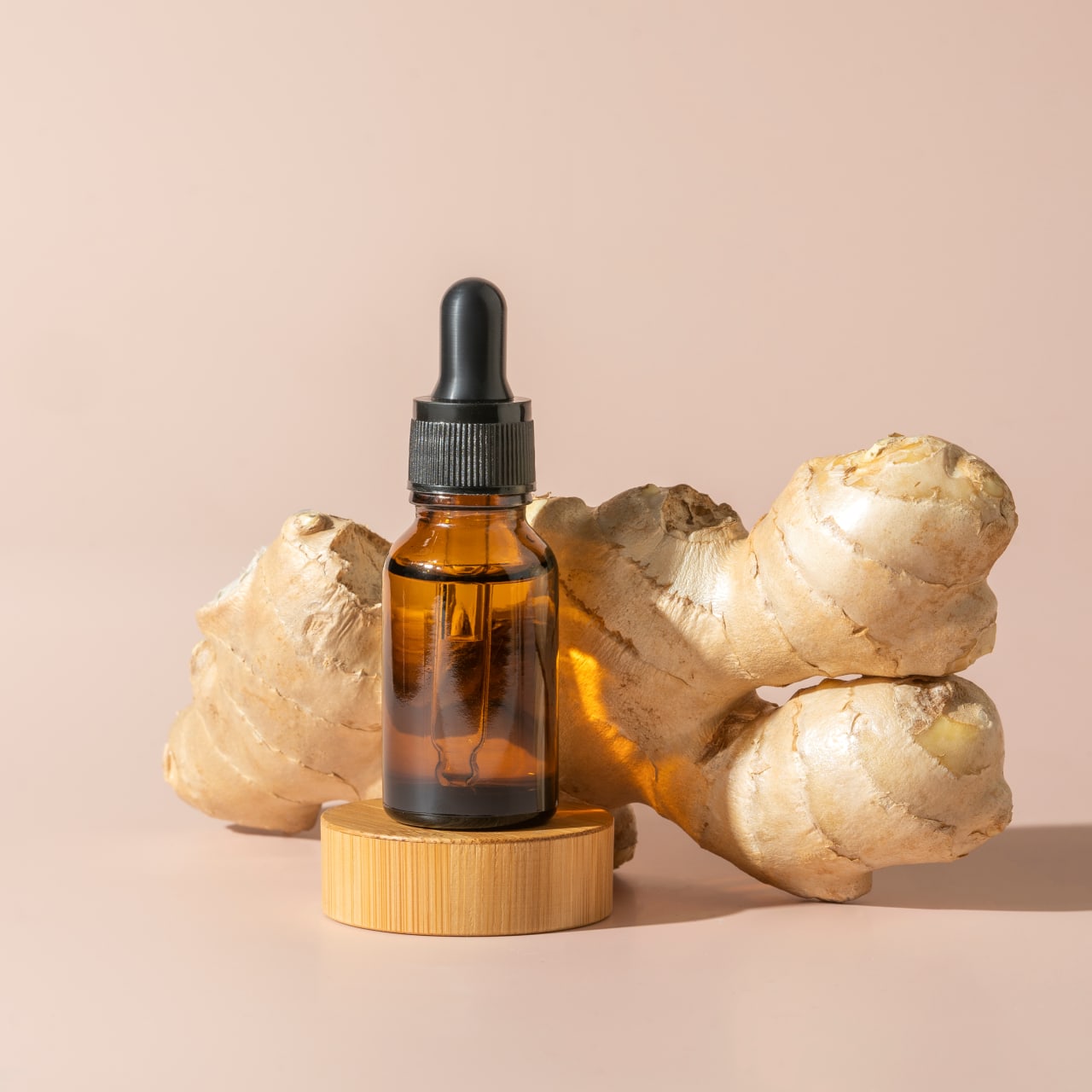
Organic Ginger Essential Oil

This essence is known as an aphrodisiac and general tonic. Its delicious spicy scent of fresh ginger is a treat and is perfectly suited for use in tantric practices. Please note that this essential oil should be avoided during the first 3 months of pregnancy. It can cause skin irritation, so it is important to always use it well diluted and keep it out of the reach of children, avoiding contact with the eyes. Certain natural components (limonene, linalool, citral, geraniol) may cause allergic reactions in sensitive individuals. It is recommended to test the preparation on the crook of the elbow at least 48 hours before use. Please note that if you use this oil diluted in massage, be sure to avoid the mucous membranes.

Discover Organic Ginger Essential Oil

Organic Vanilla Oil (oily macerate)

Made from macerated vanilla pods, this vegetable oil has a powerful vanilla scent, which has earned it a reputation as an aphrodisiac. It is also protective and nourishing, making it ideal for tantric massages. Please note that this oil is not recommended for people with sesame or nut allergies. As a general rule, always test your preparation on the inside of your elbow at least 48 hours before use.

Discover Organic Vanilla Oil (oily macerate)

Precautions

The advice provided in this article is for informational purposes only and does not replace the recommendations of your healthcare professional. If you choose to use essential oils, be sure to always follow the recommendations and precautions found in our Essential Oils Guide.

Expert advice

Tantra is practiced gently and mindfully, without the need to perform. Create a soothing environment, breathe deeply, and be attentive to your partner's feelings and needs, with kindness. Every gesture, glance, or massage helps awaken the senses, strengthen intimacy, and nurture closeness. The key is to be fully present together and savor every shared moment, without pressure.

Learn more

What is a tantric method session?

A tantra session is a guided moment in which you explore breathing, gaze, touch, and presence to create a deep connection. Depending on the approach chosen, it may include breathing exercises, "eye gazing," tantric massage, or meditative practices. The goal is always the same: to slow down, feel, and let the relationship unfold in awareness and gentleness.

What is the meaning of this remote practice?

Long-distance tantra is simply a conscious practice for couples when partners are not physically together. It is based above all on presence, attention, and intention, even through a screen. By synchronizing your breathing, looking at each other, or guiding sensory exercises, you create a genuine connection that can be just as meaningful even if you are not physically together.

Is it possible to practice tantric exercises alone?

Solitary tantra invites you to gently explore your own energy through breathing, conscious touch, and meditation. It is a practice that strengthens self-awareness, calms the mind, and develops bodily sensitivity. By taking this time for yourself, you learn to connect better with yourself and, therefore, with others.

What are the benefits of this practice for women?

Tantrism allows women to reconnect with their bodies, their rhythms, and their sensations without pressure or performance goals. This practice promotes a more conscious, slower, and more harmonious sexuality that is respectful of one's needs. It can also help to strengthen confidence, pleasure, and the ability to clearly express one's limits and desires, without feelings of discomfort or doubt.

Focus on Gabrielle Adrian, Sexologist

Gabrielle Adrian is a sexologist, couples therapist, and founder of Hello Hédoné. Committed to the well-being of women and men since 2021, she helps women, men, and couples navigate their intimate lives. She also offers concrete solutions to women and men who suffer in their sexuality, particularly for dyspareunia, sexual dysfunction, desire disorders, sexual trauma, body image issues, and sexual fulfillment. With three years of experience in individual and couples counseling, she has developed a method based on both sensual and sexual education.

Bibliography

1

Vieyra, N. (2022).

Love, Tantra, and Sexuality: A Path to Fulfillment. Eyrolles.

2

Francoeur, RT. (1992). Sexuality and spirituality: the relevance of eastern traditions. PubMed.

3

Written by psychologue.net. (2025). Tantric sex: The secrets to deep and fulfilling intimacy. psychologue.net.

4

WebMD editorial contributor. (2025). What Is Tantric Sex? WebMD.