Our traditional remedies to combat vitamin D deficiency

Lack of vitamin D, often referred to as the 'sunshine vitamin', is a common problem in winter when exposure to sunlight is reduced. Vitamin D is essential for our health, playing a crucial role in bone health, boosting the immune system and mood regulation. Fortunately, our grandmothers have always known how to take advantage of natural resources to make up for these deficiencies. In this article, we explore the most effective traditional remedies for combating vitamin D deficiency, combining traditional know-how with natural tricks.

By The Aroma-Zone editorial team

Reading time: 0 min.

What is vitamin D?

Vitamin D, also known as calciferol, is a fat-soluble vitamin that is essential for the body to function properly. Once released in the stomach, vitamin D is transported to the small intestine (where all nutrients are absorbed). It then travels via the lymphatic system to the liver. The absorption of vitamin D therefore depends on the amount of fat in the diet.

Vitamin D is now considered to be a genuine hormone, because it acts as such by binding to receptors in the target organs.

Vitamin D is found in two forms:

  • Vitamin D2 (Ergocalciferol), derived from plant-based foods. It is found in mushrooms, yeast and cereals. It is three times less well assimilated than vitamin D3.

  • Vitamin D3 (Cholecalciferol) is synthesised by the skin from cholesterol, under the action of ultraviolet light. It is also found in animal foods (oily fish, dairy products) and certain plants such as northern lichen.

These two forms of vitamin D are stored in the liver, muscles and adipose tissue, and are inactive, waiting to be used. So, thanks to exposure during the warmer months, vitamin D enables us to meet some of our body's needs in winter.

Vitamin D tolerates heat fairly well, but it is very quickly altered by light, which is why you should always leave it in a dark place.

Why take vitamin D?

Bone manufacture and health

Vitamin D is essential for the absorption and binding of calcium and phosphorus, minerals necessary for bone health. It helps to regulate bone density by enabling the production of the bone framework. This is why it is essential for growth and in the fight against osteoporosis.


Muscle function

Vitamin D plays a role in muscle contraction and the renewal of muscle cells.


Modulation of the immune system

Vitamin D boosts the body's immune defences against viruses. It activates white blood cells, the immune cells that produce antibodies to destroy microbes and pathogens.

Vitamin D also plays a role in

  • The health of the intestinal mucosa

  • Nerve transmission

  • Reducing inflammation in the body

  • Prevention of lung infections


The dangers of vitamin D deficiency

A vitamin D deficiency can lead to reduced immunity, demineralisation, muscle wasting and low-grade inflammation.

A deficiency can lead to rickets in children, osteoporosis, chronic infections or seasonal depression in adults.

What are the symptoms of vitamin D deficiency?

Lack of vitamin D, or vitamin D deficiency, can lead to a variety of symptoms, depending on the severity and duration of the deficiency. Common symptoms include

  1. Fatigue and general weakness: vitamin D deficiency can cause persistent fatigue and muscle weakness.

  2. Bone and joint pain: vitamin D is essential for bone health. A lack of it can lead to bone pain, particularly in the lower back, hips and legs.

  3. Muscle problems: muscles can become weak, sore or prone to cramp.

  4. Depression and mood disorders: low levels of vitamin D are associated with an increased risk of depression and other mood disorders.

  5. Delayed healing: vitamin D plays a role in cell regeneration and wound healing. A deficiency can slow the healing of wounds.

  6. Hair loss: although less common, severe vitamin D deficiency can contribute to hair loss.

  7. Immune problems: vitamin D is crucial for the immune system. A deficiency can increase susceptibility to infections.

Grandma's remedy for vitamin D deficiency

There are a number of simple steps you can take to increase your vitamin D levels naturally.


Expose your skin to the sun

Vitamin D, also known as the "sunshine vitamin", is 75% produced by exposure to the sun. To make sure you have enough, expose your face, neck, forearms and legs to the sun for 20-30 minutes a day from May to September. Avoid wearing sun cream or other protection during this short exposure time to maximise the production of vitamin D by the skin.

We recommend sunbathing before 11 am or after 5.30 pm in summer to avoid the most intense UV rays. The idea, of course, is not to get sunburnt!


Foods rich in vitamin D

As well as exposure to the sun, certain foods can provide you with vitamin D. These include fatty fish (sardines, mackerel, herring, salmon), egg yolks, butter, certain mushrooms, dark chocolate, ghee, cod liver…


Adopt a balanced lifestyle

You need to be particularly careful to follow a healthy lifestyle.

Over-intensive sport, lack of sleep, an overloaded liver or tired kidneys are all factors that can cause you to over-consume vitamin D.

  • Take up a sport that suits your current mood and vitality. Do it moderately, for an hour, 3 or 4 times a week. Alternate between intensive sport (CrossFit, running, climbing) and gentle to moderate exercise (yoga, pilates, walking, cycling).

  • Sleep at regular times, avoiding screens before bedtime and avoiding stimulants (tea, coffee, chocolate, alcohol) after 3pm.

  • Eat a healthy, balanced diet containing a variety of high-quality seasonal foods. The aim is to cover your nutritional needs in terms of macronutrients (proteins, lipids, carbohydrates) and micronutrients (vitamins and minerals) for the body to function properly.


Learn to cope better with stress

The stress hormone prevents vitamin D from playing its role. Think about breathing exercises and meditation. Take a walk in the woods if you can, the aim being to lighten your emotional mental load.

Natural alternative: Aroma-Zone vitamin D food supplement

Over 80% of the French population is thought to be deficient in vitamin D. When exposure to the sun and food are not enough, it is essential to supplement with vitamin D.

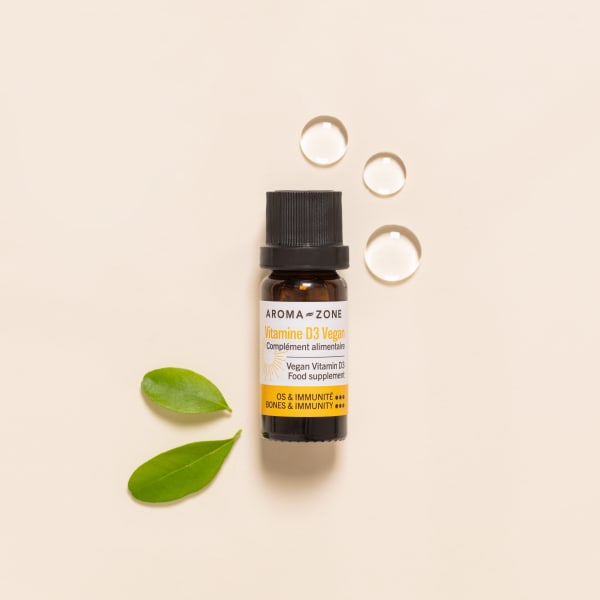
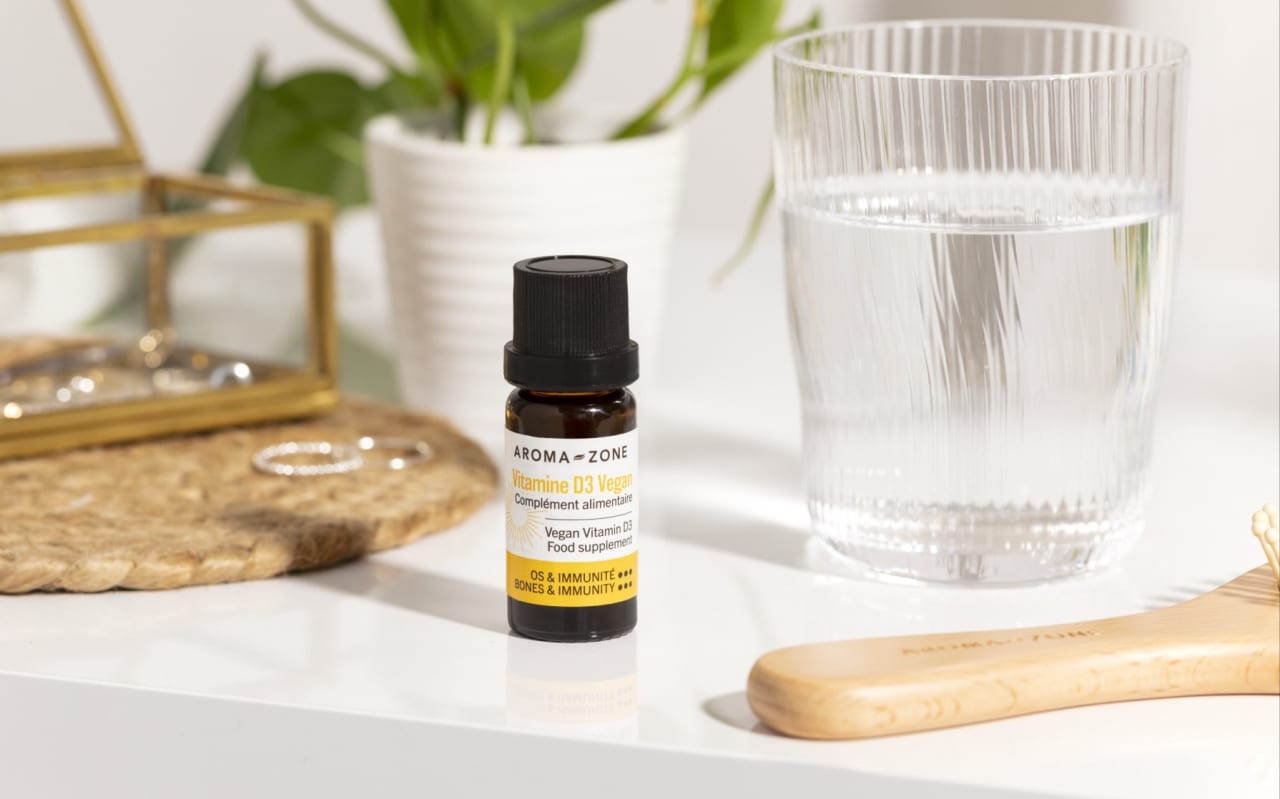
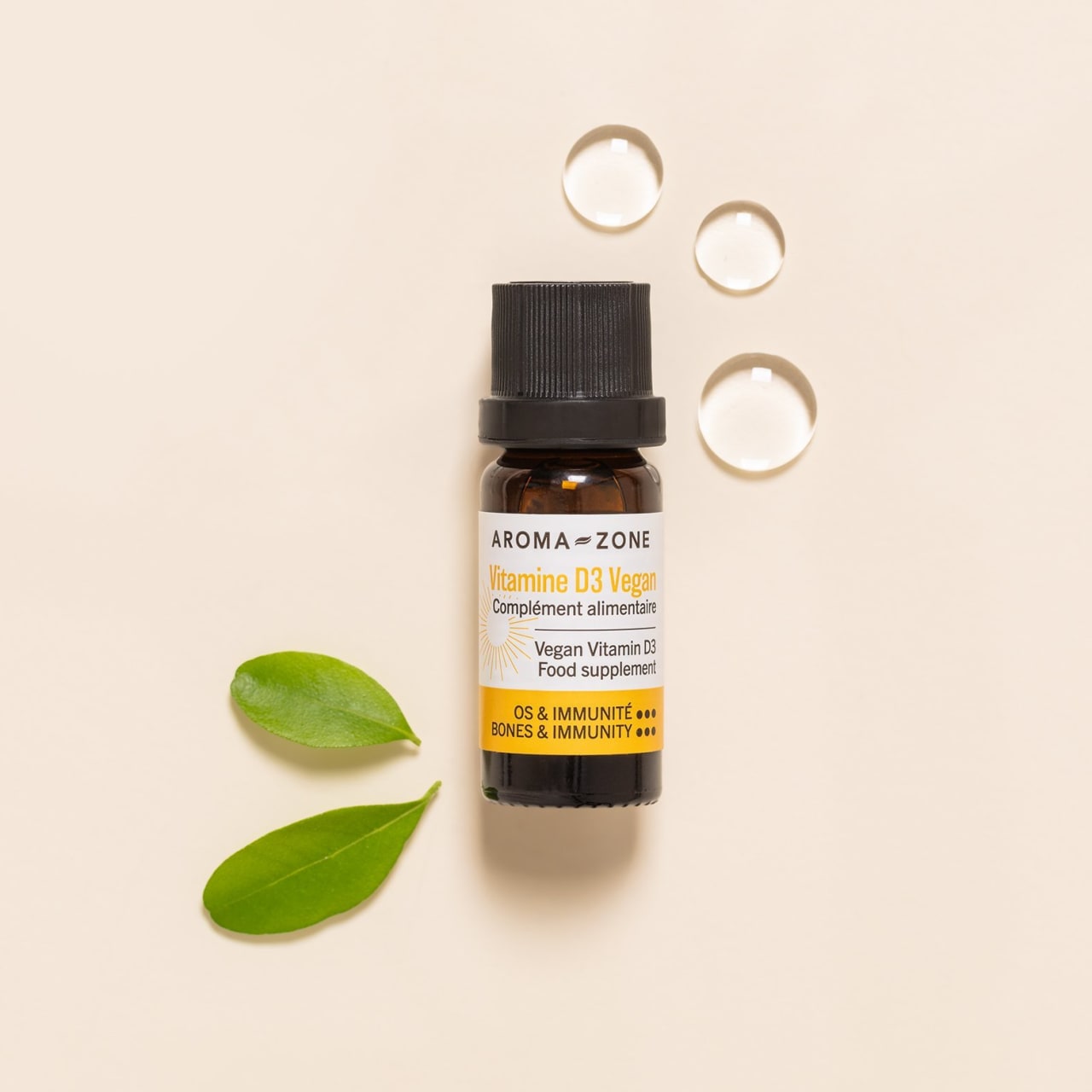
Aroma-Zone's vegan vitamin D food supplement is extracted from seaweed and is of natural, plant-based origin. This vitamin D is available in the D3 (or cholecalciferol) form, which is best assimilated by the body. It comes in the form of a neutral-tasting oil, which is easy to measure out and take in drops.

Vegan Vitamin D3

Containing a high dosage of natural, vegan Vitamin D3, this dietary supplement is particularly recommended for supporting immunity and preserving bone density. Known as the "sunshine vitamin", vitamin D is particularly recommended when exposure to the sun is limited.

Discover Vitamin D3 vegan

Contraindications

  • Not to be used by children under 3 years of age.

  • Pregnant and breast-feeding women should seek their doctor's advice before taking any supplements.

  • We recommend seeking the advice of a healthcare professional before use in children over 3 years of age.

  • Do not use if you have kidney stones

  • Not recommended for use in the treatment of epilepsy

Find out more

What dose of vitamin D should I take?

For adults and children over the age of 4, the recommended amounts are 400 IU per day and 600 IU for pregnant women. However, in the case of a proven vitamin D deficiency or during the autumn and winter seasons, this is not enough to cover all requirements. The optimal dose would be 2000 IU per day.

The recommended doses for Aroma-Zone vegan vitamin D food supplement are:

  • Adults: 2 to 5 drops a day (800 to 2000 IU)

  • Pregnant and breast-feeding women: 5 drops per day (2000 IU)

  • People with increased needs (black or dark-skinned people living in latitudes with little sunshine, the elderly, athletes, etc.): 5 drops a day (2000 IU)

  • Adolescents (12 to 18 years): 2 to 4 drops a day (400 to 1600 IU)

  • Children (3 to 11 years): 1 drop a day (400 IU)

We advise you to have your vitamin D levels checked by your doctor before taking any supplements. A chronic overdose can cause headaches, vomiting, diarrhoea, more frequent urination, liver and kidney problems and intense fatigue.

How should vitamin D be taken?

As vitamin D has an affinity with fats, you will maximise its absorption if you take it with meals. Place the recommended number of drops in a teaspoon, then swallow.

You can also add it directly to your plate or to a compote or yoghurt.

When should I take vitamin D?

As the days are shorter and the light less intense in autumn and winter, remember to supplement from October to March (in mainland France) to make up for the lack of vitamin D.

You should supplement more:

  • During winter, to support your immune system

  • If you have dark skin and live in latitudes with little sunshine: exposure to the sun may not be enough to cover your vitamin D3 needs.

  • If you use sun cream on a daily basis

  • If you have little exposure to the sun

  • If you live in a polluted environment

  • If you are elderly, to compensate for the reduced production of vitamin D3

  • If you are vegan or vegetarian