How can you get rid of milia safely and naturally?

How can you get rid of milia safely and naturally?


By Gipsy Dauge

Published on: Friday, December 01, 2023, Updated on: Tuesday, October 27, 2026

Milia, those small, often unsightly skin cysts, can be a source of concern. However, by adopting simple daily preventive measures, it is possible to reduce their appearance and promote healthier skin. If they cause discomfort, milia can be removed by a dermatologist who will make a small incision.

Contents

Understanding What Milia Are

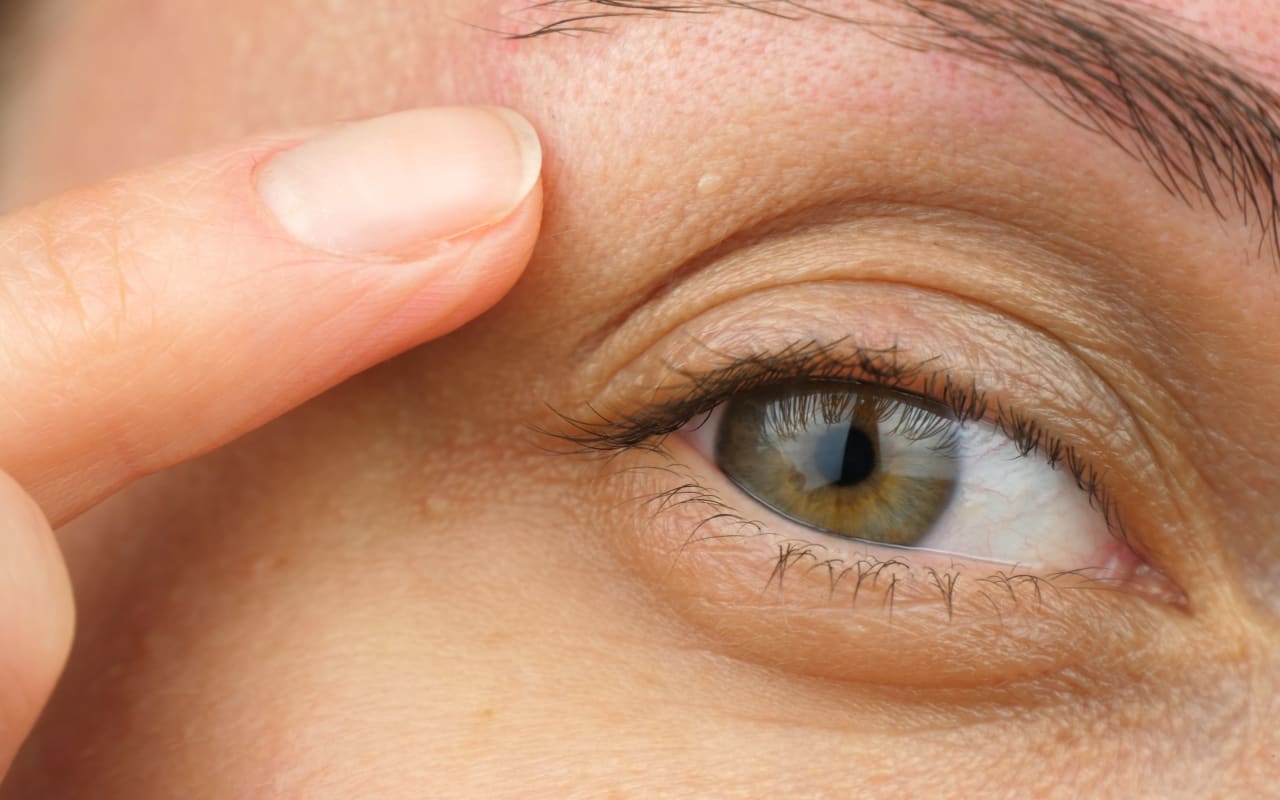
Milia, also known as milia cysts, appear as small, whitish skin bumps a few millimeters in diameter on the skin’s surface. Milia are tiny, slightly hard white bumps that can appear on the skin at any age. Milia are dead skin cells that become trapped beneath the skin and form a small cyst. Milia measure between 1 mm and 3 mm and are most commonly found on the cheekbones, sometimes under the eyelids.

Milia differ significantly from pimples, despite their similar appearance. Unlike pimples, which contain bodily fluids (sebum and pus), milia result from a solid accumulation of aggregated dead skin cells. Diagnosis is primarily clinical, and their removal with a lancet is easy due to the very superficial nature of the lesion. These cysts are usually harmless but can be somewhat unsightly. These lesions are common in children. In fact, nearly half of all babies have or will develop milia in one form or another.


Milia: What Causes Them?

Infants and adults develop milia when dead skin cells have not been effectively removed from the skin. In adults, milia can occur following skin rashes or burns, leading to skin swelling and damage to the pores. It is crucial never to attempt to squeeze a milia, as this could cause significant damage to the skin barrier, with no guarantee of successful removal.

Milia: What Medical Treatments Are Available?

If you have milia and are considering treatments, it is recommended that you consult a dermatologist, a doctor specializing in skin conditions. Here are some of the treatments your doctor might consider:

  1. Extraction via incision (incision and removal): The dermatologist may use sterile instruments to pierce and extract the milia. This must be done professionally to avoid infection or scarring.

  2. Microdermabrasion: This is a procedure that uses fine crystals to exfoliate the surface layer of the skin, helping to remove dead skin cells and milia.

  3. Laser: Certain types of lasers can be used to remove milia. The laser works by heating the skin, promoting cell regeneration.

  4. Topical products: Your dermatologist may recommend using creams or gels containing ingredients such as salicylic acid, glycolic acid, or vitamin A, which can help exfoliate the skin and prevent the formation of new milia.

  5. Chemical peel: This procedure involves applying a chemical solution to the skin to induce controlled exfoliation, thereby removing dead skin cells and milia.

What are the different types of milia?

Milia are skin cysts that can take various forms. The two main categories of milia are acquired milia and congenital milia.

  1. Acquired Milium: Acquired milium is the most common type and typically develops later in life, often in adulthood. They may be associated with skin lesions, trauma, excessive sun exposure, the use of pore-clogging cosmetics, or skin conditions such as eczema. Acquired milia can be treated using methods such as extraction by a healthcare professional, microdermabrasion, chemical peels, or topical products.

  2. Congenital Miliums: These appear in newborns shortly after birth. Transient congenital miliums are often linked to normal hormonal adjustments in infants. Generally, these miliums disappear spontaneously without requiring treatment.

Best practices to adopt daily to prevent the appearance of milia

To treat milia in babies, daily facial cleansing is generally sufficient. However, teenagers and adults should wash their faces twice a day. Using warm water has the advantage of opening the pores due to the heat, thereby helping to remove impurities. After washing, it is recommended to gently pat the skin dry with a clean towel. Teenagers and adults may opt for a specific facial cleanser, while the use of such products is not recommended for young children, except in cases of oily skin. Young children are instead encouraged to use a natural ultra-moisturizing soap. Adults and teenagers can also incorporate an exfoliant into their routine. For dry skin with numerous milia, it is recommended to use a product that is both moisturizing and exfoliating. A moisturizer containing vitamin A or salicylic acid is advised.

It is recommended to limit your skincare routine to a few products that are beneficial for the skin. When treating milia, it is essential to avoid clogging the pores, as this would make it harder to remove accumulated dead skin cells. Excessive use of makeup or thick creams can make this process more difficult. For example, it is wise to stop using overly rich skincare products around the eyes, particularly plant-based oils. Although their use should not be avoided at all costs, many people develop milia by regularly applying oils such as argan oil or shea butter.

Milia: How to Avoid Making the Situation Worse?

If you notice milia appearing on your face, it’s important to resist the urge to scratch them. Trying to squeeze or scratch them can lead, at best, to skin irritation and pain, and at worst, to infection. Unlike acne pimples, milia are subcutaneous cysts that cannot be removed by squeezing them yourself. It is unlikely that you will be able to get rid of them without professional help. By trying to do it yourself, you risk damaging your skin, which could lead to scars.

What are the differences between milia and skin tags?

Milia and skin tags, although similar in appearance, differ in their origin and composition. Milia are small skin cysts resulting from the accumulation of dead skin cells beneath the skin. In contrast, skin tags, often called lipomas, are clusters of subcutaneous fatty tissue. Milia are generally white or yellowish, while skin tags can vary in color. Treatments also differ; milia sometimes require a dermatologist to extract them, while lipomas can sometimes be surgically removed.

Spotlight on our writer: Gipsy Dauge

Gipsy Dauge

Gipsy graduated from ESJ Paris and spent 10 years working in general and women’s magazines before specialising in health and wellbeing. Now a certified Yin Yoga teacher, she combines her passion for writing with her love of yoga. Through her articles, she aims to share simple, practical habits that support wellbeing and encourage a more mindful approach to everyday life.

Bibliography

  1. Milia in children

    https://www.sciencedirect.com/science/article/abs/pii/S0151963808007187

  2. How to Care for Your Skin

    https://books.google.fr/books?id=oFt-DwAAQBAJ&pg=PT219&dq=milium+grains&hl=fr&newbks=1&newbks_redir=0&sa=X&ved=2ahUKEwjh9o2uju6CAxVnU6QEHXn-CPEQ6AF6BAgGEAI#v=onepage&q=milium+grains&f=false

  3. Skincare - The Goal: Beautiful Skin

    https://books.google.fr/books?id=sWyXEAAAQBAJ&pg=PA71&dq=grains+de+milium&hl=fr&newbks=1&newbks_redir=0&sa=X&ved=2ahUKEwjh9o2uju6CAxVnU6QEHXn-CPEQ6AF6BAgNEAI#v=onepage&q=milium%20grains&f=false