Citric acid is an organic compound naturally found in citrus fruits, particularly in lemons. It is widely used in the food industry as a preservative and acidifying agent, in the form of a white crystalline powder. But citric acid also has descaling and degreasing properties, making it ideal for making eco-friendly household products and cleaning your toilet naturally.
How to Use Citric Acid to Clean Your Toilet
Published on: Thursday, February 06, 2025, Updated on: Wednesday, October 07, 2026
Keeping your toilet well maintained is essential for good hygiene and to prevent limescale build-up. Looking for an eco-friendly way to clean your toilet, and heard that citric acid can help? It's a natural ingredient, ideal for descaling, cleaning and maintaining pipework. Here's how to use citric acid on your toilet, and why it deserves a permanent place among your cleaning products.
Contents
In brief
L’acide citrique est un détartrant naturel efficace pour nettoyer, désinfecter et éliminer les dépôts de calcaire dans les WC, tout en étant respectueux de l’environnement.
Il s’utilise sous forme de poudre, diluée dans de l’eau chaude pour une efficacité maximale. Directement appliqué sur les parois ou dans la cuvette, laisser agir de 1 à 4 h, puis frotter avec la brosse WC avant de rincer.
L’article précise qu’il convient de manipuler l’acide citrique avec précaution et de le garder hors de portée des enfants et des animaux domestiques.
What is citric acid?
Why use citric acid to clean toilets?
Limescale buildup at the bottom of the toilet
Scale is formed by calcium deposits in the water that sits at the bottom of your toilet bowl. Scale formation is mainly due to three factors: water hardness: the higher the calcium content in the water, the harder the water is and the more significant the scale deposits will be; the use of hot water: the hotter the water, the faster the calcium will accumulate and the faster limescale will form; the material of your pipes: copper or stainless steel pipes are more susceptible to limescale buildup.
The consequences of limescale buildup in toilets
Limescale buildup can cause several problems, particularly with plumbing and hygiene.
Yellowish, orange, or brown stains
Urine and faeces react chemically with stagnant hard water, which can leave stains on the toilet walls or at the bottom of the bowl. These stains are mainly composed of coloured limescale and give the toilet a neglected, unsightly appearance.
Bacterial growth
Urine scale provides an ideal environment for bacteria to settle and multiply. This is because scale has uneven surfaces and a rough texture. This texture allows bacteria to easily take hold.
Clogged toilets
Scale settles at the bottom of the bowl and in the pipes. Over time, it traps some of the waste entering the pipes, gradually causing a blockage. This phenomenon is exacerbated by hard water and can eventually clog your toilet. Furthermore, calcium deposits in the water damage the seal, which becomes hard and brittle over time. The seal is then no longer effective, water seeps in, and leaks may occur.
A clogged flush
Limescale can also build up in the flush mechanism and clog the tank or its components. This has various consequences for the toilet's operation: reduced flushing power, water leaks, and even foul odours.
Citric acid removes limescale
Citric acid is known for its effectiveness in dissolving limescale and tartar. It therefore has anti-limescale and descaling properties, as well as rust-preventing, fungicidal, bactericidal, anti-algae, and disinfectant properties. It is thanks to its high acidity (pH value = 1.7) that citric acid dissolves limescale and, consequently, scale. Used regularly, it helps keep toilets clean and prevent clogs. Furthermore, it is 100% biodegradable and offers an environmentally friendly alternative to traditional synthetic chemicals.
What are the benefits of descaling a toilet with citric acid?
Using citric acid to descale toilets offers many benefits:
Maximum effectiveness: Citric acid dissolves limescale and mineral deposits just as quickly as store-bought cleaning products. For toilets with light limescale buildup, you can pour 2 tablespoons of citric acid into the toilet and let it sit for 1 hour. If your toilet is heavily scaled, you can use 200 grams of powdered citric acid and add 1 litre of boiling water before letting it sit for 3 to 4 hours
Eco-friendly: Citric acid is a natural product and 100% biodegradable. It has no impact on the environment and completely breaks down within 2 to 3 days, turning into carbon dioxide and water.
Compatibility with septic tanks: Citric acid does not interfere with the functioning of the septic tank, as it poses no danger to the bacterial colonies living there. However, be sure to use it in moderation and only when necessary.
Cost-effectiveness: Citric acid costs much less than most commercial descaling agents sold in supermarkets or online. It is a raw, unprocessed product with minimal packaging, which explains its low price
Versatile use: Citric citric acid can be used for various household applications such as cleaning shower walls, unclogging drains, cleaning surfaces, appliances and kitchen utensils, deodorising and descaling coffee makers and kettles, removing burnt-on food from the bottom of pots, getting rid of yellow sweat stains on clothes, bleaching laundry, maintaining your dishwasher and washing machine, degreasing the oven and microwave, or even weeding without polluting.
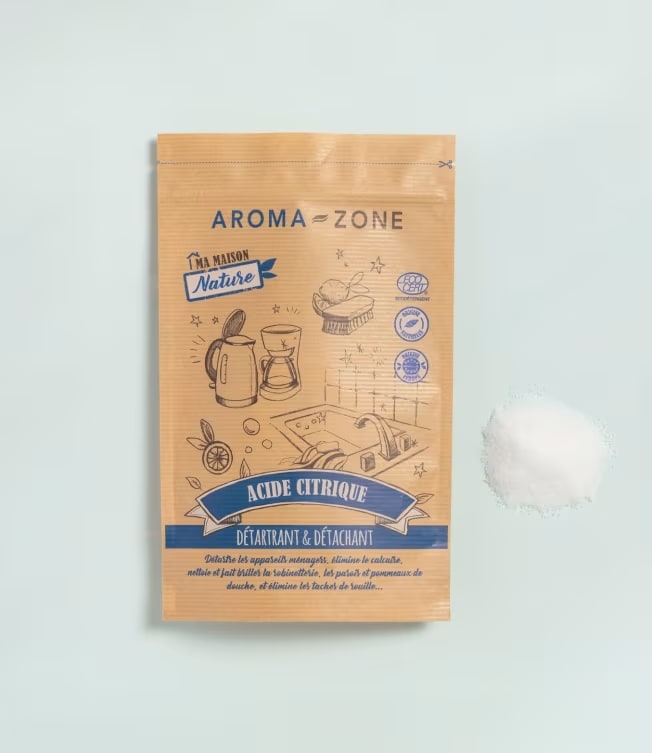
Citric Acid Eco-Detergent
Natural and biodegradable, citric acid is used in natural home cleaning for its powerful anti-limescale properties. Citric acid is ideal for descaling household appliances (kettles, coffee makers, washing machines, etc.), or for removing limescale stains and making taps, windows, shower walls and bathroom tiles shine. It is also used in laundry care to remove rust stains from fabrics, as well as to make homemade fabric softeners.
How do you use citric acid to clean the toilet bowl?
For effective toilet cleaning with citric acid, follow this method:
Regular maintenance / Toilets with light limescale: Pour 2 tablespoons of citric acid into the toilet and spread the powder over the entire interior surface of the toilet with a brush. Let it sit for 1 hour. Scrub with a toilet brush and flush the toilet.
Heavily scaled toilets: Pour 200 grams of citric acid powder into the toilet and add 1 liter of boiling water. Spread it over the entire surface with a toilet brush and let it sit for 3 to 4 hours. Scrub vigorously with the brush and flush. Repeat if necessary.
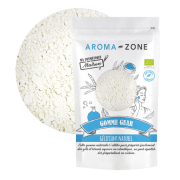
Our best Aroma Zone recipes for naturally descaling your toilet
Precautions for use
Take every precaution when handling citric acid to avoid skin and eye irritation. Keep the product out of reach of children and pets, in a dry, well-ventilated area. Avoid mixing citric acid with products containing bleach or other chemicals to prevent adverse reactions.
Expert Tip
Are you renting? Remember to descale your toilet before the walk-through with the real estate agency! If limescale is found at the bottom of the toilet during the walk-through, part of your security deposit could be withheld. Buying a packet of citric acid powder will always cost you much less than having to forfeit part of your security deposit.
Spotlight on Our Beauty Writer: Alice Blanchard

Formerly a manager at an organic shop, Alice spent several years helping her customers choose healthy products that respect both their health and the natural world. Having suffered from endometriosis since her teenage years, she chose to prioritise natural solutions to ease her symptoms and improve her day-to-day wellbeing. Drawing on her knowledge of naturopathy, she has always explored the benefits of plants and nutrition. Passionate about ecology and deeply connected to nature, Alice makes her own cosmetics and household products to reduce her impact on the planet and all its inhabitants.
Bibliography
My Natural Cleaning Products: A Simple, Eco-Friendly, and Cost-Effective Path to Self-Sufficiency
By Anniejeanne Sauvage
https://www.moncointoilettes.fr/jentretiens-mes-toilettes/
The DIY Bible: 200 Natural Recipes and Creations
DIY, Home, Food, Wellness, 2022 – By Alexandra Alzieu
The Marabout Guide to Self-Sufficiency
2019 – By John Seymour
HAL Open Science - Household Exposure to Cleaning Products and Respiratory Health
By Pierre Lemire
https://theses.hal.science/tel-04065477v1/file/105758_LEMIRE_2021_archivage.pdf