
Guide to essential oils

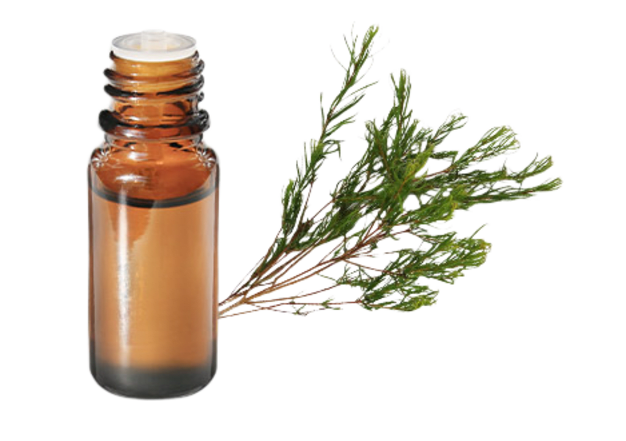
Essential oil of Tea tree (Organic tea tree)

A very gentle, broad-spectrum purifying agent, Tea tree essential oil is a must-have in aromatherapy. Tea tree essential oil is recommended to accompany infectious episodes, particularly to treat sore throat naturally. Tea tree essential oil is also the best-known treatment for blemished skin.

How to use

  • Skin application and massage

    Skin application and massage

    Appropriate

  • Cosmetic active ingredient

    Cosmetic active ingredient

    Appropriate

  • Aromatherapy bath

    Aromatherapy bath

    Appropriate

  • Diffusion

    Diffusion

    Appropriate

  • Food use

    Food use

    Suitable

Features

Properties

Precautions

Find out more

Features

Production process

Complete steam distillation

Part of the plant used

Leaves

Botanical name

Melaleuca alternifolia

Warning

The properties, information and methods of use below are quotes from reference books or websites on aromatherapy, hydrolatherapy and phytotherapy. This general information is provided for informative purposes only and in no way constitutes medical guidance. Under no circumstances can this information be used as a substitute for a medical diagnosis, consultation or follow-up, nor can it incur our liability. We recommend that you consult the guide to essential oils before using them, so that you are aware of any precautions that need to be taken. If in doubt, consult a doctor before using essential oils.

Bibliographic references

Franchomme P., Jollois R. et Pénoël D. (2001) L'Aromathérapie exactement. Editions Roger Jollois. Baudoux D. (2002) L'Aromathérapie - Se soigner par les huiles essentielles. Editions Amyris. Walters C. (1999) Aromathérapie. Guide illustré du bien-être. Editions Könemann. N.A.R.D ( ) Aroma News N°30. Editions Inspir. Bitsas A. (2009) Aromathérapie corps et âme. Comment ajuster complexité aromatique et complexité humaine. Editions Amyris.

Properties

Tea tree essential oil is traditionally used for: abscess, boil, paronychia, acne, spots, sore throats, mouth ulcers, cold sores, herpes, toothache (cavities, abscesses), fungal infections

Health

Wellness

Beauty

Household use

Find out more

A versatile, well-tolerated****anti-infective, tea tree essential oil is an essential oil in any first aid kit. It relieves skin infections such as fungal infections, abscesses and boils, as well as mouth ulcers and gingivitis. It's also an ideal essential oil for fighting winter viruses and germs: sore throats, coughs, runny nosesetc.

Properties

Tea tree essential oil is recognised for its health properties:

  • Major broad-spectrum antibacterial : gram + (Staphylococcus), gram - (Escherichia coli, Colibacter proteus)

  • Highly effectiveantifungal , particularly against Candida albicans.

  • Antiviral and immunity support.

  • Radioprotective, it limits the appearance of burns and soothes sensations of overheating caused by radiotherapy sessions.

  • Pest repellent

  • Anti-inflammatory

Uses

Tea tree essential oil is traditionally used to improve the following conditions:

  • Oral infections : mouth ulcers, abscesses, gingivitis, cavities, periodontitis, etc.

  • ENT infections : colds, bronchitis, ear infection, sinusitis, sore throat, nasopharyngitis, laryngitis, etc.

  • Gynaecological or urinary tract infections : fungal infection, vaginitis, cystitis, urethritis, etc.

  • Skin infections : skin abscesses, boils, herpes, cold sores

  • Prevention of skin burns caused by radiotherapy

  • Parasitic infections:

    • Cutaneous : scabies, ringworm

    • Intestinal : amoebas, roundworms, intestinal worms

Synergies

Purifying and sanitising action : essential oils of Bay Laurel, Palmarosa, Holy Basil, Oregano, Clove and Savory.

In practice

Oral hygiene: As an ingredient in your oral hygiene preparation

Hand hygiene: As an ingredient in your hand-care preparation

Precautions

  • Do not use in pregnant or breastfeeding women and children under 6 years old.

  • Not recommended in case of renal insufficiency.

  • Keep out of reach of children.

  • Avoid contact with eyes and mucous membranes.

  • Some natural compounds in this essential oil may cause allergic reactions in sensitive individuals when incorporated into a cosmetic formulation.

  • Avoid using old or oxidized essential oils. Store away from light and air.

  • As a general rule, always perform a patch test by applying your preparation to the inside of your elbow at least 48 hours before use.

  • For use as a cosmetic ingredient, refer to specific precautions.

Find out more

The tea treeowes its name to the navigator James Cook and his crew, who arrived in Australia and made a refreshing tea from the leaves of the tree. They also observed that the natives used the leaves to make poultices, which they applied to wounds to treat infections. In 1922, well before the arrival of the first synthetic antibiotics, chemist Arthur de Raman Penfold distilled tea tree leaves and confirmed the plant's incredible antiseptic and antibacterial properties.

This discovery spread very quickly, so much so that at the start of the Second World War, the Australian government included a bottle oftea tree essential oil in every first-aid kit for the Australian****army and navy. The first synthetic molecules appeared at the same time on the other side of the world, and very quickly put this natural essence with its undeniable virtues on the back burner. Today, this essential oil is being rediscovered and is increasingly used by the medical profession as a complement to treatments or in research, particularly to combat bacteria resistant to synthetic antibiotics. So much has been achieved by this leaf, which was originally mistaken for a simple tea leaf... So don't hesitate any longer, tea tree essential oil is an essential and indispensable aromatherapy oil!

My absolute best, first-aid oil for me or my horses, very versatile, number one in my natural first-aid kit

P
Pascale

I've been applying it to my damaged toenails for a month and I'm starting to see a clear improvement.

T
T

A bestseller

N
Nicolas

Dries out pimples well, very effective

C
Céline

Excellent quality-price ratio. Excellent product

F
Fulvia

Equivalents

Essential Oils

1 ml = approximately 35 drops (with our Aroma-Zone dropper caps)

Carrier Oils

1 pump (Aroma-Zone aluminium pump) = approx. 0.15 ml

Mass / Volume conversion (for a liquid)

Mass (g) = Density x Volume (ml) at 20°C

Further information

1 full teaspoon = between 3 and 4.5 ml

1 full tablespoon = between 7.5 and 10 ml


However, these spoon ratios depend on a number of factors (e.g. viscosity of the liquid, temperature, depth and size of the spoon, rheological behaviour of the liquid), and we strongly advise you to use precise measuring equipment, such as graduated test tubes, graduated pipettes, and precision scales.