

Guide to essential oils

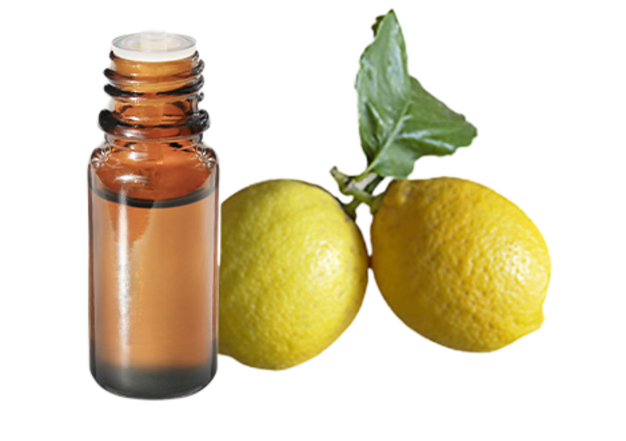
Essential oil of Lemon

Fortifying, purifying and refreshing, this organic Sicilian lemon essential oil is prized for its invigorating effect on the body. Its delicate, fruity fragrance is uplifting, while its lemon zest flavour makes it perfect for culinary use.

How to use

  • Skin application and massage

    Skin application and massage

    Appropriate

  • Cosmetic active ingredient

    Cosmetic active ingredient

    Appropriate

  • Diffusion

    Diffusion

    Suitable

  • Food grade

    Food grade

    Suitable

  • Aromatherapy bath

    Aromatherapy bath

    Possible but not recommended

Features

Properties and uses

Precautions

Find out more

Features

Production process

Cold pressed

Part of the plant used

Zest (fruit pericarp)

Botanical name

Citrus × limon

Warning

The properties, information and methods of use below are quotes from reference books or websites on aromatherapy, hydrolatherapy and phytotherapy. This general information is provided for informative purposes only and in no way constitutes medical guidance. Under no circumstances can this information be used as a substitute for a medical diagnosis, consultation or follow-up, nor can it incur our liability. We recommend that you consult the guide to essential oils before using them, so that you are aware of any precautions that need to be taken. If in doubt, consult a doctor before using essential oils.

Properties and uses

Lemon essential oil is traditionally used for: Liver health, fatigue, exhaustion, immunity, weight loss, slimming and vomiting, nausea

Health

Wellness

Beauty

Kitchen

Find out more

Appreciated for its fresh, invigorating scent, Lemon essential oil is ideal for diffusing to purify the air, especially during epidemics. It is traditionally recognised as effective for relieving nausea and motion sickness, and for aiding digestion.

Properties

In terms of health, Lemon essential oil is renowned for the following benefits:

  • Supports natural immunity, regulates the metabolism

  • Studies have shown its regulating properties on the hepatic system, as well as its anti-nausea properties.

  • It improves digestive health, relieves gas and is generally depurative

  • A general antiseptic and bactericide, particularly on gram-positive and negative bacteria.

  • Antiviral and air purifying properties when diffused.

Additionally, it is a

  • Blood fluidifier

  • Terpenes (d-limonene, beta pinene and citrals) have antifungal properties.

Uses

Lemon essential oil is traditionally used to improve the following issues:

  • Nausea, motion sickness

  • Digestive, liver and pancreatic fatigue

  • Epidemics and infectious diseases (colds, flu, gastro-enteritis, etc.)

  • Premature ageing: hypertension, capillary fragility, etc.

  • Venous stasis, heavy legs, haemorrhoids

  • Obesity, excess weight

  • Air in need of purification

In practice

Light legs: Mix into your oil blend. Apply your mixture locally, massaging lightly into the area concerned.

Air purification: diffuse into the air, alone or blended with other essential oils (Ravintsara, Scots Pine, Siberian Fir, etc.).

Precautions

  • Do not expose your skin to the sun for at least 8 hours after applying this highly photosensitising oil. Lemon essential oil without furocoumarins is recommended for use in cosmetics.

  • Irritating in its pure state; use diluted for all skin applications.

  • Not recommended during the first three months of pregnancy.

  • Keep out of reach of children.

  • Certain natural compounds contained in this essential oil may present an allergy risk in certain sensitive individuals when the essential oil is incorporated into a cosmetic composition (according to the 7th Amendment to the EU Cosmetics Directive (2003/15/EC)): limonene and, to a lesser extent, citral (geranial and neral), linalool.

  • As a general rule, always carry out a test application of your mixture in the crease of the elbow at least 48 hours before use.

Find out more

Grown throughout the Mediterranean basin, lemons are thought to have originated in India, and have long been considered a health fruit. Lemon juice was once used to clean injuries and cuts, and to relieve the pain and burning caused by insect bites. The Greeks and Romans saw lemons as a panacea. They were introduced to Europe in the Middle Ages, and are often associated with long sea voyages, during which men consumed the fruit to protect themselves from scurvy.

Equivalents

Essential Oils

1 ml = approximately 35 drops (with our Aroma-Zone dropper caps)

Carrier oils

1 pump (Aroma-Zone aluminium pump) = approx. 0.15 ml

Mass / Volume conversion (for a liquid)

Mass (g) = Density x Volume (ml) at 20°C

Further information

1 full teaspoon = between 3 and 4.5 ml

1 full tablespoon = between 7.5 and 10 ml


However, these spoon ratios depend on a number of factors (e.g. viscosity of the liquid, temperature, depth and size of the spoon, rheological behaviour of the liquid), and we strongly advise you to use precise measuring equipment, such as graduated test tubes, graduated pipettes, and precision scales.

Aromatherapy recipes from the bibliography

EO = Essential Oil VO = Carrier Oil or Macerated Oil

Almond and lemon financiers (keziahsamuse.over-blog.com)

Kitchen

  • 80 g of butter

  • 75 g of caster sugar

  • 50 g of almond powder

  • 3 egg whites

  • 30 g of wheat flour

  • 2 tablespoons of lemon juice

  • 3 drops of lemon essential oil

Directions: Preheat the oven to 180 °C. Place the butter, cut into pieces, in the Thermomix bowl and melt for 2 minutes at 70 °C, speed 1. Add the almond powder, flour, sugar, egg whites and lemon juice and mix for 20 seconds on speed 6. Divide between the moulds and bake in the oven for 20 minutes. Aroma-Zone Note: This recipe can also be made without a Thermomix: melt the butter in the microwave, then pour the melted butter into a blender with the almond powder, flour, sugar, egg whites and lemon juice. Blend in small batches until the mixture is smooth, but for as short a time as possible.

Apple and pear compote with rosemary and litsea cubeba (A. Pataud)

Kitchen

Serves 4 - Preparation: 15 minutes - Cooking time: 15 minutes

  • 1 kg apples

  • 1 kg pears

  • 50 g sugar

  • 3 tbsp water

  • 1 drop rosemary essential oil

  • 1 drop litsea cubeba essential oil

  • 2 drops lemon essential oil

  • Juice of 1 lemon

  • Acacia honey

Directions: Peel the apples and pears. Remove the seeds and cut the fruit into quarters. Put them in a saucepan with the water, the juice of one lemon and the sugar. Cover the pan. Leave to cook over a low heat for around 30 minutes. Add the essential oils mixed with a tablespoon of acacia honey once cooked, and stir well. Serve warm.

Le Jardin d'Azur gluten-free lemon cake (V. Cupillard)

Kitchen

100 g of agave syrup 40 g of sweet olive oil 2 eggs 8 drops of organic lemon or lime essential oil 1 lemon 150 g of wholegrain rice flour 1 heaped teaspoon of gluten-free baking powder Directions: In a bowl on a scale, I weigh the agave syrup and olive oil. I add the eggs and mix with a fork. I add the drops of essential oil and zest the lemon, mixing the zest into the batter. I add the rice flour and a heaped teaspoon of gluten-free baking powder. After mixing well, I pour the batter into a small, well-greased cake tin. Bake for around 25 minutes in an oven preheated to gas mark 5/6 (150/180 °C). Serve warm with Nutella, sugar, whipped cream, salted butter caramel, etc.

Bibliography

1

'Huiles essentielles - 2000 ans de découvertes aromathérapeutiques pour une médecine d'avenir'

Dominique Baudoux

2

'The Practice Of Aromatherapy'

Dr Jean Valnet - Éditions Maloine

3

'L'Aromathérapie exactement'

P. Franchomme and Dr D. Pénoël

4

'La bible de l'aromathérapie'

Nerys Purchon

5

'L'ABC des huiles essentielles'

Dr Telphon

6

'Aromatherapy'

Nelly Grosjean

7

'Les huiles essentielles pour votre santé'

G. Roulier

8

'Les cahiers pratiques de l'aromathérapie française - Pédiatrie'

Dominique Baudoux

9

Aroma-News newsletters

NARD Association

10

'Aromatherapy - Healing with essential oils'

Dominique Baudoux

11

Cuisinons avec les huiles essentielles. Des trésors de saveurs et de vitalité. Editions Anagramme

Davy O. and Fayolle M.

12

La cuisine aux huiles essentielles. Des recettes saines et créatives. Editions Ambre.

Pataud A.

13

Saveurs et bien-être. La cuisine aux huiles essentielles. Editions Filipacchi.

Le Foll N. and Da Costa B.

14

15

16

17

18

19