Can you add a hair-growth active ingredient to an anti-hair-loss serum?

Can you add a hair-growth active ingredient to an anti-hair-loss serum?


By Emilie Ondet

Published on: Monday, May 18, 2026, Updated on: Tuesday, October 13, 2026

At Aroma-Zone, we offer active ingredients that you can add to your neutral bases to personalise your skincare products and target your specific concerns. This is the case with the hair-growth-stimulating active ingredient, which has been designed to be easily incorporated into oil-based formulations. But can it be incorporated into the Anti-Hair Loss Serum, which has been developed as a ready-to-use product? Is there a risk of reduced effectiveness or, conversely, increased toxicity? This is what we explore in this article, in which we hear from our in-house Research & Development experts. 

Contents

Related products

In brief

  • Combining the hair growth active ingredient with the anti-hair loss serum is not recommended for compatibility reasons: an aqueous phase and an oily phase are not miscible

  • Mixing these two products has not been tested in a laboratory and could cause scalp irritation.

Hair loss: how much is normal?

You lose hair every day, and that’s normal. This is the telogen phase of the hair growth cycle, which lasts around three months. What’s less normal is when hair loss is more severe than usual. That’s when it’s worth looking into the causes of hair loss, and investigate what might have caused this loss three months earlier. 

The most common causes are:

  • Stress : whether psychological or physiological, it disrupts the telogen phase of the hair cycle. This category includes: hormonal imbalances (menopause, postpartum, endocrine disorders, etc.), nutritional deficiencies (particularly in protein, vitamins, iron and zinc) and psychological trauma (loss of a loved one, divorce, etc.) (1)

  • External aggressors: mechanical (hair pulling) (2), UV radiation, air pollution, etc.

  • Genetic predisposition: this is often referred to as androgenetic alopecia. It affects both men and women. 

Stress and external factors can cause low-grade inflammation, which may accelerate hair loss. 

Is combining a hair-growth active ingredient with an anti-hair loss serum a good idea?

The hair growth active ingredient, designed to effectively stimulate hair growth

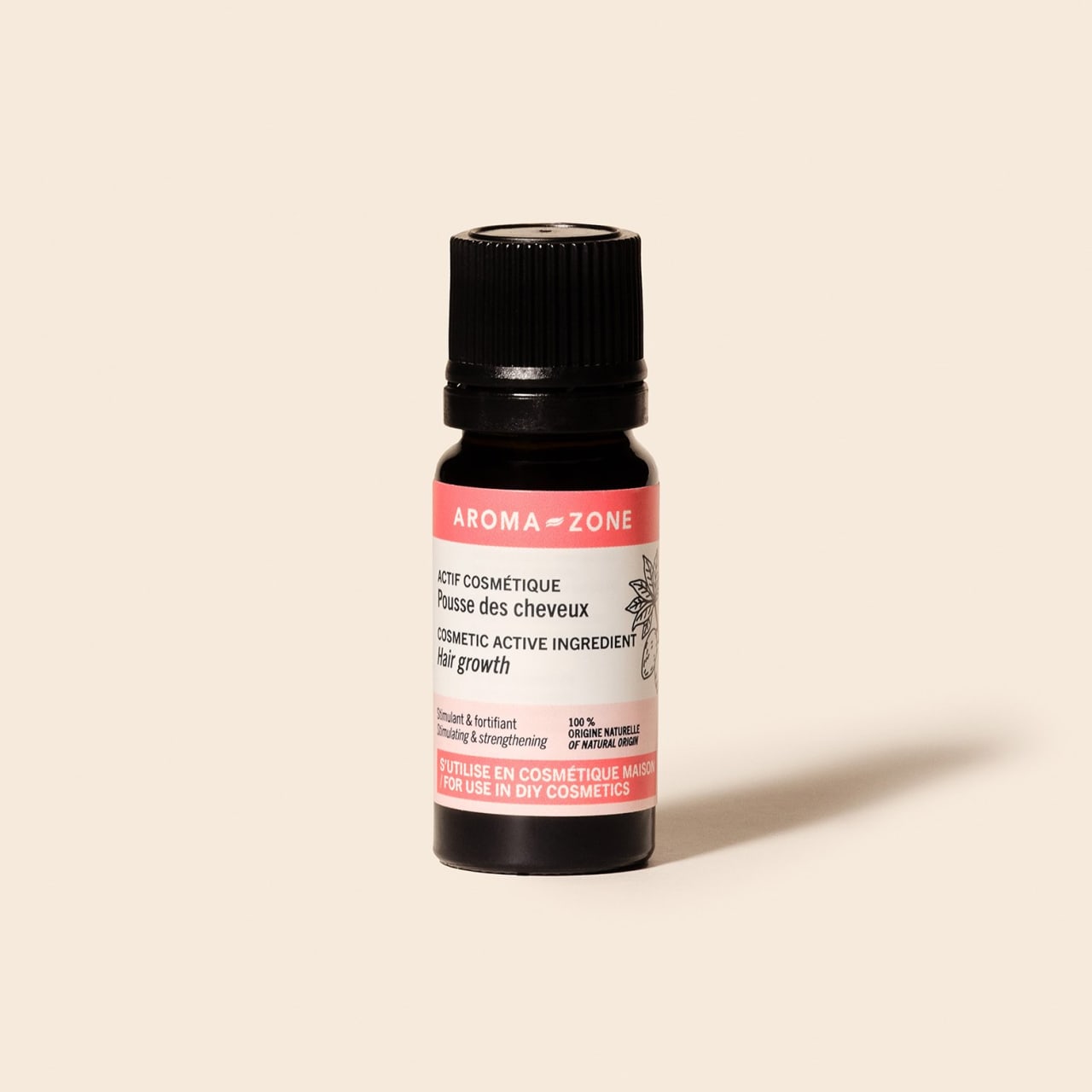
Extracted from an active microalgae known as Nannochloropsis oceanica, rich in phytosterols, this hair care active ingredient has an oily texture. Its mechanism of action: to boost the proliferation of hair follicle fibroblasts. 100% natural sapote vegetable oil, sustainably grown and traditionally used to strengthen and beautify the hair, has been added to the microalgae.

This active ingredient is oil-soluble and blends very easily into hair oil formulations, such as oil treatments and oily serums. It should be used at a concentration of between 0.5 and 5 per cent of the total weight of the formulation.

It is suitable for all hair types, and in particular for tired, brittle hair or hair where growth is to be stimulated. 

Proven effectiveness

After 150 days of treatment with a lotion containing 3% of the hair growth active ingredient, it was observed that this active ingredient:

  • Increases hair density by up to 10% in 70% of panellists*

  • Increases the number of hairs in the anagen phase (growth phase) and reduces the number of hairs in the telogen phase (shedding phase) in 100 per cent of panellists

  • Reduces hair loss** by up to 42 per cent in 90 per cent of panellists***

*Instrumental test using a trichoscan on 20 test subjects

**Instrumental test using a trichogram on 20 panellists

***Assessment following a combing test on 20 test subjects

Discover the hair-growth active ingredient

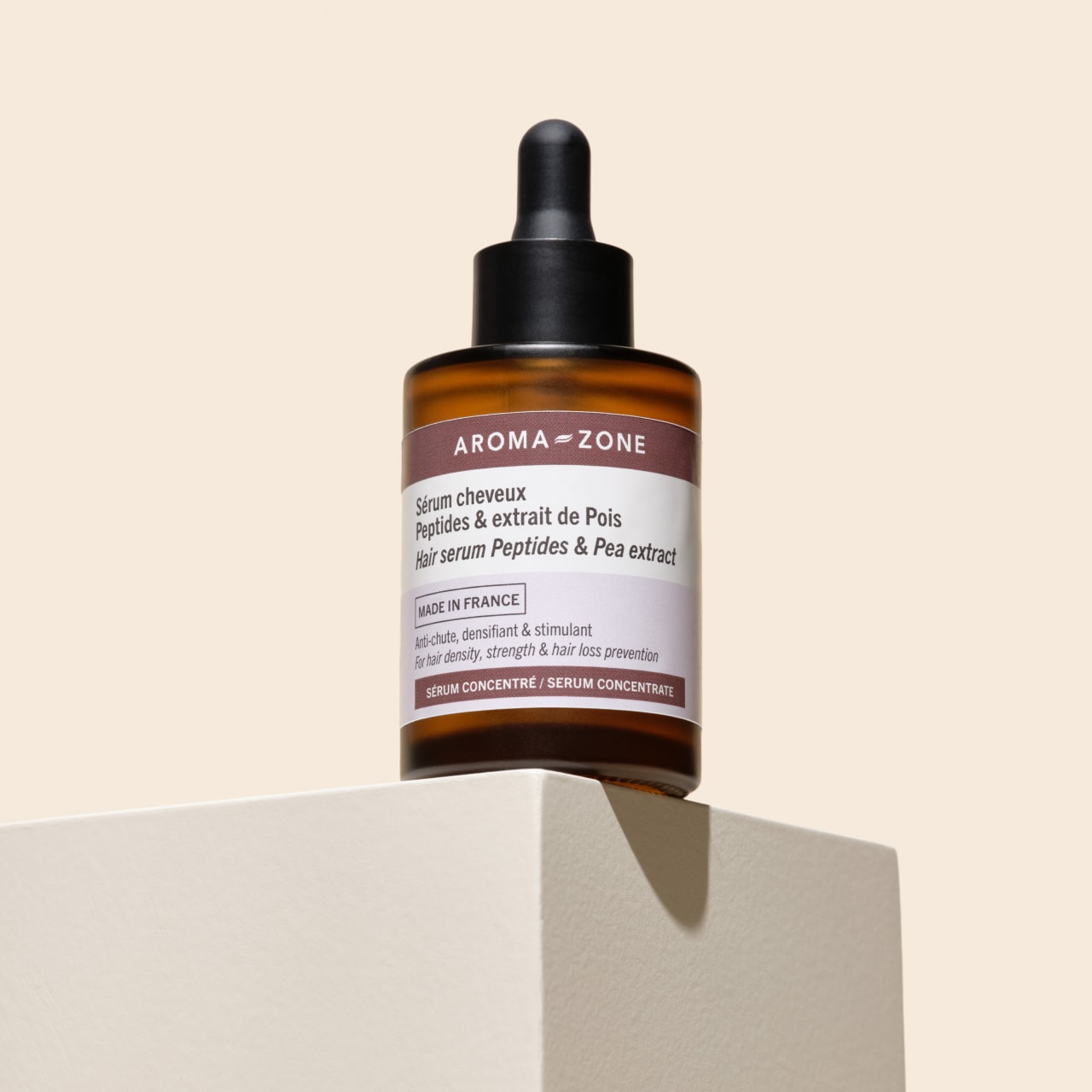
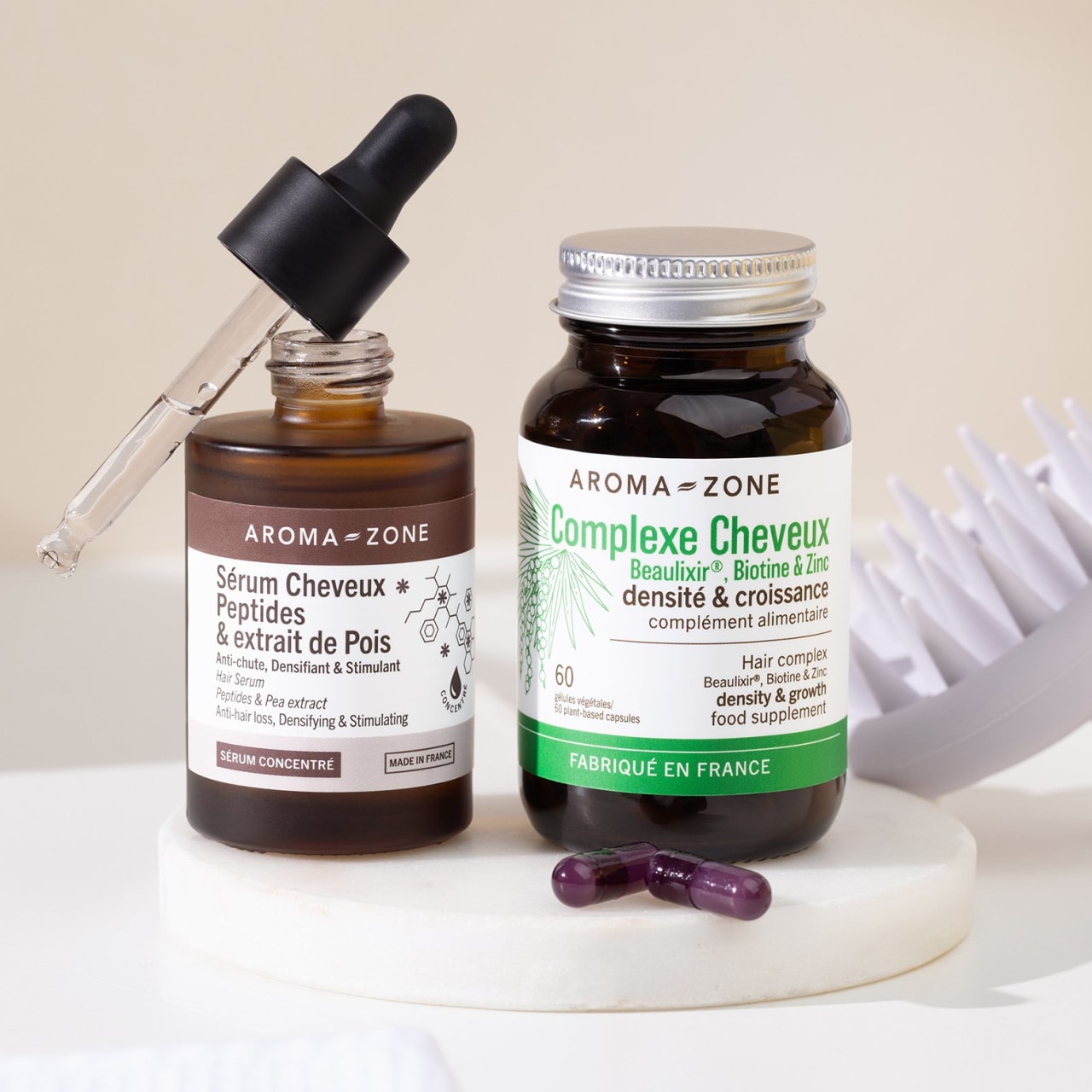
The anti-hair loss serum with peptides and pea extract, formulated to thicken and strengthen hair right from the root

This leave-in hair serum combines peptides with pea and red clover extracts. It prolongs the growth phase, promotes hair anchoring and slows down chronic hair loss – whether androgenic, stress-related, caused by nutritional deficiencies, hormonal changes or seasonal factors. With a light, watery texture that isn’t greasy and is free from fragrance and allergens, it is suitable for all hair types. It should be applied once a day to the entire scalp, massaging it in gently.

A synergy of powerful active ingredients with proven efficacy

Following a 90-day treatment programme involving a total of 20 people, an instrumental test using a trichogram and trichoscan showed that:

  • 100 per cent of participants experienced an increase in the hair growth phase

  • 100% of panellists experienced a reduction in the hair shedding phase

  • Hair density increased by up to +17% for some participants

  • +3,900 new hairs were counted.

Discover the anti-hair loss serum with peptides & pea extract

Water and oil: two immiscible media

The hair-growth active ingredient is an oily serum. Being oil-soluble, it blends easily into hair oils, oily serums and oil treatments.

The anti-hair loss serum Peptides & pea extract has an aqueous texture.

Just as with a salad dressing, where oil cannot mix with vinegar without mustard, in cosmetics, an aqueous phase cannot mix with an oily phase without a surfactant.

Thus, in the case of the two products in question, adding a hair-growth active ingredient to the serum bottle would result in two separate phases within the bottle. Even if the bottle were shaken to make these two phases miscible, their chemical properties mean that they will not mix.

Why can’t an aqueous phase and an oily phase be mixed in cosmetics?

In cosmetics, the immiscibility between an aqueous phase and an oily phase is mainly due to fundamental differences in molecular structure and intermolecular interactions. Water is a polar molecule, capable of forming a dense network of hydrogen bonds between its molecules, which gives it strong internal cohesion. Conversely, oils consist mainly of non-polar molecules (hydrocarbons) incapable of forming this type of interaction. Consequently, water–water interactions are energetically much more favourable than water–oil interactions, causing the two liquids to separate naturally. Recent work in physical chemistry thus shows that this separation results from a thermodynamic compromise in which each phase tends to maximise its internal interactions whilst minimising unfavourable contacts at the oil–water interface (3).

An accumulation of active ingredients

Our serums are products with a high concentration of active ingredients. Adding an extra active ingredient to the formula can present several risks:

  • A loss of efficacy: by combining different active ingredients from different products, it is not always straightforward to guarantee the benefits of these combinations. Sometimes, the formulations themselves can even prevent certain active ingredients from working (particularly if there are two different phases)

  • A loss of skin tolerance: A combination of active ingredients, which has not been evaluated in a laboratory, can lead to cumulative toxicity or the creation of novel mixtures on the skin, the skin tolerance of which is unknown.

We always recommend opting for minimalist routines, rather than routines that are overloaded with active ingredients. 

A word from the lab

“Apart from the fact that the hair-growth active ingredient is oily and cannot be incorporated into a water-based serum, we recommend not adding any active ingredients to the anti-hair loss serum. This is because no regulatory or toxicological validation has been carried out on the customisation of this serum. The serum is intended for use as a ready-to-use product.”

Orianne Valentin, Head of Cosmetic Formulation at Aroma-Zone

Which natural active ingredients have been shown to be effective in combating hair loss?

Active ingredients that stimulate hair growth

The active ingredients contained in anti-hair loss serum:

Pea shoot extract

Rich in phytonutrients, it helps to reactivate the dermal papilla at the base of the hair follicles, thereby stimulating new hair growth. Results are visible after 3 months: the density of hair in the growth phase has increased by approximately 8 per cent.

Panthenol (Provitamin B5)

An essential vitamin for healthy hair, it contributes to hair formation and regeneration, whilst also soothing discomfort and itching of the scalp.

The active ingredients contained in the hair growth treatment:

Sapote

The fruit of the sapote tree; its flesh contains a single large, hard stone, from which an oil rich in fatty acids is extracted, traditionally used to promote hair growth.

Nannochloropsis Oceanica

A single-celled microalgae with the unique ability to accumulate exceptionally high levels of lipids. 

Active ingredients that reduce hair loss

The Aroma-Zone anti-hair loss serum contains several exceptional active ingredients:

Red Clover Extract & Peptide Complex

Contains Biochanin A, extracted from red clover, which is an effective inhibitor of 5-α-reductase activity, thereby reducing the conversion of testosterone into DHT (dihydrotestosterone), the hormone responsible for androgenetic alopecia.

Acetyl Tetrapeptide-3

A peptide that increases the size of the hair follicle, resulting in better hair anchorage and greater vitality. This complex also reduces micro-inflammation in the hair follicle, which is responsible for disrupting the hair’s life cycle.

Biotinoyl Tripeptide-1

A combination of biotin (vitamin B8) and GHK peptide. This peptide delays the maturation and shedding phase of the hair (telogen phase), improves the structure and anchorage of the hair follicles to prevent hair loss and make them stronger and more resilient.

Pea shoot extract

This active ingredient also shows encouraging results on hair loss after 3 months: hair density in the shedding phase has reduced by more than 28 per cent.

Precautions

Medical advice is always required in cases of severe hair loss. Your doctor may recommend blood tests and further investigations to identify the causes of your hair loss. 

Expert advice

Diet plays a key role in hair health, particularly certain nutrients such as Iron, Zinc, vitamin D, biotin (also known as vitamin B8, which plays a role in protein synthesis in hair follicles), and fatty acids (4). An anti-inflammatory diet rich in antioxidants also protects against hair loss (5). Generally speaking, it is strongly advised against undertaking extreme or highly restrictive diets, as these quickly lead to nutritional deficiencies and cause stress to the body, creating conditions conducive to hair loss. 

Article Written by Emilie Ondet, Biochemistry Engineer

Photo: Emilie Ondet (1)

Emilie is a biochemistry and natural active ingredients engineer, as well as a naturopath, nutrition consultant, and writer specialising in health, food, and well-being. She spent over 10 years working in the pharmaceutical industry and scientific communication, giving her a broad, well-rounded view of health, one she's able to speak about with both rigour and clarity. Science is her foundation, words her tools. She champions an approach to health that's more preventive, more considered, more scientific, and, of course, more natural!

Bibliography

  1. Scott-Solomon E, Brielle S, Mann AO, Khoury MJ, Peng J, Tellez L, Harrigan M, Ziogas M, Pasolli HA, Cassandras M, Getzler AJ, Freeman R, Zhang B, Shwartz Y, Agudo J, Franklin RA, Hsu YC. Stress-induced sympathetic hyperactivation drives hair follicle necrosis to trigger autoimmunity. Cell. 8 January 2026;189(1):252–271.e19.

    doi: 10.1016/j.cell.2025.10.042. Epub 26 November 2025. PMID: 41308637; PMCID: PMC12668284.

  2. Douglas A, Suriano J, Nikbakht N. Quality of life and patient experience in Black women with alopecia. Int J Womens Dermatol. 1 May 2025;11(2):e203.

    doi: 10.1097/JW9.0000000000000203. PMID: 40322564; PMCID: PMC12047871.

  3. Sun Q, Chen YN, Liu YZ. The Effects of External Interfaces on Hydrophobic Interactions I: Smooth Surface. Molecules. 1 July 2024;29(13):3128.

    doi: 10.3390/molecules29133128. PMID: 38999080; PMCID: PMC11243484.

  4. Guo EL, Katta R. Diet and hair loss: effects of nutrient deficiency and supplement use. Dermatol Pract Concept. 31 January 2017;7(1):1–10.

    doi: 10.5826/dpc.0701a01. PMID: 28243487; PMCID: PMC5315033.

  5. Bazmi S, Sepehrinia M, Pourmontaseri H, Bazyar H, Vahid F, Farjam M, Dehghan A, Hébert JR, Homayounfar R, Shakouri N. Androgenic alopecia is associated with higher dietary inflammatory index and lower antioxidant index scores. Front Nutr. 15 August 2024;11:1433962.

    doi: 10.3389/fnut.2024.1433962. PMID: 39211830; PMCID: PMC11358075.

Frequently Asked Questions

Frequently Asked Questions

Associated recipe

Associated tips