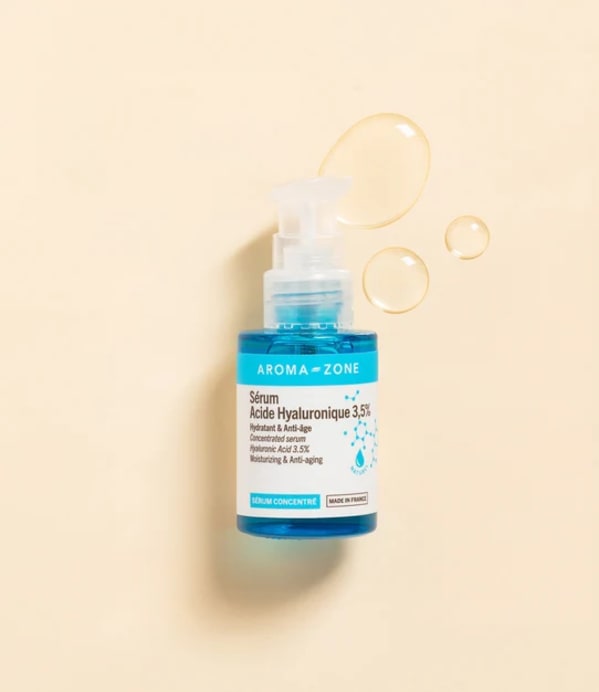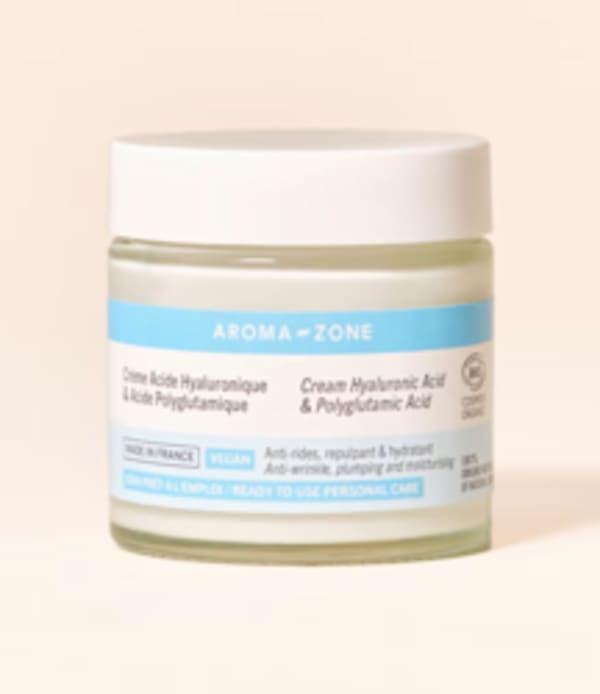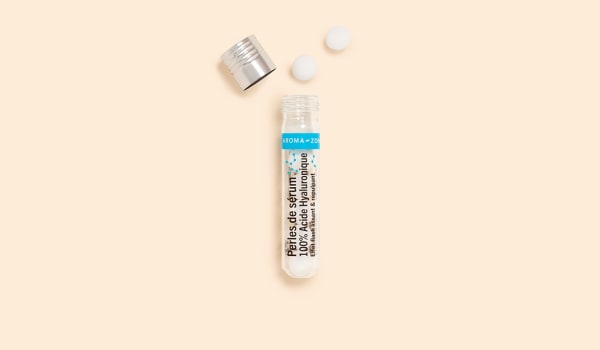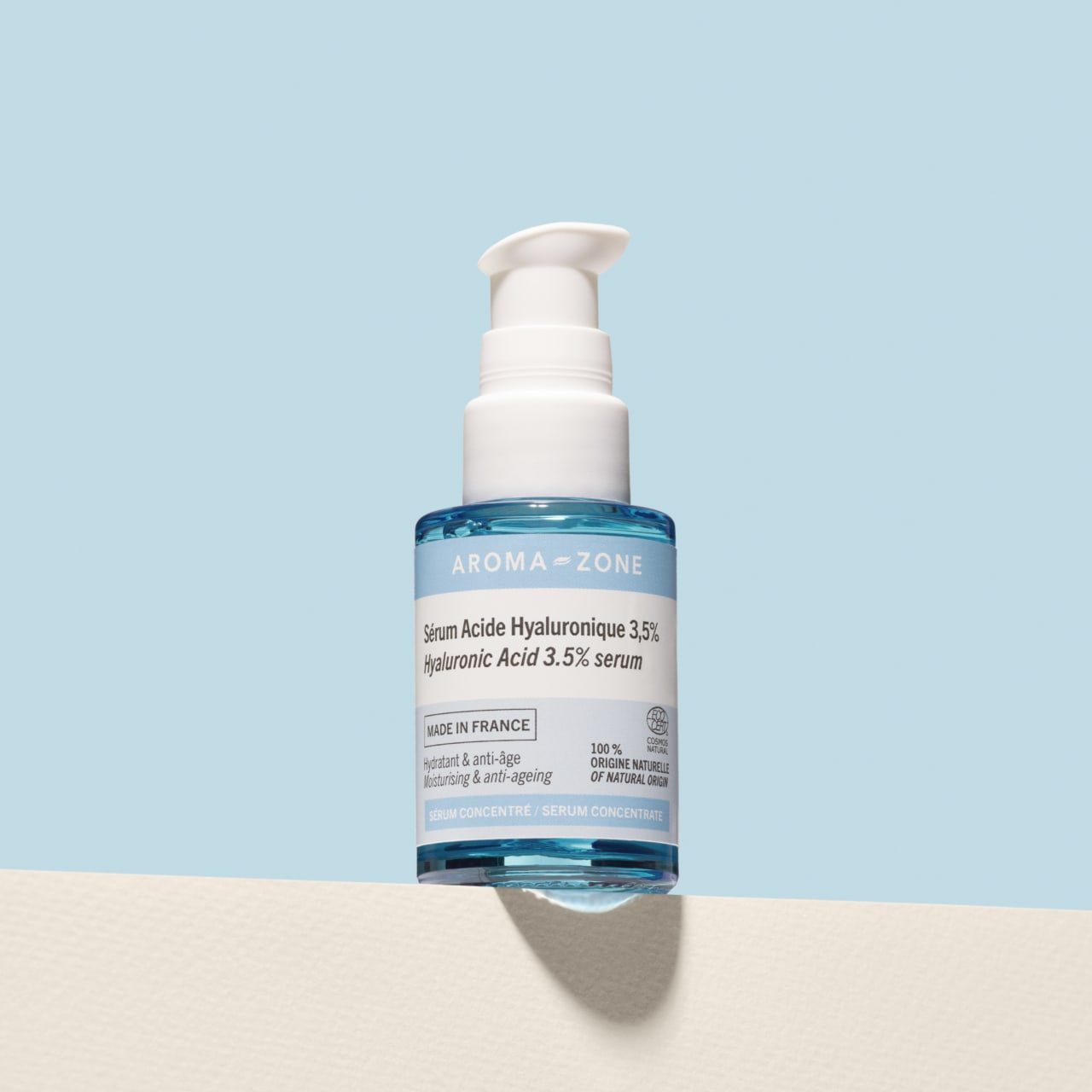
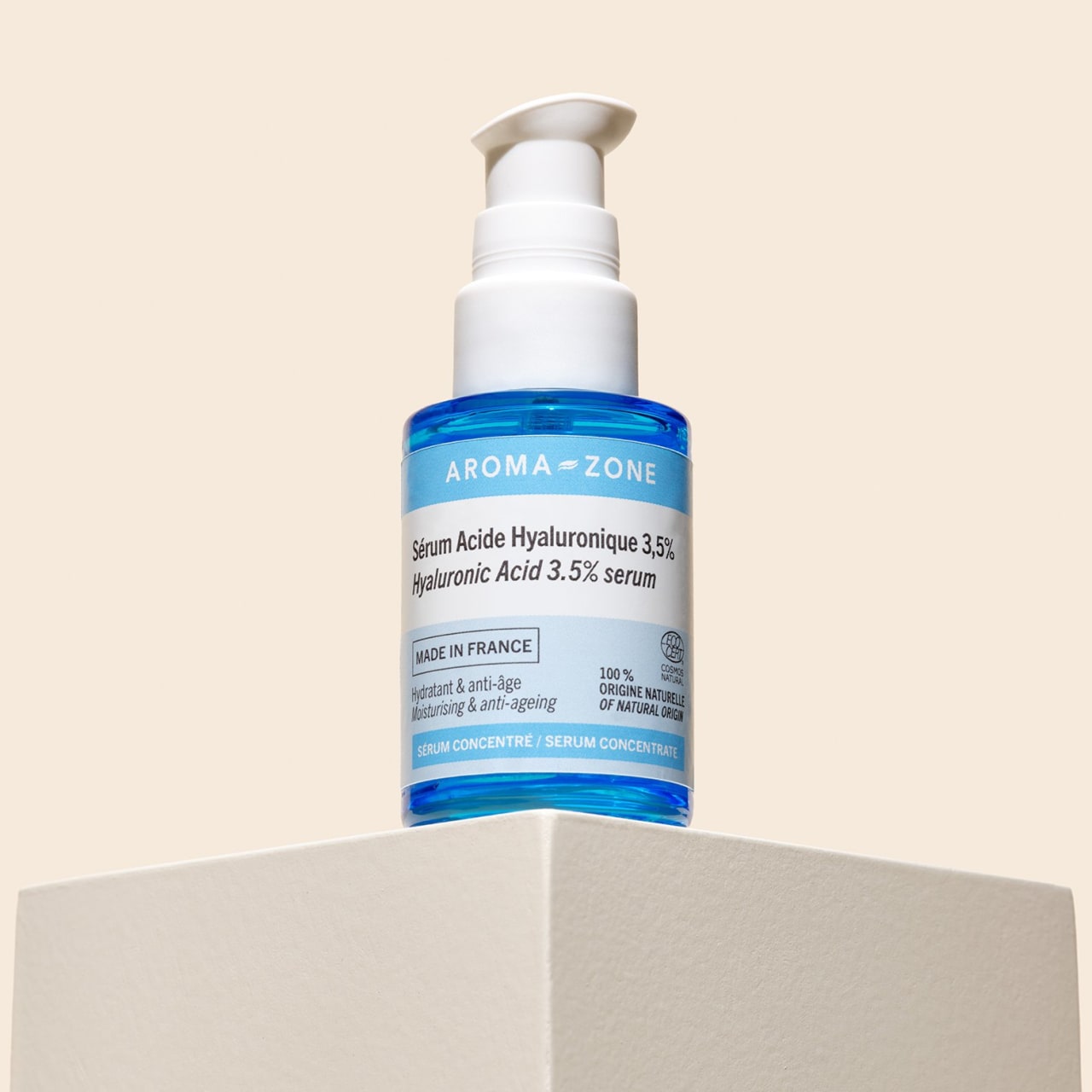
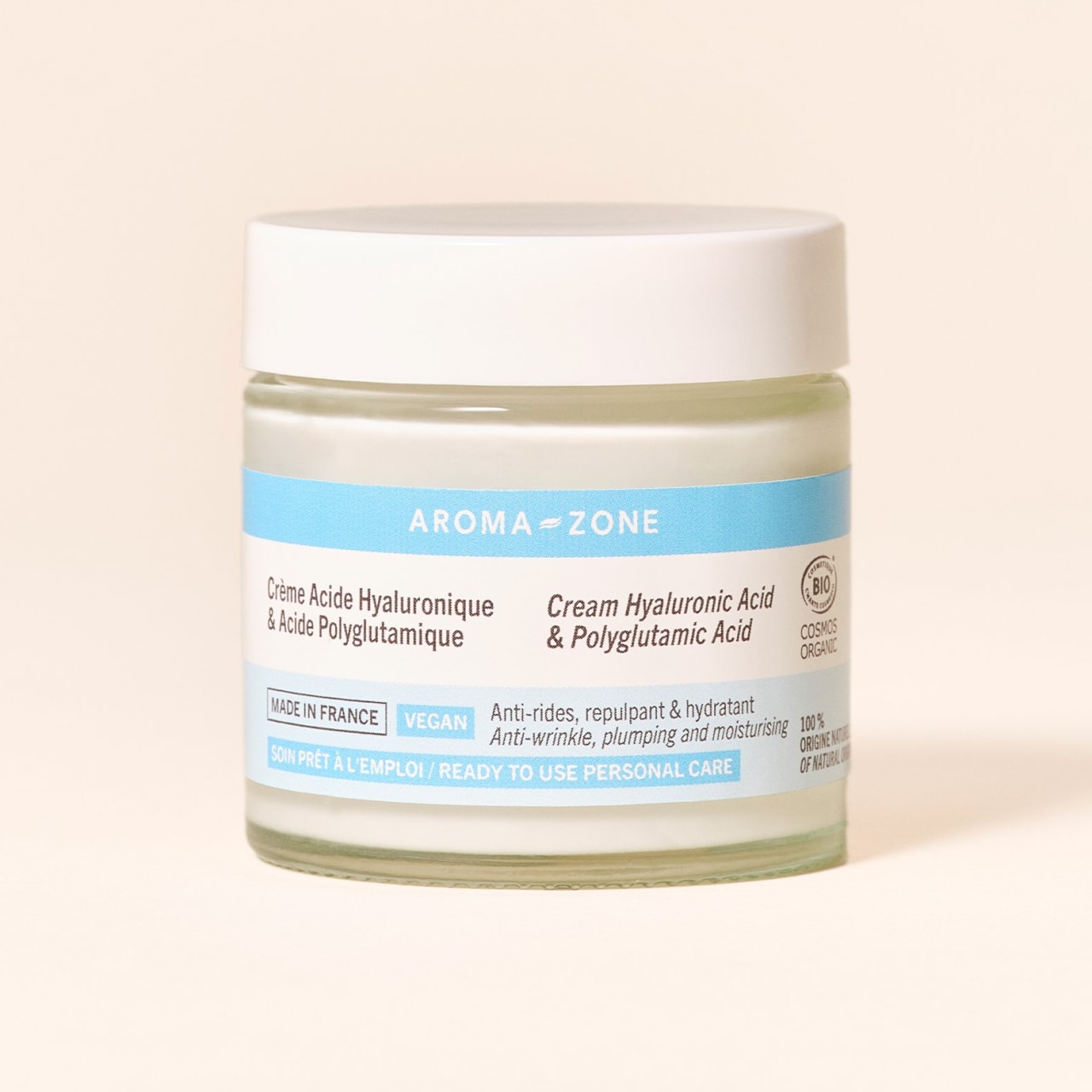
Hyaluronic acid is a non-sulphated glycosaminoglycan, found in abundance naturally within tissues and particularly in the skin. The main property of hyaluronic acid is its remarkable ability to retain nearly 1,000 times its weight in water, which gives it exceptional moisturising properties. Hyaluronic acid reserves tend to decrease with age, hence the importance of incorporating it into skincare products. To ensure effective penetration into the various layers of the skin, the molecular weight of this molecule is a key factor. The lower its molecular weight, the better the hyaluronic acid will penetrate.
Where is hyaluronic acid naturally found in the skin?
Hyaluronic acid is found at the periphery and at the interfaces of the fibres of collagen and elastin fibres, where it helps to maintain these fibres in the correct configuration. In mature skin, the connections between the fibres and hyaluronic acid tend to become less frequent, which contributes to the disorganisation of collagen and elastin fibres, leading to the gradual formation of fine lines and wrinkles.
What is the link between hydration and the signs of ageing?
It has been recognised that restoring the skin’s optimal hydration helps to slow down the formation of fine lines, reduce the depth of wrinkles, promote cell regeneration and stimulate collagen production. This is precisely how hyaluronic acid works. The result is softer, smoother and more radiant skin (1).