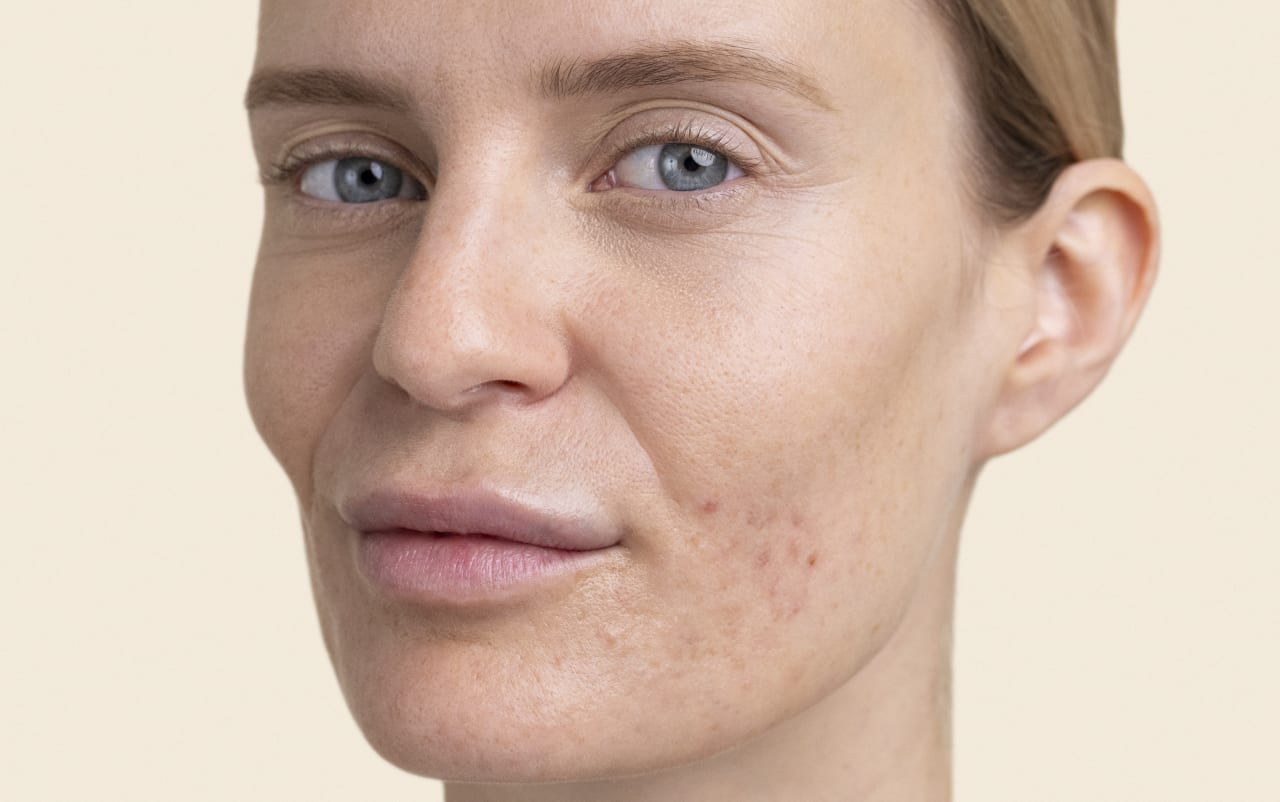
A spot that has persisted for months cannot be explained solely by a one-off excess of sebum or poor hygiene. This persistence often reflects a deeper imbalance in the skin. Several mechanisms may be involved, sometimes in combination. Identifying them is the first step towards tailoring your daily skincare routine more effectively.
Prolonged inflammation
Certain lesions, particularly deep-seated forms such as nodules, are accompanied by inflammation that persists over time. This reaction slows down the natural processes of skin renewal and can keep the spot active for several weeks, or even longer.
A hormonal imbalance
Hormonal fluctuations directly influence the activity of the sebaceous glands. An increase in sebum production can contribute to the development of deep or recurrent lesions, which progress slowly and tend to persist.
A blocked hair follicle
When a pore remains blocked, sebum and dead skin cells build up. This can lead to the formation of closed comedones or microcysts, often seen as ‘developing’ spots, which remain trapped beneath the skin and do not clear up on their own.
Recurring irritation
Shaving, prolonged mask-wearing, certain fabrics or even repeated rubbing of the skin can contribute to localised irritation. Similarly, using skincare products that are too harsh can weaken the skin and prolong inflammation.
A compromised skin barrier
Skin exposed to overly frequent cleansing or active ingredients it does not tolerate well may experience a compromised protective barrier. In response, it produces more sebum and becomes more prone to persistent blemishes.
A non-acne-related cause
In some cases, what is perceived as a spot is not actually acne. It may be a wart, a skin tag, an ingrown hair or even a small benign lesion. This confusion explains why some ‘blemishes’ do not disappear despite your usual skincare routine.