
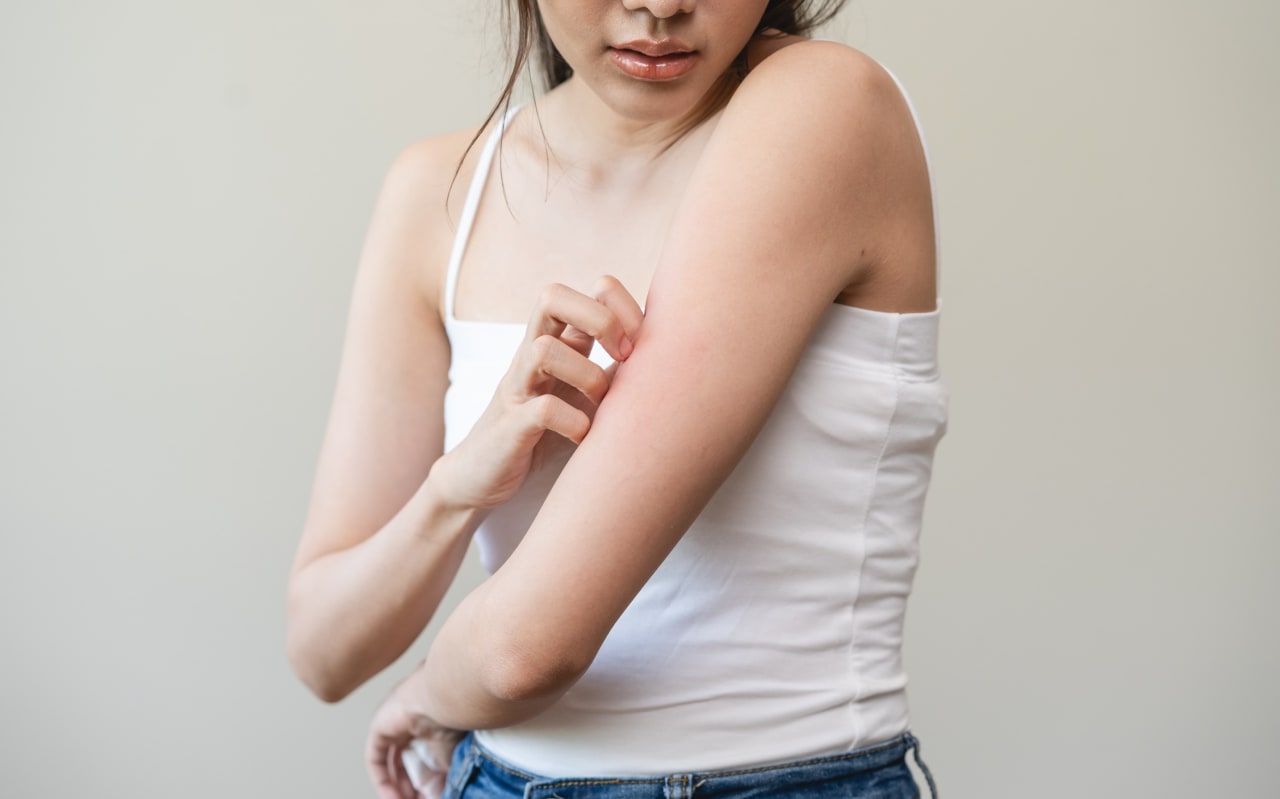
Folliculitis is an inflammation of the hair follicles, the small cavities in the skin from which hairs grow. This condition often manifests as small red or white bumps around the follicles, accompanied by itching or discomfort. Folliculitis can affect any part of the body where hair is present, including the scalp, the face (beard folliculitis), the arms, legs, the buttocks and the back.
Folliculitis: causes and symptoms
Published on: Monday, August 05, 2024, Updated on: Wednesday, October 28, 2026
Folliculitis is a skin condition that can affect anyone, often causing itching and uncomfortable irritation. Although usually mild, this inflammation of the hair follicles can nevertheless become a real source of discomfort in everyday life. Understanding its causes and knowing how to prevent and relieve it – including using natural remedies – is essential for restoring healthy, soothed skin.
Contents
What is folliculitis?
What causes folliculitis?
Bacterial infections: The most common cause of folliculitis is infection by bacteria, mainly Staphylococcus aureus.
Irritation: The use of products that are harsh on the skin or frequent shaving can irritate the hair follicles.
Follicle blockage: Wearing tight clothing or excessive sweating can block the follicles, leading to inflammation.
Excessive sweating or humidity: can indeed block the pores and trigger folliculitis
Genetic predisposition: Oily skin, a tendency towards acne or ingrown hairs
Weakened immune system: People with a weakened immune system are more likely to develop folliculitis.
Stress: Stress can weaken the immune system, making the body more susceptible to infections, including folliculitis. It is therefore important to learn how to manage stress. For example, through relaxation techniques such as meditation, yoga or regular physical exercise.
Fungal infection (yeast or fungal folliculitis): This can occur in people with oily skin, or following a course of antibiotics.
Is folliculitis contagious?
Folliculitis is not usually contagious, except in certain cases where it is caused by bacterial or fungal infections. In these situations, it can be transmitted through direct contact with infected skin or by sharing personal items such as towels or razors. It is therefore important to maintain good personal hygiene and avoid sharing personal items to reduce the risk of transmission.
What are the symptoms associated with inflammation of the hair follicles?
The signs of folliculitis can vary depending on the severity and cause of the inflammation. Here are the main symptoms to look out for:
Small red or white bumps: These small bumps, one or two centimetres in diameter, appear around the hair follicles and may sometimes be filled with pus, giving them the appearance of small spots.
Itching or discomfort: The affected area may become irritated, causing persistent itching which can be particularly uncomfortable.
Inflamed, red skin: Around the bumps, the skin may become red and inflamed, indicating the presence of an infection or irritation.
Formation of pus-filled pustules: In more severe cases, the bumps may develop into pustules – small blisters filled with pus – indicating a deeper infection of the hair follicles.
Scabs or scars after the pustules have healed: Once the pustules burst or clear up, they may leave scabs behind. If the infection was severe, scars may also form, particularly if the affected areas have been scratched or picked at.
Please note: These symptoms may worsen if the affected area is not treated properly. For example, scratching or using irritating products can make the symptoms worse. If in doubt, or if symptoms persist, it is advisable to consult a healthcare professional for an accurate diagnosis and appropriate treatment.
How should you treat this bacterial infection?
A few simple steps may be enough to relieve the condition. Folliculitis caused by Pseudomonas aeruginosa is a specific type, often contracted in saunas, swimming pools, hot tubs (hot-bath folliculitis), water parks, or via poorly disinfected diving suits. They appear quickly and clear up within a few days, unless the person has a weakened immune system. In addition, here are a few suggestions for natural remedies to relieve the discomfort.
Wash thoroughly in the shower (using an antibacterial soap if you have one)
Wear clean, loose-fitting clothing every day
The use of an antiseptic cleanser is recommended
Applying aloe vera gel can help soothe the skin and reduce inflammation
Warm compresses: applying warm compresses can help relieve discomfort.
Please note: These natural remedies are often effective at soothing mild to moderate symptoms of folliculitis. However, if symptoms persist or worsen, it is advisable to consult a healthcare professional for appropriate treatment.
How can you prevent folliculitis?
Preventing folliculitis requires good hygiene practices and a few precautions:
Maintain good hygiene and wash your skin regularly with a mild soap.
Avoid tight-fitting clothing to allow the skin to breathe and prevent irritation of the hair follicles.
Use clean razors and change the blades regularly to avoid cuts and infections.
Moisturise your skin and use moisturising lotions to keep your skin healthy.
Avoid sharing personal items such as towels and razors to reduce the risk of spreading infections.
What precautions should you take?
When using natural remedies for folliculitis, it is important to take certain precautions. If in doubt, or if symptoms persist, consult a healthcare professional for appropriate advice. Furthermore, you should avoid harsh products that could aggravate the inflammation.
Expert advice
In the vast majority of cases, folliculitis is benign and clears up on its own (without treatment) with good hygiene. However, if symptoms persist or worsen, do not hesitate to consult your doctor.
Meet Our Expert Writer: Stéphanie Le Guillou

Stéphanie is a pharmacist (since 2010) and holds a PhD in molecular biology (since 2012). Passionate about writing, she has produced medical content for nearly 15 years. Her goal is to make information accessible and easy to understand, without ever sacrificing scientific accuracy.
Bibliography
Dermato-info. French Society of Dermatology. Bacterial infections. December 2019.

Frequently Asked Questions
Associated tips

Skin care tips

Aromatherapy advice
Face care tips


