The Benefits of Green Clay Poultices, and Our Tips for Making Them

The Benefits of Green Clay Poultices, and Our Tips for Making Them


By Gipsy Dauge

Published on: Friday, October 20, 2023, Updated on: Wednesday, October 07, 2026

Used for thousands of years, green clay is one of the most popular natural ingredients for skin and body care. Rich in minerals, it is known for its strong absorbent properties, ideal for helping to draw out impurities and excess sebum. Applied as a poultice, it offers a localised treatment that's purifying and remineralising, and easy to prepare at home.

Contents

Related products

In brief

  • A green clay poultice is known for its absorbent, purifying and soothing properties, making it particularly useful for blemish-prone skin, insect bites or mild sunburn.

  • It is simple to use: prepare a green clay paste that is neither too runny nor too dry, apply a thick layer to the affected area, leave it on without allowing it to dry completely, then rinse the skin with lukewarm water.

  • The article also highlights a few precautions: avoid using it on wounds, very irritated skin or severe burns. It is also advisable to avoid metal utensils when preparing the clay paste.

The history of clay through the ages

Known since ancient times, clay is one of the natural materials that civilisations learned to use very early on. The Egyptians already incorporated it into certain preparations, while other peoples used it to make pottery, everyday objects and building materials. Easy to shape, found in many regions around the world and suitable for a wide variety of uses, this mineral material has stood the test of time without losing its appeal.

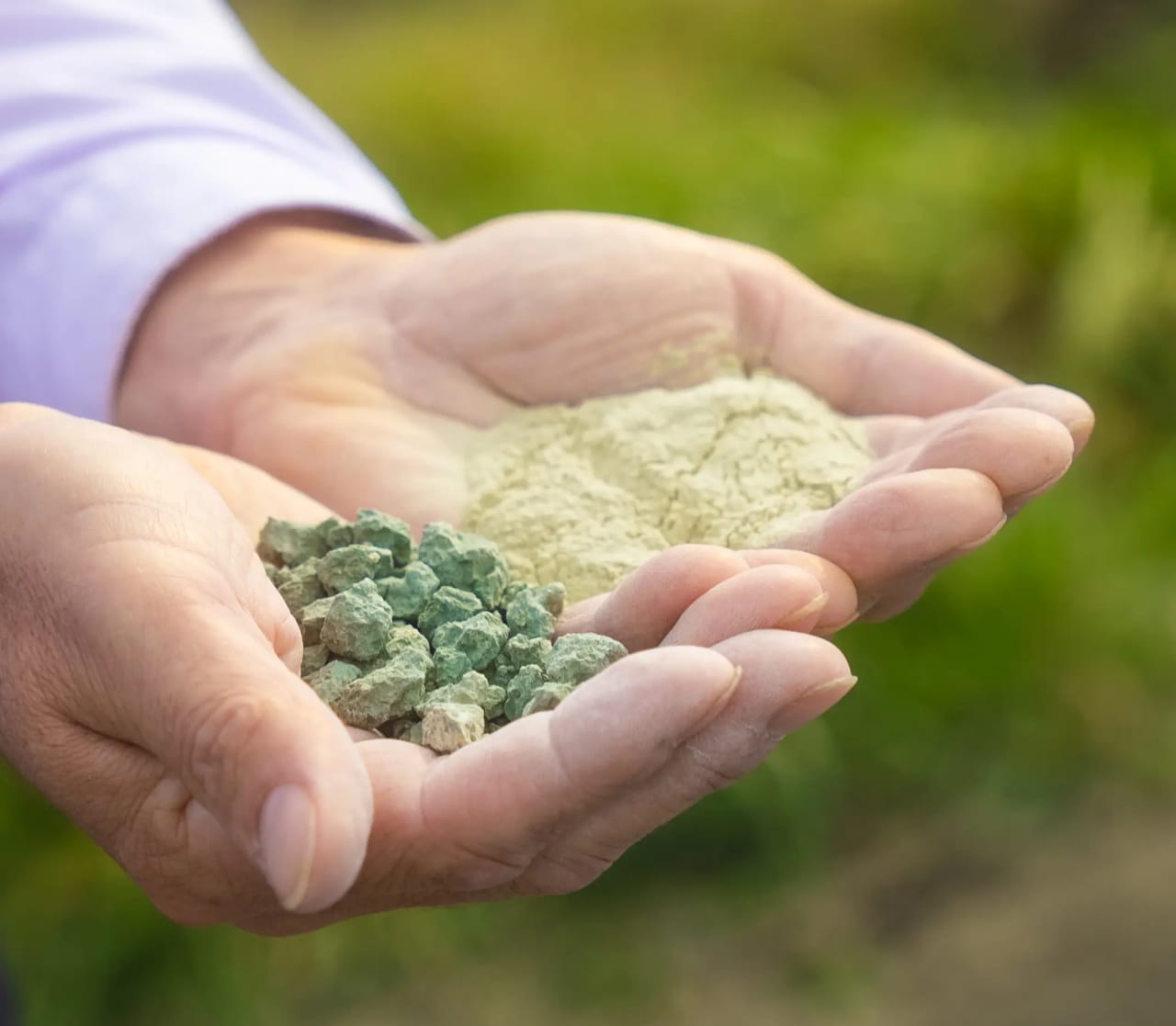
Of geological origin, clay refers to different types of rock naturally rich in minerals, including Silica, Aluminium, Magnesium and Iron. Its composition varies depending on its origin, which explains the diversity of clays and their colours. Green clay is recognisable by its colour, ranging from light to deeper green, as well as by its strong absorbent properties. For external use, it is particularly valued in poultices to help retain impurities, absorb excess moisture and support the care of blemish-prone skin. Absorbent, purifying and remineralising, it is one of the most widely used clays in natural skincare.

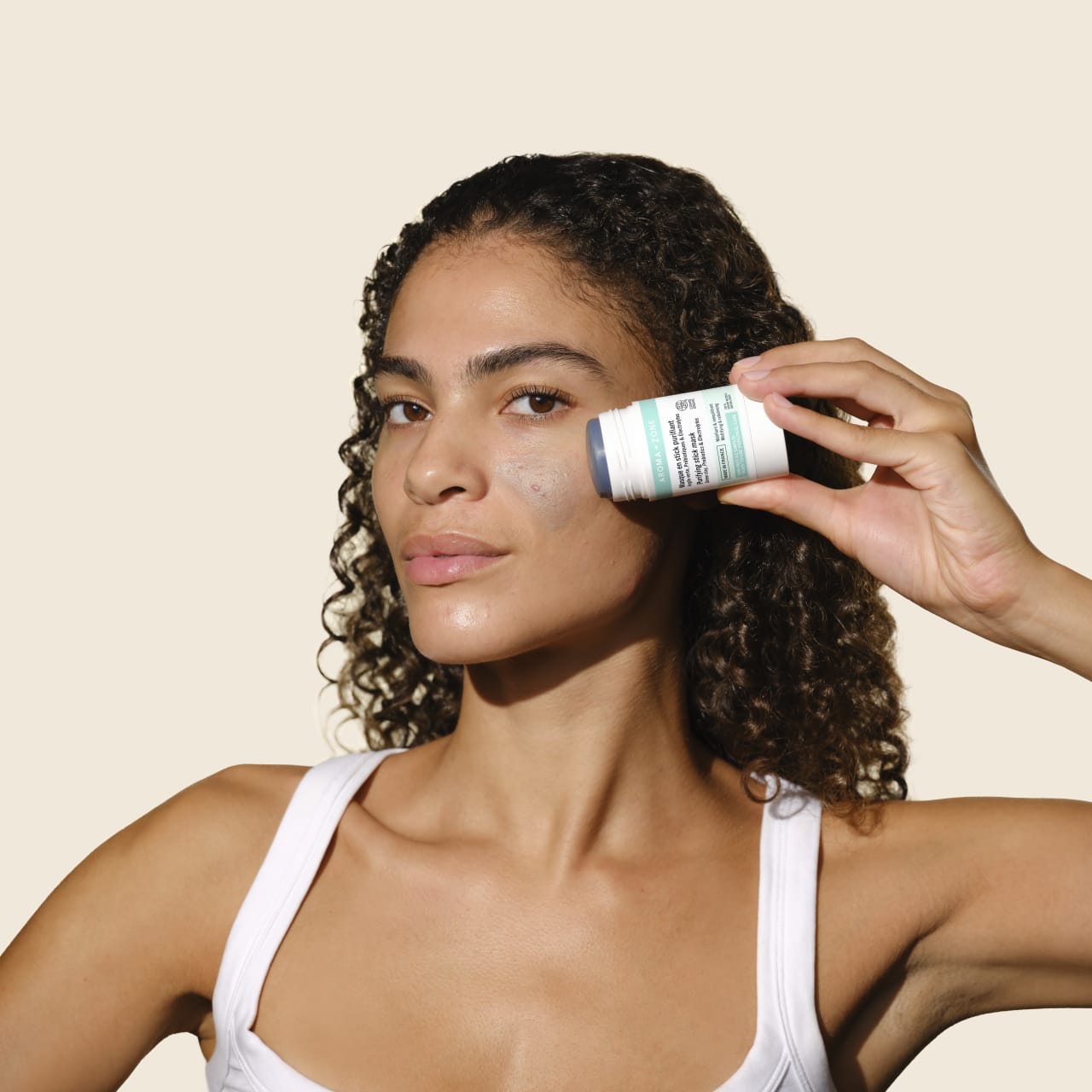
What are the properties of green clay?

Green clay is particularly valued for external use because of its mineral-rich composition and strong absorbent properties. Applied as a mask or poultice, it can support skin and body care thanks to several complementary properties:

  • Absorbent: it helps absorb excess sebum, impurities and moisture from the surface of the skin. This is one of the reasons why it is often used on combination to oily skin or skin prone to blemishes.

  • Purifying: when used as a poultice or mask, it helps cleanse the skin and remove accumulated impurities.

  • Remineralising: naturally rich in minerals and trace elements, green clay is traditionally valued for its mineral composition in skincare.

  • Soothing: when applied locally, it can help calm certain sensations of skin discomfort, particularly after an insect bite or in the case of temporary minor redness.

  • Cooling: when used cold, it provides a pleasant cooling sensation on overheated skin or after moderate sun exposure.

  • Cleansing: it helps keep the skin clear, particularly when used occasionally as a mask or poultice.

As a poultice, green clay can be used on small targeted areas, for example in the case of a blister, an insect bite or a minor first-degree burn. However, its use should remain appropriate: it should not be applied to an open wound, an infected area or an extensive burn. In the event of severe pain, fever, urinary symptoms or persistent signs, it is essential to seek advice from a healthcare professional.

How to make a green clay poultice ?

Preparing a green clay poultice only takes a few minutes. The key is to obtain a smooth, even paste that is thick enough to stay in place during application.

  1. Pour the green clay powder into a non-metallic bowl.

  2. Gradually add low-mineral water until the clay is just covered.

  3. Leave to rest for a few minutes without stirring immediately, so that the clay can absorb the water.

  4. Mix with a wooden or silicone spatula until you obtain a smooth paste that is neither too runny nor too thick.

  5. Spread the preparation onto a compress, gauze or clean cloth in a layer around 1 to 2 cm thick.

  6. Apply the poultice to the targeted area, with the clay side against the skin, then secure it with a bandage if necessary, without tightening too much.

  7. Leave it on for the recommended amount of time depending on the intended use, then remove the poultice before it dries completely.

  8. Gently rinse the skin with clean water and discard the used clay.

For a cold application, use the preparation as it is. For a warm application, gently heat the poultice in a bain-marie, then always check the temperature before applying it to the skin. It should be lukewarm, never hot, to avoid any risk of burning.

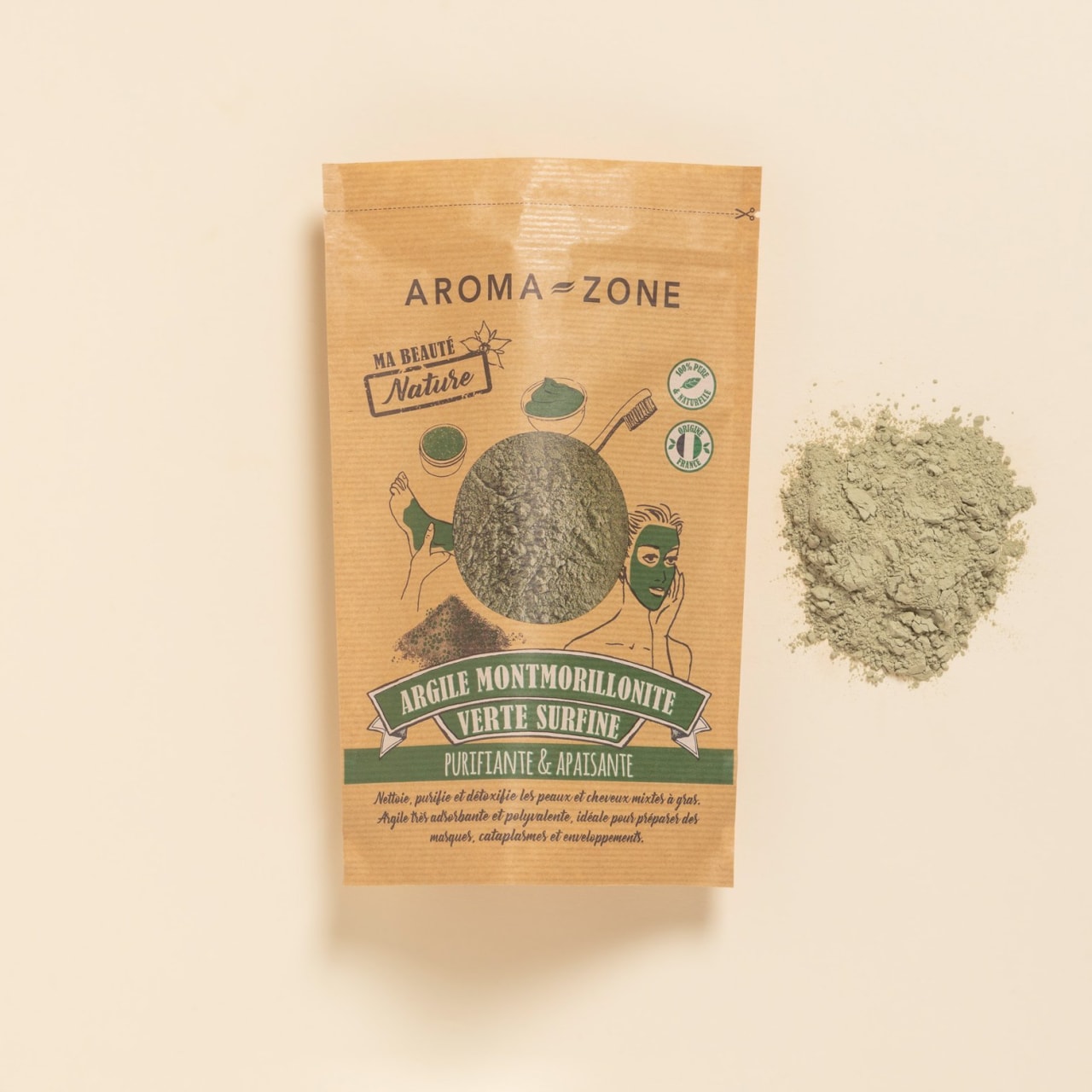
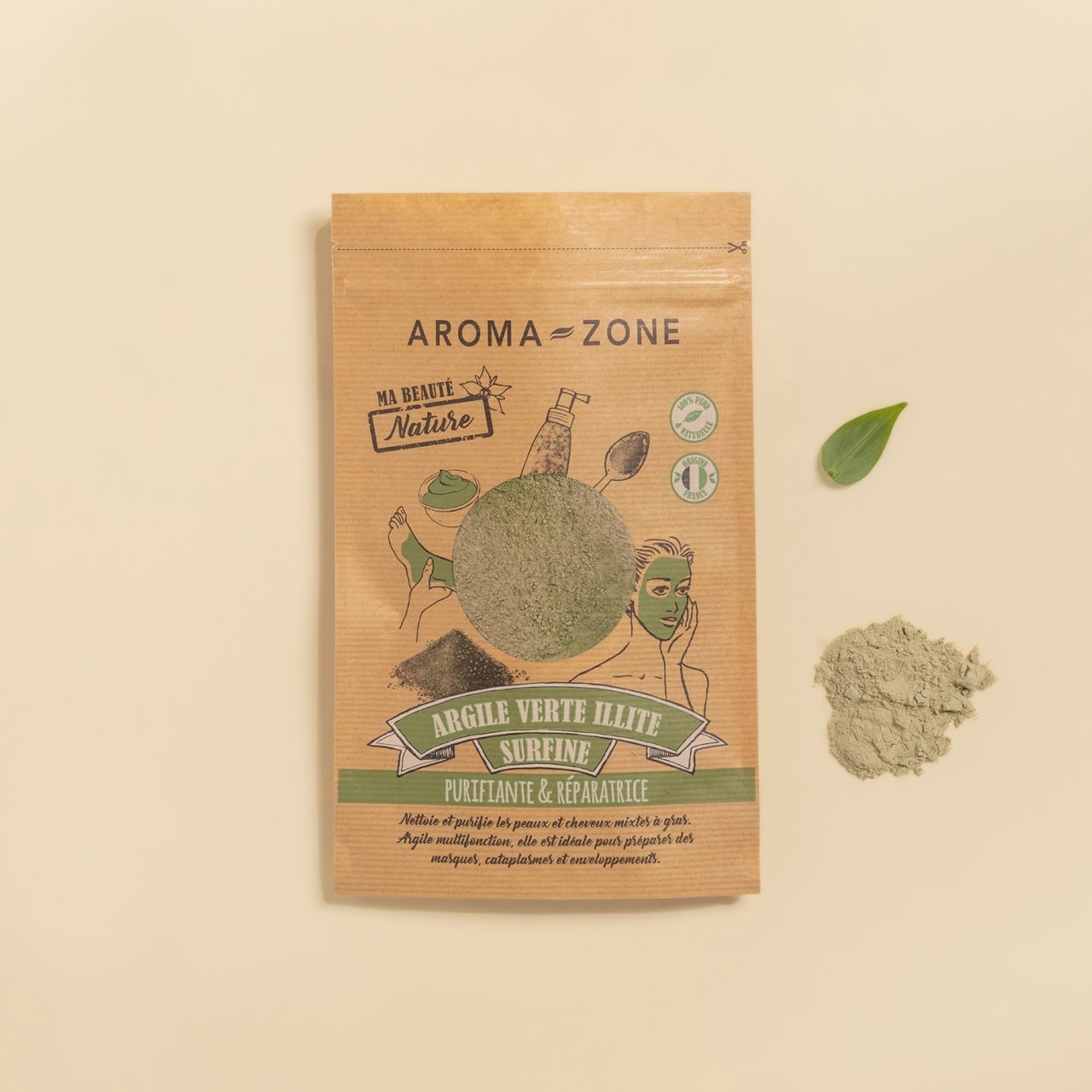
On the Aroma-Zone website, you can find green illite clay and green montmorillonite clay, two clays commonly used in natural cosmetics. Illite is particularly valued for its absorbent and purifying properties, especially in the care of combination to oily skin. Montmorillonite, meanwhile, has the ability to swell on contact with water, giving it an enveloping texture and strong absorption capacity. Both can be used to prepare poultices, depending on the desired texture and the skin’s needs.

How long should you leave a green clay poultice on?

The application time for a green clay poultice depends on the area concerned, the thickness of the poultice and how it feels on your skin. As a general rule, it is recommended to leave it on for between 30 minutes and 1 hour.

One of the key points is to remove the poultice before it dries completely. As the clay dries, it gradually loses moisture and becomes less comfortable on the skin. It is therefore best to remove it as soon as it begins to harden or lift at the edges.

For small, targeted areas, 20 to 30 minutes may be sufficient. On larger areas, the application time can be extended to up to one hour, provided that the poultice remains moist and comfortable.

After removing it, gently rinse the skin with lukewarm water and, if necessary, apply a moisturising or nourishing skincare product suited to your skin type

Hot or cold green clay poultices?

A green clay poultice can be used cold or slightly warm, depending on the area concerned and the desired effect. In all cases, it should never be applied too hot, to avoid any risk of burning or irritation.

  • A cold poultice is generally preferred on a warm, swollen or sensitive area, for example after a minor bruise, an insect bite or a mild first-degree burn. It provides an immediate cooling sensation and helps soothe local discomfort.

  • A warm poultice may be preferred when seeking a relaxing effect, particularly on an area that feels tense or contracted. Gentle warmth makes the application feel more soothing and comfortable without irritating the skin.

Before applying, always check the temperature of the poultice on the inside of your wrist. In the event of severe pain, significant swelling, an extensive burn, an open wound or persistent symptoms, seek advice from a healthcare professional.

Precautions for use

Even though it is natural, green clay should be used with care, particularly when applied as a poultice. It should not be applied to an open wound, a severe burn, very irritated skin or an area showing signs of infection. To avoid tightness or discomfort, it is best to remove the poultice before it dries completely. The used clay should then be discarded and never reused. When preparing it, avoid metal utensils and opt for a glass, ceramic or wooden bowl. If you use the poultice slightly warm, always check its temperature before application. If you have sensitive skin, perform a patch test in the crook of the elbow 24 hours before use. Finally, seek medical advice in the event of severe pain, persistent swelling, an extensive burn, fever, a deep wound or symptoms that do not improve.

Expert Advice

The right texture makes all the difference. For a poultice, the paste should be soft enough to spread easily, but thick enough to stay in place without running. If you are applying it to a mobile area, such as the knee or wrist, opt for a slightly thicker consistency and secure it with a clean compress.

Spotlight on our writer: Gipsy Dauge

Gipsy Dauge

Gipsy is a graduate of ESJ Paris. After 10 years’ experience in general and women’s magazines, she decided to specialise in writing about health and wellbeing. With a yin yoga qualification under her belt, she now skilfully combines her writing with her yoga mat. Her aim goes far beyond mere words. Her commitment runs deep: to help readers incorporate small tips into their daily lives that help them look after themselves and their environment. Every word is an invitation to adopt a balanced and fulfilling lifestyle.  

Bibliography

  1. Properties and Uses of Green Clay

    https://www.sciencedirect.com/science/article/abs/pii/S0515370017300745

  2. Evaluation of the antibacterial activity of Tunisian green clay and its effect on the intestinal flora in Wistar rats

    https://www.researchgate.net/profile/Anis-Raddaoui/publication/341792540_Evaluation_de_l%27activite_antibacterienne_de_l%27argile_verte_Tunisienne_et_son_effet_sur_la_flore_intestinale_chez_le_rat_Wistar/links/5ed4f892458515294527b2cd/Evaluation-of-the-antibacterial-activity-of-Tunisian-green-clay-and-its-effect-on-the-intestinal-flora-in-Wistar-rats.pdf

  3. EASY CLAY

    https://editions-jouvence.com/wp-content/books-cover/K4440.pdf

  4. Clay: A powerhouse of benefits for your health, beauty, and home

    https://www.google.FR/books/edition/Argile/1KZgXPSQCPQC?hl=fr&gbpv=1&dq=cataplasme+argile+verte&printsec=frontcover

Frequently Asked Questions

Frequently Asked Questions