
There is no miracle cure for weight loss, but several studies have explored spirulina’s potential role in supporting weight management. This green, spiral-shaped microalgae is called "Spirulina platensis". It belongs to the cyanobacteria family. Spirulina does not directly cause weight loss; however, it contributes to it thanks to its satiating effect. Rich in proteins that act as “appetite suppressants,” it is beneficial when combined with a healthy, balanced diet, regular physical exercise, and good-quality sleep.
Spirulina and weight loss
By The Aroma-Zone editorial team
Published on: Tuesday, March 21, 2023, Updated on: Friday, October 30, 2026
Spirulina or Arthrospira platensis is a cyanobacterium (commonly known as blue-green algae) that grows in both fresh and saltwater and first appeared over 3 billion years ago. It is so rich in micronutrients that it is considered a superfood. It is also recognised by the World Health Organization as an effective remedy for malnutrition. What are its benefits for the body? Why and how should you consume it? Does it help with weight loss? We present the benefits of spirulina and how it supports weight loss by promoting detoxification and energy, while also providing a feeling of fullness.
Contents
Does spirulina help you lose weight?
The benefits of spirulina on the metabolism
Suitable for children, adults, seniors, athletes, and those following a plant-based diet, spirulina offers numerous benefits for fatigue, digestion, inflammation, energy, cellular regeneration, and more.
A source of nutrients
A true concentrate of vitamins and minerals, spirulina contains up to 70% protein with all the essential amino acids. This makes it nutritionally valuable for vegetarians and vegans, who are more prone to deficiencies.
It is rich in minerals such as iron, zinc, magnesium, and phosphorus, which are essential for our metabolism. Spirulina is also a source of vitamins A, E, and B12, and contains phycocyanin, a blue pigment with antioxidant and anti-inflammatory properties.
However, spirulina should not be considered the sole source of iron or minerals in your diet and should be consumed as part of a balanced and varied diet.
Spirulina and weight loss
Spirulina is sometimes associated with weight loss because the proteins in it act as an appetite suppressant. These proteins have a satiating effect and help manage food intake, thereby contributing to weight loss. Spirulina also limits the excessive storage of fat in tissues.
Spirulina and energy
Rich in vitamin B12 and beta-carotene (15 times more than carrots), spirulina helps boost physical and mental energy. Popular among athletes, spirulina promotes endurance and recovery.
A natural detoxifier
The chlorophyll in spirulina has the ability to trap toxins (heavy metals, pollutants, pesticides, etc.) that accumulate in the body, eliminate them, and aid in detoxification of the liver. Its antioxidant properties also help cells protect themselves against oxidative stress.
Boosts the immune system
Spirulina contains zinc, a trace mineral essential for boosting our natural defenses. It helps strengthen immunity during periods of extreme fatigue, stress, or low energy…
Spirulina and Cholesterol
Its essential fatty acids also lower cholesterol levels, reduce the formation of atherosclerotic plaque, and limit the risk of heart attack.
In what form should you consume spirulina to lose weight?
The best way to consume spirulina is in dry form, organic, 100% pure, and free of heavy metals. You can find it in powder, flake, or capsule form. The dietary supplement Spiruline de France tablets by Aroma-Zone meets all these quality criteria.
Spirulina powder can be added to smoothies, juices, plant-based milks, soups, compotes, granola bars, and energy bowls. Spirulina in flake form is better suited for savoury dishes. Sprinkle it on your salads or in guacamole, on your fresh cheese and pesto sandwiches.
Spirulina tablets, on the other hand, are ideal for a detox regimen. Take the tablets with a glass of water, a smoothie, or fruit juice.
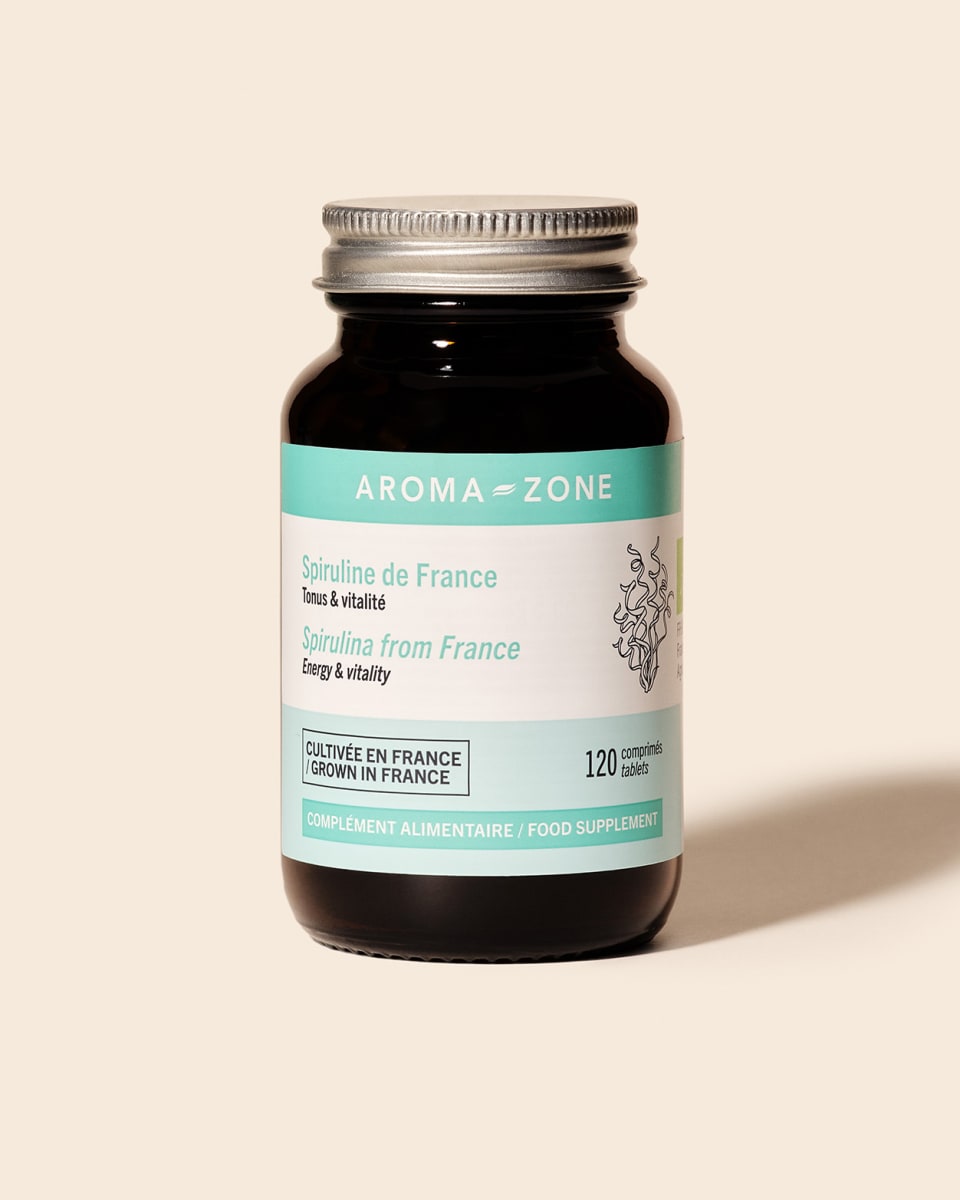
Organic Spirulina Dietary Supplement from France
Grown in France and cold-pressed without additives, this high-quality organic spirulina stands out for its nutritional richness and exceptional phycocyanin content. It comes in easy-to-swallow tablets for daily use as a dietary supplement.
Spirulina and weight loss, dosage
Remember that no dietary supplement can cause weight loss on its own, but spirulina can support a healthy diet through its detoxifying effects and nutrient-rich composition.
We recommend starting a spirulina regimen gradually, beginning with 1 gram per day. You can follow a regimen lasting 1 to 3 months, up to a maximum of 5 g per day. Always follow your healthcare professional’s recommendations and refer to the dosages listed on your spirulina bottle or packet.
Spirulina is not recommended for people with phenylketonuria, hemochromatosis, or high uric acid levels. Pregnant or breastfeeding women and children should only take spirulina upon the recommendation of a doctor.
Risks and contraindications of taking spirulina
Although spirulina is often touted for its beneficial properties as part of a weight-loss regimen, it is crucial to note some specific contraindications and precautions. Some people may be allergic to spirulina, particularly those with allergies to seafood or seaweed. Allergic reactions can range from mild to severe, posing a health risk. Additionally, individuals with phenylketonuria, a hereditary metabolic disorder, should avoid spirulina due to its phenylalanine content.
Spirulina may interact with certain medications, and it is essential to consult a healthcare professional before starting a regimen, especially for those taking specific medications. Pregnant or breastfeeding women should also exercise increased caution, as the effects of spirulina on the fetus or infant are not fully understood. Finally, although spirulina is rich in nutrients, excessive consumption can lead to adverse effects, such as gastrointestinal disturbances. It is therefore imperative to adhere to the recommended doses to avoid any potential risks and to consult a healthcare professional for personalised guidance.
Some spirulina recipes for weight loss
Associated tips

Superfoods

Superfoods

Superfoods
Superfoods


