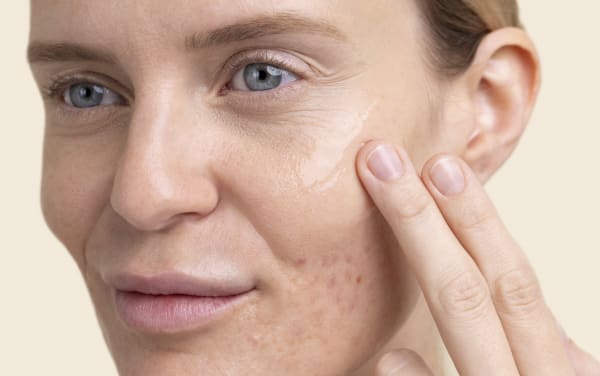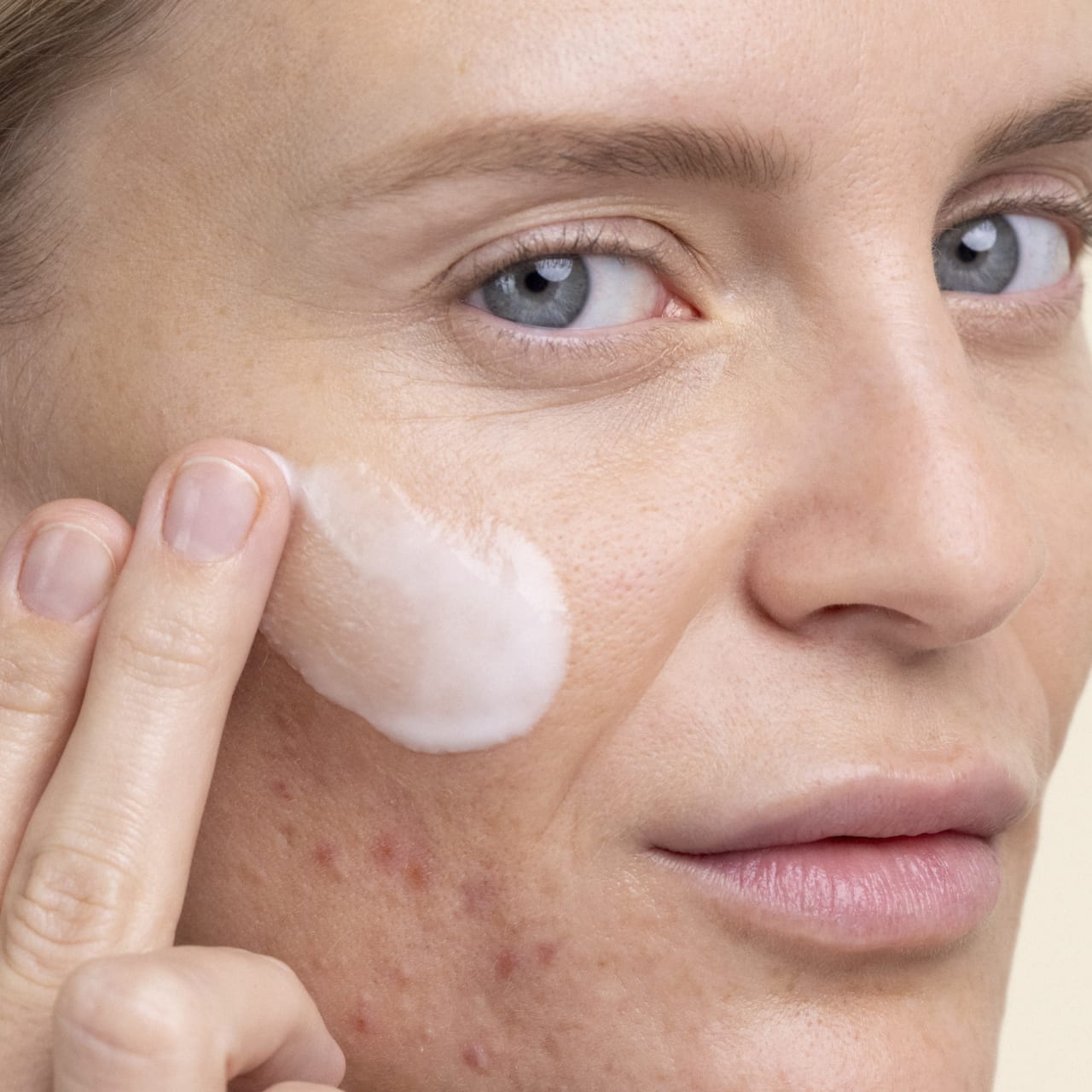
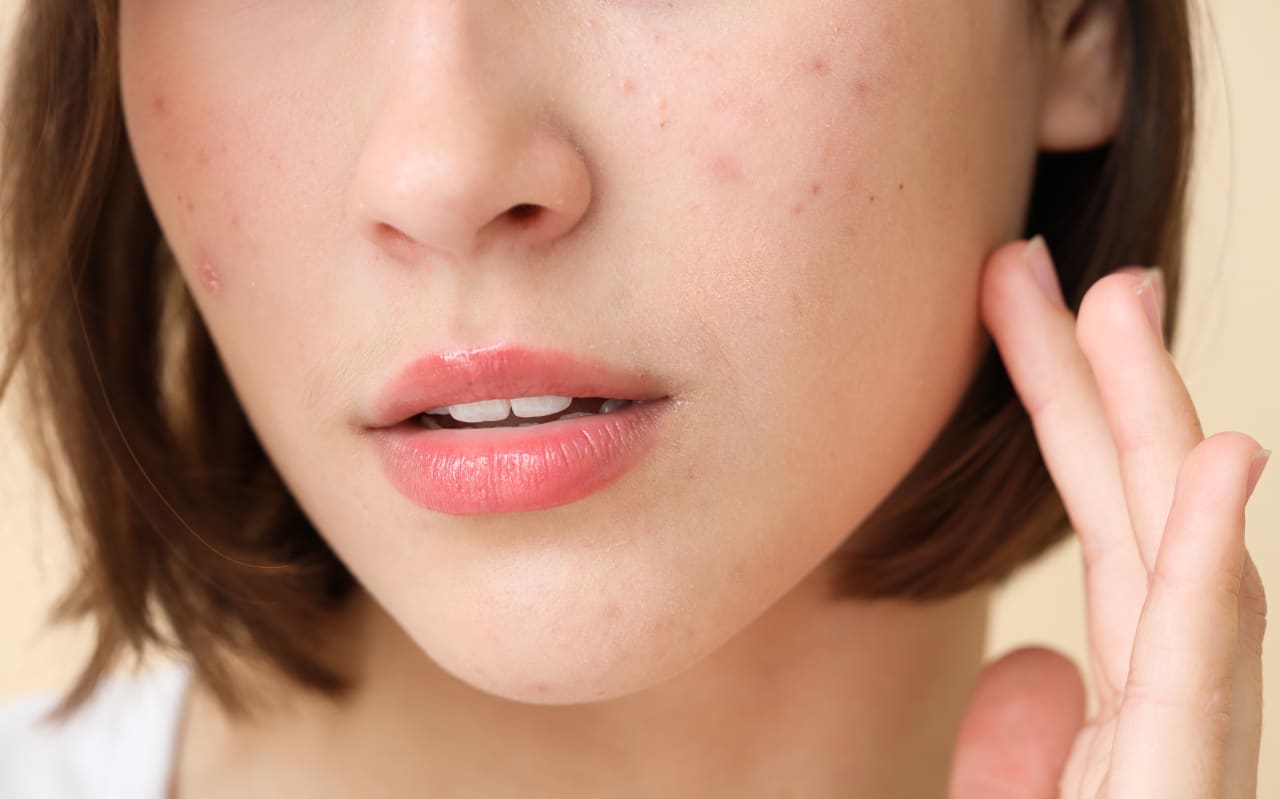
If you notice a concentration of pimples on the lower part of your face and these pimples appear cyclically or following a hormonal disturbance (for example, a few days before your period, at the beginning of pregnancy, or when changing contraception), this phenomenon is probably hormonal in origin.
Natural solutions for hormonal acne
Hormonal acne, common in adolescence, unfortunately affects many adults, bringing with it its share of pimples, blackheads and unsightly blemishes. Linked to fluctuations in hormone production, it refers to a type of acne associated with the menstrual cycle, pregnancy, the menopause and stress.
The good news? Hormonal acne is not inevitable and there are natural and effective solutions to relieve it. What is hormonal acne? What causes it? How can you reduce or get rid of it? We explain.

In short, hormonal acne refers to skin imperfections that closely follow hormonal changes. It mainly affects women and can appear at different stages of life. Fluctuations linked to the menstrual cycle, stopping the contraceptive pill, the postpartum period, or menopause help explain why it occurs more often. Given these persistent breakouts, what natural solutions are available?
What are the main causes of hormonal acne?
Menstrual cycle, ovulation, pregnancy, menopause... The causes of "late onset" acne
Particular skin sensitivity can be observed in certain families. This predisposition particularly affects the reactivity of the sebaceous glands to androgen hormones. When these glands are more numerous, larger or more sensitive, sebum production can be higher. In this context, several members of the same family may have experienced persistent or recurring blemishes at different times in their lives.
Hormonal imbalances including PCOS
Hormonal blemishes are often linked to an imbalance between male hormones, known as androgens, and female hormones, particularly estrogen. Testosterone and DHEA are produced naturally in women. They can be converted locally into dihydrotestosterone, a more active form that strongly stimulates the sebaceous glands. Conversely, estrogens have a regulating effect by limiting this stimulation. The balance between these hormones directly influences the condition of the skin.
In some cases, this imbalance is part of a broader hormonal disorder, such as polycystic ovary syndrome (PCOS). PCOS is a common endocrine disorder in women of childbearing age, characterised by excessive androgen production, irregular menstrual cycles, and ovulation abnormalities. The excess androgens observed in this context can promote increased sebum production and the appearance of blemishes. However, not all women with PCOS develop skin problems, and conversely, not all hormonal blemishes are indicative of PCOS.
Other hormones involved
Cortisol, a hormone released during prolonged stress, acts indirectly. Repeated exposure to stress is associated with increased inflammation and changes in the skin environment. These changes can contribute to the appearance or worsening of blemishes. A link between skin condition and the balance of the gut microbiota, i.e., all the microorganisms living in the intestine, is also possible.
Role of insulin
Insulin is a hormone involved in regulating blood sugar levels. Frequent stimulation of its secretion, particularly after consuming foods rich in rapidly absorbed sugars, is associated with increased androgenic activity. In some people, this stimulation can contribute to increased sebum production and the appearance of blemishes. This mechanism is also observed in some women with PCOS, in whom insulin resistance, i.e., reduced effectiveness of this hormone, is frequently described.
How do you recognise hormonal acne? The symptoms
Here are the main signs of hormonal acne:
Characteristic location: blemishes mainly located on the lower part of the face, particularly the jaw, chin and around the mouth;
Cyclical progression: changes throughout the menstrual cycle, with frequent worsening before menstruation;
Persistence into adulthood: blemishes present beyond adolescence, sometimes for several years;
Specific hormonal context: onset or worsening after stopping hormonal contraception, after pregnancy or around menopause;
Possible associated signs: cycle disorders, increased hair growth in certain areas, or localised hair loss may coexist. These elements are neither constant nor specific.
Our selection of natural solutions
Here is a selection of natural solutions.
Gently rebalance and purify the skin
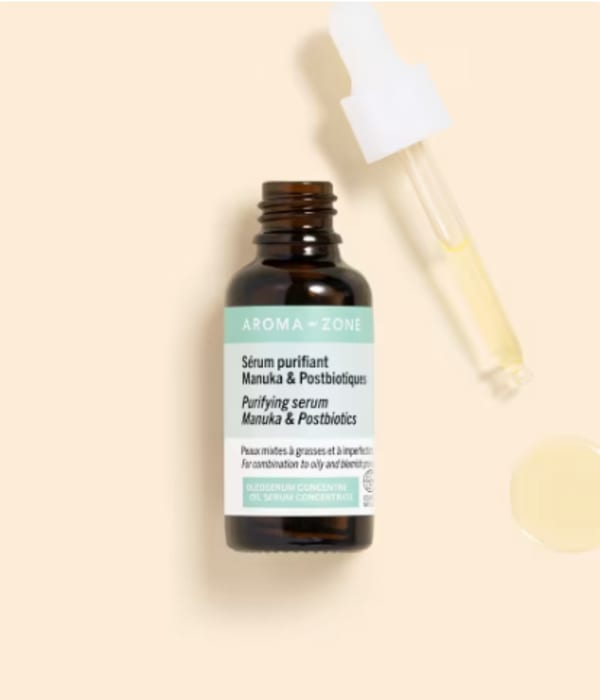
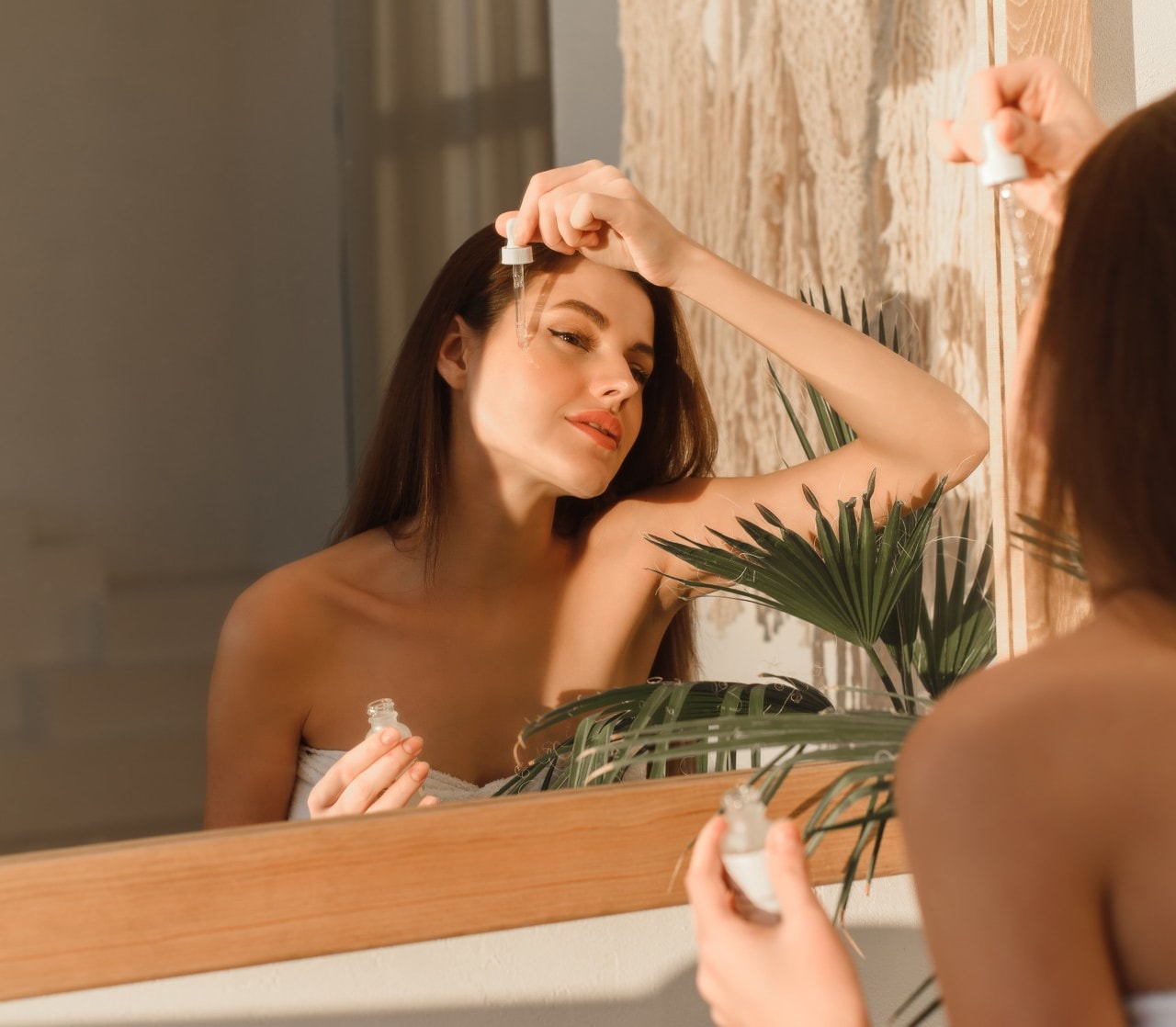
This oil-based serum combines postbiotics and Manuka extract in a base of carefully selected plant oils. It is designed to support skin prone to imbalances, help purify the skin and improve its overall appearance, while respecting the hydrolipidic film. Its nourishing texture penetrates easily without leaving a greasy finish. In case of contact with eyes, rinse thoroughly with clean water. Do not use on children under 10 years of age.
Discover the Purifying and Balancing Manuka & Postbiotics Oleoserum

Soothe and support skin balance
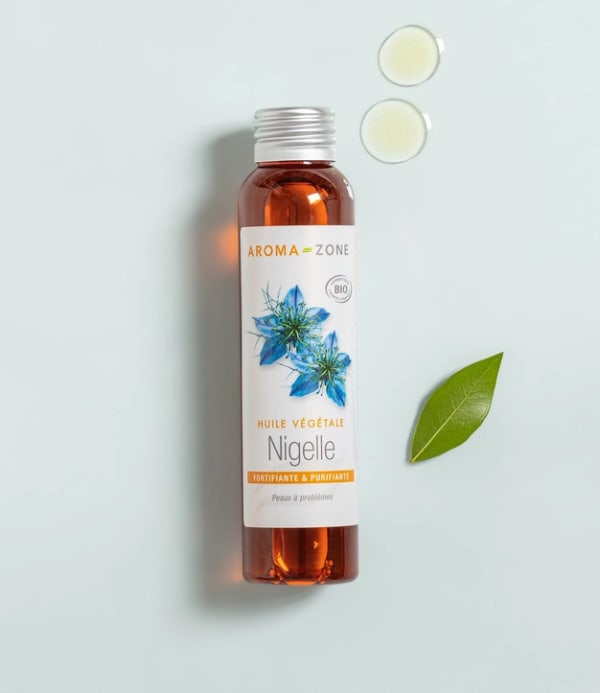
Organic Nigella vegetable oil, also known as black cumin, is valued for its naturally rich profile and traditional use on skin prone to discomfort. It is used to nourish the skin and help maintain its balance. This oil is particularly concentrated and should be used with caution. It is recommended to seek the advice of a healthcare professional before use. Due to the natural presence of essential oil, avoid applying to the eyes and mucous membranes. Before use, perform a tolerance test on the inside of your elbow. For skin application, always dilute in a mild oil macerate, such as Calendula.

Absorb excess sebum and purify
Montmorillonite green clay is ideal for masks designed for skin prone to shine. Highly absorbent, it helps to deeply cleanse the skin and remove impurities, leaving it feeling clear. Store the clay away from air, moisture, and light, making sure to close the bag tightly after each use. As this product is powdery, avoid handling it near a source of ventilation and do not inhale it. Keep out of reach of children. As clay has the ability to absorb impurities and toxins, it should not be reused once used.

Unify skin tone and smooth texture
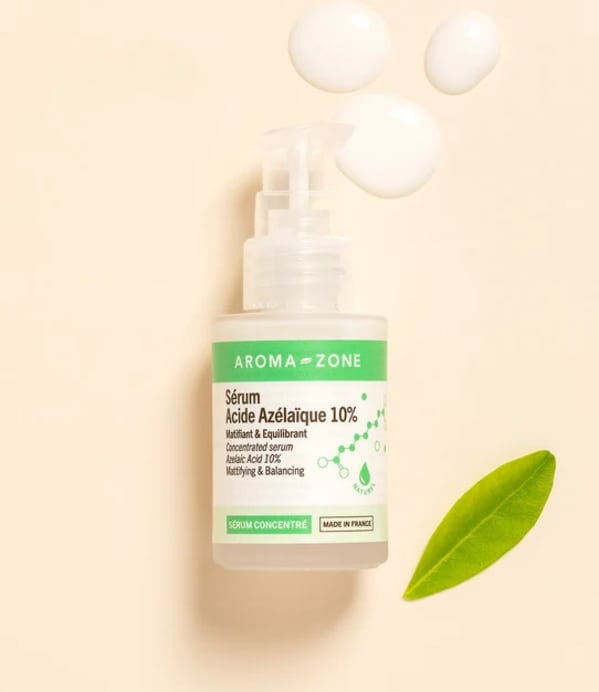
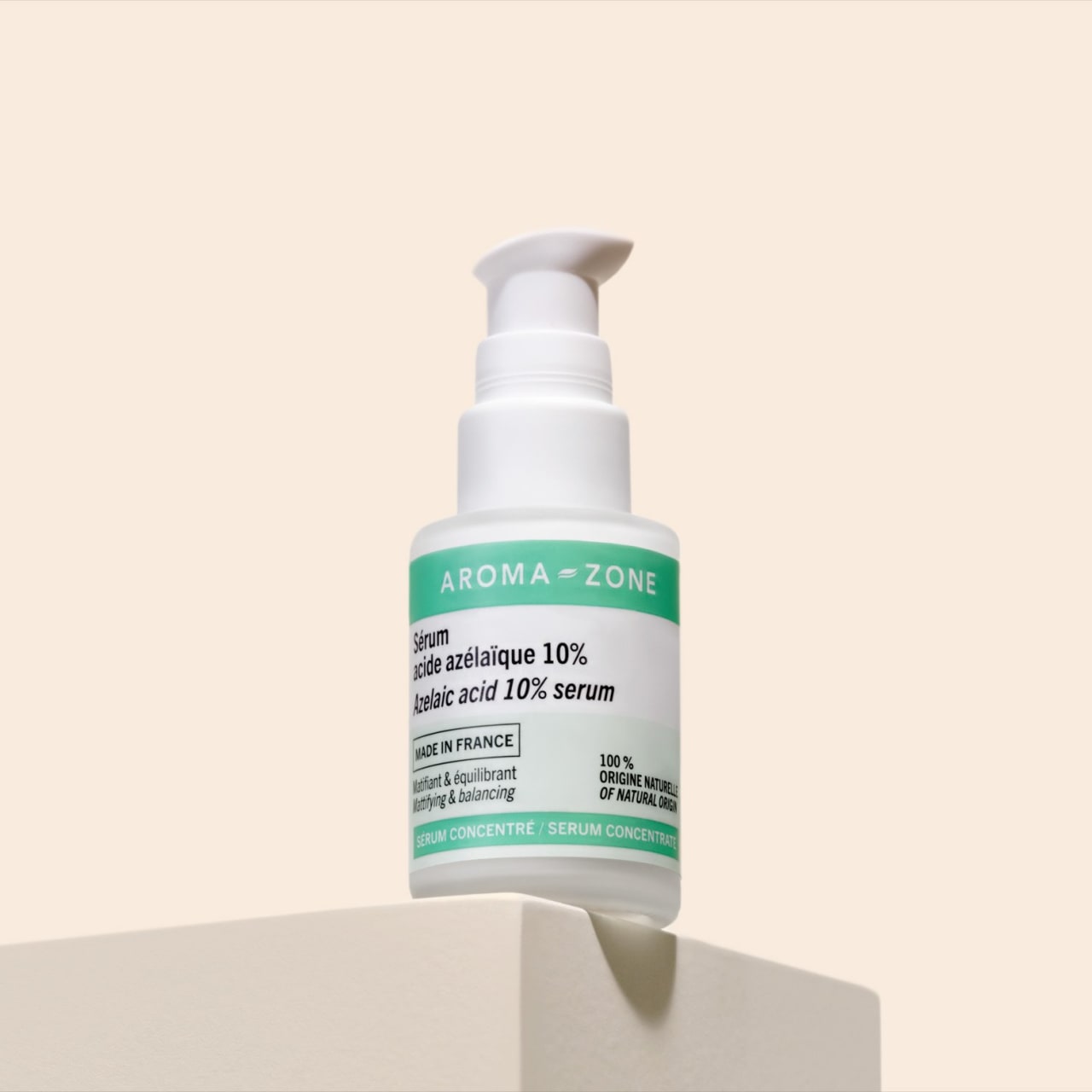
This serum, concentrated with 10% azelaic acid, is formulated for skin prone to visible irregularities and uneven complexion. Its light texture allows for targeted application to gradually improve the appearance of the skin. Highly concentrated, it is recommended to introduce it gradually into your routine, starting with one application every 2 to 3 days, or even twice a week. Combine it with gentle cleansing and moisturizing products. Avoid the eye area. If irritation occurs, space out applications. If signs persist, discontinue use.
Precautions
Natural approaches are not a treatment for hormonal acne per se. Any persistence of blemishes, any worsening, or any association with other general signs warrants medical advice.
Expert advice
Hormonal acne is based on complex mechanisms involving skin sensitivity, hormonal variations, and lifestyle factors. Available scientific data indicate that non-medicinal measures can accompany medical treatment, with some improvement in blemishes. Support from a healthcare professional can help guide choices and identify situations requiring specific treatment.
Find out more

How do I know if I have hormonal acne?

How do I know if I have hormonal acne?

Does hormonal acne disappear?

Does hormonal acne disappear?
Hormonal skin imperfections are cyclical in nature in women, so they tend to disappear when hormonal balance is restored. If the pimples are due to the menstrual cycle, it usually takes until the end of the period for the spots to fade. When stopping birth control pills, during pregnancy, and during menopause, blemishes also tend to gradually fade.

Hormonal acne or adult acne: what are the differences?

Hormonal acne or adult acne: what are the differences?
Blemishes in adulthood can be caused by hormonal imbalance, but also by an unbalanced diet, poor lifestyle choices, or the use of products that are unsuitable for the skin. To ensure you understand the nature of your problem, we recommend discussing it with your general practitioner or a dermatologist.

Hormonal acne and scars: how can they be alleviated?

Hormonal acne and scars: how can they be alleviated?
Hormonal blemishes can leave lasting marks. Their appearance is exacerbated by the intensity of breakouts, repeated manipulation, and sun exposure. Limiting sun exposure and avoiding scratching blemishes helps reduce the risk of pigmentation spots or indented or raised scars.

What foods should be avoided if you have hormonal acne?

What foods should be avoided if you have hormonal acne?
Available studies suggest that a high glycemic index diet may be associated with worsening hormonal acne in some people. This mainly concerns products rich in rapidly absorbed sugars, such as sugary drinks, pastries, or highly refined cereals, which can stimulate insulin secretion and sebum production. Several studies have also observed a link between milk consumption and acne, although no direct causal relationship has been established. The effect seems to vary from person to person. At this stage, no systematic dietary restrictions are recommended. Adjustments should be made on an individual basis, taking into account each person's specific reactions.
Meet Our Expert Editor, Stéphanie Le Guillou, Pharmacist and Doctor of Molecular Biology

A qualified pharmacist since 2010 and a PhD graduate in Molecular Biology since 2012, Stéphanie has been writing medical and scientific content for nearly 15 years. Passionate about sharing knowledge, she is committed to making complex health information accessible and easy to understand while maintaining the highest standards of scientific accuracy.
Bibliography
1
Bagatin E, Freitas THP, Rivitti-Machado MC, Machado MCR, Ribeiro BM, Nunes S, Rocha MADD.
Adult female acne: a guide to clinical practice. An Bras Dermatol. 2019 Jan-Feb;94(1):62-75. doi: 10.1590/abd1806-4841.20198203. Erratum in: An Bras Dermatol. 2019 Mar-Apr;94(2):255. doi: 10.1590/abd1806-4841.2019940202.. Machado MCR [corrected to Rivitti-Machado MC]. PMID: 30726466; PMCID: PMC6360964.
2
High Authority for Health.
Acne: when and how to treat it? Website: HAS. Saint-Denis La Plaine (France); 2015 [accessed in December 2025]
3
Borzyszkowska D, Niedzielska M, Kozłowski M, Brodowska A, Przepiera A, Malczyk-Matysiak K, Cymbaluk-Płoska A, Sowińska-Przepiera E.
Evaluation of Hormonal Factors in Acne Vulgaris and the Course of Acne Vulgaris Treatment with Contraceptive-Based Therapies in Young Adult Women. Cells. 2022 Dec 16;11(24):4078. doi: 10.3390/cells11244078. PMID: 36552842; PMCID: PMC9777314.
4
Telkkälä A, Sinikumpu SP, Huilaja L.
Etiology of Adult Female Acne-Systematic Review. Health Sci Rep. 2025 Apr 30;8(5):e70697. doi: 10.1002/hsr2.70697. PMID: 40309637; PMCID: PMC12042216.
5
Jović A, Marinović B, Kostović K, Čeović R, Basta-Juzbašić A, Bukvić Mokos Z.
The Impact of Psychological Stress on Acne. Acta Dermatovenerol Croat. 2017 Jul;25(2):1133-141. PMID: 28871928.
6
Khunger N, Mehrotra K.
Menopausal Acne - Challenges And Solutions. Int J Womens Health. 2019 Oct 29;11:555-567. doi: 10.2147/IJWH.S174292. PMID: 31754313; PMCID: PMC6825478.
7
Stoll S, Shalita AR, Webster GF, Kaplan R, Danesh S, Penstein A.
The effect of the menstrual cycle on acne. J Am Acad Dermatol. 2001 Dec;45(6):957-60. doi: 10.1067/mjd.2001.117382. PMID: 11712049.
8
National Institute of Health and Medical Research. Contraception. 2023.
https://www.inserm.fr/dossier/contraception/
9
VIDAL. Acne, adults too. 2024.
https://www.vidal.fr/actualites/30616-acne-les-adultes-aussi.html
10
VIDAL. Professional recommendations: acne. 2024.
https://www.vidal.fr/maladies/recommandations/acne-1504.html
11
Health Insurance. Acne: the right reflexes and the right actions. 2025.
https://www.ameli.fr/assure/sante/themes/acne/bons-reflexes-bons-gestes8