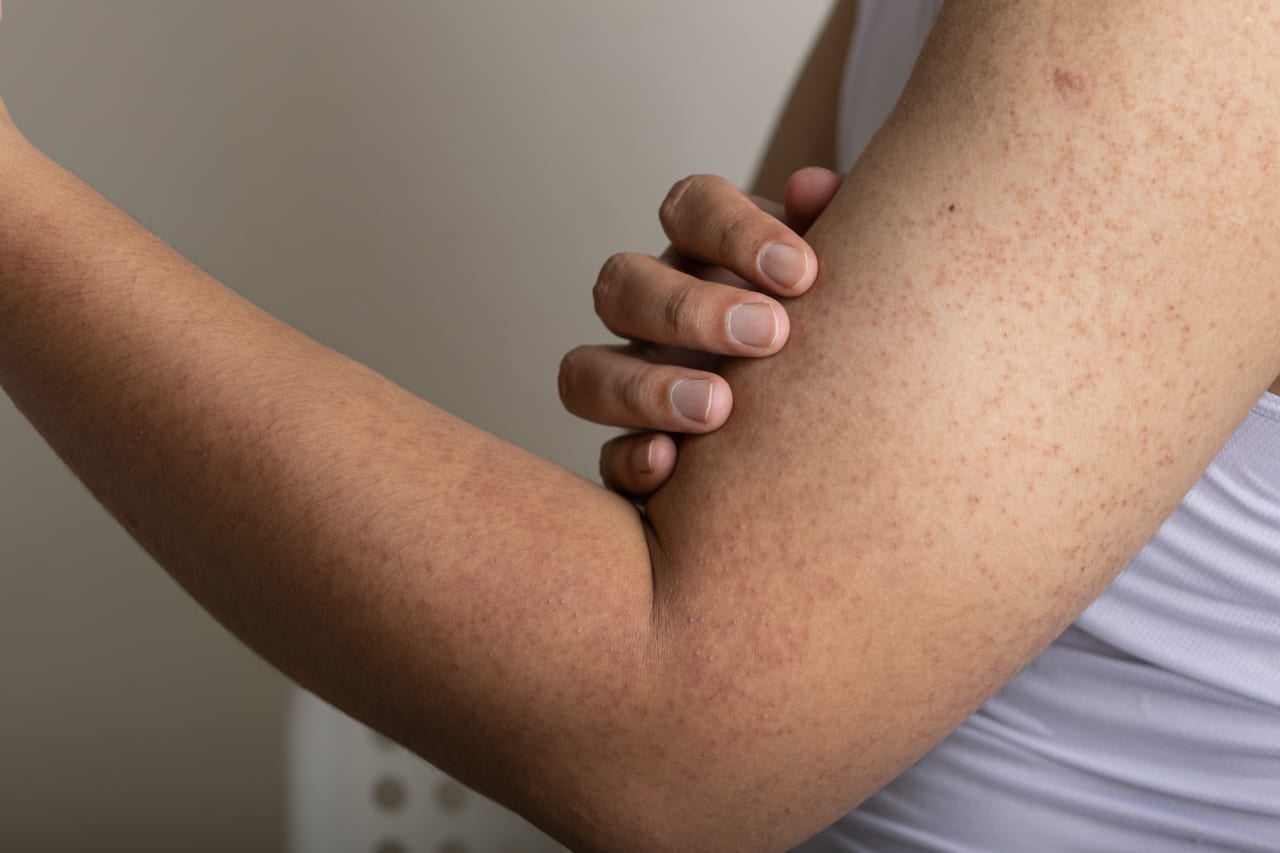
Keratosis pilaris is a skin condition characterized by small keratotic bumps centered around hair follicles. These skin bumps are formed by dead skin cells trapped in the openings of hair follicles and sebaceous glands. These pores are blocked by accumulations of keratin, creating a "cornified plug." Beneath this plug, the hair remains trapped in its follicle and cannot emerge. This situation can lead to mild inflammation around the follicle, manifesting as red spots at each opening (some describe this condition as having the appearance of "strawberry legs"). In addition, these blocked follicles can also become infected spontaneously or after being scratched, which can lead to the appearance of red or pus-filled pimples resembling acne on the areas affected by keratosis pilaris.
These bumps create a rough texture to the touch, giving the impression of rough skin or sandpaper. This skin condition usually appears in childhood. In half of cases, symptoms appear during the first decade of life. The simple form of keratosis pilaris presents as gray, keratotic lesions on the arms, thighs, and buttocks, primarily in women. The erythematous form of keratosis pilaris can progress to atrophy and presents with various clinical manifestations such as ophryogenic erythema, vermiculated atrophodermia, and Siemens alopecia. Keratosis pilaris usually appears on the arms and thighs, but also on the back or face.