Iron Bisglycinate dietary supplement: benefits and usage guidelines

Iron Bisglycinate dietary supplement: benefits and usage guidelines


By Marie Anne Vion

Published on: Friday, January 23, 2026, Updated on: Wednesday, October 21, 2026

An essential mineral for the proper functioning of our bodies, iron plays a key role in oxygen transport. However, iron deficiency is common. According to the World Health Organisation (WHO), it is the most widespread nutritional deficiency in the world. Women, children, athletes and those following a vegetarian or vegan diet are particularly affected. In this context, Iron Bisglycinate stands out as an innovative and well-tolerated solution. But what exactly is it? Discover all the secrets of iron supplementation for greater wellbeing.

Contents

Related products

What role does iron play in the body?

Iron is a trace element essential for life, even though it is present in only small quantities in the body. In its natural state, it is a metal found in various minerals, such as haematite or magnetite. In the environment and within the body, it circulates in the form of ferrous (Fe²⁺) or ferric (Fe³⁺) ions, which are soluble in water.

These ionised forms are involved in many vital biological processes and natural cycles, including oxygen transport, energy production and DNA synthesis. As the body cannot produce or store it for long periods, a regular intake through diet or via supplements, where necessary, is essential to prevent iron deficiency.

Which foods contain iron?

Iron is found in many foods of both animal and plant origin. Among the foods richest in iron are:

  • Liver, red meat, offal

  • Fish and seafood

  • Pulses (lentils, chickpeas, red beans)

  • Green vegetables (spinach, parsley, Swiss chard)

  • Seeds (sesame, pumpkin) and certain oilseeds

  • Seaweed such as spirulina

However, the form in which iron is present in these foods affects its bioavailability.

Haem iron and non-haem iron: what is the difference?

There are two types of iron in the diet:

Haem iron: bound to haemoglobin (in red blood cells) and myoglobin (in muscles), it is essential for the transport and storage of oxygen. Of animal origin, it is found in meat and fish and is best absorbed by the body (around 25 per cent).

Non-haem iron: of plant origin, found in cereals, vegetables and plant-based dietary supplements. Its absorption rate is lower than that of haem iron (often less than 17 per cent) and it is more susceptible to interactions with other nutrients.

How can iron absorption be improved?

Iron absorption, particularly that of non-haem iron (from plants), can be optimised through certain dietary choices. Vitamin C is an essential cofactor: it makes iron more soluble and neutralises inhibitors such as phytates (pulses, whole grains), polyphenols (tea, coffee, red wine) or calcium found in dairy products.

Furthermore, consuming haem iron (meat, fish) alongside plant-based iron also improves its absorption. Conversely, it is best to avoid drinking tannin-rich beverages (tea, coffee) at the same time as meals containing iron to minimise their impact.

In summary: combining iron with vitamin C, varying your sources and spacing out the intake of inhibitors helps to maximise its absorption.
What are the signs of iron deficiency?

The most common signs of iron deficiency are:

  • Persistent tiredness, even after rest

  • A pale or sallow complexion

  • Shortness of breath on exertion

  • Frequent headaches or dizziness

  • Brittle nails, hair loss or dry skin

  • Irritability, difficulty concentrating or memory loss

  • Increased susceptibility to infections

  • Restless legs syndrome

When these symptoms appear, a blood test (ferritin, haemoglobin, transferrin) is essential to confirm iron deficiency and assess the need for appropriate supplementation.

What is iron bisglycinate?

Iron bisglycinate is a highly bioavailable form of iron, produced by chelating a ferrous ion with two molecules of glycine, an amino acid. This stable structure allows the iron to avoid adverse interactions with other nutrients in the digestive tract, thereby facilitating its absorption without irritating the intestinal lining.

Compared with other conventional iron salts (such as sulphate or gluconate), iron bisglycinate is better tolerated, particularly in terms of digestion. Furthermore, this form has superior bioavailability, meaning that a greater quantity of iron is actually absorbed and utilised by the body.

Iron bisglycinate is therefore an ideal option for people with sensitivities or increased requirements, offering effectiveness, comfort and safety as part of a properly supervised supplementation programme.

What is the difference between chelated iron and non-chelated iron?

Chelated iron, such as iron bisglycinate, is bound to amino acids, which promotes better absorption and improved digestive tolerance. Non-chelated iron, on the other hand, comes in the form of salts and may be less easily absorbed, more frequently causing digestive discomfort. Chelated iron therefore offers a gentler and more effective alternative for those wishing to optimise their daily iron intake.

Why use iron bisglycinate?

Iron bisglycinate is a form of iron that is particularly well absorbed and generally better tolerated by the digestive system than other conventional forms. It can be useful in cases of increased iron requirements, persistent fatigue or to support certain key bodily functions. Thanks to its high bioavailability, this type of iron provides a targeted and effective intake, particularly in the following situations:

Alleviating symptoms of fatigue

An adequate intake of iron helps to reduce fatigue, whether it is occasional or linked to a latent deficiency, and thus helps to restore energy and vitality in everyday life.

Promoting good cellular oxygenation

Iron is an essential component of haemoglobin and myoglobin, which are involved in the transport and storage of oxygen. Iron bisglycinate provides an effective source of iron to support these functions and ensure optimal tissue oxygenation.

Contributing to haemoglobin synthesis

Iron is essential for the normal formation of red blood cells and haemoglobin, promoting efficient oxygen transport in the blood.

Contributes to energy production

By playing a role in oxygen transport and cellular energy production, iron contributes to normal energy metabolism, which is essential for the body’s overall balance.

Supporting cognitive and nervous system functions

Iron is involved in the synthesis of neurotransmitters (dopamine, serotonin), which play a role in emotional balance, concentration and memory. Adequate iron levels are therefore beneficial for brain function.

Boosting the body’s natural defences

By supporting the differentiation and proliferation of immune cells, iron plays a role in maintaining an effective immune system. Its enhanced absorption in the form of bisglycinate provides targeted support when needed.

What are the benefits of iron bisglycinate?

Iron bisglycinate is recognised for its high bioavailability and good digestive tolerance. Its main benefits are:

  • Supports the normal formation of red blood cells and haemoglobin, thereby contributing to optimal oxygen transport in the body.

  • Contributes to normal energy metabolism by supporting cellular energy production.

  • Helps reduce tiredness, particularly in cases of iron deficiency or increased requirements.

  • Contributes to the proper functioning of the immune system, by promoting natural defence mechanisms.

  • Supports normal cognitive function, including memory, concentration and attention.

  • Plays a role in the process of cell division, a mechanism essential for growth, cell renewal and tissue repair.

  • High digestive tolerance, making it particularly suitable for people who are sensitive to digestive problems associated with other forms of iron.

  • High stability in the digestive tract, with controlled release of iron, reducing unwanted interactions with other nutrients.

Please note: Ferrochel® Iron Bisglycinate, such as that from Aroma-Zone, is a widely studied chelated form. Clinical data show superior absorption compared to iron sulphate, a significant improvement in ferritin stores after several weeks of supplementation, as well as better digestive tolerance – a key factor for regular and long-term use.

Focus on our Iron Bisglycinate dietary supplement

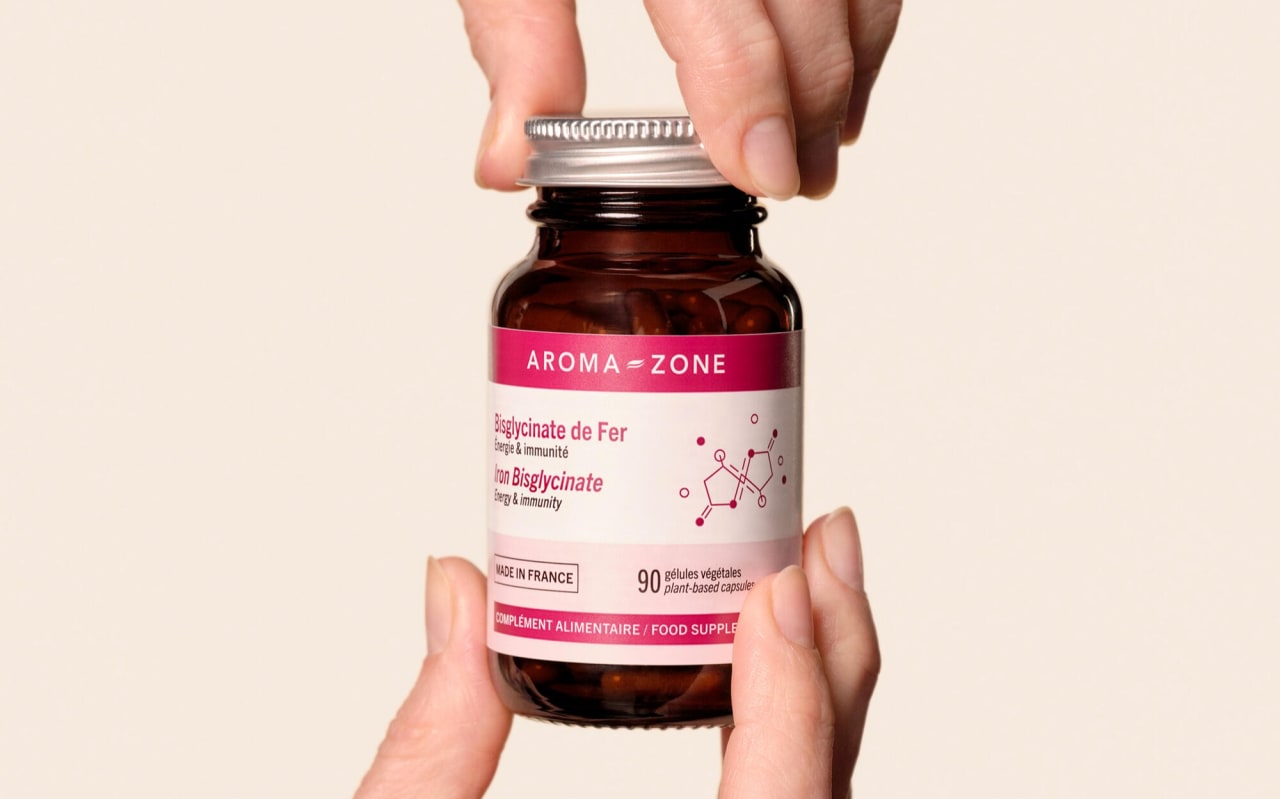
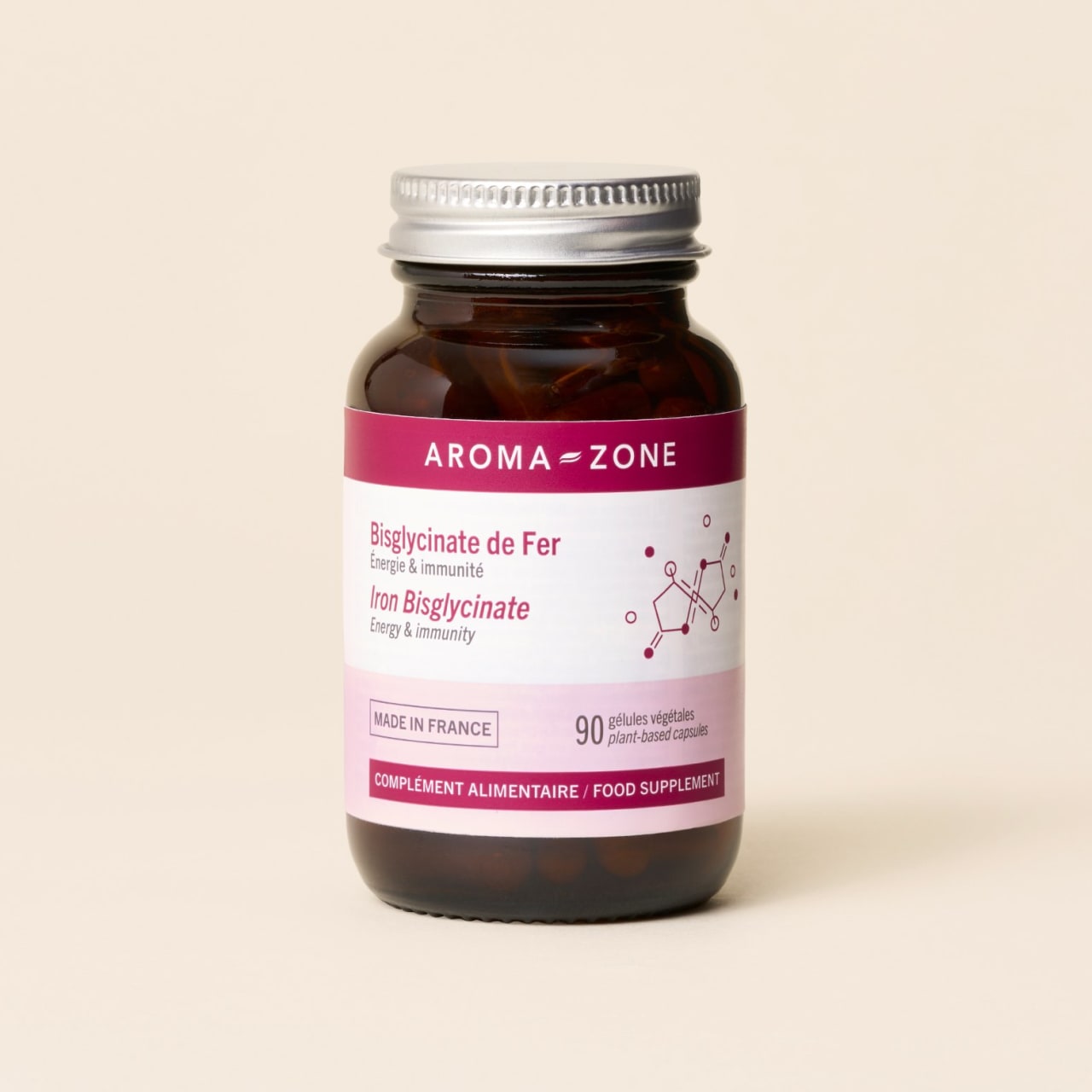
Iron Bisglycinate – 90 capsules – Dietary supplement

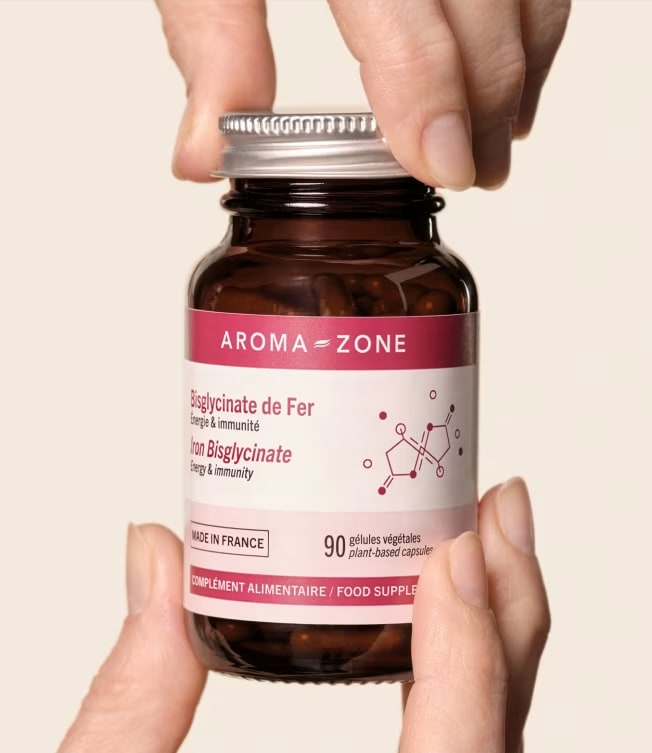
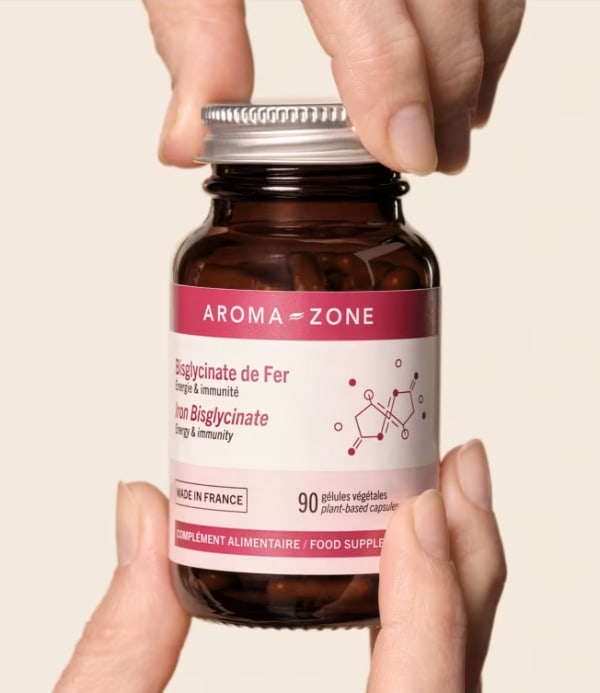
The Iron Bisglycinate dietary supplement combines two patented ingredients with high nutritional value: Ferrochel® Iron, a chelated form recognised for its high bioavailability and digestive tolerance, and PureWay-C® Vitamin C, which enhances iron absorption whilst protecting cells from oxidative stress. With just one capsule a day, this comprehensive formula provides 100 per cent of the recommended daily intake of iron and vitamin C. It helps to reduce fatigue, supports red blood cell formation, oxygen transport, energy metabolism, cognitive function and the immune system. It is particularly suitable for people prone to iron deficiency (women, athletes, vegetarians, etc.) or during periods of physical vulnerability.

This supplement is for adults only and must not be used in cases of conditions leading to iron overload (haemochromatosis, polycythaemia, etc.). It is not a substitute for a balanced diet or medical supervision. It is recommended not to exceed the dose of one capsule per day and to seek medical advice before taking any supplements, particularly for pregnant or breastfeeding women. Designed as a 3-month course of treatment, this supplement is suitable for vegetarians and vegans. As with any iron-based product, it must be kept out of the reach of children and used only if a deficiency has been identified by a healthcare professional.

Discover Iron Bisglycinate – 90 capsules – Dietary supplement

Who can take ferrous bisglycinate?

Iron bisglycinate is a well-tolerated form of iron, ideal for meeting increased requirements or compensating for an insufficient intake. It is particularly suitable for people prone to iron deficiency who are looking to reduce fatigue, support their immune system or optimise their nutritional intake. It may be suitable for:

  • Vegetarians and vegans, whose diets exclude animal sources of haem iron, which is better absorbed by the body.

  • Women with heavy periods, who are at risk of more frequent iron loss.

  • Athletes, due to increased iron loss associated with intense physical exercise.

  • For pregnant or breastfeeding women, on medical advice, to meet increased physiological needs.

  • People feeling tired, during periods of stress or convalescence, when micronutrient requirements are higher.

In all cases, a prior medical assessment (ferritin, haemoglobin, etc.) is essential before starting supplementation, in order to avoid any risk of overdose.

When should you take an iron supplement in the form of bisglycinate?

Taking an iron bisglycinate supplement should primarily be considered in response to a specific condition, rather than as a routine measure:

  • When an iron deficiency or an iron-deficiency anaemia is confirmed by laboratory tests.

  • In the event of a drop in ferritin levels, even in the absence of anaemia, which may affect energy levels and recovery.

  • When persistent functional symptoms appear: unexplained tiredness, shortness of breath on exertion, paleness, brittle nails or hair loss.

  • During periods when iron requirements increase temporarily, such as during intensive training or a recovery phase.

  • In pregnant or breastfeeding women, or those with heavy periods, whose iron requirements are increased by menstrual blood loss or foetal growth.

In all cases, supplementation must be part of a supervised programme, with appropriate monitoring, in order to restore balance without disrupting iron metabolism.

Why have we combined Vitamin C with Iron in our dietary supplement?

The combination of iron and vitamin C is based on an essential nutritional synergy that has been extensively documented. Vitamin C improves the absorption of non-haem iron (that of plant origin or used in supplements).

By combining these two nutrients in a single formula, this supplement aims to maximise the effectiveness of iron, whilst ensuring it is gentle on the digestive system – an issue that is often a concern with iron treatments.

Vitamin C also protects against oxidative stress thanks to its antioxidant properties, and supports collagen synthesis, which is essential for overall health.

This combination makes this supplement a comprehensive solution, designed to optimise iron intake whilst strengthening vital functions, through an approach that is both effective and respectful of the body’s natural balance.

What routine should you follow?

Incorporating an iron supplement into your daily routine can make a real difference to your energy levels and well-being. To maximise its absorption and benefits, here is an example of a routine:

Iron Bisglycinate – 90 capsules – Dietary supplement

1. In the morning: Take 1 capsule of Iron Bisglycinate with a large glass of water, whilst having breakfast. Avoid coffee or tea for 1 to 2 hours.

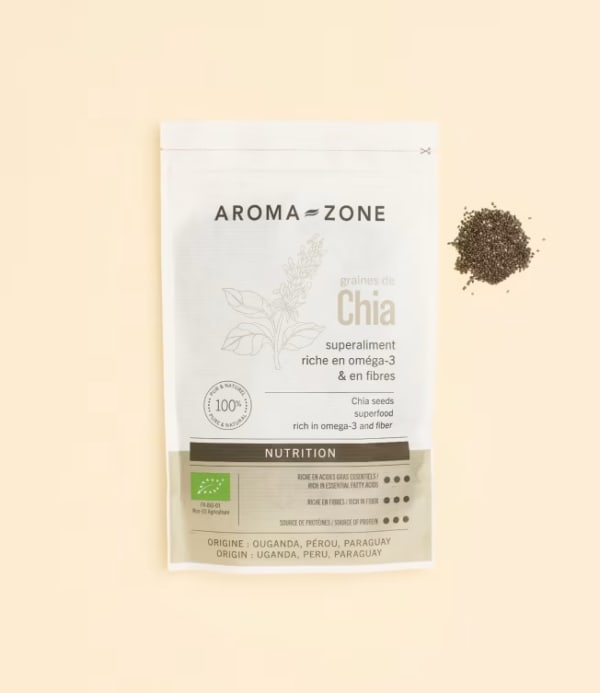
2. During the day : Add organic chia seeds to a smoothie or yoghurt. Their fibre content promotes healthy bowel function, which can help prevent constipation sometimes associated with iron supplementation. Combine them with fruit or vegetables rich in vitamin C to boost iron absorption.

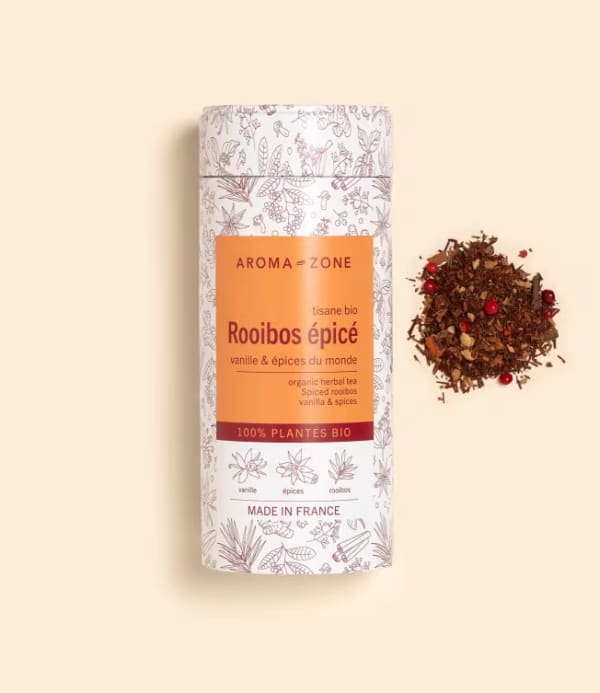
Organic Spiced Rooibos Tea

3. The afternoon: Opt for a organic spiced rooibos herbal tea, which is caffeine-free and ideal for supporting the body without hindering iron absorption.

4. In the evening: Opt for a light dinner including green vegetables and pulses, followed by a organic Sleep herbal tea to promote rest and recovery.

Generally speaking, make sure you eat a diet rich in iron (offal, fish, sesame seeds, pulses, green vegetables, etc.) and, ideally, low in phytates, which can inhibit iron absorption. To reduce the phytate content, consider soaking, sprouting or fermenting pulses, whole grains and seeds before eating them.

Contraindications and precautions

Before starting any iron supplementation, a blood test is essential to assess the body’s actual requirements. Excess iron can be just as harmful as a deficiency, particularly in cases of conditions that promote its accumulation, such as haemochromatosis, polycythaemia or certain liver diseases. This is why consulting a healthcare professional is essential before starting any course of treatment.

If taking this alongside vegetable-based activated charcoal, avoid consuming it at the same meal as iron, as it may absorb certain active ingredients. Similarly, zinc-based supplements should be taken at separate times, as zinc and iron may interact in terms of their intestinal absorption.

Iron may also cause mild digestive discomfort in some people, such as nausea or a feeling of heaviness. However, the bisglycinate form is known for being well tolerated by the digestive system.

It remains essential to adhere to the recommended daily doses and not to extend a course of treatment without medical supervision, in order to ensure that supplementation is both effective and safe.

Expert advice

Iron supplementation can provide real support in cases of fatigue, a weakened immune system or increased requirements. However, before taking any supplements, it is essential to identify the cause of any potential deficiency. A balanced diet remains the foundation of good iron status: prioritise foods rich in easily absorbed iron (such as legumes when properly combined, green leafy vegetables or animal products if consumed), accompanied by sources of vitamin C to optimise absorption.

Choosing a well-formulated supplement can then form part of a holistic, gentle and targeted approach, always in consultation with a healthcare professional. If a course of supplementation proves necessary, be sure to limit your intake of tea or coffee, as these can hinder iron absorption. Opt for water or mild herbal teas to accompany your supplementation.

Finally, pregnant and breastfeeding women are advised to consult a healthcare professional before taking any supplements.

Spotlight on Our Nutrition and Food Expert, Marie-Anne Vion

Marie-Anne Vion.jpg

Faced with digestive disorders such as IBS and SIBO, Marie-Anne turned to nutrition and natural solutions. Passionate about wellbeing, she is now studying dietetics and nutrition. She shares her expertise through articles that offer accessible advice and insights. Drawn to the brand's natural approach, she helps promote a balanced diet and self-reliance in health matters.

Bibliography

  1. WHO. WHO guidelines help to detect iron deficiency and protect brain development. 20/04/2020

    https://www.who.int/fr/news/item/20-04-2020-who-guidance-helps-detect-iron-deficiency-and-protect-brain-development

  2. ANSES. Everything you need to know about iron. 27/10/2022.

    https://www.anses.fr/fr/content/tout-savoir-sur-le-fer

  3. Moustarah F, Daley SF. Dietary iron. [Updated: 8 January 2024]. In: StatPearls [Internet]. Treasure Island (FL): StatPearls Publishing; January 2025.

    https://www.ncbi.nlm.nih.gov/books/NBK540969/

  4. Ameli. Symptoms and diagnosis of iron deficiency anaemia. 8 September 2025. Accessed January 2026.

    https://www.ameli.fr/assure/sante/themes/anemie-par-carence-en-fer/

  5. Cook J., Adaptation in iron metabolism, American J. Clin. Nutr., 1990

  6. Berthou C, Iliou JP, Barba D. Iron, neuro-bioavailability and depression. EJHaem.

    5 December 2021;3(1):263–275. doi: 10.1002/jha2.321. PMID: 35846210; PMCID: PMC9175715.

  7. Sholzberg M, Hillis C, Crowther M, Selby R. Diagnosis and management of iron deficiency in women.

    CMAJ. 10 August 2025;197(27):E819–E827. French. doi: 10.1503/cmaj.240570-f. PMID: 40789601; PMCID: PMC12350412.

  8. R. Pineda, S. Ashmead, et al., Efficacy and safety of ferrous bisglycinate chelate in pregnant women with iron deficiency anaemia: A randomised controlled trial,

    Journal of Perinatal Medicine, 2011

  9. H. Bovell-Benjamin, L. Allen, et al., Bioavailability of ferrous bisglycinate chelate in water and in orange juice compared with ferrous sulphate,

    Journal of Food Science, 2000

  10. Bito, T., Okumura, E., F., M. & Watanabe, F., Potential of Chlorella as a dietary supplement to promote human health.

    Nutrients, 2020

  11. Medicinal properties of Moringa oleifera: An overview of a promising remedy. J. Med.

    Plants Res., 2012

  12. Chyka PA, Butler AY, Herman MI. Ferrous sulphate adsorption by activated charcoal.

    Vet Hum Toxicol. 2001 Feb;43(1):11–3. PMID: 11205069.

  13. Layrisse M, García-Casal MN, Solano L, Barón MA, Arguello F, Llovera D, Ramírez J, Leets I, Tropper E. Iron bioavailability in humans from breakfasts enriched with iron bis-glycine chelate, phytates and polyphenols. J Nutr.

    September 2000;130(9):2195–9. doi: 10.1093/jn/130.9.2195. Erratum in: J Nutr December 2000;130(12):3106. PMID: 10958812.

  14. Heath AL, Skeaff CM, O’Brien SM, Williams SM, Gibson RS. Can dietary treatment of non-anaemic iron deficiency improve iron status?

    J Am Coll Nutr. 2001 Oct;20(5):477–84. doi: 10.1080/07315724.2001.10719056. PMID: 11601562.

  15. Ferrari P, Nicolini A, Manca ML, Rossi G, Anselmi L, Conte M, Carpi A, Bonino F. Treatment of mild non-chemotherapy-induced iron deficiency anaemia in cancer patients: comparison between oral ferrous bisglycinate chelate and ferrous sulphate.

    Biomed Pharmacother. September 2012;66(6):414–8. doi: 10.1016/j.biopha.2012.06.003. Epub 29 June 2012. PMID: 22795809.

Frequently Asked Questions

Frequently Asked Questions