How to Use Chamomile to Lighten Your Hair?

How to Use Chamomile to Lighten Your Hair?


By Hélène Betoux

Published on: Tuesday, May 21, 2024, Updated on: Friday, September 18, 2026

Did you think it was just a myth? Not at all, our grandmothers were right: chamomile really can help lighten naturally blonde hair. That said, don't expect a dramatic transformation or sun-kissed highlights overnight, the lightening effect of German chamomile is subtle, creating soft, natural-looking brightness rather than a bold colour change. It's more than enough to bring out the shine and radiance of fair hair. The easiest way to use it is as a final rinse after shampooing, though depending on your preferences, you can also try a lightening spray or a homemade hair mask.

Contents

Related products

What is Chamomile?

With its golden-yellow centre and long cream-coloured petals, chamomile is a true symbol of summer in the countryside. It is widely cultivated in Eastern Europe but can also be found throughout Asia and North Africa. In the wild, it thrives in dry, stony soils.

This elegant plant can grow up to 50cm tall. It resembles a daisy, although its leaves are much more finely divided into slender segments. It is also easily recognised by its naturally sweet, aromatic fragrance.

Long before it became known for enhancing blonde hair, German chamomile was valued as a traditional medicinal plant. Its therapeutic use was notably promoted by the 16th-century German botanist and physician Hieronymus Bock, who recommended it for supporting digestive comfort.

What Are the Properties of Chamomilla recutita?

Rich in flavonoids, chamomile is renowned for its soothing and anti-inflammatory properties. It is also valued for its many benefits in skin and hair care. Traditionally, it is known for being:

  • Anti-inflammatory, which allows it to soothe sensitive and irritated skin.

  • Revitalising, helping to improve the appearance of both skin and hair

  • Brightening, particularly for naturally blonde hair, where it can help enhance luminosity and subtle golden tones.

What are its benefits for hair?

  • Helps soothe the discomfort associated with dry, sensitive or atopic-prone scalps.

  • Enhances radiance and shine in hair that tends to appear dull or darkened over time.

  • Helps reveal and brighten golden highlights in naturally light-coloured or blonde hair.

  • Helps maintain brightness and prevents the yellowing of grey hair.

  • Softens the hair fibre and helps improve the overall texture and feel of the hair.

Does Chamomile Lighten Hair?

People often say that chamomile "lightens" hair, but this is something of a simplification. Its effects are very different from those of hydrogen peroxide, which hairdressers use to bleach hair. Nor does it colour the hair in the same way as a conventional hair dye.

German chamomile is primarily known for enhancing the golden tones naturally present in blonde hair. Its flowers contain a yellow pigment called apigenin, which can coat the hair fibre and create the appearance of brighter, more luminous highlights. Rather than changing the hair colour itself, chamomile helps boost natural radiance and bring out subtle golden reflections, making it particularly popular for refreshing blonde hair when it looks a little dull, especially after winter.

Which Chamomile Should You Use to Lighten Your Hair?

There is only one type of chamomile traditionally known for its ability to lighten hair: German Chamomile (Chamomilla recutita or Matricaria chamomilla). You may also come across it under the names Matricaria Chamomile, German Chamomile or simply Chamomile. These all refer to the same plant species, which is the one we recommend for naturally brightening blonde hair.

Be careful not to confuse it with other plants from the Asteraceae family, particularly Roman Chamomile (Chamaemelum nobile). Although it looks very similar and shares some of the same beneficial properties, it is not traditionally associated with the same hair-lightening effects as German Chamomile.

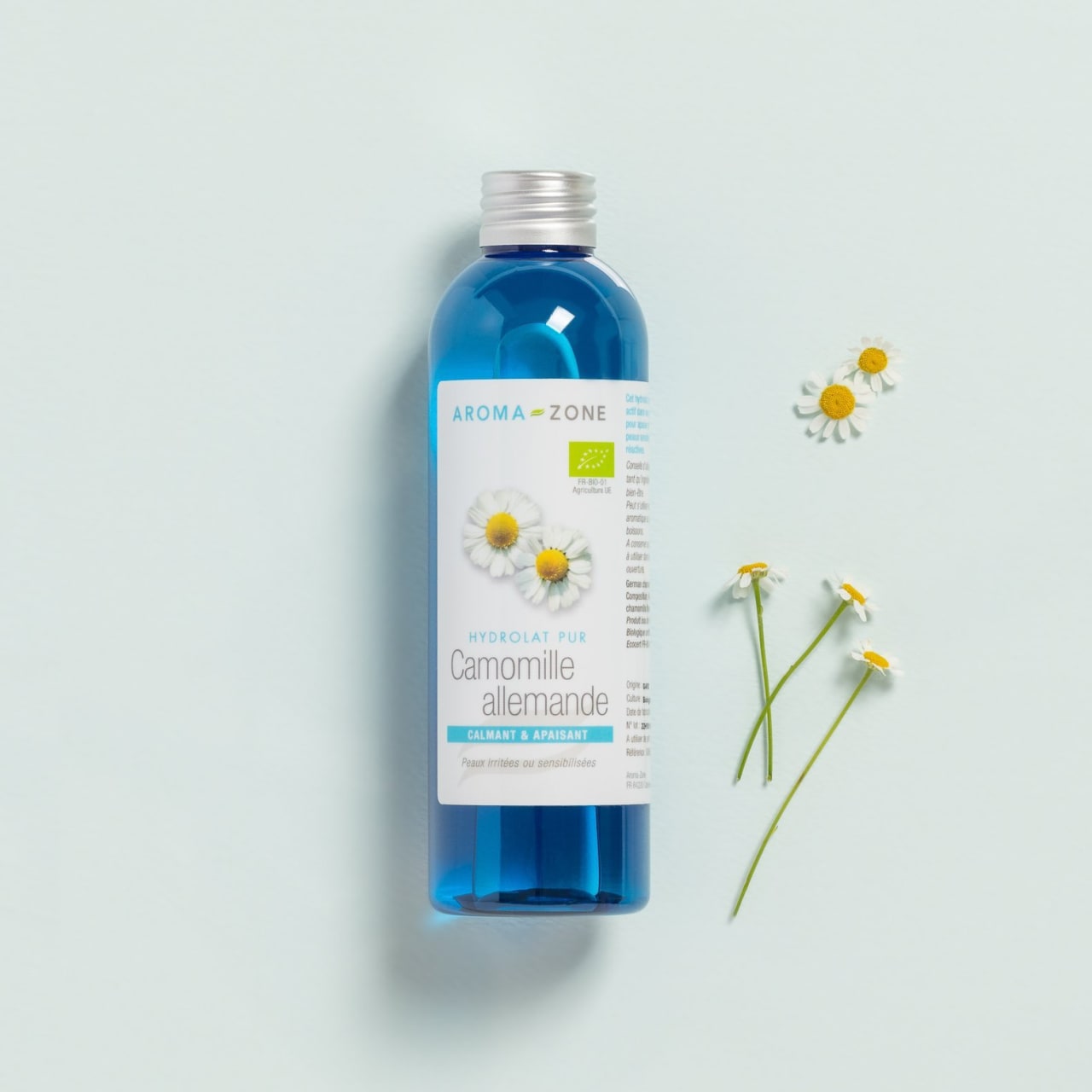
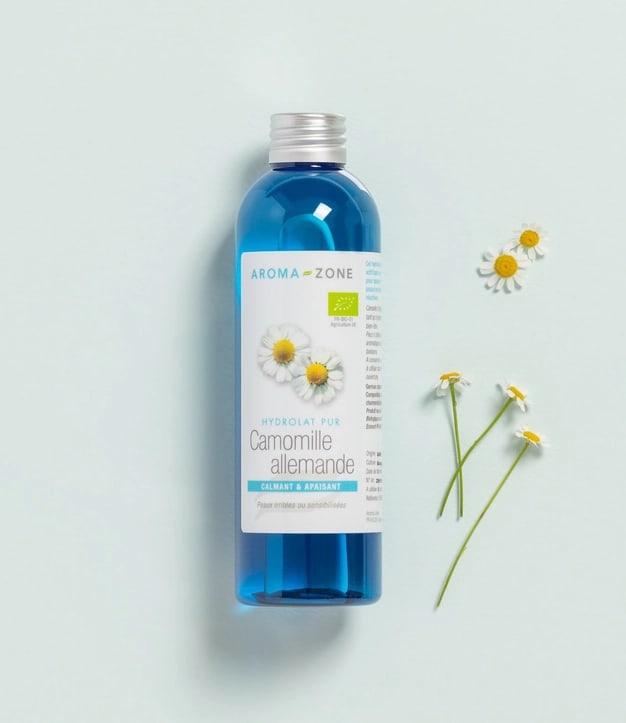
Spotlight on Organic German Chamomile Hydrosol

This hydrosol is renowned for helping to soothe delicate, tight-feeling or itchy skin. It can be incorporated into your homemade creams and lotions designed for sensitive skin. It is also traditionally used to enhance the natural brightness of blonde hair and reveal subtle golden highlights.

How Do You Use German Chamomile to Lighten Hair?

  • Organic German Chamomile Hydrosol: Use it neat as a final rinse at the end of your shampoo routine. You can also combine it with apple cider vinegar to help counteract the effects of hard water and maximise its brightening benefits. A common blend is 6 tablespoons of German Chamomile Hydrosol to 2 tablespoons of apple cider vinegar.

  • German Chamomile Essential Oil: Add a few drops to neutral hair-care bases or homemade formulations. It can be incorporated into shampoos, hair masks or natural brightening sprays to help enhance the appearance of luminous, healthy-looking hair.

Our Other Natural Tips?

  • German Chamomile tea bags: A simple and convenient way to prepare a chamomile infusion. Steep 1–2 tea bags in hot water for around 10 minutes, keeping the container covered. Allow the infusion to cool, then use it immediately as a final hair rinse. For best results, choose a high-quality chamomile tea.

  • Dried German Chamomile flowers: You can also make your own chamomile rinse using dried flowers. Add 70 g of dried flowers to 1 litre of water and simmer for around 20 minutes. Leave to cool before using immediately as a final rinse after washing your hair.

How to Successfully Lighten Your Hair with a Rinse?

  1. Follow your usual hair washing routine. Shampoo your hair and rinse thoroughly. Follow with your conditioner, then rinse again.

  2. Just before stepping out of the shower, gently squeeze excess water from your lengths.

  3. Pour the equivalent of 8 tablespoons of German Chamomile hydrosol over your hair. For easier application, transfer it to a spray bottle and mist it evenly throughout your hair. Massage your lengths to ensure the treatment is distributed evenly along the hair fibre.

  4. Gently squeeze out any excess moisture and, most importantly, do not rinse.

  5. Dry your hair as usual or leave it to air dry. Repeat after every shampoo.

You can also discover all our tips for maintaining a polar blonde colour.

Things to Know Before Use

  • German Chamomile Hydrosol: Store in the refrigerator and use within 6 months of opening. As with any natural substance, there is always a risk of an allergic reaction in sensitive individuals.

  • German Chamomile Essential Oil: A potent ingredient that should be used with care. Follow the recommended dosages provided in the technical data sheet and recipes. Do not use during the first 3 months of pregnancy, while breastfeeding, or on children under 3 years of age. Internal use should only be undertaken under the supervision of a qualified healthcare practitioner. Not recommended for individuals with a history of hormone-dependent cancers. Keep out of reach of children. As a general rule, always perform a patch test by applying your preparation to the inside of the elbow at least 48 hours before use. When using it as a cosmetic ingredient, please refer to the specific precautions for cosmetic use.

Expert Tip

Planning a trip to the beach this summer? The combination of salt water and sunshine is well known for naturally lightening hair, creating that sought after beachy look with soft waves and subtly sun kissed highlights.

However, keep in mind that sea water and sun exposure can also leave your hair feeling dry and damaged. To keep your hair looking its best, we recommend pairing your lightening routine with nourishing and repairing treatments. Don't be afraid to be generous with them. Your hair will thank you for it and look even more beautiful by the end of summer.

Focus on Our Writer, Hélène Betoux

Hélène Betoux is a French beauty journalist specialising in web media. Every day she writes tips, advice, and guides to help consumers choose the right beauty products. With a strong interest in natural, organic, and clean cosmetics, she analyses and shares trends and innovations in the sector.

Bibliography

  1. A Guide to Medicinal Plants

    Debuigne G., Couplan F. Éditions Larousse, 2009, pp. 315–316.

  2. Cosmetic Hair Care

    M. Ait Ourhrouil, L. Dahbi, B. Hassam. Médecine du Maghreb, 1998, No. 72.

Frequently Asked Questions

Frequently Asked Questions