


There are no known contraindications to taking vegan vitamin D3 continuously over the long term in the recommended doses. However, during the summer months, supplementation is not normally necessary during periods of exposure to strong sunlight, as the body produces its own vitamin D.
Calcium and vitamin D: do they have a synergy?
Vitamin D deficiency affects around one billion people of all ages and ethnic origins around the world. This phenomenon is mainly due to lifestyle and environmental factors. Yet vitamin D plays a fundamental role in maintaining the body's ability to function. In this article, discover the fundamental role of the blend of calcium and vitamin D, how to recognise the signs of vitamin D deficiency and the benefits of these compounds.

What is vitamin D?
Vitamin D is a fat-soluble substance that is formed in the skin due to the sun's ultraviolet rays. There are two types of vitamin D: D2, found in mushrooms exposed to the sun, and D3, produced by our bodies when we are exposed to UVB rays, and found mainly in foods such as oily fish. Whether it comes from the skin or from food, the vitamin D we absorb is transformed biologically. It passes through a preliminary stage in the liver and a second in the kidneys to become its active form, called 1,25(OH)2D.
What are the properties of vitamin D?
Vitamin D plays a crucial role in regulating the absorption of calcium in the intestine, thereby promoting its assimilation in the body. The active form of vitamin D, known as 1,25(OH)2D (or calcitriol), has various biological effects on a number of body tissues. This active form is key part of bone health, but also has an effect on healthy metabolic function and immunity.

What are the benefits of Vitamin D?
It contributes to muscle contraction and muscle cell renewal.
Vitamin D plays a key role in the immune system by strengthening the body's defences against viruses.
It is also an essential part of intestinal health, nerve transmission and reducing inflammation in the body.
It promotes bone health: by encouraging the absorption and binding of calcium and phosphorus, which are essential for bone structure. Its role in regulating bone density makes it essential for growth and the prevention of osteoporosis.
What is calcium?
What are the properties of calcium?
Calcium (Ca) is essential for many vital functions, mainly in the form of Ca²⁺ ions. Its ability to lose two electrons allows it to bind easily to other molecules and play a structural role in the body. In the body, calcium is mostly present in the form of calcium phosphate and the majority of our reserves are found in our bones. When calcium levels in the blood fall, it can be released from this reserve to make up the deficit. A prolonged calcium deficiency can therefore have a detrimental effect on bone strength and health.
What are the benefits of calcium?
Bone health: it is abundant in the body, mainly in bones and teeth, where it plays a structural role in bone and tooth formation.
General body maintenance: essential for blood clotting, nerve transmission and muscle contraction, calcium acts as a cofactor for numerous enzymatic reactions. Making sure you get an adequate intake of calcium through your diet or supplements is essential for maintaining your body's overall health.
A closer look at our vegan vitamin D3

Loaded with natural and vegan vitamin D3, this food supplement is recommended mainly to support immunity and preserve bone capital. Known as the ‘sunshine vitamin’, vitamin D is particularly recommended when exposure to the sun is limited. This vitamin D from seaweed comes in the D3 form, which is best assimilated by the body, and is supplied in the form of a neutral-tasting oil, to be measured out in drops for easy absorption.
Why take calcium with vitamin D?
Vitamin D exerts a significant influence on the formation of the 208 bones in the human body as it is part of your calcium metabolism. Its main role is to increase the absorption of calcium from the digestive tract, while also contributing to it being stored in your bone cells in the form of calcium phosphate.
When should I take a course of vitamin D and calcium?
Recognising the signs of vitamin D deficiency
A lack of vitamin D can have a number of consequences for your health, so it may be worth taking a vitamin D supplement if you notice a bone-related issue (as it is co-dependent on the effectiveness of calcium), muscle weakness or a weakening of the immune system, leading to general tiredness and weakness.
It is also important to note that the symptoms of vitamin D deficiency can vary according to individual circumstances. If you think you may be at risk of vitamin D deficiency, it is advisable to consult a healthcare professional to assess your vitamin D status and discuss the measures to be taken to prevent or halt a deficiency.
What are the signs of calcium deficiency?
Bone problems are one of the first signs. As calcium is a major component of bone, a deficiency can lead to weakening of the bones, increasing disorders such as osteoporosis. In the most serious cases of deficiency, there may be an increased risk of bone fractures.
Dental problems are another warning sign. Calcium is essential for dental health. A lack of calcium can increase the risk of tooth decay and other dental problems.
Lastly, muscle cramps may indicate a calcium deficiency. This mineral plays a crucial role in muscle contraction, and a lack of it can lead to cramps and muscle weakness.
How do I take a course of vitamin D?
Desired effects
Vitamin D improves calcium absorption in the intestines, which is crucial for bone formation and strength. Without a sufficient intake of vitamin D, only 10-15% of dietary calcium is absorbed, which can lead to bone weakness and increase the risk of fractures. The importance of vitamin D supplementation in people at risk of osteoporosis has been demonstrated in the 2019 journal of rheumatism (9).
Dosage
How many drops of our vegan vitamin D3 do you need?
Adults: 2 to 5 drops per day (800 to 2000 IU)
Pregnant and breastfeeding women: 5 drops per day (2000 IU)
People with increased needs (people with dark or matte skin living in latitudes with little sunshine, the elderly, sportspeople, etc.): 5 drops per day (2000 IU)
Teens (12 to 18 years old): 2 to 4 drops per day (400 to 1600 IU)
Children (3 to 11 years): 1 drop per day (400 IU)
Please note: depending on the number of drops taken per day, one bottle represents a course of treatment lasting around 2 months.
Contraindications
This product is not a substitute for a varied and balanced diet. Do not exceed the recommended daily dose and it must not be taken by children under 3 years of age. In addition, pregnant or breast-feeding women should consult a health professional before taking any supplements. We also recommend that you seek the advice of a health professional before you give children any supplements.
What are the best combinations with vitamin D and calcium?
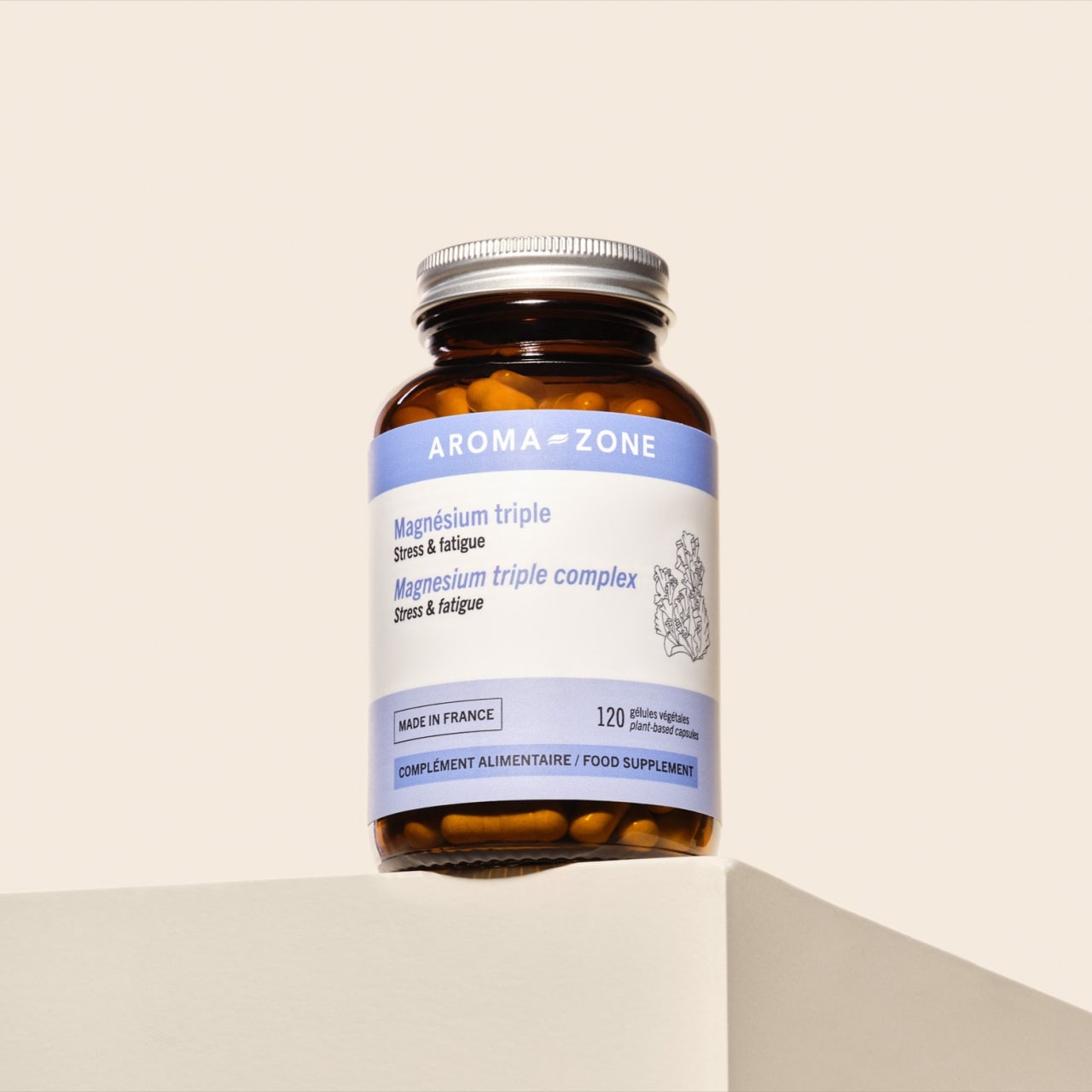
Triple magnesium and vitamin D
Magnesium plays a crucial role in regulating the concentration of calcium in bones and soft tissue. According to a 2022 study, it helps to convert vitamin D into its active form, which improves calcium absorption. This food supplement combines 3 forms of magnesium for optimum effectiveness and guaranteed high bioavailability. Magnesium also helps to reduce fatigue and ensure the nervous system functions properly, promotes muscle function and normal protein synthesis, and contributes to bone health.
Zinc and vitamin D
Zinc is essential for immune health, but it also influences bone metabolism. It supports the activity of osteoblasts (bone-making cells), and its combination with vitamin D has been shown to improve bone mineral density. A study in the Journal of Bone and Mineral Research confirmed that zinc combined with vitamin D reinforced the latter's effect on improving bone health (10).
How can I boost my vitamin D and calcium intake?
1. To make sure you get a good intake of calcium and vitamin D, we recommend adapting your diet to include foods containing these two nutrients:
Calcium-rich foods include: dairy products such as milk, cheese and yoghurt, as well as certain green leafy vegetables such as rocket, broccoli and kale. Nuts and seeds are also high in calcium, particularly almonds, sesame and chia, which can provide between 250 and 600 mg per 100 g.
Foods high in vitamin D include: oily fish such as salmon, mackerel and tuna. Egg yolk and cod liver oil are also very good sources of vitamin D.
2. Moderate exposure to the sun is also a natural source of vitamin D. The main source of vitamin D for most people comes from skin synthesis as a result of exposure to the sun, generally between 10 am and 3 pm in spring, summer and autumn. Vitamin D produced in the skin has a blood life of at least twice that of ingested vitamin D. Several factors, such as skin pigmentation, ageing, variations in the angle of the sun, the season or the time of day, also have a significant influence on the production of vitamin D3 by the skin.
Precautions for use
There are no harmful effects from a small one-off overdose of vitamin D3. In this case, simply reduce the dose for the following day or skip a dose to rebalance the overall dosage. It is important, however, to avoid chronic overdosing. Always follow the recommended doses for food supplements.
Expert advice
For food supplements to be effective, it is important to take them at a fixed time: we therefore recommend that you take your capsules at the same time every day.
Find out more

Can I take Vitamin D3 continuously?

Can I take Vitamin D3 continuously?

Do calcium and vitamin D3 requirements increase with age?

Do calcium and vitamin D3 requirements increase with age?
Yes, with age, the body becomes less efficient at absorbing calcium and synthesising vitamin D, which increases the risk of deficiency.
Spotlight on our editor: Gipsy Dauge

Gipsy is a graduate of ESJ Paris. After 10 years' experience in the general and women's press, she decided to move into writing about health and well-being. With a certificate in yin yoga, she now puts her pen, as well as her yoga mat, to excellent use. She cares deeply about what she writes. She has a deep commitment to helping readers incorporate tips into their daily lives to take care of both themselves and their environment. She hopes to inspire you to follow a balanced and fulfilling lifestyle with her writing.
Bibliography
1
Vitamine D : un acteur majeur en santé ? (2010).
2
Mithal, A., Wahl, D. A., Bonjour, J.-P., Burckhardt, P., Dawson-Hughes, B., Eisman, J. A., & Morales-Torres, J. (2011). Vitamin D: The "sunshine" vitaminJ
3
Berta, F. (2015). La vitamine D (Coll. Profession santé).
4
Heaney, R. P., & Weaver, C. M. (2019). Calcium Intake and Health. Nutrients 11(7), 1606.
5
Aubineau, N. (2012). Brain dietetics: The new deal.
6
Yates, J. (2022). La santé en rhmes - Vivre sans déprime : Le bien-être par la diète, le sport et l'assiette.
7
Fleet, J. C. (2022). Vitamin D-Mediated Regulation of Intestinal Calcium Absorption. Nutrients, 14(16), 3351.
8
Amin, N., Clark, C. T., Taghizadeh, M., & Djafarnejad, S. (2019). Zinc supplements and bone health: The role of the RANKL-RANK axis as a therapeutic target.
9
Souberbielle, J.-C., Cormier, C., Cavalier, E., Breuil, V., Debiais, F., Fardellone, P., Guggenbuhl, P., Javier, R.-M., Legrand, E., Lespessailles, E., Paccou, J., Thomas, T., & Cortet, B. (2019). Update: Vitamin D supplementation in France in osteoporotic patients or patients at risk of osteoporosis: recent data and new practices.
10
Reid, I. R. (2014). Calcium supplements: benefits and risks. Journal of Internal Medicine, 277(3), 283-294.