


Guide to essential oils

Essential oil of Bourbon geranium

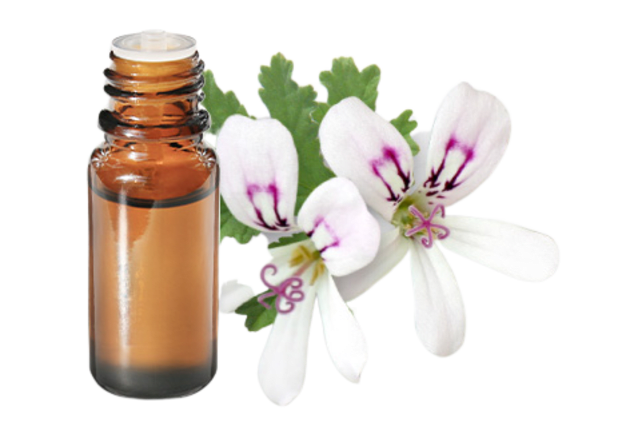
Ideal for use in skin care products, Bourbon Geranium essential oil is known as a skin tonic. Astringent, Geranium Bourbon essential oil clarifies and brightens the complexion. Rich in purifying active ingredients, Geranium Bourbon essential oil is also reputed to combat skin blemishes. When diffused, Geranium Bourbon essential oil purifies the air and reveals a soft, rosy fragrance. Its sweet, floral fragrance is also popular in perfumery.

How to use

  • Skin application and massage

    Skin application and massage

    Suitable

  • Cosmetic active ingredient

    Cosmetic active ingredient

    Appropriate

  • Diffusion

    Diffusion

    Appropriate

  • Aromatherapy bath

    Aromatherapy bath

    Appropriate

  • Food grade

    Food grade

    Appropriate

Features

Properties and uses

Precautions

Find out more

Features

Production process

Complete steam distillation

Part of the plant used

Leaves

Botanical name

Pelargonium graveloens cv Bourbon

Warning

The properties, information and methods of use below are quotes from reference books or websites on aromatherapy, hydrolatherapy and phytotherapy. This general information is provided for informative purposes only and in no way constitutes medical guidance. Under no circumstances can this information be used as a substitute for a medical diagnosis, consultation or follow-up, nor can it incur our liability. We recommend that you consult the guide to essential oils before using them, so that you are aware of any precautions that need to be taken. If in doubt, consult a doctor before using essential oils.

Properties and uses

Bourbon Geranium essential oil is traditionally used for : Acne, spots, eczema, chapped, craked skin, wrinkles, fine lines, fungal infections, insect repellent, nosebleeds, stretch marks.

Health

Beauty

Fragrance

Kitchen

Find out more

Thanks to its content of compounds with powerful antifungal and antiseptic effects,Bourbon Geranium essential oil is widely recognised in aromatherapy for helping with fungal skin infections, minor infections, small wounds and insect bites.

Properties

Bourbon Geranium essential oil is renowned for the following health benefits:

  • Rich in antiseptic, antibacterial and antifungal active ingredients

  • Rich in anti-inflammatory active ingredients

  • Antispasmodic, relaxing

  • Tonic, astringent, haemostatic, healing

  • Renowned for toning venous and lymphatic circulation

  • Rich in calming and pain-relieving active ingredients

  • Contains compounds that have been shown to repel mosquitoes

Uses

Bourbon Geranium essential oil is traditionally used to improve the following conditions:

  • Skin conditions, eczema, dermatosis

  • Small wounds, superficial cuts

  • Skin fungal infections

  • Rheumatism

Synergies

  • Soothing, skin regenerating : essential oils of Gum Rockrose, True Lavender, yarrow, German Chamomile.

  • Helps circulatory health: Essential oils from the mastic tree, Mediterranean cypress essential oils, Calophylla inophylla carrier oil

  • Quiet summer nights : Lemon Eucalyptus and Lemongrass essential oils

In practice

Quiet summer nights: diffused into the air.

Quiet summer nights: Mix into your oil blend. Apply a few drops of your mixture to the wrists, ankles, etc. IN PRACTICE

For skin problems: Mix into your oil blend. Apply a few drops of your mixture locally to the problem area.

Precautions

  • Do not use during the first 3 months of pregnancy, while breast-feeding or on children under 3 years of age.

  • May be irritating in large doses; always dilute well before skin application.

  • Avoid contact of pure essential oil with the eyes.

  • Keep out of reach of children.

  • Certain natural compounds contained in this essential oil may present a risk of allergy in certain sensitive individuals when the essential oil is incorporated into a cosmetic composition (according to the 7th Amendment of the European Directive on cosmetic products (2003/15/EC)): citronnellol, geraniol, linalool and, to a lesser extent, citral (neral and geranial), limonene.

  • As a general rule, always test-apply your mixture in the crease of the elbow at least 48 hours before use.

  • For use as a cosmetic ingredient, please refer to the specific precautions.

Find out more

Native to southern Africa, pelargonium - or florists' geranium - belongs to the Geraniaceae family. TheGreek origin of the plant's botanical name is " geranos ", meaning crane, because the fruit of the plant resembles the bird's beak. It was imported to Europe at the end of the 16th century. Its pretty, fragrant pink, white or red flowers were a big hit, and it quickly became very fashionable at court and in the gardens of French châteaux.

Equivalents

Essential Oils

1 ml = approximately 35 drops (with our Aroma-Zone dropper caps)

Carrier oils

1 pump (Aroma-Zone aluminium pump) = approx. 0.15 ml

Mass / Volume conversion (for a liquid)

Mass (g) = Density x Volume (ml) at 20°C

Further information

1 full teaspoon = between 3 and 4.5 ml

1 full tablespoon = between 7.5 and 10 ml


However, these spoon ratios depend on a number of factors (e.g. viscosity of the liquid, temperature, depth and size of the spoon, rheological behaviour of the liquid), and we strongly advise you to use precise measuring equipment, such as graduated test tubes, graduated pipettes, and precision scales.

Aromatherapy recipes from the bibliography

EO = Essential Oil VO = Carrier Oil or Macerated Oil

Flower oil (A. Pataud)

Kitchen

How to use: Mix 1 drop of Ylang-Ylang (Cananga odorata) essential oil, 1 drop of Geranium (Pelargonium graveolens) essential oil and 5 cl of rapeseed oil. To give your dishes a bucolic touch.

Flower syrup (A. Pataud)

Kitchen

Directions for use: Mix 1 drop of Ylang-Ylang (Cananga odorata) essential oil, 1 drop of Geranium (Pelargonium graveolens) essential oil and 20 cl of syrup. Add a few spoonfuls to fruit salads.

Bibliography

1

"L'Aromathérapie exactement"

P. Franchomme and Dr D. Pénoël

2

Essential oils as medicine for the future

Dr Jean-Pierre Willem

3

'Aromatherapy - Healing with essential oils'

Dominique Baudoux - Editions Amyris

4