Royal jelly cannot be considered an anti-inflammatory in the medical sense of the term. Only medicinal substances can be awarded this status. That said, several studies have confirmed its anti-inflammatory effects. It is thought to increase the production of certain types of cytokines, which are essential for the immune response to foreign bodies. Therefore, it could prove helpful for treating inflammatory phenomena.
What are the benefits of royal jelly?
Royal jelly has a range of benefits for humans from health and well-being to skincare. It is a major source of vitamins, trace elements, amino acids and fatty acids, particularly 10-HDA. "Bee milk" owes most of its properties to this active ingredient! That said, the benefits of royal jelly have only undergone a few clinical studies. When it comes to skin, hair, diabetes, cancer, hypertension and so forth, many claims are based on scientific conclusions that are too weak to be recognised. Although it cannot be described as a general cure-all, this valuable substance is beneficial nonetheless. If you want to make the most of its nutritional richness, you can choose between supplements and topical products.

A closer look at the origin of the benefits of royal jelly
Royal jelly is a substance secreted by "nurse" bees. Known as "bee milk", it stimulates worker bee and queen bee growth. It is, therefore, one of the most beneficial bee-derived products in terms of nutritional value.
But above all, royal jelly is the the queen bee's favourite food. She feeds on it throughout her life. This privilege gives her outstanding physical characteristics, as well as exceptional fertility. She can lay up to 2,000 eggs a day, which means she can keep the swarm alive on her own.
Some beekeepers believe that the benefits of royal jelly are also responsible for the queen's exceptional lifespan. She can live up to 5 years, compared with 5 weeks for a worker bee.
The many benefits of royal jelly
The rich, complex composition of royal jelly makes it suitable for a wide variety of daily applications for humans. It is particularly notable for its high B group vitamin content (especially B5). It also contains a unique fatty acid found nowhere else in nature: 10-hydroxy-2-decenoic acid (10-HDA). These particular features are the reason for the main benefits associated with its consumption.
Vitamins in royal jelly
B1 (thiamine), B2 (riboflavin), B3 (PP), B5 (pantothenic acid), B6 (pyridoxine), B8 (vitamin H), B9 (folic acid), B12 (cobalamin). B group vitamins are all present in bee milk's composition. Most of them (B2, B3, B8) are necessary for metabolising carbohydrates, proteins, lipids and amino acids. Vitamins B1 and B12 are also involved in the proper functioning of the nervous system. Vitamin B5, meanwhile, is involved in the metabolism as a whole, as well as in hormone and neurotransmitter synthesis.
Vitamin C (ascorbic acid). This plays a key role in the body's immune defence system.
Vitamin E (tocopherol). This is a powerful antioxidant, a substance capable of breaking free radical chain reactions. It, therefore, protects our cells from accelerated ageing.
The case of 10-hydroxy-2-decenoic acid (10-HDA)
10-Hydroxy-2-decenoic acid (or 10-HDA) is an active ingredient that is only found in royal jelly. It is highly concentrated, representing between 2 and 5% of the jelly's mass.
In the past, 10-HDA was known as the "R factor" (for "rejuvenation factor"). In fact, it is thought to have the ability to almost slow down the body's ageing process. Several hypotheses also suggest that it has anti-tumour and immunomodulating properties. In skin and hair care, it is thought to play a role in collagen synthesis and the regulation of melanogenesis (production of the pigment melanin).
Generally, this is the active ingredient that researchers study when investigating the benefits of royal jelly. However, today's research consensus is that it is all the bioactive components of royal jelly that make it beneficial for various skincare, hair care and wellness products.
The other characteristic components of royal jelly
Royalisine (or defensin). This peptide contains gamma globulins, amino acids that are essential for the immune system to function properly. It has broad-spectrum antibacterial activity (Gram-negative and Gram-positive bacteria).
Royalactin (57-kDa protein). This protein is thought to be responsible for queen bees' rapid growth. It is thought to affect cell spread and increase the queen's fertility by activating a specific enzyme: S6 kinase.
Asparagine. This amino acid accounts for 1/5 of the peptide content in royal jelly. Although not essential to the body, it is often recommended for all those who do regular sports, as it increases your physical stamina.
Acetylcholine. Each gram of royal jelly contains around 1 milligram of acetylcholine. This component is a neurotransmitter. It is involved in the central and peripheral nervous systems.
What are the health benefits of royal jelly?
Royal jelly and immunity
Several animal studies appear to confirm the immunomodulating properties of royal jelly. For example, research from 2023 concluded that its constituent proteins improved mice's immunity by enriching their intestinal microbiota. An earlier study in 2016 also concluded that administration of royal jelly led to an increase in antibody production in a group of Japanese quails.
Did you know? Because of its alleged immunity-boosting benefits, a course of royal jelly is often recommended to build up your resilience during seasonal transitions.
Royal jelly and type 2 diabetes
A scientific publication published in 2016 suggests that royal jelly could have positive effects on blood sugar levels in type 2 diabetics. The patients tested ingested 1000 mg of jelly 3 times a day for 8 weeks. Another study went so far as to compare its benefits with those of insulin. However, other studies found no significant improvement. The results are, therefore, still too isolated to allow us to conclude that it should be legitimately used to treat diabetes.
Royal jelly and hypertension
The hypotensive effects of royal jelly also underwent a number of investigations. In particular, its peptide and acetylcholine content have been studied in in vitro tests and on animals. The results show that royal jelly may reduce blood pressure. If confirmed, this could be beneficial for preventing of heart disease. As this may be the case, it is not recommended for use in conjunction with drugs that reduce your blood pressure (risk of hypotension).
Royal jelly and cancer
Royal jelly's benefits also extend to the field of oncology. Some studies have shown that it inhibits the growth of tumours and/or metastases involved in certain cancers. It is also thought to have chemoprotective effects for patients undergoing treatment. However, be cautious: other research claims that royal jelly encourages cell growth and increases them. Therefore, there is a risk that it may have the opposite effect if it is being used to treat cancer (spread of cancer cells).
Other suggested potential effects
Improves menopausal symptoms (oestrogenic activity).
Hepatoprotective (liver protection) and nephroprotective (kidney protection) effects.
Helps treat certain ulcers.
Supports sexual function and fertility.
Combats fatigue and depression.
Anti-cholesterolaemic properties (lowers cholesterol levels).
Improves cognitive function (neuroprotective effects).

What are the benefits of royal jelly for the face and skin?
Healing properties
In dermatology, bee milk has been studied for its healing properties. Recent scientific papers have concluded that its composition encourages the cell migration involved in healing skin lesions. It could, therefore, be beneficial in helping injuries to heal more quickly. However, this research was limited to animals and in vitro tests on human cells. Therefore, further research is still needed.
Moisturising properties
In cosmetics, royal jelly is traditionally used as a moisturising agent in skincare creams. It helps to maintain optimum moisture levels in the upper layers of the epidermis. In fact, it keeps skin looking healthy and plump. This is due to its high concentration of proteins and sugars. These two components 'trap' water, reducing insensible loss through evaporation.
Antioxidant properties
Studied for its effects on cell senescence, royal jelly also has antioxidant properties. In practical terms, this means that it reduces the damage (particularly visible damage) caused by free radicals. Therefore, it plays a role in preventing accelerated skin ageing. It could also supports collagen synthesis, a fibrous protein that serves as the 'foundation' of the skin's structure. This benefit is attributable to 10-HDA.
What benefits does royal jelly have for hair?
Hair tonic
Royal jelly contains a number of substances, such as amino acids, that are essential for beautiful hair. In particular, it could support the natural production of keratin, the main protein in hair. In doing so, it can make hair stronger, shinier and more supple. A source of antioxidants, it is also thought to protect the hair fibre from external damage. Therefore, it could be helpful for preventing hair breakage, dehydration and dullness.
Hair growth
Among the many benefits of royal jelly for the hair, some specialists cite its effects on hair growth. For example, if it is applied to the scalp, it is said to stimulate hair follicle activity. At the same time, its richness in vitamin B8 (biotin) and vitamin B5 makes it a helpful active ingredient for preventing excessive hair loss. Therefore, it is likely to be beneficial for alopecia or post-partum hair loss.
Freeze-dried, fresh, organic, capsules… Which food supplement should I choose?
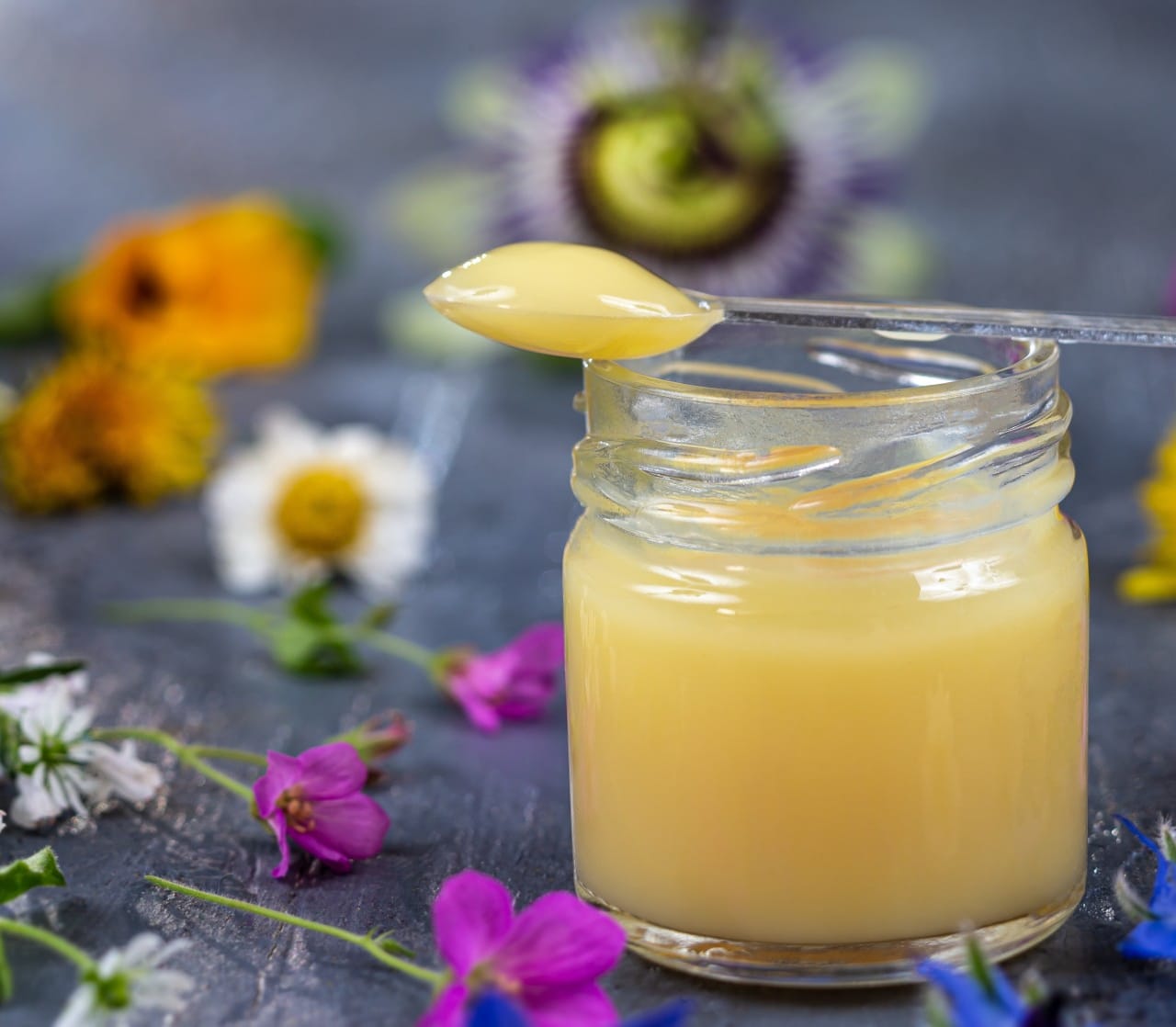
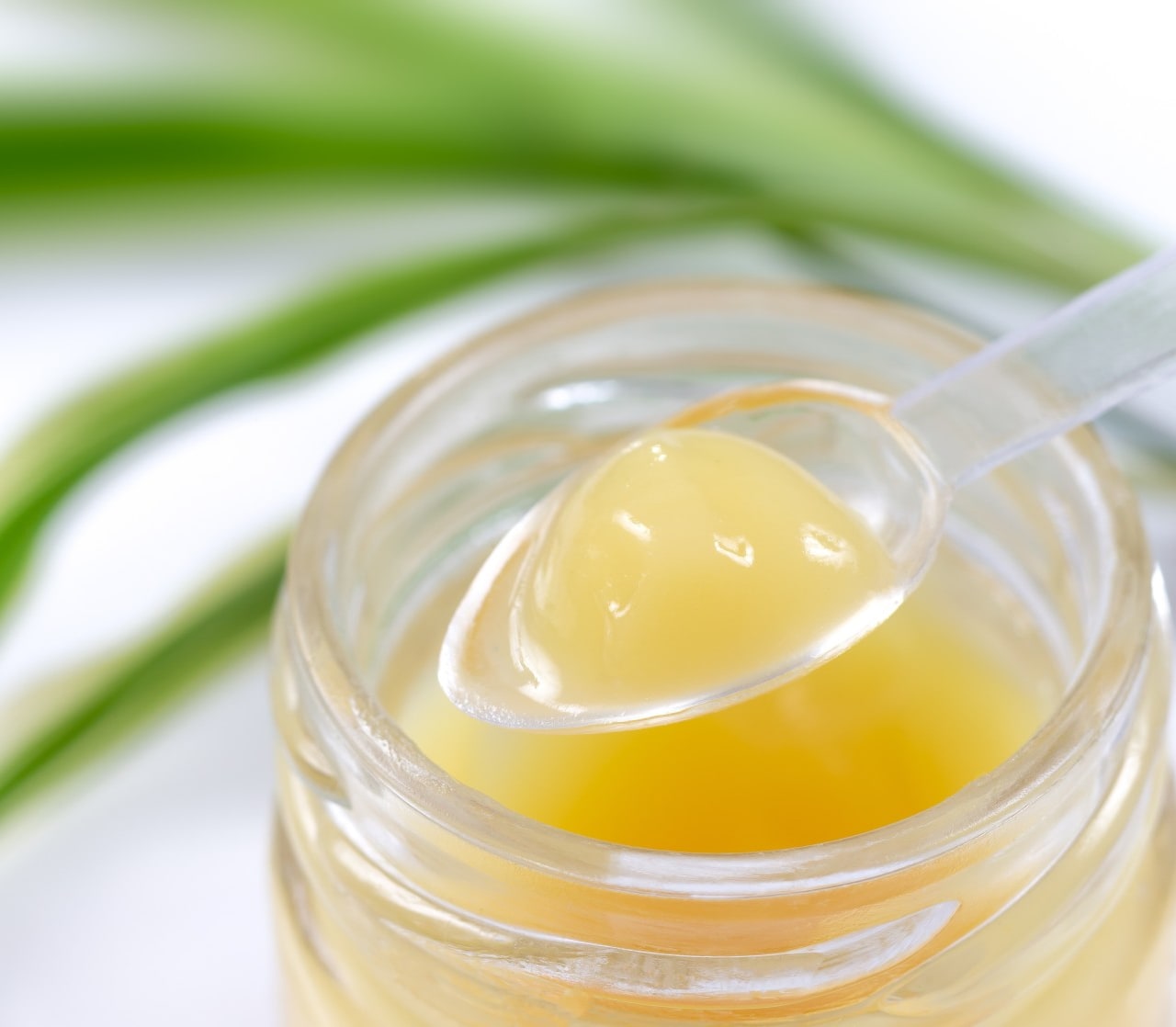
The benefits of pure royal jelly. It is undiluted and bottled immediately after harvesting. Its freshness guarantees optimum bioavailability. However, it is highly perishable and must be stored with care (at less than 5°C, in an airtight container).
The benefits of freeze-dried royal jelly. This is cold-dehydrated bee milk in powder form. This technique preserves all the jelly's precious nutrients. It is more stable than fresh jelly, but must be kept away from moisture.
The benefits of organic royal jelly. It is certified organic by an independent body. This means that it meets strict specifications in terms of quality, harvesting ethics and production.
The benefits of royal jelly capsules. Unlike fresh jelly, royal jelly capsules enable you to enjoy all its benefits without having to take it sublingually. Therefore, they are ideal for those who cannot stand the sour taste of the jelly.
The benefits of food supplement ampoules. They are easy to use, as the daily dose has already been prepared for you. Royal jelly is often mixed with water (or fruit juice, ideal for children) to help dilute it.
The benefits of the most common bee milk combinations
There are fresh royal jelly treatments, as well as food supplements based on royal jelly. The latter generally focus on combinations of active ingredients designed to enhance the benefits of pure royal jelly. Here are some guidelines for choosing your ampoules or capsules.
Honey and royal jelly: for flavour
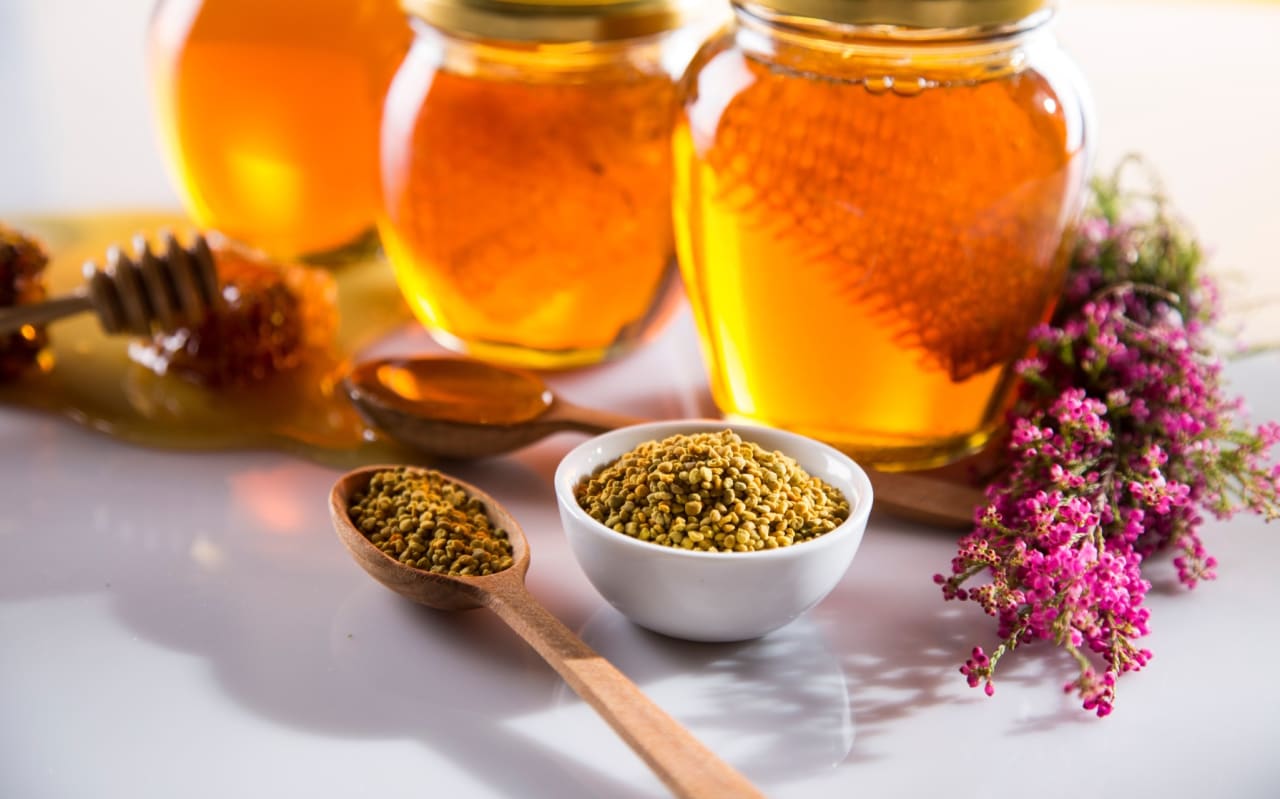
We prefer this blend to make the dose of royal jelly more pleasant. The natural sugar in honey softens the rancid, acidic taste of the pure jelly. Honey has also long been recognised for its beneficial effects on the digestive system and its antioxidant properties.
Ginseng and royal jelly: benefits for vitality
This combination is often recommended for athletes or people suffering from physical or mental fatigue. It is said to have tonic and stimulating properties for the body. Ginseng is an adaptogen plant whose name literally means "root of life".
Pollen and royal jelly: benefits for immunity
Pollen and royal jelly have a similar composition. When they are combined, they are thought to support the body's natural defence mechanisms. Pollen is considered a superfood. It contains 20 of the 27 amino acids essential to the body's physiological functions.
Royal jelly and propolis: antibacterial benefits
Propolis is a mixture of resinous and gummy substances, salivary secretions and beeswax. It is renowned for its purifying effects. It is ideal in combination with royal jelly during the winter to prevent mouth discomfort and inflammation (coughs, breathing difficulties, etc.).
Find out more

Is royal jelly anti-inflammatory?

Is royal jelly anti-inflammatory?

What are the contraindications to royal jelly?

What are the contraindications to royal jelly?
It is not recommended for people with allergies to honey, grasses, bee-derived products or bee stings. Taking it orally is contraindicated for people on anticoagulant therapy or with hormone-dependent cancers (breast, prostate, ovary, uterus, etc.). Several adverse effects have also been observed in people suffering from asthma and eczema. As a precautionary measure, royal jelly should be avoided by pregnant and/or breastfeeding women.

Dosage: how should royal jelly be taken?

Dosage: how should royal jelly be taken?
It is best taken in the morning on an empty stomach, a while before your first meal of the day. Follow the dosage specific to the royal jelly food supplement you have chosen. Have you chosen a fresh jelly packaged in a small jar? Most specialists recommend consuming 500 mg of jelly a day on average. Place the jelly under your tongue and allow it to melt. Ask a health professional for advice if you have any doubts about the dosage.
Spotlight on our specialist editor, Hélène Betoux

Hélène Betoux is a French beauty journalist specialising in web media. Every day she writes tips, advice and guides to help consumers choose the right beauty products. With a strong interest in natural, organic and clean cosmetics, she analyses and shares trends and innovations in the sector.