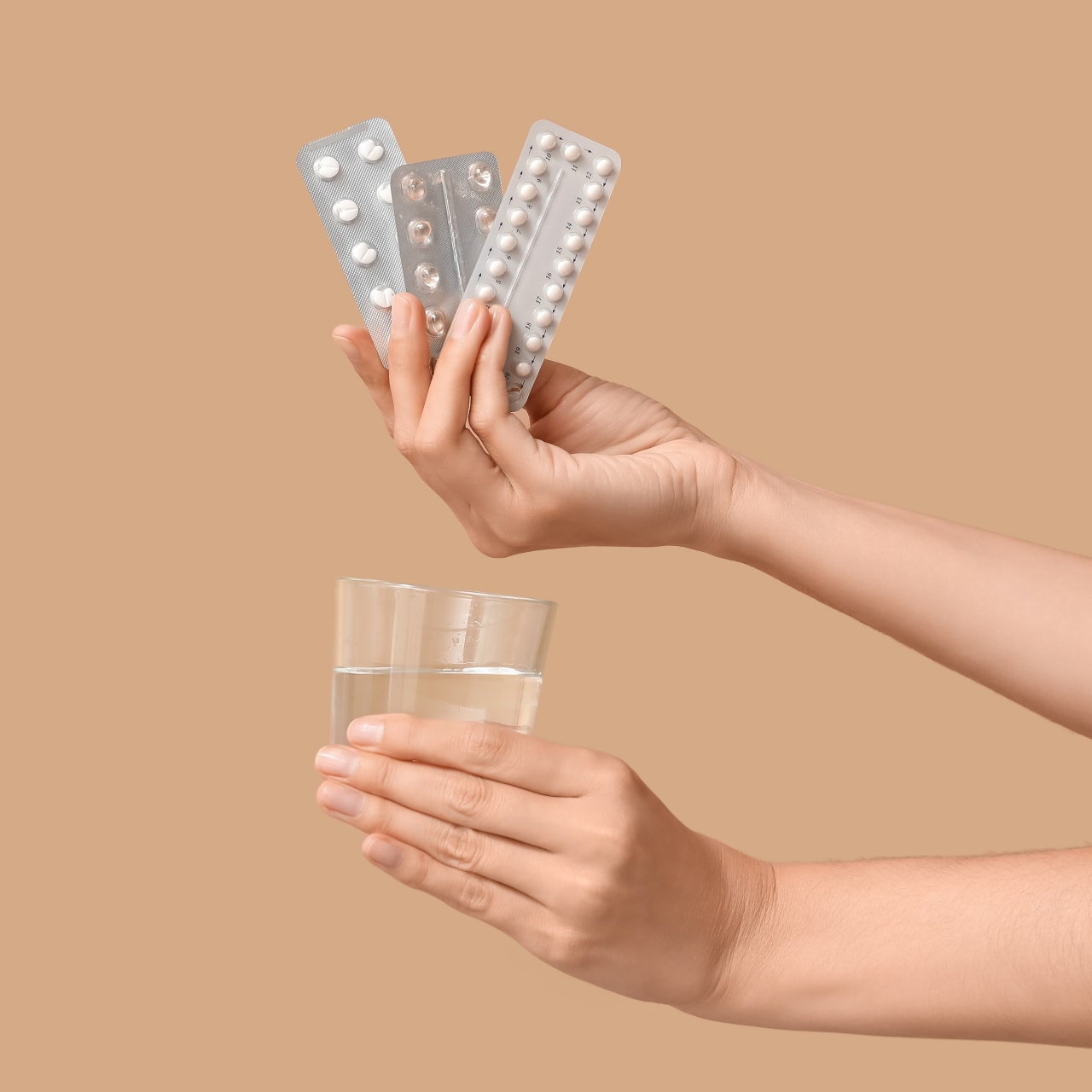
The morning-after pill falls into the category of emergency hormonal contraception. It can be obtained free of charge and without a prescription from a chemist. It is used to prevent fertilisation when unprotected sex has taken place or when there has been a mishap with a usual method of contraception, such as a torn condom or a missed contraceptive pill. It works only before ovulation, i.e. before the ovary releases an egg.
There are two active ingredients: levonorgestrel, a synthetic progestogen, and ulipristal acetate, a selective progesterone receptor modulator. The first must be taken within 72 hours of intercourse. The second remains effective for up to 120 hours, or five days. These substances do not cause a termination of pregnancy: they act before fertilisation and are therefore not equivalent to an abortion (1).
In which situations should it be taken?
This emergency contraception is intended for any woman who has had unprotected sex or whose usual contraceptive method has failed. It may be considered:
if you’ve missed a pill, especially at the start or end of a pack
when a condom has broken or slipped off
if a vaginal device (ring, diaphragm) has been inserted incorrectly or removed too early
or after unprotected sex.
The aim is to prevent fertilisation before it occurs. However, its effectiveness depends on the stage of the menstrual cycle: the pill is only effective if ovulation has not yet taken place.