
A chalazion can appear on either the upper or lower eyelid. It develops in the thickness of the eyelid, near the Meibomian glands. Its location simply depends on which gland is affected.
Swollen eyelid? The right steps to take to soothe a chalazion naturally
One morning, your eyelid seems a little swollen, a small painless lump has formed, and you feel discomfort every time you blink. This is probably a chalazion, a benign but often uncomfortable inflammation. Discover the right natural reflexes to adopt to soothe the area, as well as hygiene rules, and learn how to tell the difference between a chalazion and a stye.
Reading time: 0 min.
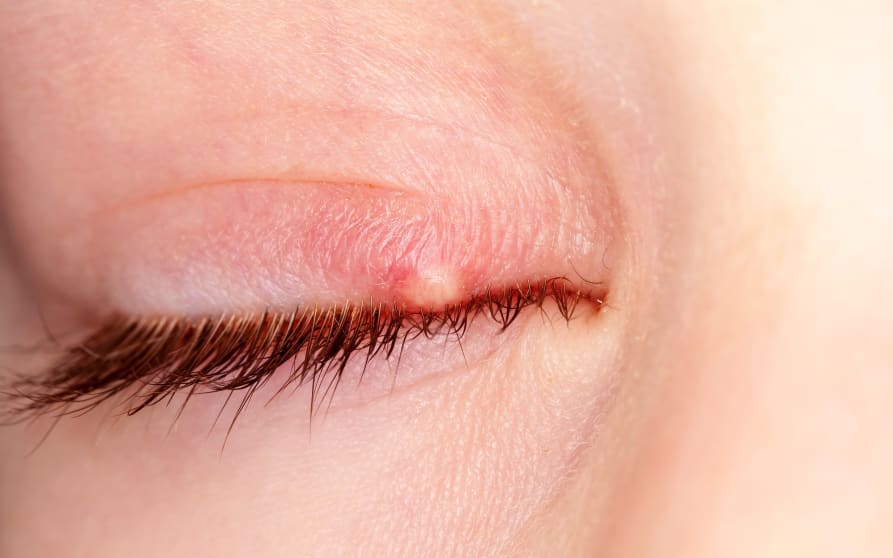
What is a chalazion?
A chalazion is a benign cyst that forms on the eyelid. The area may be slightly swollen, with a feeling of tension, but generally without sharp pain. It results from the obstruction of a sebaceous gland called the Meibomian gland, which is responsible for producing the lipid film in tears. When the gland's duct becomes blocked, sebum gradually accumulates and causes a localized inflammatory reaction. The affected area may appear slightly swollen, with a feeling of tension or tightness, often without sharp pain but likely to interfere with eye movement. This accumulation can also contribute to eye congestion, causing a feeling of heaviness or eye strain upon waking or after prolonged exposure to screens.
How can you tell the difference between a chalazion and a stye?
Although chalazions and styes look similar, their origins are different.
A stye is the result of an acute bacterial infection, often red, hot, and painful, sometimes with a small white dot. A poorly healed stye can sometimes turn into a chalazion. A chalazion, on the other hand, is a chronic, non-infectious, painless inflammation that develops more slowly.
To learn more, discover the natural treatments for styes.
What are the possible causes?
There are several possible causes for the appearance of a chalazion.
Eye fatigue and dry eyes
Prolonged eye strain (screens, artificial light, lack of blinking) can disrupt the quality of the tear film. As a result, the Meibomian glands function less efficiently, which promotes the thickening and accumulation of sebum. This dryness creates conditions conducive to blockage of the ducts and the development of a chalazion.
Makeup residue around the eye and poor eyelid hygiene
Traces of makeup that have not been properly removed, especially along the lash line, can gradually clog the pores of the sebaceous glands. This is sometimes compounded by poor eyelid hygiene or the use of unclean accessories (brushes, sponges), which can cause local inflammation.
Pollution and environmental aggressors
Fine particles, dust, and dry air (heating, air conditioning) weaken the surface of the eye. Repeated exposure to these irritants can disrupt the protective film on the eye and cause the glands to become congested, increasing the risk of chalazion.
Wearing contact lenses
Wearing contact lenses, especially for long periods of time or if they are poorly fitted, can increase dry eye symptoms and alter the distribution of the tear film. This can disrupt the normal functioning of the Meibomian glands and make them more prone to blockage.
Allergic predisposition
People who are prone to allergies may be more vulnerable to eye discomfort. This condition sometimes leads to repeated rubbing of the eyes and low-grade inflammation of the eyelids, which can disrupt the functioning of the Meibomian glands.
Rosacea and inflammatory conditions
Rosacea can also promote the development of a chalazion. This chronic skin condition is often accompanied by increased skin sensitivity. Persistent inflammation can disrupt the functioning of the Meibomian glands, thicken their secretions, and facilitate their obstruction, creating a breeding ground for this type of congestion.
What are the characteristics of this type of cyst?
Small lump under the eyelid: a rounded mass, often well defined, that appears gradually. It can be located on the upper or lower eyelid and develop slowly over several days.
Localized swelling: the eyelid may appear thickened or slightly swollen, with a feeling of tension, especially upon waking or when blinking;
No sharp pain: unlike a stye, a chalazion is generally painless. However, a diffuse discomfort may be felt, especially if the area is congested.
Discreet or non-existent redness: the skin often remains relatively unmarked, although slight redness may appear when the inflammation is more active;
Feeling of heaviness in the eye: some people describe visual discomfort, tired-looking eyes, or a feeling of "heaviness" in the eye.
Slow progression: the chalazion develops gradually and can persist for several weeks without appropriate treatment.
Our natural solutions to help it heal
Natural approaches are not a substitute for medical advice, but they can help to support eyelid comfort, limit local congestion, and support the natural healing process.
Hydrosols

Organic Cornflower Hydrosol
Traditionally used to soothe tired and sensitive eyes, it helps refresh the eye area and relieve the feeling of swollen eyelids. Applied as a warm or cool compress to closed eyelids for a few minutes, it helps to decongest the area and restore comfort to the eyes. Use once or twice a day, mixed with a little chamomile hydrosol, for example, then apply with a clean compress, avoiding direct contact with the eye.
Contraindications: for external use only. Do not apply inside the eye. In case of accidental contact with the eye, rinse immediately and thoroughly with clean water.
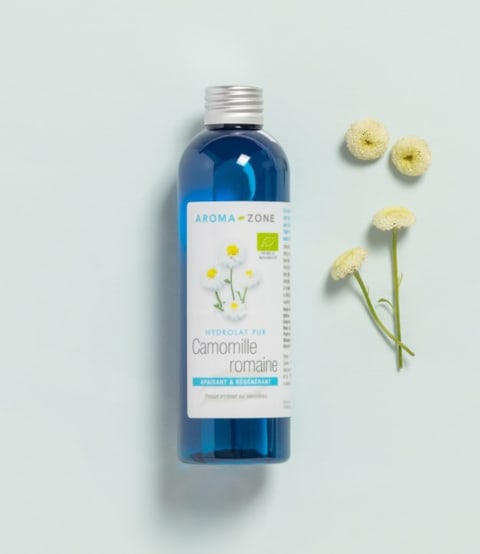
Organic Roman Chamomile Hydrosol
Known for its soothing properties, it is particularly suitable for reactive skin and sensitive areas such as the eyelids. It can help soothe feelings of eye discomfort. Soak a compress in a mixture of cornflower hydrosol and chamomile hydrosol, wring it out slightly, then apply it to the closed eye for 5 minutes, once or twice a day.
Contraindications: for external use only. Do not apply inside the eye. In case of accidental contact with the eye, rinse immediately and thoroughly with clean water.

Organic fine lavender hydrosol from Provence
It is known in cosmetics for its refreshing, soothing, astringent, and purifying properties. It is perfectly possible to mix two hydrosols together for a synergistic compress. Apply gently to the closed eyelid, without rubbing, after mixing it with another hydrosol of your choice.
Contraindications: for external use only. Do not apply inside the eye. In case of accidental contact with the eye, rinse immediately and thoroughly with clean water.
Dietary supplements

Vegan omega-3
Dietary supplement based on DHA and EPA derived from microalgae, in triglyceride form for easy absorption. DHA helps maintain normal vision. Omega-3s are among the supplements recommended for taking care of your vision and eyes.
Contraindications: do not exceed the recommended daily dose. Not suitable for children under 12 years of age. Pregnant or breastfeeding women, children: seek advice from a healthcare professional.

Vitamin C powder
A concentrated source of vitamin C, to be diluted in water or a cold drink. Vitamin C contributes to the normal functioning of the immune system and protects cells against oxidative stress. It also contributes to normal collagen formation, which is useful for maintaining normal skin.
Contraindications: do not exceed the recommended daily dose. For adults only. Pregnant or breastfeeding women should consult a healthcare professional before taking any supplements. Keep out of reach of children.
Targeted accessories & treatments

Eye patches to be soaked
These reusable patches fit perfectly around the eye and allow for even application of skincare products. Soaked in hydrosol or gel, they help keep the product in contact with the eyelid and enhance the refreshing and soothing effect, while offering a moment of relaxation for the eyes. After use, gently rinse the patches with cold soapy water, leave them to air dry flat on a cotton pad, then store them in their bag: they are then ready to be reused.

Organic Aloe Vera Gel
Known for its moisturizing and refreshing properties, it can be applied in a thin layer to the eye patches before application to provide an immediate cooling effect and support skin comfort. Aloe vera gel helps to soothe skin prone to irritation, supports skin hydration, and forms a protective film against external aggressions. It is therefore a valuable ally in caring for the delicate skin around the eyes and around the chalazion.
Contraindications: this gel is a cosmetic product and is not suitable for consumption. Do not apply inside the eye. In case of accidental contact with the eye, rinse immediately and thoroughly with clean water.
The right steps to take to care for your swollen eyelid
Gentle heat on the eyelid: apply a warm (never hot) compress to your closed eyelid for 5 to 10 minutes, two to three times a day. The heat helps to soften secretions and relax the area. You can alternate between warm water compresses and hydrosols, making sure to wring them out thoroughly before application.
Gentle massage after the compress: once the eyelid has warmed up, gently massage from the top towards the edge of the eyelashes, without pressing, to help decongest the area. This movement should be very light and always performed with the eyelid closed.
Thorough hand and eye hygiene: wash your hands thoroughly before each treatment and gently clean the eyelid with a soft cotton pad and lukewarm water or a product suitable for sensitive eyes. Avoid touching or rubbing the area unnecessarily;
Take a break from makeup and contact lenses: as long as the eyelid is swollen, it is best to avoid eye makeup and wearing contact lenses. Also remember to clean and disinfect your makeup brushes and accessories regularly.
Clean bedding: remember to wash your bedding frequently, especially pillowcases, to limit the accumulation of impurities that come into contact with your face.
When should you seek medical advice? Signs you shouldn't ignore
If the chalazion persists for more than three weeks, grows larger, or becomes red and painful, consult an ophthalmologist. Also seek medical advice if you experience blurred vision, fever, or severe pain. Natural remedies can aid healing, but they are not a substitute for a medical diagnosis.
Precautions
When applying eye care products, be careful never to apply them directly inside the eye. Always use clean compresses or carefully cleaned patches, and wash your hands before each application. Avoid rubbing the eyelid, even if it feels uncomfortable, and stop using any product if you experience a stinging or irritating sensation. Do not apply skincare products to broken skin and follow the instructions for use specific to each product.
Expert advice
During or just after applying the warm compress, you can gently massage the eyelid, keeping your eye closed. Using the compress, make light movements from the top towards the root of the eyelashes, without applying pressure. This action complements the effect of the heat and helps promote the natural drainage of secretions from the Meibomian glands.
Find out more

Is the chalazion on your lower or upper eyelid?
Is the chalazion on your lower or upper eyelid?
Is the chalazion on your lower or upper eyelid?
What causes pain inside the eye?
What causes pain inside the eye?
What causes pain inside the eye?
Pain inside the eye can have various causes: dry eyes, eye strain, irritation, inflammation, or infection. If the pain is intense, persistent, or associated with decreased vision, medical advice is necessary.
What can you apply to the inside of the eyelid?
What can you apply to the inside of the eyelid?
What can you apply to the inside of the eyelid?
It is not recommended to apply cosmetic products to the inside of the eyelid. Natural treatments should always be used on closed eyelids and applied externally only. However, in case of discomfort or discharge, the eye can be gently rinsed with saline solution to clean it. For any internal application or specific treatment, only a healthcare professional is qualified to recommend a suitable solution.
Focus on our naturopathic editor, Eloïse Dubois-Gaché.

Eloïse is certified as a “naturopathic practitioner” by the Institut Supérieur de Naturopathie (ISUPNAT) and has been practicing naturopathy for over 5 years. Thanks to her extensive experience in various herbal shops, Éloïse provides, when necessary, comprehensive and precise advice on herbal medicine, aromatherapy, gemmotherapy, and micronutrition when developing a personalized wellness program tailored to each individual.
Bibliography
1
Chalazion: definition, symptoms, treatments | Elsan. (n.d.). Elsan.
https://www.elsan.care/fr/pathologie-et-traitement/maladies-des-yeux/chalazion-definition-symptomes-traitements
2
https://www.hug.ch/sites/interhug/files/documents/chalazion.pdf
3
Lempert, S. L., Jenkins, M. S., & Brown, S. I. (1979). Chalazia and Rosacea. Archives of Ophthalmology, 97(9), 1652–1653.
https://doi.org/10.1001/archopht.1979.01020020220006
4
Al-Namaeh, M. (2020). A systematic review of the effect of omega-3 supplements on meibomian gland dysfunction. Therapeutic Advances in Ophthalmology, 12, 2515841420952188.
https://doi.org/10.1177/2515841420952188


