Psyllium: What Is It?

Psyllium: What Is It?


By Stéphanie Le Guillou

Published on: Wednesday, October 23, 2024, Updated on: Friday, November 13, 2026

Reading time: ++4 min

If you’re looking for a natural way to support your gut health, psyllium might be just what you need. Although often overlooked, this plant deserves our attention for its beneficial properties, which can support digestion, help regulate bowel movements and contribute to overall gut health. Let’s explore the benefits of psyllium and how you can incorporate it into your daily routine.

Contents

Psyllium: a plant with digestive benefits

Psyllium (Plantago ovata), also known as “ispaghul” or “Indian plantain”, is a herbaceous plant belonging to the Plantaginaceae family. Native to arid regions of the Middle East, it is now mainly cultivated in India, although it is also grown in Europe and South America.

Psyllium is known for its tiny seeds, with more than 500 per gram, which are covered by a thin outer layer called the psyllium husk. These husks are particularly rich in fibre.

The main active component of psyllium husk is mucilage, which accounts for around 20–30% of its composition and can absorb up to eight times its volume in water. When it comes into contact with water, mucilage forms a viscous gel that helps regulate intestinal transit and improve stool consistency. This is what gives psyllium its beneficial properties for digestive health.

Where is psyllium found? Where does it grow?

Psyllium grows naturally in sandy soils and dry climates, particularly in parts of the Middle East and South Asia, including Iran and India, where arid conditions are favourable. In response to growing demand, its cultivation has expanded to other regions, including Europe and South America.

Plantago ovata, also known as “blond psyllium” or “Indian plantain”, is mainly cultivated in India, particularly in the states of Rajasthan and Gujarat. It is the most widely used variety worldwide, valued for its high fibre content and benefits for digestive comfort.

What are the benefits and properties of psyllium?

With its naturally high fibre content, psyllium can support digestive health in several ways:

  • Supports healthy bowel function through its naturally high fibre content.

  • Helps regulate bowel movements, whether they are too slow or too fast, by increasing stool bulk and retaining water.

  • Promotes digestive comfort by helping to soften hard stools and improve stool consistency.

  • Helps maintain good intestinal health by supporting sluggish bowels.

  • Contributes to overall wellbeing by helping maintain regular digestion.

  • Helps regulate blood cholesterol levels. Its soluble fibre forms a gel in the digestive tract that can help reduce the absorption of dietary cholesterol.

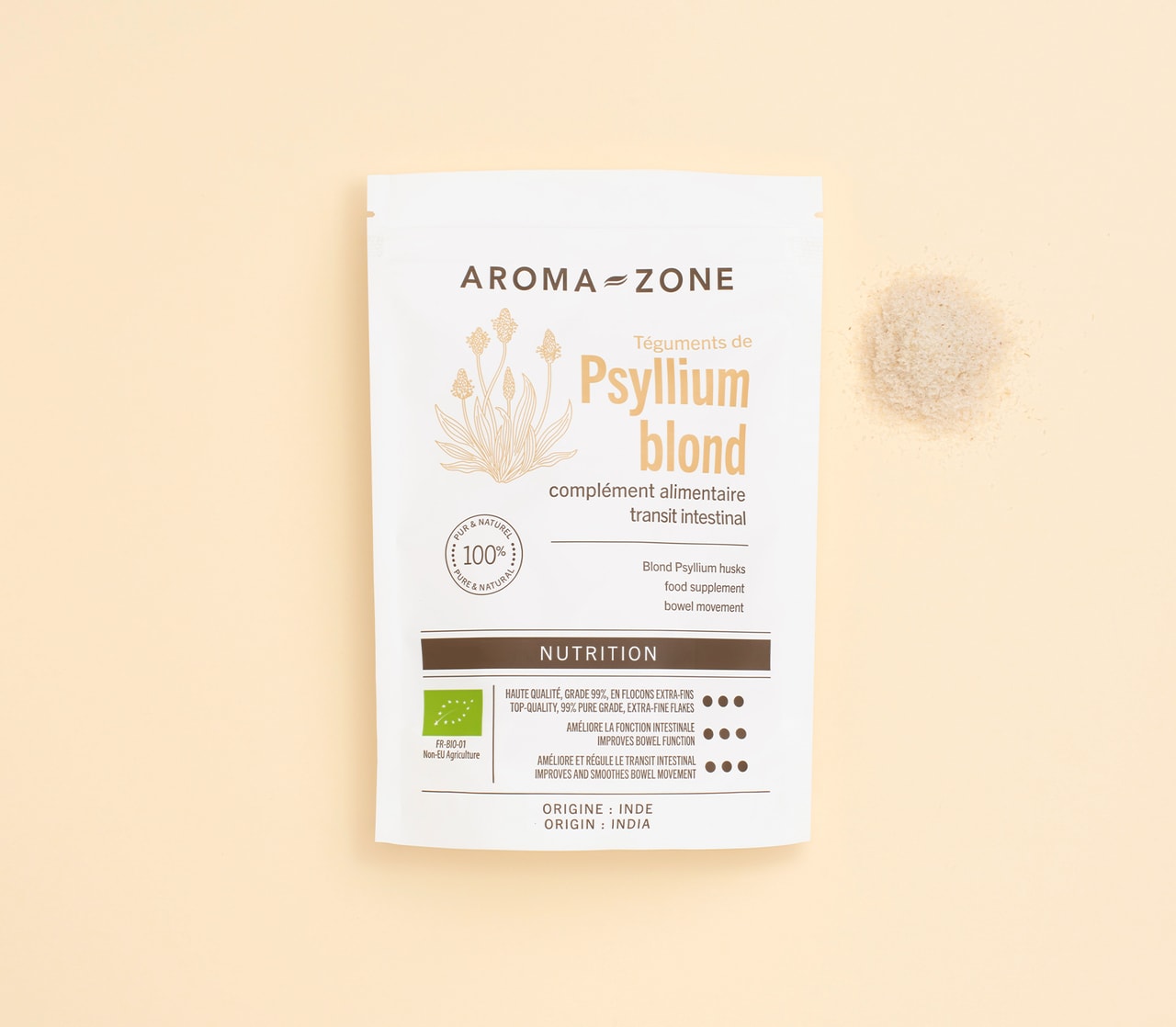
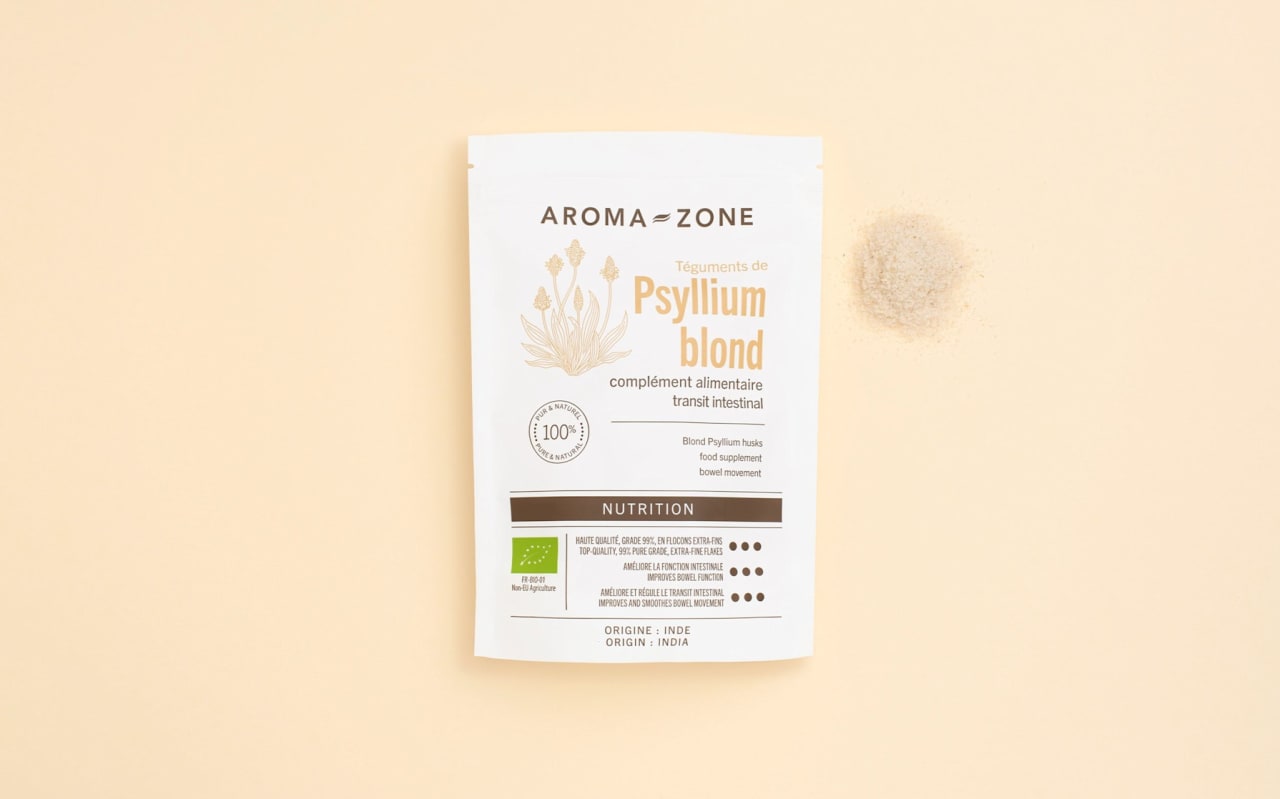
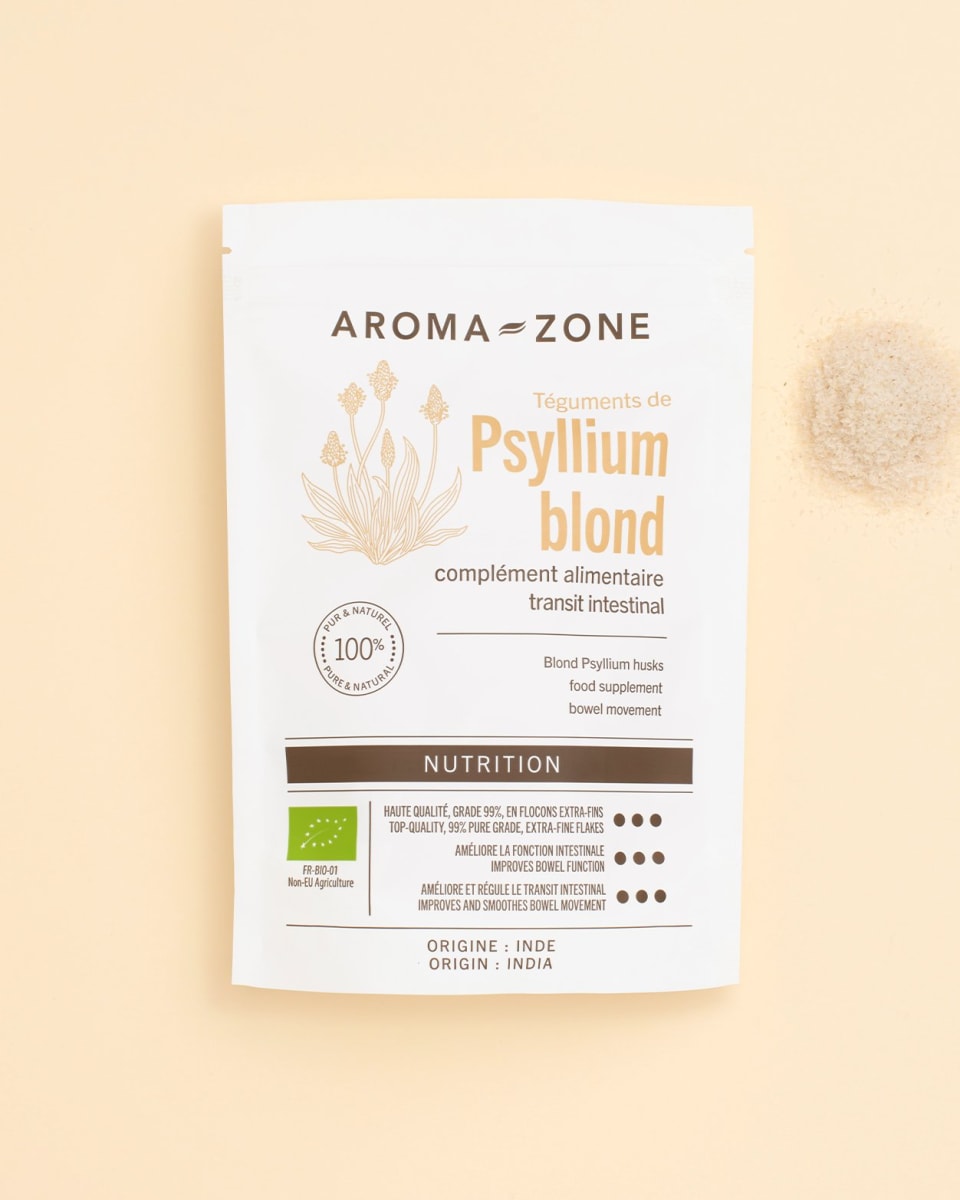
Organic blonde psyllium – 300 g – Food supplement

A closer look at our Organic Blond Psyllium

Made from 100% organic blond psyllium husks, this product combines a purity level of 99% with a high fibre content and certified organic quality. It offers a gentle way to help regulate bowel movements and support everyday digestive comfort.

It's easy to incorporate into your daily routine: simply mix 1 teaspoon to 1 tablespoon into a glass of water and drink straight away, followed by a second glass of water to help the psyllium husks swell and form a gel.

This product is intended for adults and should be taken as part of a varied, balanced diet and a healthy lifestyle. Always follow the recommended dosage and drink plenty of water when taking psyllium. Avoid use if you have severe digestive disorders or difficulty swallowing. If you take medication, allow a suitable interval between taking psyllium and any medication.

Discover our Organic Blond Psyllium - 300 g - Dietary Supplement

How to use psyllium husks

Psyllium is easy to use and can be incorporated into your daily routine in several ways.

Which form of psyllium should you choose?

Psyllium is mainly available as a powder made from ground husks. It can be mixed with water or fruit juice, or added to recipes. It is also available in capsule form as a supplement. Flakes and whole seeds are other options, although they are less common.

The choice depends on personal preference. Powder is often preferred because it is easy to use and quick to take effect. Organic psyllium is also available, for those who prefer products made from organically grown plants.

When should you take psyllium?

The best time to take psyllium depends on the desired effect. To help promote a feeling of fullness, it is recommended to take it about 30 minutes before a meal, with a large glass of water. This encourages the formation of a gel in the stomach, which can help you feel fuller.

If you want to improve bowel regularity, psyllium can be taken at any time of day. Taking it at the same time each day can help establish a regular routine. Always take it with plenty of water to reduce the risk of intestinal blockage.

What is the recommended dosage?

The dosage depends on individual needs. For Aroma-Zone's Organic Blond Psyllium, dissolve 1 teaspoon to 1 tablespoon in a large glass of water or another drink. Mix well and drink immediately, followed by a second glass of water.

Note: If you're using psyllium for the first time, start with 1 teaspoon and gradually increase the amount according to your tolerance.

When should you avoid taking psyllium?

Although psyllium is generally well tolerated, certain situations call for advice from a healthcare professional before use. Particular caution is needed if you have a digestive disorder or difficulty swallowing, as psyllium forms a thick gel when mixed with water. It is also essential to drink enough water when taking it.

What are the potential side effects?

Side effects are generally mild and temporary. They may include bloating, gas and abdominal discomfort, particularly when you first start taking psyllium. These symptoms may occur as your digestive system adjusts to the increased fibre intake.

Psyllium may also affect the absorption of certain medications and nutrients, including vitamin B12. To reduce the risk of interactions, it is generally recommended to leave an interval between taking psyllium and other medications. Check the recommended interval on the product packaging or ask your pharmacist for advice.

When can psyllium be useful?

Psyllium is particularly useful for helping to regulate bowel movements. Its soluble fibre absorbs water and forms a gel in the digestive tract, which helps to:

  • Relieve constipation by increasing stool bulk and making stools easier to pass.

  • Improve stool consistency by absorbing excess water, which can be helpful in cases of loose stools.

  • Promote regular bowel movements by helping to keep stools soft and easy to pass.

These benefits make psyllium a useful addition to a natural approach to digestive wellbeing.

Precautions for use

Before incorporating psyllium into your routine, there are a few precautions to bear in mind to ensure it is used safely and appropriately. This natural supplement should be used as part of a healthy lifestyle and is not a substitute for a varied and balanced diet. It is intended for adults only and is not recommended for pregnant or breastfeeding women.

Always follow the recommended dosage and make sure you drink enough water when taking psyllium. As it absorbs water and expands, insufficient fluid intake may cause digestive discomfort.

Psyllium should not be used in cases of difficulty swallowing, narrowing or obstruction of the digestive tract, or certain intestinal disorders.

It is also contraindicated in cases of unexplained rectal bleeding, difficulty passing stools despite the use of laxatives, narrowing of the digestive tract, oesophageal or cardia disorders, suspected or confirmed intestinal obstruction, intestinal paralysis, megacolon or difficulty swallowing, due to the risk of gastrointestinal obstruction.

Psyllium may interfere with the absorption of medications. If you're taking medication, leave at least one hour between taking it and psyllium, and ask your healthcare professional for advice if you're unsure.

Expert advice

Psyllium is a gentle source of plant fibre that can help support digestive comfort and regular bowel movements. To complement its effects, include other sources of fibre in your diet, such as cooked green vegetables, fresh fruit (including apples and pears), soaked flax or chia seeds, and whole grains.

As with any supplement, psyllium should be used as part of a varied, balanced diet and a healthy lifestyle. Remember to drink enough water throughout the day.

Meet our expert writer: Stéphanie Le Guillou

photo me.jpg

Stéphanie is a pharmacist (since 2010) and holds a PhD in molecular biology (since 2012). Passionate about writing, she has been producing medical content for nearly 15 years. Her aim is to make information accessible and easy to understand, whilst always maintaining scientific accuracy.

Bibliography

  1. Elisangela Aparecida Nazario Franco, Ana Sanches-Silva, Regiane Ribeiro-Santos, Nathália Ramos de Melo, Psyllium (Plantago ovata Forsk)

    From evidence of health benefits to its food application, Trends in Food Science & Technology, Volume 96, 2020, Pages 166-175, ISSN 0924-2244, https://doi.org/10.1016/j.tifs.2019.12.006

  2. Khan, A. W. et al. Nutritional and Therapeutic Benefits of Psyllium Husk (Plantago Ovata). (2021). (ISSN: 2581-3226)

    https://www.researchgate.net/publication/349279055_Nutritional_and_Therapeutic_Benefits_of_Psyllium_Husk_Plantago_Ovata

  3. Jovanovski E, Yashpal S, Komishon A, Zurbau A, Blanco Mejia S, Ho HVT, Li D, Sievenpiper J, Duvnjak L, Vuksan V.

    Effect of psyllium (Plantago ovata) fiber on LDL cholesterol and alternative lipid targets, non-HDL cholesterol and apolipoprotein B: a systematic review and meta-analysis of randomized controlled trials. Am J Clin Nutr. 2018 Nov 1;108(5):922-932. doi: 10.1093/ajcn/nqy115. PMID: 30239559. https://pubmed.ncbi.nlm.nih.gov/30239559/

Frequently Asked Questions

Frequently Asked Questions