Our experts’ anti-dark spot routine
By The Aroma-Zone editorial team
Published on: Thursday, July 30, 2026, Updated on: Friday, October 09, 2026
Dark spots form through two distinct biological mechanisms.
The first, and best known, is melanogenesis: under the influence of the sun, hormonal changes or skin inflammation, melanocytes produce excess melanin. These pigment deposits accumulate on the skin’s surface, forming sunspots or post-blemish marks.
The second, less well-known but equally significant, is the production of lipofuscin. This brown oxidation pigment is promoted by oxidative stress and skin ageing. Its accumulation in cells contributes to the appearance of dark spots, dulls the complexion and accentuates skin tone irregularities.
In both cases, the result is the same: a less even complexion, more pronounced areas and a general lack of radiance.
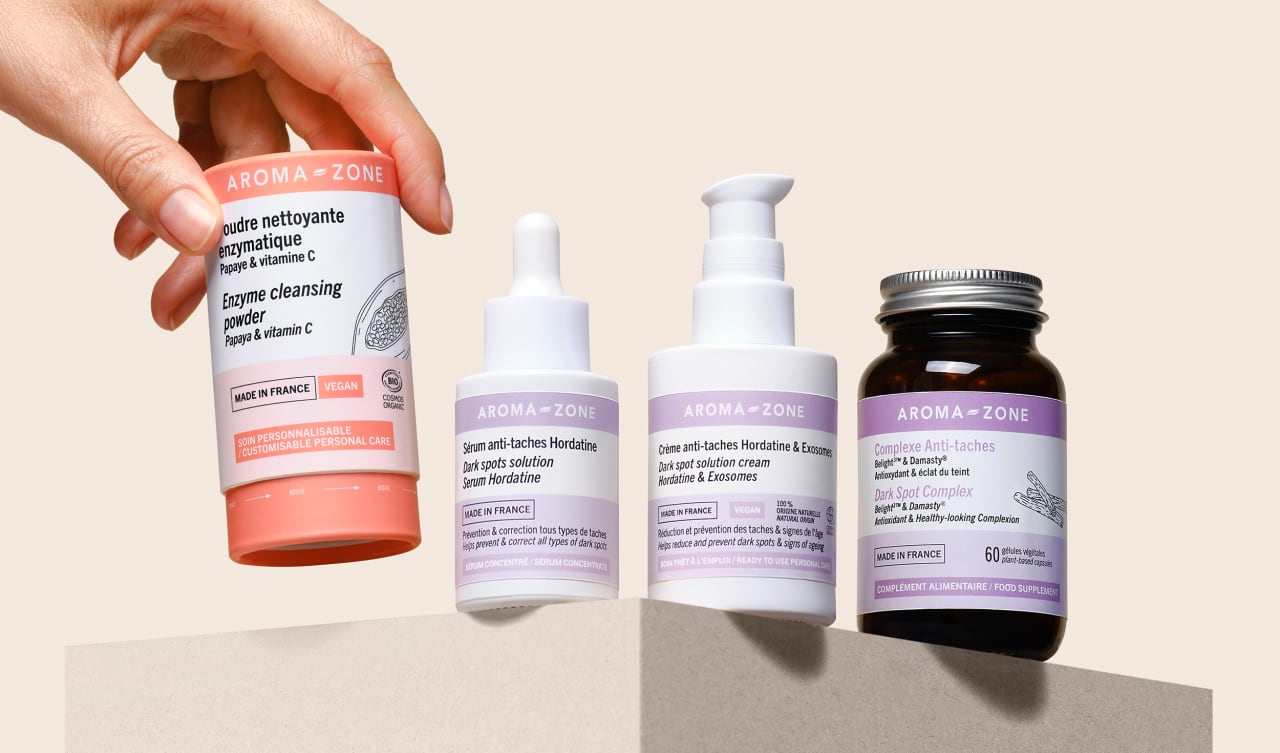
Our skincare routine has been developed in collaboration with dermatologists to work in synergy to reduce existing dark spots and prevent new ones from forming. For a visibly radiant and even complexion.
Contents
My 4-step routine
Step 1 – Cleanse my skin
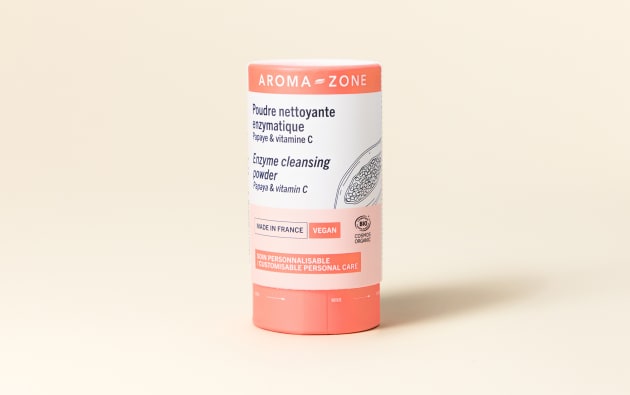
Papaya & Vitamin C Enzymatic Cleansing Powder
This 2-in-1 cleansing powder cleanses the skin whilst gently exfoliating thanks to natural papaya enzymes. It helps remove dead skin cells, unclog pores and prepares the skin to better absorb the anti-dark spot active ingredients in the following steps, for an even and radiant complexion.
Recommended use: morning and evening, pour a small amount of powder into the palm of your hand, then add a few drops of lukewarm water (the enzymes are activated by the heat of the water) until a creamy lather forms. Apply to the face and neck, then rinse with clean water.
Step 2 – Identifying my specific concern
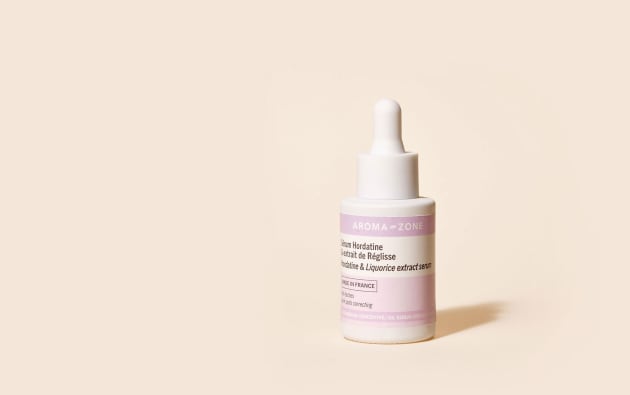
Hordatine and Liquorice Extract Anti-Dark Spot Serum
This triple-action serum, designed to combat dark spots, even out skin tone and combat the signs of ageing, combines Hordatine (a natural, upcycled molecule derived from barley sprouts), liquorice extract and niacinamide. It visibly reduces existing dark spots, prevents new ones from forming and evens out the complexion, whilst being gentle on sensitive skin.
Recommended use: In the morning and/or evening, on clean, dry skin, apply a few drops to the face and neck, massaging gently with your fingertips. Avoid the eye area.
Step 3 – Moisturising my skin
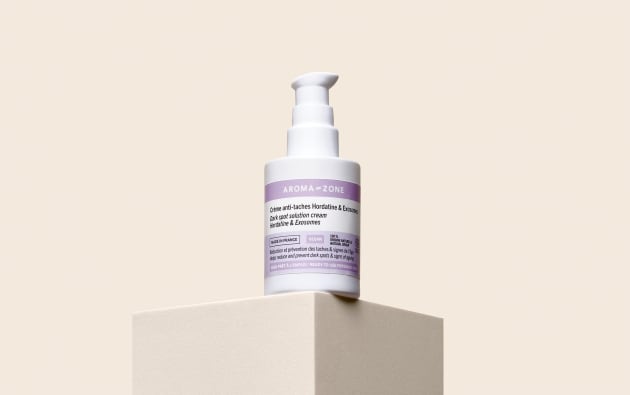
Anti-dark spot face cream – Hordatine & Exosomes
For reduced dark spots in as little as 7 days**: Thanks to its innovative complex of Hordatine and Exosomes, this expert treatment offers dual anti-dark spot and anti-ageing action. It corrects and prevents pigmentation spots both on the surface and deep within the skin, whilst targeting the signs of ageing. The best anti-dark spot cream for 100% of users**
Recommended use: In the morning and/or evening, after applying your serum, apply the cream to your face, neck and décolletage.
Step 4 – Take action from within
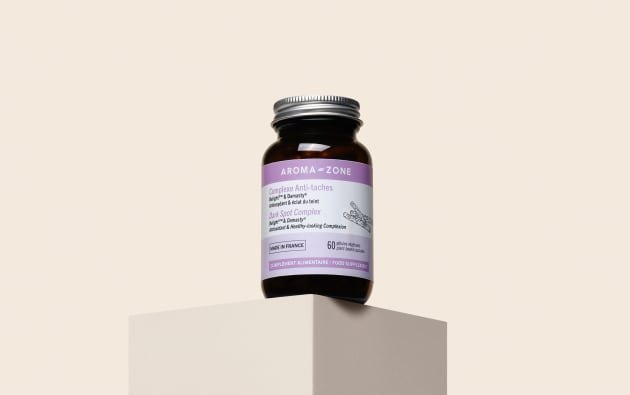
Belight³™ & Damasty® Dark Spot Complex – Antioxidant & Radiant Complexion
This formula combines two patented and clinically tested ingredients: Damasty®, which helps improve the evenness and radiance of the complexion, and Belight³™, which helps visibly reduce the appearance of pigmentation spots. Vitamin C helps protect cells against oxidative stress.
Recommended use: 2 capsules a day, to be swallowed with a glass of water.
The Aroma Solution

“Once a month, between exfoliation sessions, applying an oil-based mask complements the recommended anti-dark spot routine. Lemon litsea essential oil directly inhibits tyrosinase, a key enzyme involved in the overproduction of melanin (1). Argan oil reinforces this action by also reducing the production of this enzyme (2). Sea buckthorn oil, which is very rich in antioxidants, protects the skin from ageing and preserves the complexion’s radiance (3).
Dr Anthony Touboul, Pharmacist and aromatherapy expert
A word from the experts
Dr Reyhan Amode, Dermatologist

“Dark spots or hyperpigmentation can take various forms: solar lentigines, pigmentary acne and melasma are common reasons for seeking medical advice. Whatever the cause, protection against UV rays and even visible light is essential. Various active ingredients, such as glabridin, tranexamic acid, vitamin C and niacinamide, help to reduce the production and transfer of melanin.”
ALICE MICHELLE, Dietitian and Nutritionist

“Alongside taking the ‘Anti-Dark Spots’ dietary supplement, it can be very beneficial to consider micronutrition and adopt a few daily habits to maximise its potential. Certain nutrients are particularly beneficial for supporting skin that is (already) prone to pigmentation spots. These mainly include powerful antioxidants such as vitamin C, polyphenols, carotenoids and the well-known omega-3s. The latter are particularly beneficial if the skin is inflamed, as inflammation accelerates post-inflammatory hyperpigmentation. (Sources: mackerel, sardines, salmon, linseeds, chia seeds, walnuts). Vitamin C helps to limit oxidative stress, which plays a direct role in the development of pigmentation spots. It is also worth noting its role in collagen synthesis, as collagen itself acts as an antioxidant. (Sources: acetone, red peppers, kiwi fruit, citrus fruits, broccoli, red berries). As for polyphenols, they act to counteract UV-related skin damage; their antioxidant properties provide enhanced protection. (Source: blueberries, blackcurrants, green tea, grapes, cocoa, spinach, turmeric, cinnamon). Carotenoids, meanwhile, may offer a slight photoprotective effect. (Sources: carrots, sweet potatoes, pumpkin, apricots, spinach, broccoli, papaya)”
MARION ALVES DE OLIVEIRA, Naturopath

“Did you know that the sun isn’t the only cause of dark spots?
UV exposure remains the main trigger for pigmentation spots, but several factors can contribute to their appearance or persistence. Oxidative stress, caused in particular by pollution, smoking, chronic stress or an unbalanced diet, promotes the oxidative reactions involved in skin pigmentation. Insufficient sleep can also disrupt the skin’s natural repair and renewal mechanisms. Hormonal changes (pregnancy, contraception, the menopause) can stimulate melanin production and contribute to melasma. Finally, any skin inflammation (spots, irritation, chafing, etc.) can leave persistent pigmented marks, known as post-inflammatory hyperpigmentation. (4,5,6)
To naturally support your anti-dark-spot routine, adopt a holistic approach: protect your skin from UV rays every day, opt for a diet rich in colourful plant-based foods and antioxidant vitamins, and low in refined sugars and ultra-processed foods; ensure you get restorative sleep; take regular exercise; and make time to manage your stress more effectively. Finally, avoid picking at spots or skin irritations to minimise the risk of post-inflammatory hyperpigmentation.” (7, 8, 9)
Precautions for use
References