
Guide to essential oils

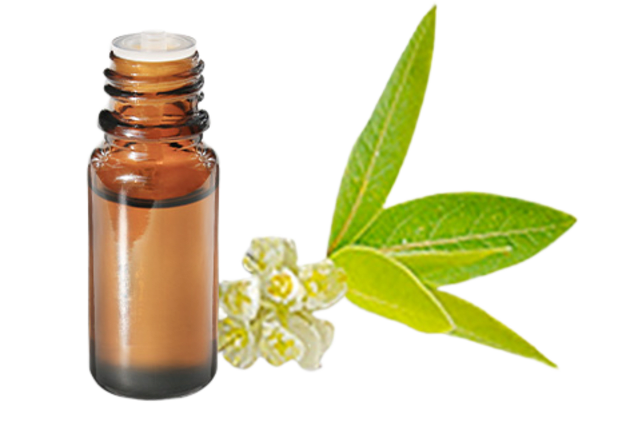
Essential oil of Organic Litsea cubeba

Also known as may chang or mountain pepper, the lemony notes of organic Litsea cubeba essential oil promote relaxation, joyfulness and a good mood. It is therefore the number one essential oil for improving your mood. In psycho-energetic olfactotherapy, organic Litsea cubeba essential oil supports depressive states, helping to dispel dark thoughts. It is recommended for restoring confidence in oneself and in life in general. In cooking, Litsea cubeba essential oil has an unusual lemony aroma that goes delightfully well with seafood and white fish.

How to use

  • Skin application and massage

    Skin application and massage

    Appropriate

  • Cosmetic active ingredient

    Cosmetic active ingredient

    Appropriate

  • Aromatherapy bath

    Aromatherapy bath

    Appropriate

  • Diffusion

    Diffusion

    Appropriate

  • Food grade

    Food grade

    Suitable

Features

Properties and uses

Precautions

Find out more

Features

Production process

Complete steam distillation

Part of the plant used

Fruit

Botanical name

Litsea cubeba

Warning

The properties, information and methods of use below are quotes from reference books or websites on aromatherapy, hydrolatherapy and phytotherapy. This general information is provided for informative purposes only and in no way constitutes medical guidance. Under no circumstances can this information be used as a substitute for a medical diagnosis, consultation or follow-up, nor can it incur our liability. We recommend that you consult the guide to essential oils before using them, so that you are aware of any precautions that need to be taken. If in doubt, consult a doctor before using essential oils.

Properties and uses

Litsea cubeba essential oil is traditionally used for: Arthritis, osteoarthritis, rheumatism, anxiety, depression, fungal infection

Health

Beauty

Wellness

Find out more

Properties

In health care, Litsea cubeba essential oil is recognised for the following properties:

  • High in terpene aldehydes, known for their anti-inflammatory properties.

  • Antifungal, thanks to its terpene aldehyde and geraniol content.

  • Reputed as digestive tonic, eupeptic, it aids digestion

  • Pest repellent

  • Antibacterial

Uses

In addition to treatments, it is traditionally used in the following cases:

  • Inflammations, tendonitis, arthritis, rheumatoid arthritis

  • Ulcers of the stomach and duodenum (part of the intestine at the end of the stomach)

  • Lack of appetite, digestive insufficiency

  • Fungal infections

  • Parasitic infections

In practice

Inflamed painful areas: Mix with your oil blend. Apply the mixture locally, massaging gently.

Precautions

  • Not recommended during pregnancy or for children under 6. Do not use internally during pregnancy.

  • Irritating to the skin in its pure state; always use well diluted when applied to the skin. Use with caution, especially on sensitive or allergic skin.

  • Keep out of reach of children.

  • Avoid contact with the eyes.

  • Certain natural compounds contained in this essential oil may present a risk of allergy in certain sensitive individuals when the essential oil is incorporated into a cosmetic composition (according to the 7th Amendment of the European Cosmetics Directive (2003/15/EC)): citral (geranial and neral), limonene and, to a lesser extent, linalool, geraniol.

  • As a general rule, always test your product in the crease of the elbow at least 48 hours before use.

  • For use as a cosmetic ingredient, please refer to the specific precautions.

Find out more

Also known as may chang, Litsea cubeba is an evergreen shrub that was cultivated in China, India and Sri Lanka.

Its essential oil is extracted from berry-like fruits. Its exotic, lemony scent creates a ambiance of joy, relaxation and optimism when diffused.

Aromatherapy recipes from the bibliography

EO = Essential Oil VO = Carrier Oil or Macerated Oil

Neuralgia (after consulting a doctor) (D. Festy)

Health & wellbeingNerve pain and disorders

  • 0.5 ml Helichrysum italicum essential oil
  • 1 ml Roman chamomile essential oil
  • 0.5 ml yarrow essential oil
  • 0.5 ml Litsea cubeba essential oil
  • 1 ml spike lavender essential oil
  • Add up to 10 ml extra tamanu oil for product optimisation

Use: Apply 4 to 6 drops of this mixture to the painful area. Repeat if necessary.

Scabies (Aroma news - Nard)

Health & wellbeingBacterial, viral and parasitic infections

  • 3 ml Melaleuca alternifolia (tea tree) essential oil
  • 3 ml Litsea citrata (Litsea cubeba) essential oil
  • 3 ml Eugenia caryophyllus (clove) essential oil
  • 3 ml Mentha x piperita (peppermint) essential oil
  • 1 ml Tanacetum annuum (blue tansy) essential oil
  • add up to 300 ml extra cetyl cream as required for product optimisation

Use: 1 application in the evening over the entire body surface, then bandage to maintain contact for 10 hours. Repeat the treatment for 3 consecutive days.

Lichen simplex (D. Baudoux)

Health & wellbeingSkin problems

  • 1 ml Litsea citrata (Litsea cubeba) essential oil
  • 3 ml Cymbopogon martinii (palmarosa) essential oil
  • 3 ml Aniba rosaeodora (rosewood) essential oil
  • 2 ml Thymus vulgaris CT geraniol (common thyme with geraniol) essential oil
  • 2 ml Satureja montana (savory) essential oil
  • 5 ml Rosa rubiginosa carrier oil (rose hip)
  • add up to 30 ml extra Transcutol as required for product optimisation

Use: 2 to 3 topical applications a day.

Aroma-Zone comment: Transcutol is a little-used pharmaceutical product which allows fats such as essential oils to penetrate the skin easily. It can easily be replaced by a dry carrier oil such as hazelnut, kukui or macadamia oil.

Skin fungal infection (Aroma news - Nard)

Health & wellbeingSkin problems

  • 2 ml palmarosa essential oil
  • 1 ml tea tree essential oil
  • 1 ml rose geranium essential oil
  • 0.5 ml Litsea cubeba essential oil
  • 1 ml bay laurel essential oil
  • add up to 30 ml extra tamanu carrier oil as required for product optimisation

Use: 3 to 4 topical applications a day until noticeable improvement.

Hay fever, allergic rhinitis (Aroma news - Nard)

Health & wellbeingENT problems

  • 2 ml Eucalyptus radiata essential oil (narrow-leaved eucalyptus)
  • 2 ml Eucalyptus dives essential oil (menthol eucalyptus)
  • 1 ml Mentha piperita essential oil (peppermint)
  • 1 ml Litsea citrata (Litsea cubeba) essential oil

Use: 3 to 4 drops on the sinus areas, repeated as necessary.

Digestive and gastric spasms (D. Baudoux)

Health & wellbeingDigestive problems

  • 1 ml Gaultheria procumbens (American wintergreen) essential oil
  • 2 ml Ocimum basilicum ssp basilicum (basil) essential oil
  • 2 ml Artemesia dracunculus (tarragon) essential oil
  • 1 ml Citrus aurantium ssp aur. (Seville orange) leaf essential oil
  • 1 ml Litsea citrata (Litsea cubeba) essential oil
  • add up to 15 ml of Corylus avellana (hazelnut) carrier oil or transcutol as required for product optimisation

Use: 8 drops in epigastric unctions, to be repeated as needed.

Aroma-Zone comment: Transcutol is a little-used pharmaceutical product which allows fats such as essential oils to penetrate the skin easily. It can easily be replaced by a dry carrier oil such as hazelnut, kukui or macadamia oil.

Baby blues (breastfeeding mothers, on medical advice) (D. Festy)

Health & wellbeingProduct for pregnant or breastfeeding women

  • 5 drops Litsea cubeba essential oil
  • 5 drops sweet orange essential oil
  • 5 drops mandarin essential oil

Use: Pour the essential oil into the diffuser and diffuse 3 times a day for 10 days.

Aphonia (D. Baudoux)

Health & wellbeingVarious

  • 2 ml cypress essential oil
  • 1 ml spike lavender essential oil
  • 2 ml Litsea cubeba essential oil

Use: 2 drops of the mixture in a teaspoon of honey or olive oil, 3 times a day after meals for one week.

Equivalents

Essential Oils

1 ml = approximately 35 drops (with our Aroma-Zone dropper caps)

Carrier oils

1 pump (Aroma-Zone aluminium pump) = approx. 0.15 ml

Mass / Volume conversion (for a liquid)

Mass (g) = Density x Volume (ml) at 20°C

Further information

1 full teaspoon = between 3 and 4.5 ml

1 full tablespoon = between 7.5 and 10 ml


However, these spoon ratios depend on a number of factors (e.g. viscosity of the liquid, temperature, depth and size of the spoon, rheological behaviour of the liquid), and we strongly advise you to use precise measuring equipment, such as graduated test tubes, graduated pipettes, and precision scales.

Bibliography

1

'Huiles essentielles - 2000 ans de découvertes aromathérapeutiques pour une médecine d'avenir'

Dominique Baudoux

2

'Aromathérapie' Éditions Maloine

Dr Jean Valnet

3

'L'Aromathérapie exactement'

P. Franchomme and Dr D. Pénoël

4

'La bible de l'aromathérapie'

Nerys Purchon

5

'L'ABC des huiles essentielles'

Dr Telphon

6

'Aromatherapy'

Nelly Grosjean

7

'Les huiles essentielles pour votre santé'

G. Roulier

8

'Les cahiers pratiques de l'aromathérapie française - Dermatologie' - Editions Amyris

Dominique Baudoux

9

Aroma-News newsletters

NARD Association

10

'Aromatherapy - Healing with essential oils'

Dominique Baudoux - Editions Amyris