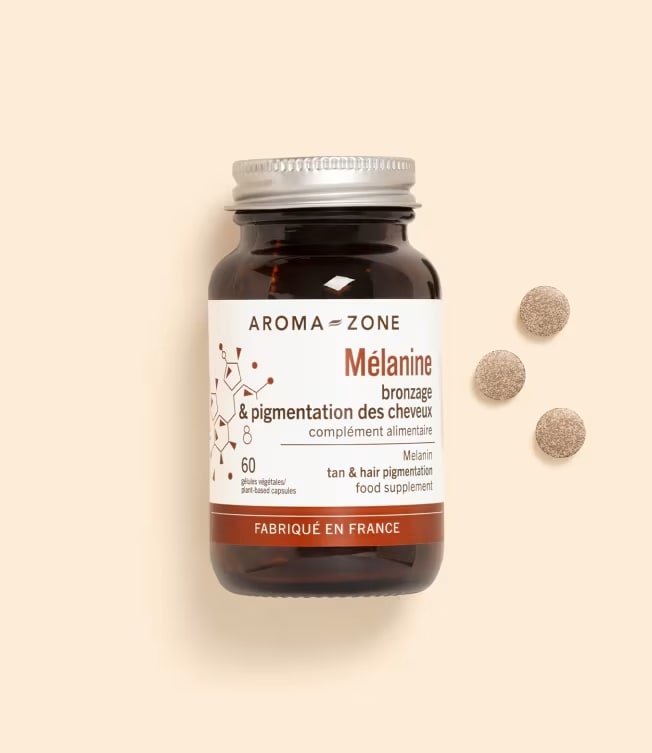
Melanin is a pigment naturally found in humans and many animals. It determines the colour of the skin, eyes, and hair. It also plays a part in the skin’s natural defence mechanisms against ultraviolet (UV) radiation by absorbing some of these rays. However, this protection is limited and is by no means a substitute for the recommended sun protection measures, such as seeking shade, wearing protective clothing or using a suitable sunscreen when exposure is unavoidable.
Melanin is produced by cells called melanocytes, located in the epidermis, the outermost layer of the skin. Its synthesis relies in particular on tyrosine, an amino acid naturally present in the body. The amount and type of melanin produced vary from person to person, which explains the diversity of skin, eye, and hair colours.
What Are the Different Types of Melanin?
Eumelanin: Ranging in colour from dark brown to black, it is predominant in people with dark hair and olive to dark skin
Pheomelanin: Ranging in colour from yellow to red, it is more prevalent in people with red or blonde hair and fair skin
The proportions of these two forms of melanin help to determine natural hair and skin colour. With age, melanocyte activity in the hair follicles gradually decreases. This phenomenon, combined with genetic and environmental factors, contributes to the appearance of grey, then white, hair.