Aroma-Zone Bisabolol Active Ingredient

Aroma-Zone Bisabolol Active Ingredient


By Delphine Duc

Published on: Monday, November 16, 2026, Updated on: Monday, November 16, 2026

Reading time: ++4 min

SOOTHING & REPAIRING The active ingredient that instantly soothes sensitive and uncomfortable skin.

A true benchmark soothing active ingredient, bisabolol helps to reduce feelings of irritation whilst promoting skin repair and comfort.

Contents

Related products

Bisabolol Aroma-Zone

INCI Name: Bisabolol ((L)-alpha-bisabolol: 95% min)

NATURAL / SYNTHETIC: 

100% plant-based; 100% of the total ingredients are sourced from organic farming.

VEGAN

BIOCHEMICAL COMPOSITION: 

A natural sesquiterpene alcohol, bisabolol is a lipophilic molecule derived mainly from the distillation of plants, recognised for its simple structure and high affinity with the skin.

SUSTAINABILITY / TRACEABILITY: 

Obtained by fractional distillation of the essential oil of the Candeia tree (Vanillosmopsis erythropappa), native to Brazil. 

Bisabolol: what effect does it have on the skin?

Bisabolol is a natural monocyclic alcohol belonging to the sesquiterpene family. Originally isolated from German chamomile, it is the main active ingredient responsible for this plant’s skin-soothing properties.

In terms of its effect on the skin, bisabolol acts primarily as a soothing agent. It acts directly within skin cells by inhibiting the cellular signalling pathways involved in inflammation, notably the NF-kB, ERK1/2 and JNK pathways. This inhibition helps to curb the production of pro-inflammatory mediators and cytokines such as TNF-α, IL-1β, IL-6, COX-2 and iNOS. It therefore helps to relieve itching and alleviate the symptoms of skin prone to eczema or atopic dermatitis.


At the same time, bisabolol may exhibit significant antioxidant activity. It scavenges the free radicals responsible for oxidative stress in the skin and stimulates the body’s natural enzymatic defences, in particular superoxide dismutase (SOD) and glutathione (GSH).


Beyond its soothing action, bisabolol has properties that regulate pigmentation. It counteracts the overproduction of melanin by inhibiting the expression of tyrosinase, the key enzyme in melanogenesis. This mechanism makes it a valuable active ingredient for reducing the appearance of hyperpigmentation spots and evening out the complexion.


Finally, bisabolol supports skin healing and accelerates the repair of damaged or injured tissue.

Bisabolol: scientifically proven Efficiency

The efficacy of bisabolol has been demonstrated in several in vivo clinical studies and scientific research papers:

A prospective, randomised, double-blind clinical study* involving 278 patients with atopic dermatitis evaluated the application of a cream containing 0.3 per cent alpha-bisabolol, applied twice daily for 8 weeks. The results show that, when applied alone at a concentration of 0.3%, alpha-bisabolol reduces the severity of pruritus by 30% (compared with 0% for the control group without the active ingredient) and reduces the atopic dermatitis severity score (SCORAD) by 45% (compared with 22% for the control group). The combination of alpha-bisabolol (0.3%) and heparin achieves a 70% reduction in pruritus and the SCORAD score.

Furthermore, bisabolol may play a role in skin repair. Indeed, in a clinical study* involving 29 volunteers with chronic venous ulcers, daily application for 30 days of a spray combining ozonated oil and alpha-bisabolol resulted in complete remission in 25 per cent of patients (compared with 0 per cent in the control group). The average lesion area was reduced by 65 per cent at the end of the 30 days (it should be noted that in this study, bisabolol was combined with ozonated oil).

Finally, a clinical study* conducted on 28 women of Asian origin who applied a 0.5% alpha-bisabolol cream once daily for 8 weeks to a hyperpigmented area measured a spectrophotometric lightening of +73% compared with the control product. It should be noted, however, that this instrumentally measured change did not translate into a significantly visible lightening during the visual clinical assessment.

*Please refer to the scientific bibliography for further information.

Skin tolerance

Adeline

A Note from Adeline Nalin, Head Pharmacist and Toxicologist at Aroma-Zone

"Bisabolol is an active ingredient recognised for its excellent tolerability, even on sensitive and reactive skin. Naturally soothing, it helps to reduce feelings of discomfort and calms redness. Thanks to its gentle, non-irritating properties, it is suitable for daily skincare, including for skin that is weakened or prone to inflammation".

Adeline Nalin – Head Pharmacist and Toxicologist

A Safe Ingredient for your Health

A Note from Our Aroma-Zone Toxicologist

"Bisabolol has a very favorable safety profile: it is well tolerated, non-sensitizing, and suitable for use in a wide range of product categories. Its use is considered safe at concentrations typically found in cosmetics."

Adeline Nalin - Head Pharmacist and Toxicologist

A note from the dermatologist, Dr Aoun

agathe-aoun.jpg

"This active ingredient is derived from candeia, or German chamomile, and has anti-inflammatory and soothing properties. It alleviates feelings of skin discomfort and supports the skin’s natural healing processes. Suitable for sensitive and reactive skin, it is particularly recommended following skin stressors such as shaving, exfoliation or other forms of skin irritation. It is also beneficial for irritated skin and can help other active ingredients to penetrate the skin. Use with caution if you are allergic to the Asteraceae family".

Dr Aoun – Dermatologist

Formulation Focus with the Aroma-Zone R&D Laboratory

In formulations, bisabolol is a fat-soluble molecule, usually derived from an essential oil, which is easy to incorporate into oil-based phases without any particular difficulty. It is particularly valuable for its soothing and restorative properties, which explains its frequent use in products for chapped lips or damaged skin, where it helps to rapidly improve skin comfort.

For Which Skin Types?

The active ingredient bisabolol is particularly well-suited for sensitive, reactive, uncomfortable, or redness-prone skin. It is also suitable for skin prone to itching, pruritus, eczema, or atopic dermatitis. Finally, those with hyperpigmented spots will find bisabolol beneficial.

Which Concerns Does This Address?

Bisabolol addresses skin concerns such as itching, irritation, pigmentation spots, and hyperpigmentation, as well as skin sensitivity and a weakened skin barrier.

What Xxx Does for the Skin

  • Soothes: redness, tightness, and skin irritation immediately

  • Relieves: itching and discomfort associated with eczema or dermatitis

  • Reduces: the appearance of hyperpigmentation spots and evens out the complexion

  • Promotes: healing and repair of damaged areas

  • Protects: the skin from oxidative stress thanks to its free-radical-fighting properties.

Bisabolol: an essential ingredient for the skin

Aroma-Zone’s bisabolol is found in an essential skincare product: 

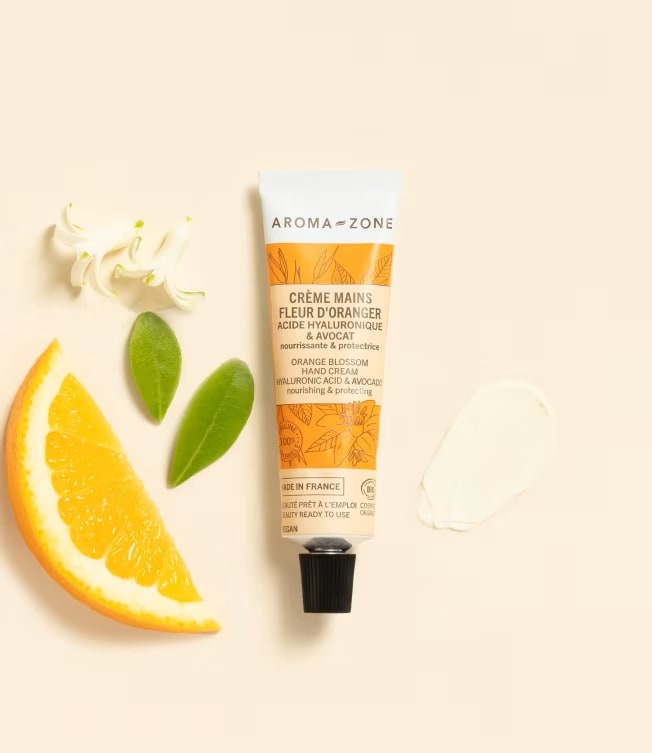
Our Organic Hyaluronic Acid & Avocado Hand Cream – Orange Blossom

100% naturally derived, containing hyaluronic acid and organic oat and avocado oils, this cream – with its floral, delicately honeyed orange blossom scent – nourishes, soothes and envelops the hands in a protective film that isn’t greasy or sticky. Its creamy, melt-in texture provides absolute comfort and leaves hands feeling soft and delicately scented.

Discover the Organic Hyaluronic Acid & Avocado Hand Cream – Orange Blossom.

Bisabolol is also present as an active ingredient in: 

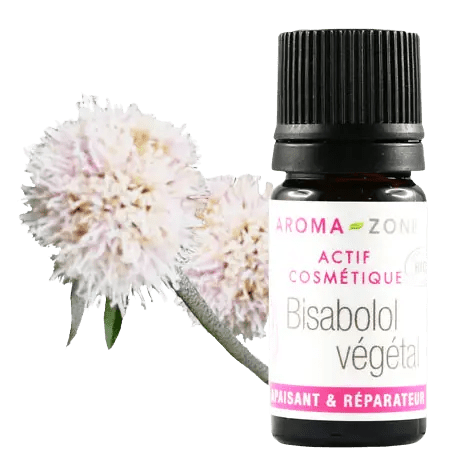
Organic Bisabolol Active Ingredient

Organic Bisabolol Active Ingredient

An active compound found in several plants, including chamomile and candeia, alpha-bisabolol is known as a powerful soothing active ingredient that is highly effective even at low doses. It is an excellent choice for the care of sensitive and irritated skin. It can be incorporated into your balms, oils and creams, but must never be used undiluted.

Discover the Organic Bisabolol Active Ingredient

Precautions

Bisabolol is a molecule renowned for its very high safety profile and low toxicity. It does not exhibit any photoallergic or phototoxic properties at concentrations used in cosmetics. Although bisabolol is extremely well tolerated by all skin types, it is still recommended to carry out a patch test in the crook of the elbow at least 48 hours before the first application of a product containing it, in order to rule out any risk of an individual allergic reaction.

Spotlight on our expert writer: Delphine Duc

Delphine Duc 02.jpg

Delphine DUC, a biological engineer specialising in cosmetology, has been passionate about the field of cosmetics for almost 10 years. She started making her own cosmetics using Aroma Zone products to tackle her skin problems, then decided to train as a cosmetologist and finally to create a bespoke cosmetics brand to address everyone’s individual skin concerns.

Bibliography

  1. Arenberger, P., Arenbergerová, M., Drozenová, H., Hladíková, M., & Holcová, S. (2011). Effect of topical heparin and levomenol on atopic dermatitis: A randomised four-arm, placebo-controlled, double-blind clinical study. Journal of the European Academy of Dermatology and Venereology, 25(6), 688–694. 

    doi: 10.1111/j.1468-3083.2010.03950.x

  2. Bader Eddin, L., Jha, N. K., Goyal, S. N., Agrawal, Y. O., Subramanya, S. B., Bastaki, S. M. A., & Ojha, S. (2022). Health benefits, pharmacological effects, molecular mechanisms, and therapeutic potential of α-bisabolol. Nutrients, 14(7), Article 1370. 

    doi: 10.3390/nu14071370

  3. Gheucă Solovăstru, L., Stîncanu, A., De Ascentii, A., Capparé, G., Mattana, P., & Vâță, D. (2015). Randomised, controlled study of an innovative spray formulation containing ozonated oil and α-bisabolol in the topical treatment of chronic venous leg ulcers. Advances in Skin & Wound Care, 28(9), 406–409. 

    doi: 10.1097/01.ASW.0000470155.29821.ed

  4. Kamatou, G. P. P., & Viljoen, A. M. (2010). A review of the application and pharmacological properties of α-bisabolol and α-bisabolol-rich oils. Journal of the American Oil Chemists’ Society, 87(1), 1–7. 

    doi: 10.1007/s11746-009-1483-3

  5. Lee, J., Jun, H., Jung, E., Ha, J., & Park, D. (2010). The skin-lightening effect of α-bisabolol in Asian female subjects. International Journal of Cosmetic Science, 32(4), 299–303. 

    doi: 10.1111/j.1468-2494.2010.00560.x

  6. Ramazani, E., Akaberi, M., Emami, S. A., & Tayarani-Najaran, Z. (2022). Pharmacological and biological effects of alpha-bisabolol: An updated review of the molecular mechanisms. Life Sciences, 304, Article 120728. 

    doi: 10.1016/j.lfs.2022.120728 

Frequently Asked Questions

Frequently Asked Questions