Can you remove or reduce facial blemishes with a moisturiser?

Can you remove or reduce facial blemishes with a moisturiser?


By Marion Alves de Oliveira

Published on: Wednesday, September 09, 2026, Updated on: Friday, October 16, 2026

Dark spots can make your complexion look less even, and more dull. But can a moisturiser really help to correct facial spots? It all depends on its formula: a standard moisturiser hydrates the skin, whilst a spot-correcting cream combines hydration with targeted active ingredients. Not all spots are the same, and they can have different causes. Find out how to choose the right skincare product to restore a more even and radiant complexion.

Contents

Related products

In brief

  • A standard moisturiser is not enough to target pigmentation spots: it must contain active ingredients specifically designed to tackle this issue.

  • Dark spots can have various causes and progress through different stages. An anti-dark-spot cream can therefore target visible spots, those in the early stages of formation and deeper ones, whilst also caring for the skin.

  • A dark spot treatment combines targeted action on dark spots, hydration and anti-ageing benefits in a single product, with results that can be seen quickly when used regularly.

Why is it so difficult to treat facial blemishes?

The different types of dark spots

The term ‘pigment spot’ generally refers to any abnormality in skin pigmentation. It therefore does not refer solely to brown spots: depending on the colour observed, several types of spots can be distinguished.

  • Brown spots, or hyperpigmentation, refer to darker pigmentation in certain areas of the skin. They may be linked, in particular, to increased melanin production or the accumulation of certain oxidation pigments 6(1)

  • Red patches, or inflammatory patches, may appear following skin inflammation, as in the case of certain marks left by acne or rosacea

  • White patches, or hypopigmentation, are a result of a reduction in skin pigmentation.

Pigment spots can also be categorised according to their stage of development:

  • Visible spots are already present on the skin’s surface and can be seen with the naked eye. Their intensity and size may change over time

  • Invisible spots are still imperceptible to the naked eye, but are already beginning to form beneath the skin’s surface. These clusters of melanin act as a ‘reservoir’ for future pigmented spots

  • Deep spots are embedded in the deeper layers of the epidermis, or even at the dermo-epidermal junction. They are often older, and may be more diffuse, widespread or persistent.

The aim of a treatment for dark spots is to act on them, whether they are already visible or still forming, whilst targeting the mechanisms that may contribute to their formation.The mechanisms underlying the development of dark spots

When it comes to brown spots, two main mechanisms can be distinguished: those linked to melanin and those linked to lipofuscin.

Melanin is a pigment naturally produced by the skin to protect it. It is produced by melanocytes and then transferred to the cells of the epidermis. Its production is regulated in particular by an enzyme called tyrosinase. When this enzyme is more actively stimulated, melanin production increases and can lead to a build-up of pigment, resulting in brown spots. (1)

This overproduction of melanin can be triggered by various factors, including UV radiation, inflammation, skin ageing or hormonal changes. It is this mechanism in particular that is involved in sunspots, post-inflammatory marks and melasma . (2)

Lipofuscin, meanwhile, is a yellow-brown pigment resulting from the accumulation of damaged and oxidised cellular residues. With age and under the influence of environmental stress, the recycling of these cellular waste products slows down: they can then gradually accumulate within the cells and form lipofuscin deposits.

However, lipofuscin itself has pro-oxidant properties. Its accumulation can promote the production of free radicals, which in turn help to stimulate melanogenesis. Lipofuscin and melanin can thus accumulate and form pigment clusters, contributing to the gradual onset of pigmentary ageing.

An anti-dark-spot approach can therefore aim to target these two complementary mechanisms, by limiting both the overproduction of melanin and the accumulation of oxidation-related pigments.

What factors contribute to the development of dark spots?

Several factors can contribute to the appearance of dark spots or make them more pronounced, particularly by affecting pigment production, inflammation or skin ageing.

Sun exposure is a major factor in the development of dark spots. UV rays stimulate melanin production (1) and can therefore contribute to the development or darkening of brown spots, such as solar lentigines.

Hormonal fluctuations can also influence skin pigmentation. They are notably involved in melasma, which manifests as brown patches often found on the face.

Inflammation is another factor to take into account. Skin inflammation, for example following a blemish, can lead to persistent pigmentation and leave a post-inflammatory mark.

Finally, oxidative stress and cellular ageing can encourage the accumulation of lipofuscin, an oxidation pigment. This phenomenon contributes to the appearance of certain brown spots and explains, in particular, why pigmentation irregularities become more common with age.

Thus, dark spots can be triggered by external factors, such as UV rays, but also by internal factors, such as hormonal fluctuations, inflammation, oxidative stress and cellular ageing. An effective approach to tackling dark spots therefore involves addressing several of these mechanisms simultaneously.

How can you distinguish between pigmentation spots, post-inflammatory marks and scars?

After a blemish, a mark may remain visible for several weeks, or even longer. However, depending on its appearance, it may be a pigmentation irregularity, a post-inflammatory mark or a genuine scar.

A post-inflammatory mark appears following inflammation of the skin, for example after a blemish. It manifests as a change in skin colour, with an area that is darker or redder than the surrounding tissue. However, the texture and surface of the skin remain unchanged.

A scar, by contrast, involves a change in the skin’s structure. It may result in a depression, a raised area or a change in skin texture. It is therefore not caused by the same mechanisms as a simple change in pigmentation.

This distinction is important for understanding what a dark spot treatment can actually achieve: it targets pigmentation irregularities and may therefore be beneficial for post-inflammatory hyperpigmentation. However, it cannot correct a scar that alters the structure of the skin.

What are the benefits of an anti-dark spot treatment?

Pigmentation spots can be just one of several concerns: an uneven complexion, a lack of radiance, dehydration, loss of firmness or the appearance of the first wrinkles. Choosing an anti-dark spot cream allows you to address several of these needs with a single product, whilst providing the skin with the daily hydration it requires.

What are the benefits of an anti-dark spot face cream?

A dark spot-correcting cream does more than just target pigmentation irregularities. It also helps to care for the skin on a daily basis thanks to its moisturising properties, with benefits that complement the action of the active ingredients designed to combat dark spots. It can therefore address several needs in a single step: helping to even out the complexion, keeping the skin supple and comfortable and, depending on its formula, helping to combat the visible signs of ageing.

  • A more even and radiant complexion

This is, of course, the key benefit targeted by the anti-dark spot action. By acting on the mechanisms involved in pigmentation, the specialised active ingredients help to make dark spots less visible and gradually restore a more even and radiant complexion.

  • Hydrated, more supple and smoother skin

This is where the role of a cream really comes into its own. A face cream is designed to provide hydration and help maintain the skin’s comfort and suppleness. It thus complements the targeted action of an anti-dark spot treatment with an essential daily benefit.

Unlike a serum, which is generally formulated with a lightweight texture and focuses more on a specific concern, a cream therefore allows you to combine targeted action and hydration in a single step.

  • Firmer skin and less visible wrinkles

A dark spot-correcting cream can also be beneficial when pigmentation irregularities are accompanied by visible signs of ageing. When it contains active ingredients with anti-ageing properties, it can help improve the appearance of firmness and reduce the visibility of wrinkles and fine lines, in addition to its action on dark spots.

Why does mature skin benefit more from a product designed to tackle dark spots?

Pigment spots become an increasingly common concern with age. 

From the age of 40 onwards, solar lentigines in particular become more common. Over the years, cumulative sun exposure can also contribute to the gradual development of dark spots, whilst cellular ageing plays a part in the appearance of certain types of pigmentation linked to the accumulation of lipofuscin.

An anti-dark spot treatment is therefore particularly important for mature skin, where users may wish to address dark spots, complexion radiance and the signs of ageing simultaneously. A treatment combining anti-dark spot action with anti-ageing benefits thus addresses several concerns in a single step.

Spotlight on the Hordatine & Exosomes Anti-Dark Spot Cream

Carousel-FT_Hordatine-and-Exosomes-Dark-Spot-Cream_2.jpg

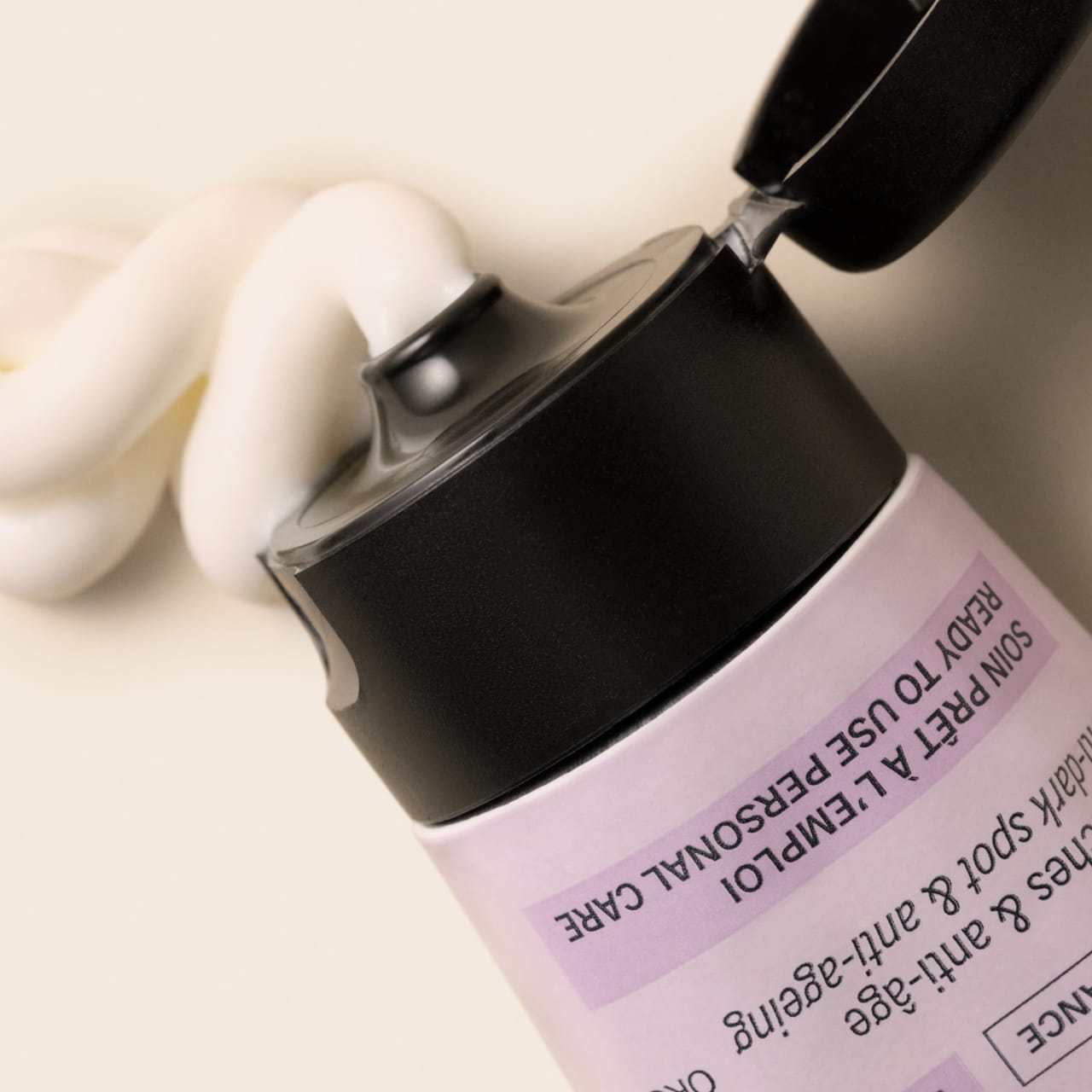
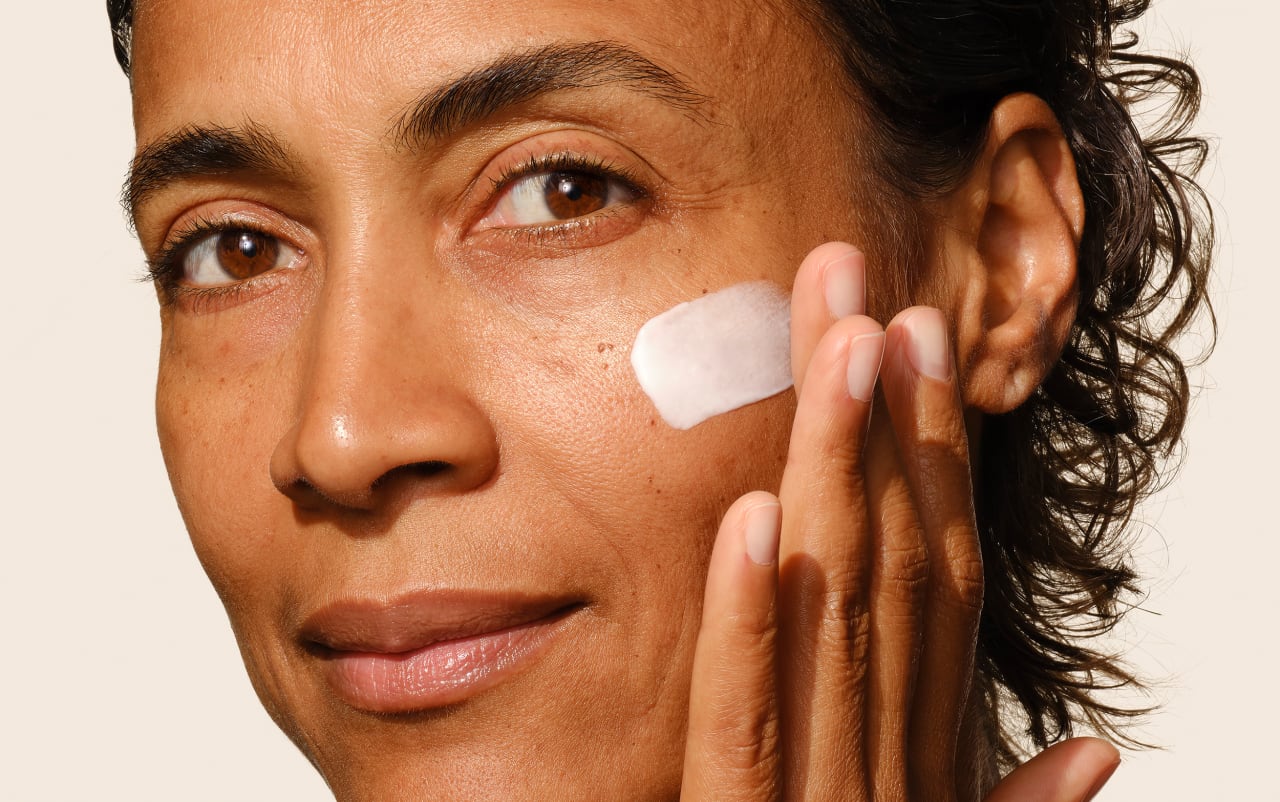
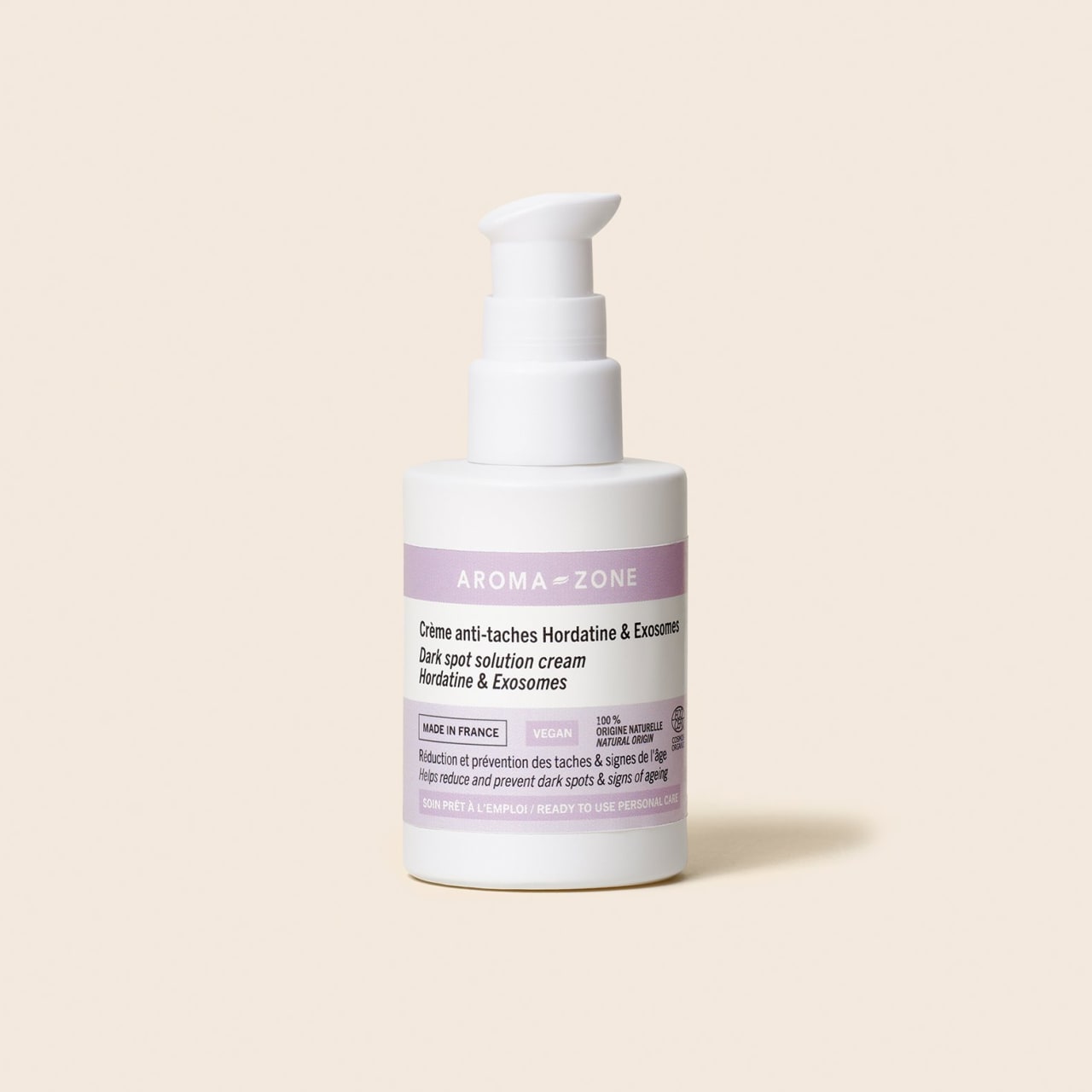
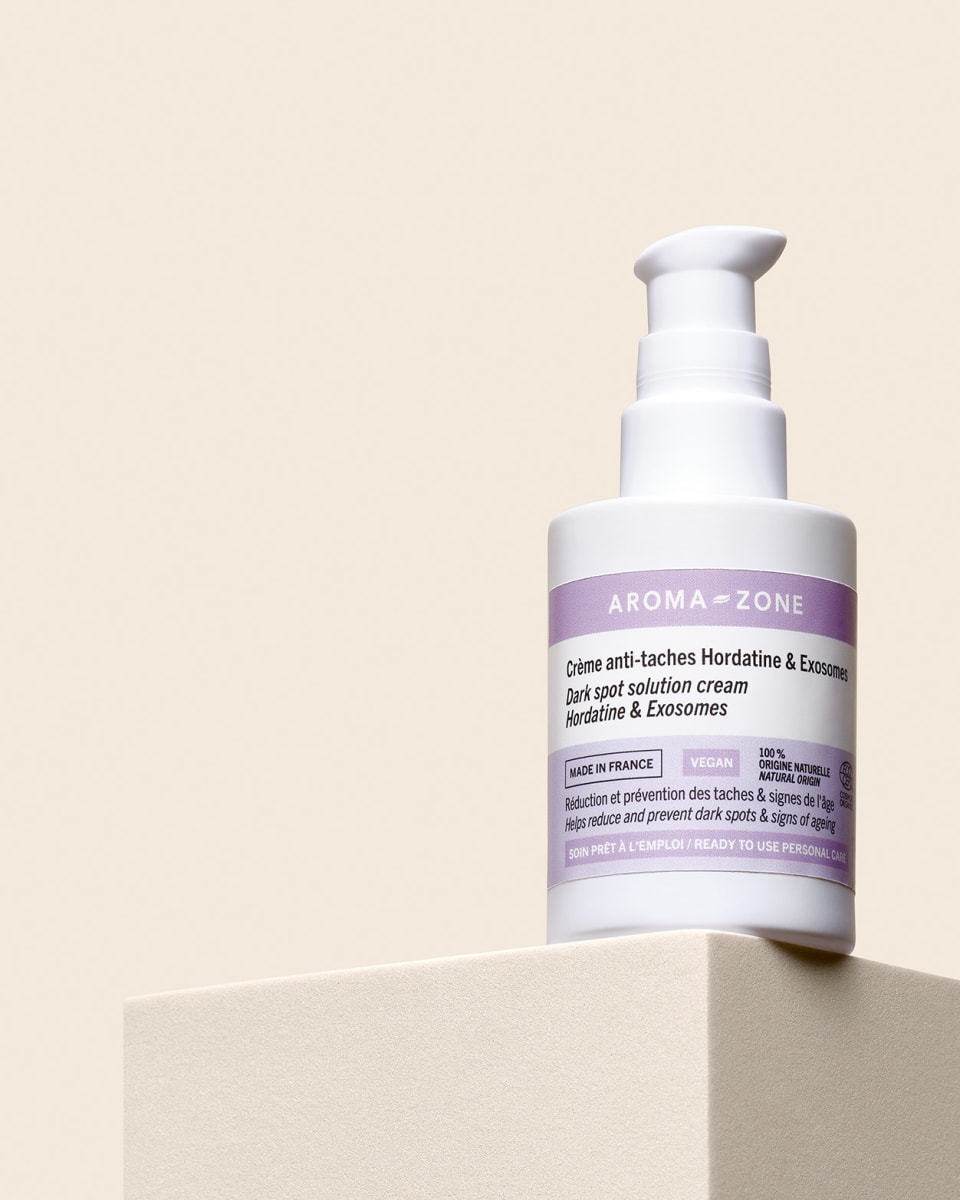
The Hordatine & Exosomes Anti-Dark Spot Cream is an anti-dark spot and anti-ageing facial treatment designed to tackle both pigmentation spots and the visible signs of ageing. Thanks to its innovative complex of Hordatine and Exosomes, it takes a holistic approach, offering both preventative and corrective action on dark spots, both on the surface and deep within the skin. Its silky texture absorbs quickly without leaving a greasy residue.

Discover the Anti-Dark Spot Cream

Why choose the Hordatine & Exosomes anti-dark spot cream?

  • A dual-action face cream

This treatment combines anti-dark spot and anti-ageing action, whilst providing daily hydration in a single product, to address the various needs of skin affected by pigmentation irregularities and visible signs of ageing. 

  • An expert formula designed to target multiple skin mechanisms

The formula targets the two main causes of hyperpigmentation: the overproduction of melanin and the accumulation of oxidation pigments associated with skin ageing. It thus helps to prevent the appearance and reappearance of dark spots, whilst also addressing existing ones.

Its action is not limited to pigmentation: it also helps to protect the skin from oxidative stress, preserve its firmness and elasticity, and smooth out wrinkles and fine lines. The skin is thus left with long-lasting hydration, feeling softer and smoother.

  • Preserves the youthfulness of cells

Marine exosomes, true cellular messengers, are rich in exosomal thioredoxin, an antioxidant protein. They help protect cells from damage caused in particular by UVA rays and oxidative stress, whilst supporting the mechanisms associated with youthful skin. They also stimulate the production of collagen and elastin, thereby helping to improve skin firmness and reduce the appearance of wrinkles. Their action on skin hydration and repair helps to create smoother, more resilient skin.

  • An effective formula that stays true to nature

The Hordatine & Exosomes Anti-Dark Spot Cream combines effectiveness with a commitment to natural ingredients. Its formula is 100% naturally derived, COSMOS Organic certified and vegan, and is free from fragrance, silicones and petrochemical derivatives, in line with the COSMOS standard.

It has been dermatologically tested and is non-comedogenic. It is suitable for sensitive skin as well as for pregnant and breastfeeding women.

What results can you expect from a dark spot treatment?

Less visible dark spots in just 7 days

Results show that 100% of users notice less visible dark spots after just 7 days*. After 28 days of use, the number of dark spots is halved.

 *Satisfaction test carried out on 35 volunteers after 28 days’ use.

Efficacy measured by independent tests

The effectiveness of the Hordatine & Exosomes Anti-Dark Spot Cream has been assessed through several tests carried out by independent laboratories:

  • A satisfaction test, carried out on 35 volunteers after 28 days’ use, assessed the results as perceived by users

  • A scoring system and an instrumental test carried out by a professional, on 35 volunteers after 56 days’ use, assessed the visible improvement in dark spots

  • An instrumental test, carried out on 11 volunteers, measures skin hydration over a 24-hour period.

After 28 days’ use, the results show that:

  • 100% of users noticed a more even, uniform and radiant complexion;

  • 100% noticed their skin was twice as firm;

  • 100% noticed a reduction in fine lines and wrinkles;

  • Fine lines and wrinkles were halved for 97% of users.

Consistency is essential for optimising results

It is consistent use that maximises results. To reap the full benefits of the Hordatine & Exosomes Anti-Dark Spot Cream, it is therefore essential to apply it once or twice a day, depending on your skin’s needs.

Is the Aroma-Zone anti-dark spot cream suitable for your skin?

The Hordatine & Exosomes Anti-Dark Spot Cream has been designed to address several skin concerns at once. It is suitable for both women and men and can be used from the age of 12. It is particularly suitable for mature skin from the age of 40, which is often more prone to pigmentation spots and signs of ageing.

Targeted benefits

The Hordatine & Exosomes Anti-Dark Spot Cream is particularly suitable if you wish to:

  • Reduce the appearance of pigmentation spots: help minimise their appearance and prevent them from forming

  • Achieve a more even complexion: promote an even, radiant complexion

  • Moisturise the skin: maintain hydration for 24 hours

  • Improve skin firmness: help achieve firmer skin

  • Reduce wrinkles and fine lines: minimise their appearance

  • Protect the skin from oxidative stress: benefit from the formula’s antioxidant action.

When should you use the Hordatine & Exosomes anti-dark spot cream?

I’m in a hurry and looking for a 2-in-1 skincare product.

I’m looking for a single product that combines several benefits in one simple step. The Hordatine & Exosomes Anti-Dark Spot Cream combines hydration, dark spot correction and anti-ageing benefits.

I’m looking for a more even, radiant and uniform complexion.

I have a few dark spots that make my complexion look less even and less radiant. I’m looking for a skincare product that specifically targets pigmentation irregularities rather than just a moisturiser. The Hordatine & Exosomes Dark Spot Corrector helps to make dark spots less visible and gradually restore a more even and radiant complexion.

I’m looking for a formula that’s 100% natural, certified organic, silicone-free and fragrance-free.

I want to target my dark spots without compromising on my standards regarding ingredients. The Hordatine & Exosomes Anti-Dark Spot Cream is 100% natural, COSMOS Organic-certified and vegan, and free from silicones and fragrance.

I have sensitive skin and am looking for a gentle anti-dark spot treatment.

I want to tackle my dark spots, but I’d prefer to avoid harsh products that might irritate my skin. Dermatologically tested and non-comedogenic, the Hordatine & Exosomes Dark Spot Correcting Cream is suitable for sensitive skin. It is also suitable for pregnant and breastfeeding women.

I’m looking for a formula that’s more moisturising than a serum.

I want to target my dark spots with a serum, but my skin also needs hydration and comfort. So I’m looking for a cream to apply on top to complement the serum’s action and provide the necessary daily hydration. The Hordatine & Exosomes Dark Spot Correcting Cream therefore combines targeted action with hydration, delivering sustained hydration for 24 hours.

How should you use it on a daily basis?

How can you easily incorporate it into your skincare routine?

The Hordatine & Exosomes Anti-Dark Spot Cream forms part of the Aroma-Zone 5-step anti-dark spot routine, designed to work in a complementary way to address the various needs associated with pigmentation spots.

Discover our anti-dark spot routine

How to use it: instructions for use

For our advice on using the Hordatine & Exosomes Anti-Dark Spot Cream, see our dedicated guide How should you use the Hordatine & Exosomes Anti-Dark Spot Cream?

What is the difference between a face cream, a face cream for dark spots and a serum for dark spots?

These three skincare products all have their own benefits, but they do not all address the same need.

Product

Main effects

Face cream

– Moisturises the skin daily

- A general-purpose skincare product that helps keep the skin comfortable and supple

Anti-dark spot face cream

– Moisturises the skin daily

– Targets the appearance of pigmentation spots

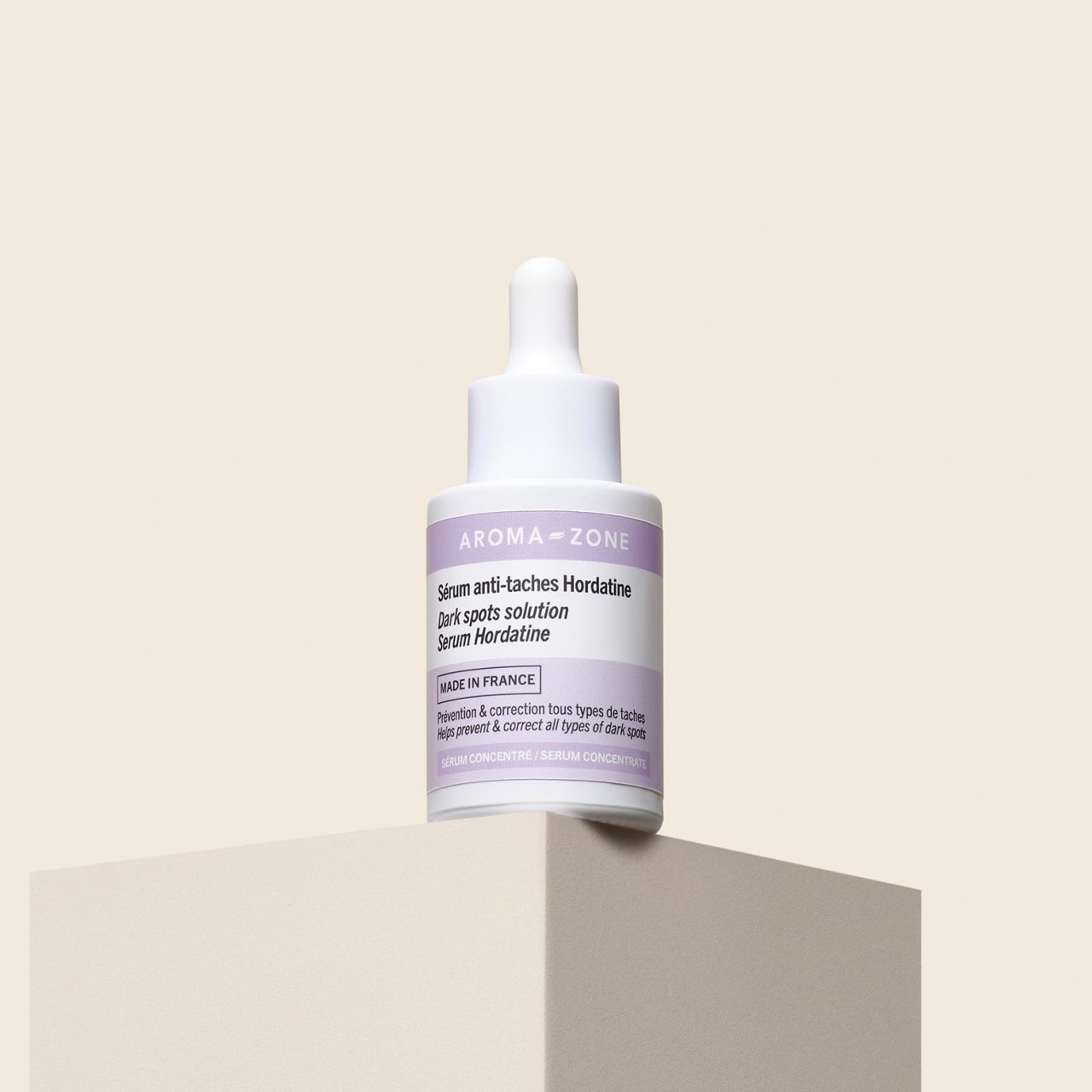
Anti-dark spot serum

– Specifically targets dark spots

– Provides a high concentration of targeted active ingredients, depending on the formula

– Requires the application of a face cream on top to moisturise

In summary: A face cream focuses primarily on hydration and skin comfort, whilst an anti-dark spot face cream provides targeted action against pigmentation irregularities. An anti-dark spot serum, on the other hand, is designed to specifically target this issue and can be used in combination with a moisturiser.

To find out more and discover the moisturiser best suited to your skin’s needs, check out our guide Moisturiser: choosing the right one for my skin type.

Expert feature

Hordatine is recognised for its targeted action on skin tone evenness, particularly by helping to reduce the appearance of pigmentation spots. It is easy to incorporate into a formulation and can serve as a natural alternative to more controversial active ingredients with similar properties, making it a suitable choice for formulations seeking to combine efficacy with gentleness.

Precautions for use

Avoid contact with the eyes. In case of contact, rinse immediately with clean water.

Spotlight on Marion Alves De Oliveira

Marion ALVES DE OLIVEIRA

Marion is a Doctor of Pharmacy, naturopath, and coach. After twelve years in the cosmetics industry, she now helps clients achieve greater overall balance and adopt a more mindful lifestyle, with a particular focus on sustainable nutrition. She also created a podcast where she shares insights to promote a lifestyle philosophy that respects both health and the environment.

Bibliography

  1. Ferreira dos Santos Videira, I., Moura, D. F. L., & Magina, S. (2013). Mechanisms regulating melanogenesis. Anais Brasileiros de Dermatologia, 88(1), 76–83.

    https://doi.org/10.1590/S0365-05962013000100009

  2. Davis, E. C., & Callender, V. D. (2010). Post-inflammatory hyperpigmentation: A review of the epidemiology, clinical features, and treatment options in skin of colour. The Journal of Clinical and Aesthetic Dermatology, 3(7), 20–31.

    https://pubmed.ncbi.nlm.nih.gov/20725554/

Frequently Asked Questions

Frequently Asked Questions