Calories in wholemeal bread: understanding its calorie content and nutritional benefits

Calories in wholemeal bread: understanding its calorie content and nutritional benefits


By The Aroma-Zone editorial team

Published on: Tuesday, August 12, 2025, Updated on: Wednesday, October 28, 2026

Contents

Related products

What is wholemeal bread?

Origins and history

Wholemeal bread has held a unique place in the human diet for millennia. As far back as ancient times, civilisations consumed bread made from wholemeal wheat flour, that is to say, flour comprising the entire grain (bran, germ and endosperm). This rustic and nourishing bread was a staple food for a long time before the advent of refined flours. Today, it is highly prized for its nutritional qualities and high fibre content, reflecting growing demand for natural foods and dietary wellbeing.

The different varieties

There are several types of wholemeal bread, suited to everyone’s tastes and needs:

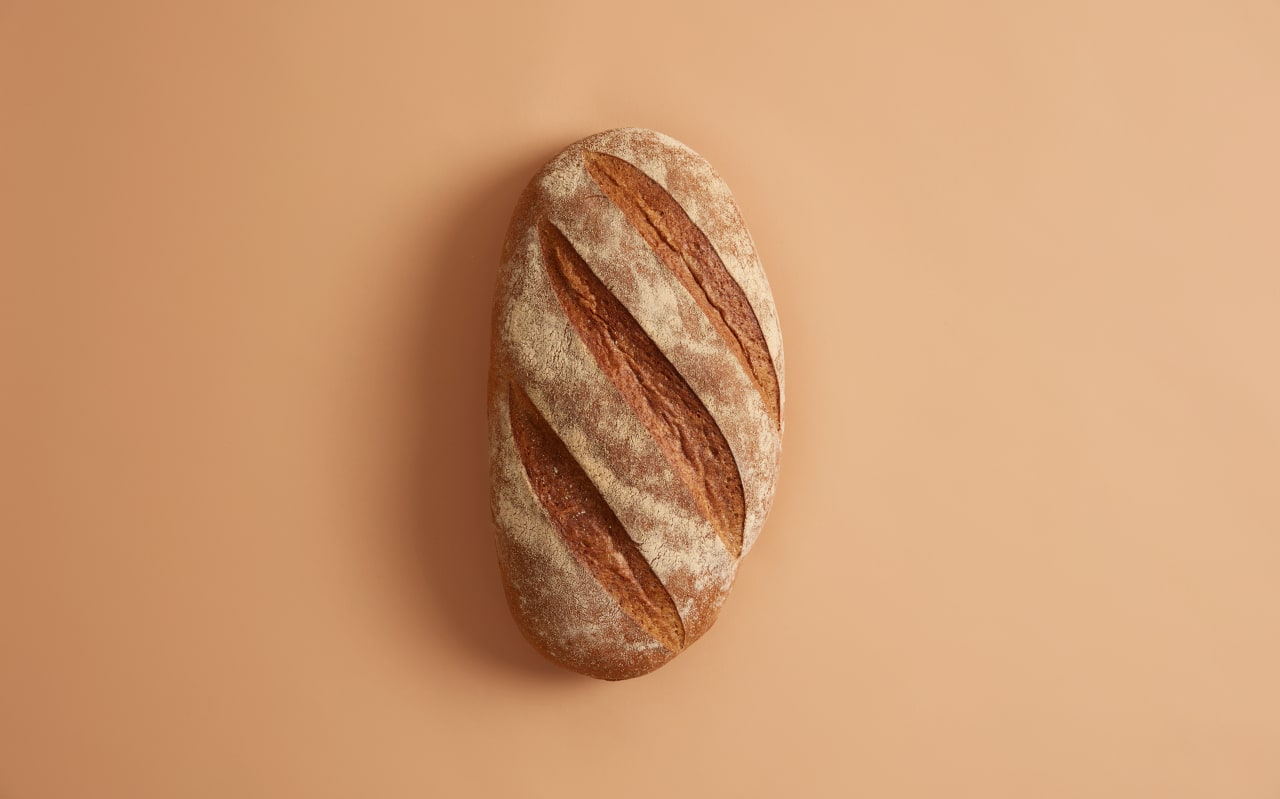
  • Traditional wholemeal bread: made from wholemeal wheat flour, water, and sourdough starter or yeast, this bread has a thick, chewy crust.

  • Wholemeal sandwich bread: softer and characterised by its light, airy texture and thin crust.

  • Wholemeal rusks: a dry, crisp version, ideal for breakfast.

Botanical characteristics and cultivation of wholemeal wheat

The wheat used for wholemeal bread comes from the plant Triticum aestivum. This annual cereal grows in temperate zones, in well-drained, nutrient-rich soil. The cultivation of wholemeal wheat follows natural cycles: sowing in autumn or spring, growth over several months, then harvesting in summer. Wholemeal retains all its parts (bran, germ and endosperm), which gives it its nutritional richness.

Calories and energy

Is it a fruit or a vegetable?

Wholemeal bread is neither a fruit nor a vegetable: it is a cereal product, made from wholemeal wheat.

Nutritional information per serving

  • Per 100 g: approximately 230 to 250 kcal

  • Per slice (average, 30 g): 70 to 75 kcal

  • Per 50 g: 115 to 125 kcal

2 slices: ... kcal

2 slices of wholemeal bread (approx. 60 g): 140 to 150 kcal.

In a bakery

Artisan wholemeal bread may vary slightly depending on the recipe and hydration: allow for 240 to 250 kcal per 100 g.

Crumb: calorie content

Wholemeal sandwich bread has a slightly higher caloric value, around 250 to 260 kcal per 100 g.

2 slices of white bread: ... kcal

For two slices of wholemeal sandwich bread (approx. 50 g): 125 to 130 kcal.

1 wholemeal rusk: ... kcal

One wholemeal rusk weighs approximately 10 g: 37 to 40 kcal.

kcal and energy density

The energy density of wholemeal bread is relatively low for a starchy food, thanks to its high fibre content which promotes a feeling of fullness.

Comparison with white bread: calorie differences

White bread provides an average of 250 to 265 kcal per 100 g, which is similar to wholemeal bread. However, wholemeal bread contains more fibre and micronutrients.

Grains: energy content

Multigrain breads fall within the same energy range as wholemeal bread: 240 to 260 kcal per 100 g.

Is it high in calories?

Wholemeal bread is not particularly high in calories for a cereal product. Its high fibre and nutrient content makes it a sensible choice as part of a balanced diet.

Which type is the lowest in calories?

Wholemeal bread, multigrain bread and certain types of wholemeal crispbread or rusks are among the lowest in calories compared to enriched white bread or brioche.

How many slices make up 30 g?

Generally, a slice of wholemeal bread weighs 30 g. Therefore, 30 g is equivalent to a medium-thick slice.

Which is best for weight loss?

Wholemeal bread, thanks to its high fibre content, promotes a feeling of fullness and helps with weight management as part of a balanced diet.

A Word from the Dietitian

"Choosing the right bread 

Not all wholemeal breads are created equal. Mass-produced breads may be of lower quality due to additives and less stringent requirements regarding the flour used. For high-quality bread, opt for those from artisan bakeries, made with natural sourdough and organic wholemeal flour, without additives or preservatives. The list of ingredients should be short and easy to read. Studies suggest that the fibre in wholemeal bread acts as a prebiotic and contributes to the production of butyrate, a fatty acid with anti-inflammatory properties for the colon (Louis et al., Nat Rev Gastroenterol Hepatol, 2014). Ideally, choose a wholemeal bread made from a blend of flours derived from different grains."

Raquel Barros – Dietitian, Nutritionist

Nutritional analysis

Complete nutritional information

Here is the average nutritional breakdown per 100 g of fresh wholemeal bread:

Nutrient

Per 100 g

Energy (kcal)

240

Protein (g)

8.5

Carbohydrates (g)

41

Of which sugars (g)

2.0

Fat (g)

1.5

Fibre (g)

7.0

Vitamin B1 (mg)

0.25

Vitamin B6 (mg)

0.13

Magnesium (mg)

70

Iron (mg)

2.1

Essential nutrients

Wholemeal bread provides plant-based protein, complex carbohydrates, fibre, B vitamins (particularly B1 and B6) and minerals (magnesium, iron, zinc).

Per 100 g

240 kcal, 8.5 g protein, 41 g carbohydrates, 2 g sugars, 1.5 g fat, 7 g fibre.

Energy (kcal)

240 kcal per 100 g.

Protein (g)

8.5 g per 100 g.

Carbohydrates (g)

41 g per 100 g.

Of which sugars (g)

2 g per 100 g.

Fat (g)

1.5 g per 100 g.

Fibre (g)

7 g per 100 g.

Vitamins

Mainly B vitamins (B1, B6).

Minerals

Magnesium, iron, zinc, phosphorus.

Benefits and advantages

For your health

Antioxidants, blood sugar levels, digestion

Thanks to its high fibre content, wholemeal bread supports healthy bowel function and helps regulate blood sugar levels. It also contains antioxidants, found in wheat bran, which support the body’s natural defences.

For the skin

Natural cosmetics and moisturising

The vitamins and minerals found in wholemeal bread, particularly vitamin B and zinc, help to maintain healthy skin. In homemade cosmetics, wholemeal bread powder can be used in natural face masks to provide a softening effect.

As part of a diet

Satiety, weight management, specific diets

Its high fibre content provides a lasting feeling of fullness, making it a valuable ally for weight management or as part of specific diets (reducing blood sugar spikes or controlling cholesterol levels, for example).

Its role in a balanced diet

Ideas for your meals and sporting activities

Wholemeal bread fits easily into your daily meals – for breakfast with nut butter, with crudités at lunch, or as an energy source for a snack before exercise. It’s a great alternative to products made with refined flour, offering optimal nutritional value.

Practical advice

Ideal portion sizes and managing overeating

It is recommended to eat 2 to 4 slices of wholemeal bread a day (i.e. 60 to 120 g), depending on your caloric requirements, age and activity level. To avoid overconsumption, it is best to prioritise quality (sourdough, artisan or organic bread) and to vary your intake with other sources of complex carbohydrates.

Natural recipes

Cosmetic applications?

Infusions and face/body care

Wholemeal bread powder can be incorporated into oil-based macerates to create gentle scrubs or moisturising masks. It has an exfoliating and remineralising effect.

Precautions and recommendations

Consume in moderation according to your needs

Adjust the amount of wholemeal bread you eat to suit your energy expenditure, age and health. If you are following a specific diet (low-carbohydrate, gluten-free), seek advice from a healthcare professional.

Storage and origin

Wholemeal bread is best stored wrapped in a clean cloth at room temperature, away from damp. Opt for products from organic and local farms, which guarantee better traceability.

Possible allergies

Wholemeal wheat contains gluten, a common allergen. You should take care if you have a gluten intolerance or allergy. Always check the ingredients list on the packaging.

Bibliography

  1. ANSES – Ciqual Table 2024

  2. USDA FoodData Central – Wholemeal bread, fresh

  3. Scientific studies on its benefits

  4. WHO / PNNS recommendations

  5. Scientific analysis of its nutritional value

  6. Comparative study of the nutritional content of different types

Frequently Asked Questions

Frequently Asked Questions

Associated tips