
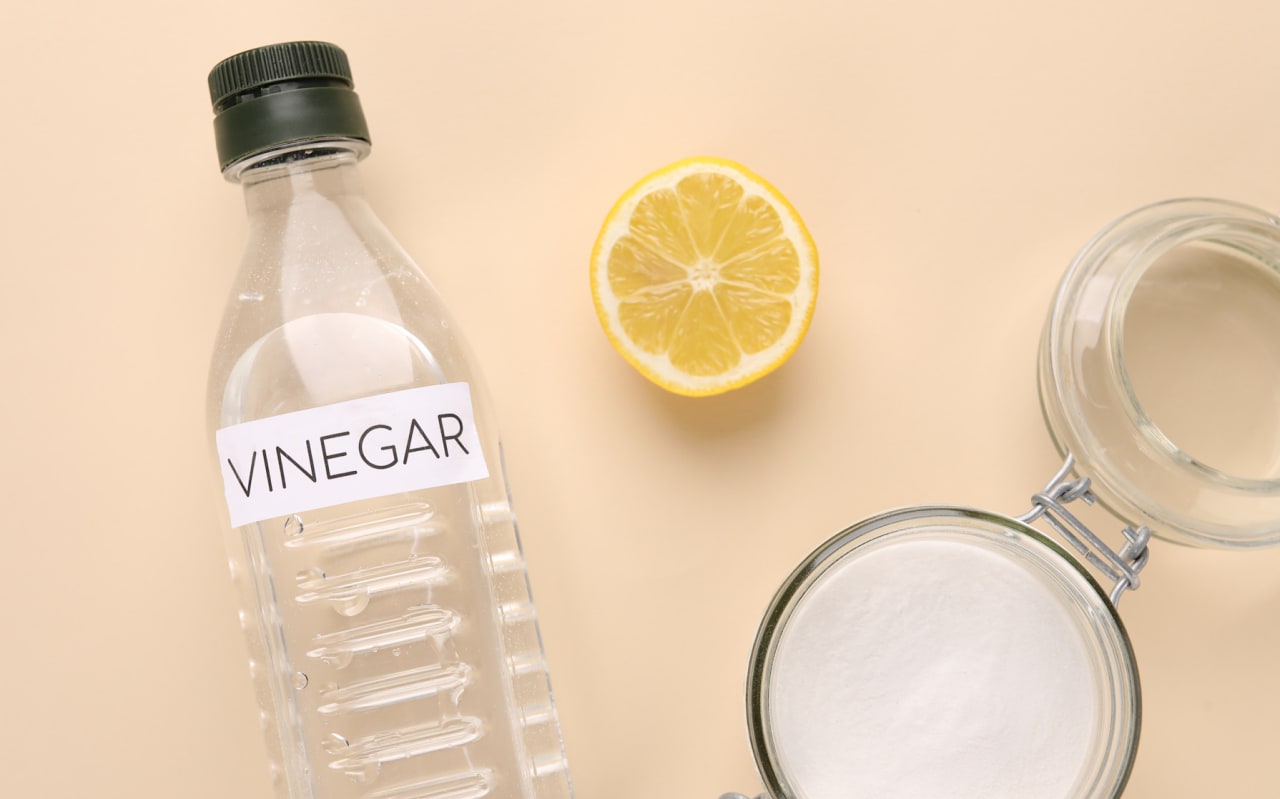
White vinegar, also known as crystal vinegar, is a colourless liquid made by fermenting plant-based alcohols such as beetroot, maize, or wheat. It's mainly made up of acetic acid diluted in water, with an acidity level typically ranging from 5 to 10%. This concentration makes it food-safe and suitable for culinary use. Its clear appearance makes it easy to use in the kitchen, and it can also be used for light household cleaning thanks to its natural disinfecting and cleaning properties.
What's the Difference Between White Vinegar and Household Vinegar?
Published on: Tuesday, September 02, 2025, Updated on: Friday, October 30, 2026
Vinegar has become a genuine household staple. An essential ally for keeping your home clean while minimising the use of chemicals, this product is ideal for cleaning your entire home (or almost all of it) effectively and gently. Understanding the difference between white vinegar and household vinegar will help you use each one correctly, whether for cleaning surfaces, descaling appliances, or caring for laundry. Discover our tips and tricks for safe, effective, and environmentally friendly cleaning.
Contents
Related products
£3.50
250 ml
What Is White Vinegar?
Good to know: The term ‘white vinegar’ can be misleading, as some products labelled as such have a higher acidity level and are intended for household use. The key factor to remember, then, is the percentage of acetic acid stated on the bottle.
Why Use this Product?
Food preservation: White vinegar acts as a natural preservative thanks to its acidity. It is particularly effective for preserving pickles, marinades and salad dressings. Acetic acid inhibits bacterial growth and helps to preserve vegetables, gherkins and onions in a healthy way. When used in cooking, it can help reduce salt intake whilst enhancing the flavours of food.
Gentle cleaning of food-contact surfaces: Thanks to its mild antibacterial action, white vinegar can be used to clean chopping boards, containers and surfaces that come into contact with food. It also dissolves surface grease, ensuring safe cleaning without harsh chemicals.
Cooking aid: Edible white vinegar is a versatile ingredient in the kitchen. It is used to deglaze sauces and to make mayonnaise and other emulsified sauces. It can also be used to tenderise certain meats and some vegetables. Its acidity acts on proteins, making them easier to cook. It can also improve the texture of dishes.
Light descaling: Even in low concentrations, white vinegar dissolves limescale from kettles, coffee makers and other small household appliances. Using it regularly helps to extend the lifespan of these appliances whilst reducing the need for chemical products.
Odour-neutralising action: White vinegar has the ability to neutralise unpleasant odours. You can add it to the water used to rinse fruit and vegetables to remove surface impurities and pesticides. Around the home, it helps to freshen the air in the fridge or on kitchen surfaces.
Good to know: White vinegar can be used to help loosen nits, making them easier to comb out, and can also be used as a hair rinse to leave your hair soft and shiny!
What Is Household Vinegar?
Household vinegar is made using the same process as white vinegar, but it has a higher acetic acid concentration, generally between 10 and 14%, and up to 20° for some highly concentrated products. It's intended exclusively for household cleaning and isn't suitable for consumption. Its strength makes it especially effective against limescale, stubborn grease, and unpleasant odours. Despite its potency, it remains biodegradable and environmentally friendly.
What Are Its Benefits?
Intensive descaling: 14° household vinegar is particularly effective for descaling kettles, coffee makers, shower heads and taps. This is because acetic acid dissolves encrusted limescale deposits without damaging resistant metals such as stainless steel or aluminium. What’s more, it allows you to descale your entire home whilst being kind to the environment
Cleaning hard surfaces: You can easily clean your home using white vinegar alone! Household vinegar effectively removes grease from hobs, cooker hoods, floors, worktops, mirrors and windows. You can also give a white wall a thorough clean with white vinegar. Its multi-purpose action means it can replace several chemical products. Household vinegar is therefore a cost-effective and eco-friendly cleaning product
Laundry care: Adding household vinegar to the washing machine softens fabrics, preserves colours and neutralises unpleasant odours. It can be added directly to the fabric softener compartment or diluted with washing powder to enhance the washing results
Odour removal: Household vinegar eliminates unpleasant odours from bins, ashtrays and drains. Its neutralising power is ideal for creating a healthier and more pleasant living environment, without the use of harsh or polluting chemicals
Environmental friendliness: Made from natural ingredients, household vinegar is biodegradable and completely safe. You can use it frequently without risking your health or that of your children or pets. Unlike some chemical products, it does not emit harmful volatile compounds, allowing you to clean safely – both for yourself and for the environment.
White Vinegar and Household Vinegar: What Are the Differences?
Although they are made from the same base ingredient and use the same process, white vinegar and household vinegar differ in their acidity levels and uses:
White vinegar (6–10°): Edible, used for cooking and for cleaning lightly soiled surfaces.
Household vinegar (10–14° or 20°): Intended for heavy-duty cleaning, descaling and disinfecting. Must not be ingested.
Vinegar's cleaning effectiveness increases with its acidity level. The most concentrated vinegars should be used with caution on delicate surfaces: waxed wood, natural stone, marble and aluminium. Never mix vinegar with bleach, chlorine or hydrogen peroxide to avoid toxic and dangerous chemical reactions.
Focus on Our Eco-Friendly Detergent 12% White Vinegar
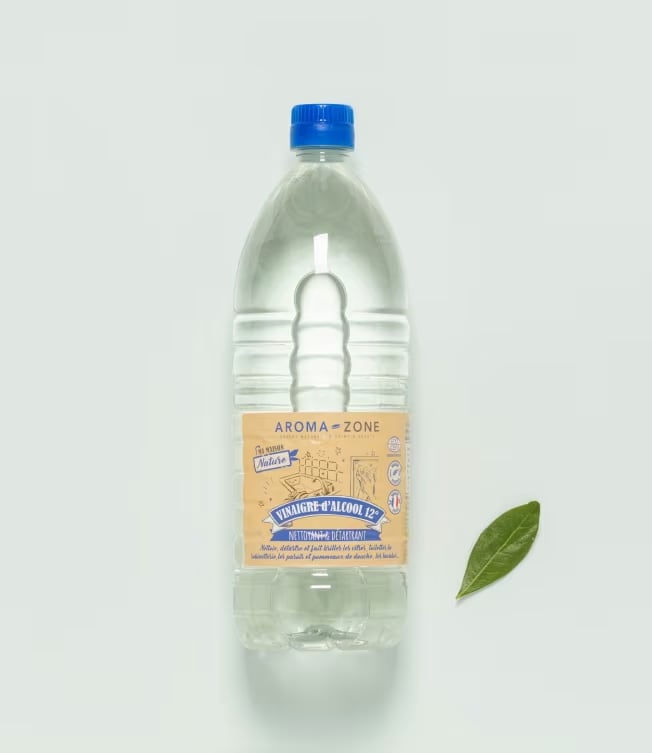
Highly concentrated, this natural white vinegar with 12% acidity is ideal for household cleaning. It's highly effective for cleaning, descaling, and polishing windows, taps, showers, sinks, basins, and toilet bowls, as well as for descaling and cleaning household appliances (coffee machines, washing machines, etc.). 100% plant-based, it's a genuine essential for natural home cleaning!
How Can You Incorporate These Vinegars into Your Routine?
These two types of vinegar can be used for a wide range of everyday household tasks:
Cleaning surfaces: Use household vinegar to clean worktops and hobs
Windows and mirrors: Spray a solution of white vinegar diluted 50 % with water for a streak-free clean
Laundry care: Add household vinegar to the fabric conditioner compartment to leave your laundry soft and odour-free
Household appliances: Descale coffee machines, kettles and taps with household vinegar
Occasional odour removal: Place a container of white vinegar in the fridge or bin to neutralise odours when necessary.
Our Aroma-Zone recipes based on vinegar





Precautions for use
Avoid delicate surfaces: waxed wood, natural stone, marble, granite and aluminium. Never mix vinegar with bleach, chlorine or hydrogen peroxide. Keep out of reach of children and follow the recommended usage quantities to minimise the environmental impact.
Expert Advice
For safe, effective cleaning with white vinegar, choose your product based on its acidity level and intended use: cooking, light cleaning, or intensive cleaning. Follow the precautions and be mindful of surfaces that aren't compatible, to avoid any damage.
Spotlight on Our Beauty Writer: Alice Blanchard

Formerly a manager at an organic shop, Alice spent several years helping her customers choose healthy products that respect both their health and the natural world. Having suffered from endometriosis since her teenage years, she chose to prioritise natural solutions to ease her symptoms and improve her day-to-day well-being. Drawing on her knowledge of naturopathy, she has always explored the benefits of plants and nutrition. Passionate about ecology and deeply connected to nature, Alice makes her own cosmetics and household products to reduce her impact on the planet and all its inhabitants.
Bibliography
Le Droguiste, ‘Understanding the differences between white vinegar and household vinegar’
Filfa France, ‘White vinegar vs household spirit: what are the differences for everyday cleaning?’
TF1 Info, ‘Is there a difference between white vinegar, household vinegar and spirit vinegar?’



