What Are the Natural Solutions for Restorative Sleep?

What Are the Natural Solutions for Restorative Sleep?


By The Aroma-Zone editorial team

Published on: Thursday, July 28, 2022, Updated on: Friday, October 30, 2026

Trouble falling asleep, waking during the night, or waking too early in the morning: these are the main signs of insomnia. Whether occasional or chronic, this sleep disorder, often linked to stress, inevitably affects the quality of our days, leading to fatigue, drowsiness, irritability, and difficulties with attention and memory. To stop these symptoms from taking a toll on our health and mood, it's essential to get back to restorative, restful sleep.

Our experts share their tips and natural solutions using essential oils to help combat insomnia and restore peaceful, balanced sleep.

Contents

Why use natural solutions to sleep better?

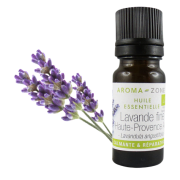
Essential oils are a natural and effective solution for improving the quality of your sleep. They act on the nervous system by promoting relaxation and reducing stress and anxiety, two major factors in insomnia. Essential oils such as Organic PDO Fine Haute Provence Lavender, Roman chamomile, and Organic Seville Orange are particularly well-suited for calming mental agitation, soothing muscle tension, and inducing a sense of serenity conducive to falling asleep.

Furthermore, the use of essential oils offers a natural alternative to sleeping pills and other medications that may have unwanted side effects. Essential oils act gently on your body without causing dependency, making them a safe option for promoting restful sleep.

Some Example Recipes

Understanding the Different Stages of Sleep

Sleep consists of several distinct phases that repeat throughout the night, forming what is known as a sleep cycle. Each cycle lasts about 90 minutes and consists of the following phases:

  • Light sleep (non-REM): At the start of each cycle, you enter light sleep. Your body begins to relax, your breathing and heart rate slow down, but you are not yet deeply asleep. Eye movements are slow, and your body may move occasionally.

  • Deep sleep (non-REM): This phase is characterised by deep sleep. Your muscles relax even further, blood pressure drops, and your body recovers physically. It is harder to wake up during this phase, and if you are awakened, you will feel disoriented.

  • REM (Rapid Eye Movement) Sleep: REM sleep is the most interesting phase of the cycle. Your eyes move rapidly, hence the name. This is the phase where most of your dreams occur. Your brain is very active, almost as active as when you are awake. Your muscles are temporarily paralysed to prevent you from moving in response to your dreams. This is also the phase where your brain consolidates memories and processes emotions.

  • Light sleep (non-REM): After REM sleep, you return to light sleep. You can wake up more easily at this stage. This complete sleep cycle repeats several times throughout the night, with each cycle gradually becoming shorter as the night progresses.

What causes insomnia?

Stress, anxiety, and depression are responsible for more than half of all reported cases of insomnia. When we go through difficult or turbulent periods in life, sleep is often the first thing to suffer, leading to a specific type of insomnia: acute adjustment insomnia. Going to bed is then accompanied by mental rumination, which is a prime cause of difficulty falling asleep. And as if that weren’t enough, these obsessive thoughts often accompany those infamous nighttime awakenings. We can therefore see how important it is to learn to control these major disruptors—our thoughts—especially when it’s time to sleep. Practices such as meditation and relaxation, which engage our attention and divert us from our thought patterns, are therefore more than welcome for calming mental agitation when sleep disturbances and insomnia intrude on our nights.

How can you overcome chronic insomnia?

Transient insomnia, also known as occasional and temporary, is, all things considered, a fairly common occurrence: it's actually quite normal to have a bad night's sleep from time to time. Things get more complicated when this sleep disorder tends to recur and become a regular occurrence. If insomnia disrupts your sleep more than 3 times a week for 3 months, you are considered to be suffering from chronic insomnia or psychophysiological insomnia. Sleep disturbances have then taken hold, and it is important to take action. Especially since they plunge us into a veritable vicious cycle: initially caused by stress, anxiety, and depression, sleep deprivation becomes a factor that exacerbates this stress, anxiety, and depression. The fear of not being able to fall asleep, as well as the resulting disruption of the body's circadian rhythms, then become factors in their own right that perpetuate insomnia.

In cases of chronic insomnia, it may be necessary to seek help from a specialist. Cognitive-behavioural therapies, for example, can yield good results in restoring normal sleep patterns. Breathing exercises, sophrology, and meditation can also be of great help in cases of established sleep disorders and insomnia.

Nightmares: Another Source of Insomnia

It’s quite common to struggle to fall back asleep after a nightmare. These “bad dreams” have a knack for waking us up abruptly, with a feeling of panic or unease accompanied by various physical symptoms (rapid heartbeat, sweating...). Insomnia is therefore common after a nightmare, as both the body and mind need some time to return to a “normal” state. However, nightmares are not harmless. They occur during the REM sleep phase, a phase filled with dreams that play an important role in emotional regulation. Bad dreams may thus serve as a way to "process" negative emotions or to prepare oneself to face the dangers and difficulties of real life. While it is normal to have occasional nightmares, their recurrence and negative impact on sleep quality may reflect a particularly stressful and difficult period, or psycho-emotional disorders (anxiety, depression, post-traumatic stress disorder, etc.). The link between nightmares and insomnia is therefore very close.

Tips to Help Prevent Insomnia

Adopting a healthy lifestyle is also essential if you want to ensure restful and restorative nights. You should therefore consider:

  • Limiting your intake of stimulants (tea, coffee, energy drinks, alcohol, tobacco, etc.), especially in the evening.

  • Avoiding overly heavy dinners, which require intense digestive effort from the body.

  • Maintaining a regular daily routine (changes can indeed lead to occasional and temporary insomnia).

  • Avoiding noisy environments. 

  • Setting the temperature in your bedroom to a level conducive to sleep (between 16 and 19°C). 

Sleep disorders and insomnia can also result from certain specific conditions such as hyperthyroidism, gastro-oesophageal reflux, or chronic pain. Respiratory and motor sleep disorders, such as sleep apnoea and restless legs syndrome, also significantly impair sleep quality. In all cases, it is therefore important to treat these conditions to restore normal daytime sleep.

How can you combat insomnia naturally?

Good sleep quality also means maintaining a regular sleep-wake schedule, which should not be disrupted too much during weekends or holidays. If you are prone to insomnia, it is helpful to identify any toxic causes (stimulants, certain medications, etc.) and environmental factors (noise, light, etc.) that may be responsible for sleep disturbances. For example, avoid exposure to blue light from screens in the evening, which stimulates hypervigilance. Similarly, you should aim to engage in regular physical activity, so that your body has been sufficiently active during the day to feel tired in the evening.

Breathing is also a useful tool to help you fall asleep: there are many techniques, such as abdominal breathing (inhaling slowly and deeply, letting your belly expand like a balloon, then exhaling slowly until your belly is completely deflated) or cardiac coherence breathing (inhaling for 5 seconds, then exhaling for 5 seconds, at a rate of 6 full breaths per minute, maintaining this rhythm for several minutes). Both are designed to slow the respiratory rate and heart rate, as well as deeply soothing the body, thereby creating conditions conducive to falling asleep.

As for aromatherapy, it proves to be a valuable aid in promoting sleep and improving its quality. We therefore turn to essential oils with sedative, calming, and anxiolytic properties that are used topically or through inhalation. For optimal results, combine these "sleep-promoting" essential oils with breathing techniques.

Additionally, you can also take a short-term course of melatonin to regulate your sleep cycles.

You can also read our article Falling Asleep Without Medication: Natural Techniques to Overcome Insomnia


When Should You Avoid Using Essential Oils for Sleep?

Although essential oils can be beneficial for improving sleep, it is essential to use them with caution and to be aware of certain contraindications. Essential oils are not suitable for everyone, particularly pregnant women, young children, and people suffering from certain serious medical conditions.

It is important to consult a healthcare professional or an aromatherapist before using essential oils, especially if you are already taking medication or have pre-existing health conditions. Additionally, it is recommended to perform a skin tolerance test before applying an essential oil to the skin, as some people may be sensitive or allergic to certain components.

Precautions

Essential oils are powerful natural concentrates. Please refer carefully to the intended uses and precautions for use on each product information sheet. Store them in a suitable glass bottle, away from light and air. Keep out of reach of children. Do not use on pregnant or breastfeeding women, or on children under 6 years of age. Avoid contact with the eyes and mucous membranes. Please consult the general safety information sheet for essential oils as well as the specific information sheet for each essential oil.

Expert Advice

If you are prone to insomnia or sleep disorders, be sure to adopt a healthy lifestyle: Stop drinking alcohol and smoking, reduce coffee consumption, exercise regularly, and reduce stress, etc. It may also be beneficial to consider liver rebalancing: an overworked and fatigued liver often causes nighttime awakenings. Follow a detoxifying and decongesting regimen by taking 1 drop of organic bog Labrador tea essential oil on a neutral lozenge, letting it dissolve in your mouth twice a day before meals for 3 weeks.

Aude Maillard

Doctor of Pharmacy, graduate of the Faculty of Pharmacy in Tours.

Learn more about low energy

Bibliography

Associated tips